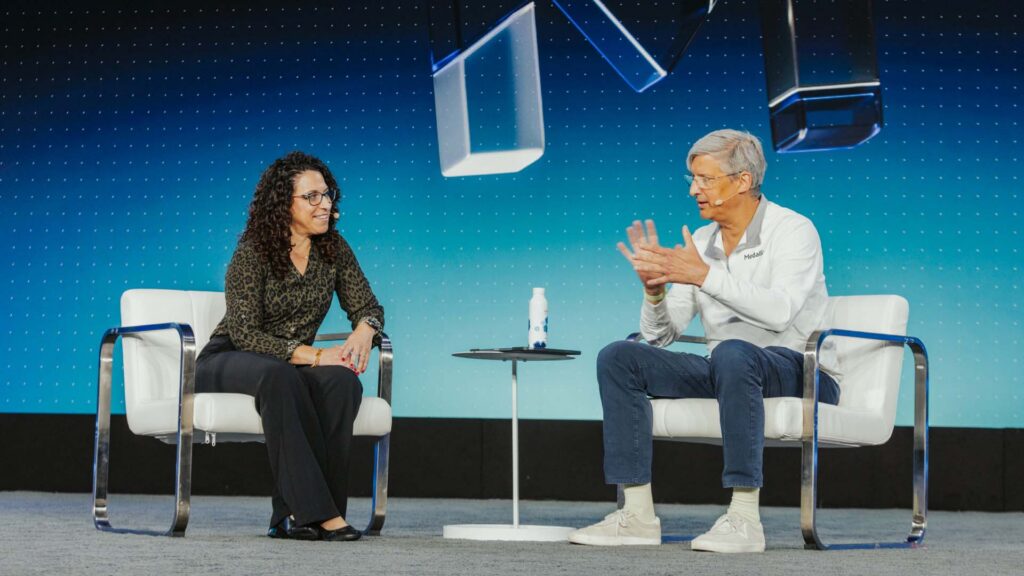
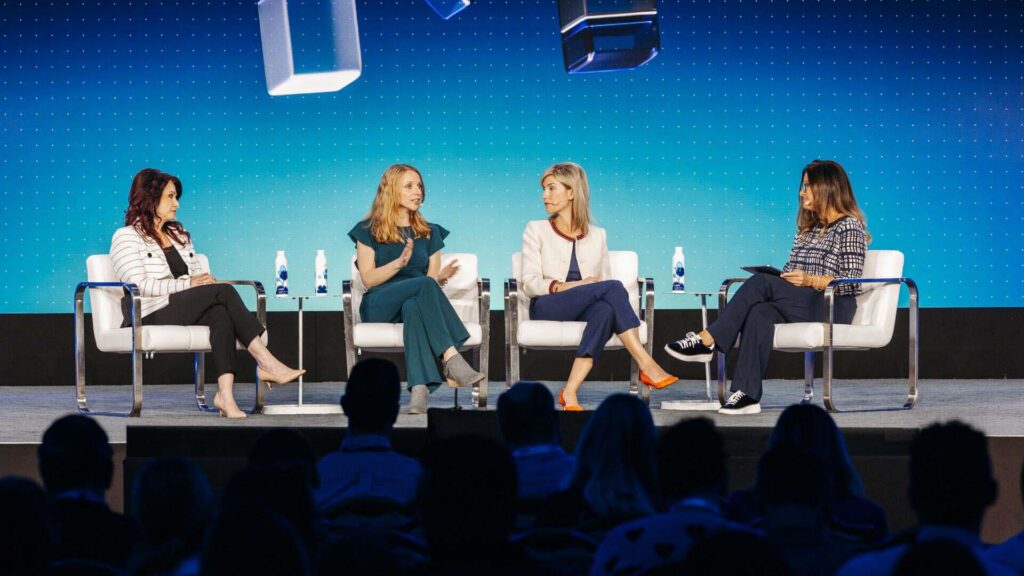
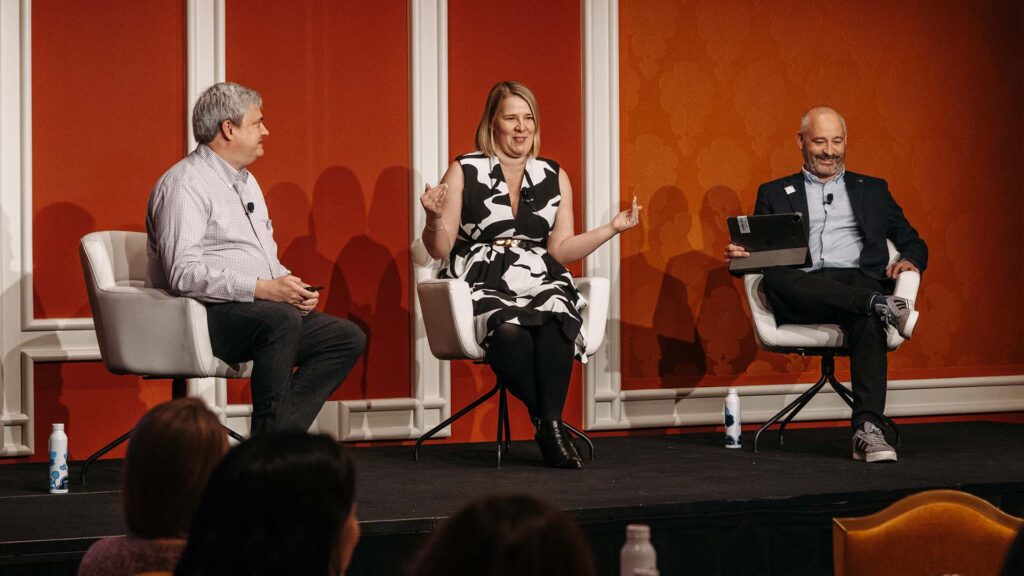
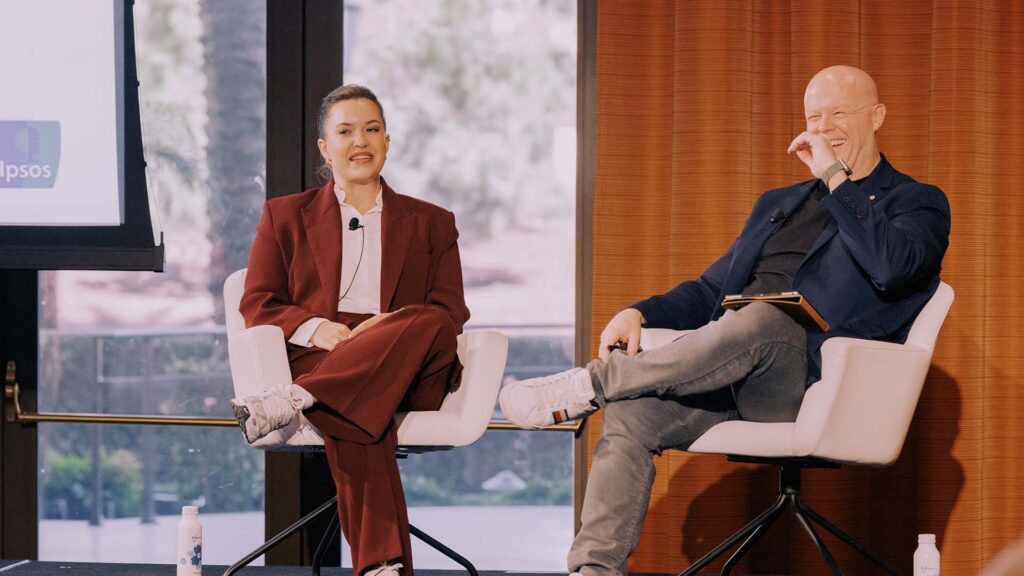
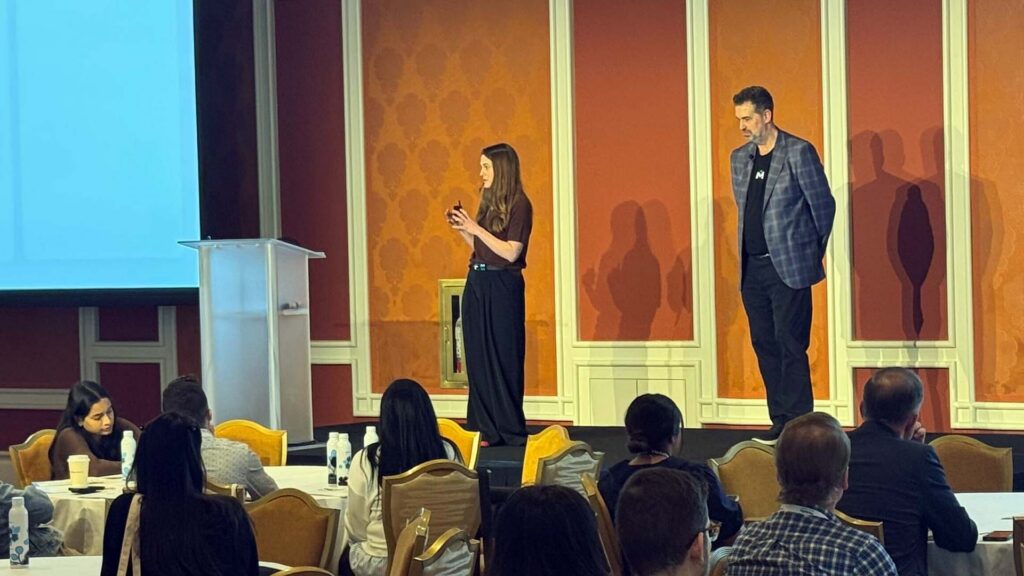
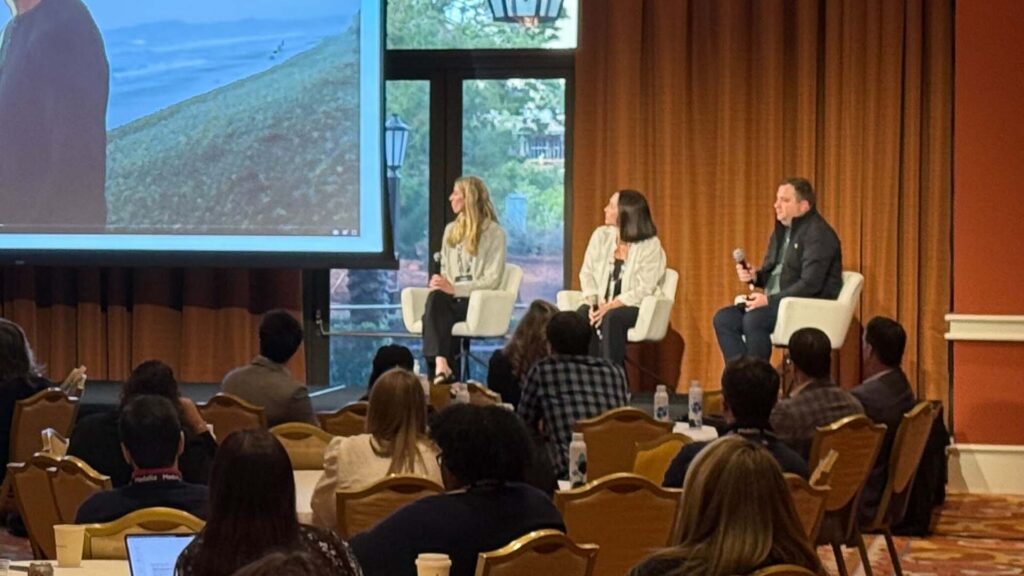
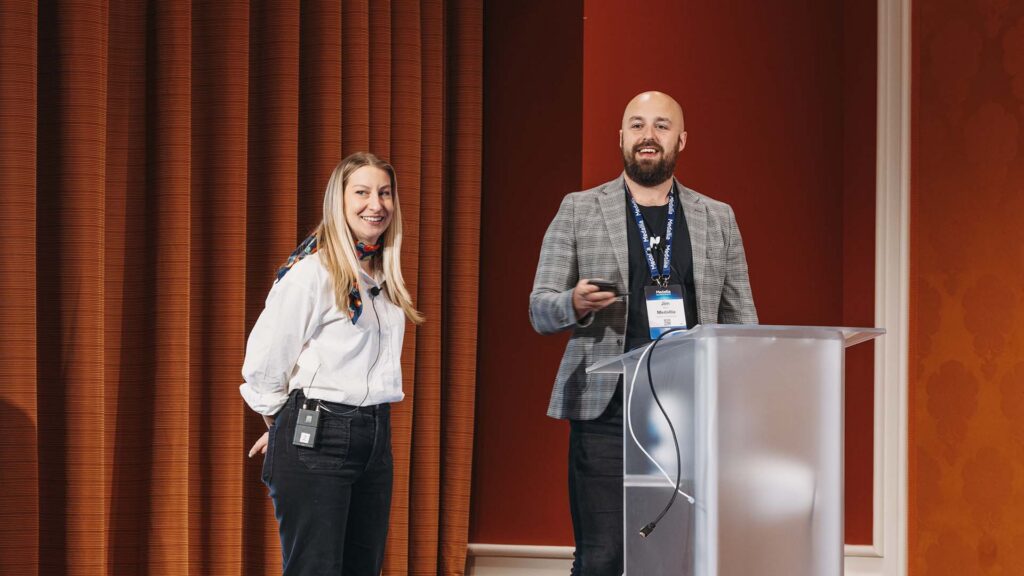
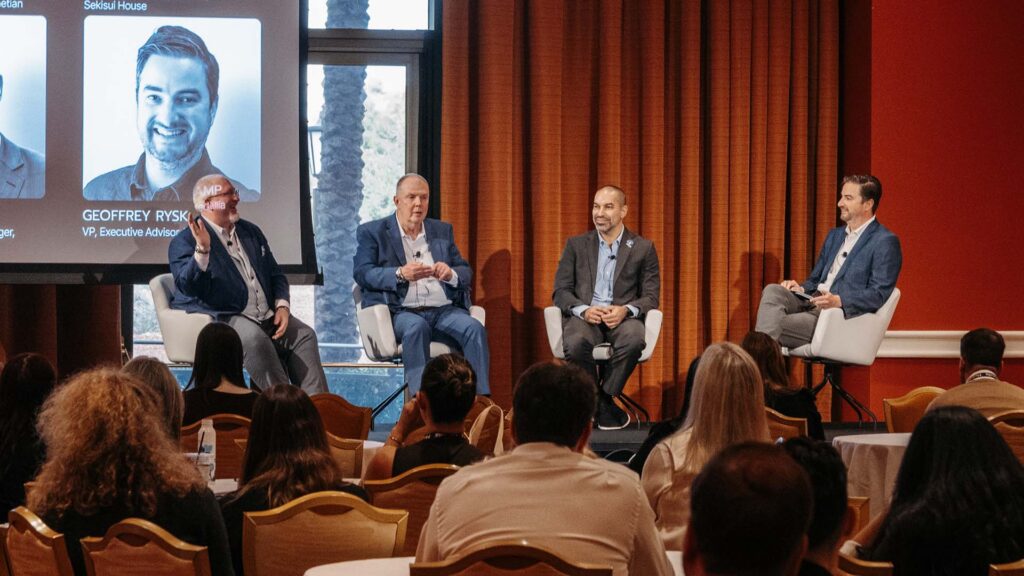
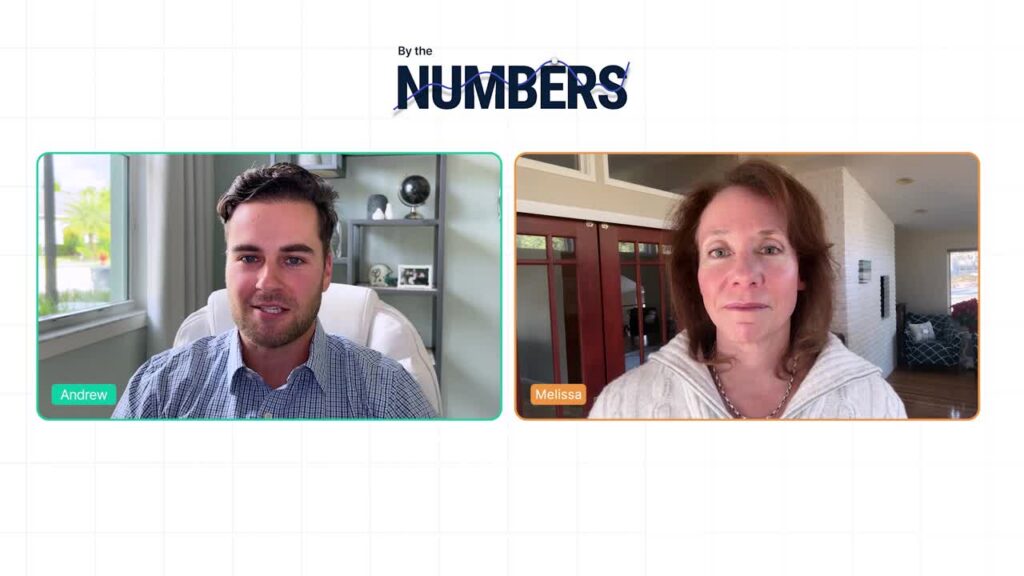
Aviv Glick: [00:00:00] My name is Aviv Glick. I lead the business value consulting team here at Medallia, where we’re helping clients quantify and articulate the value of the programs. And so that’s what our panel is going to discuss today, how exactly they did that successfully end to end. So that means identifying the challenge and the opportunity.
It means mobilizing people in the organization to actually take action and realize the value and then quantify it and articulate it. So as you can see, we have a lot to talk about in the next 40, 45 minutes. So I’m very excited to have you today. My goal here is to give you some tactical steps that you can take back some ideas that you can apply to where you are in that ROI.
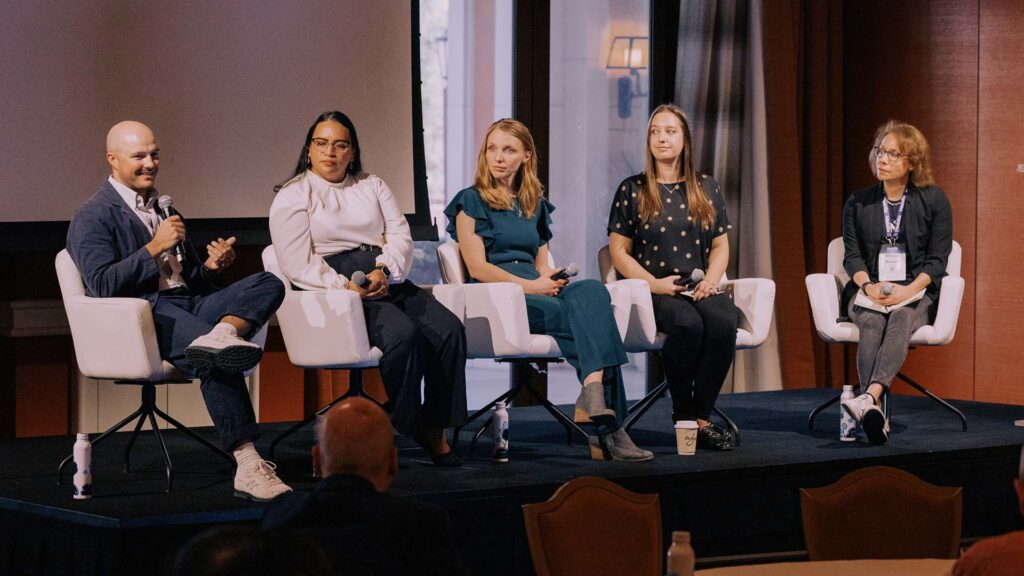
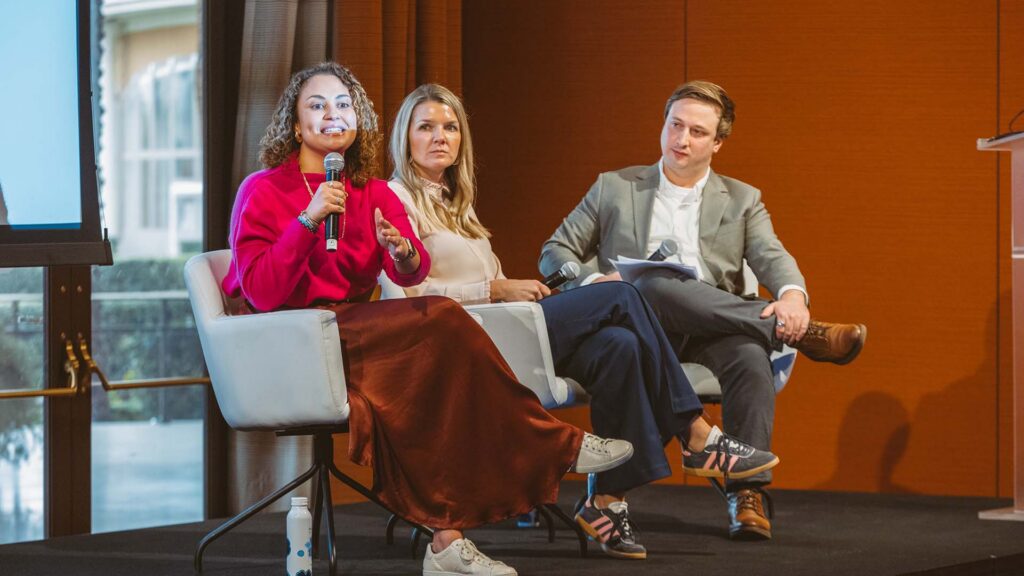
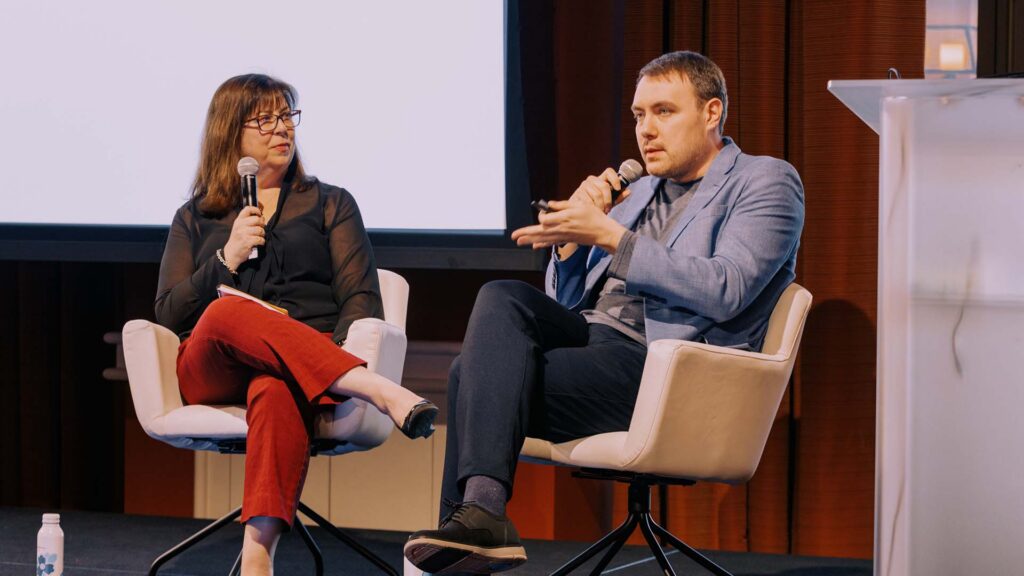
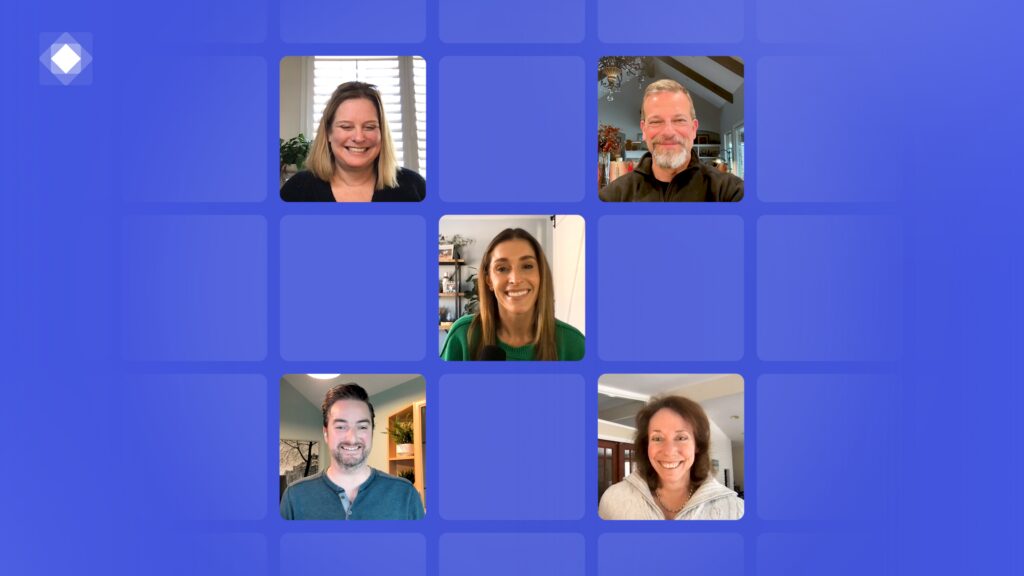
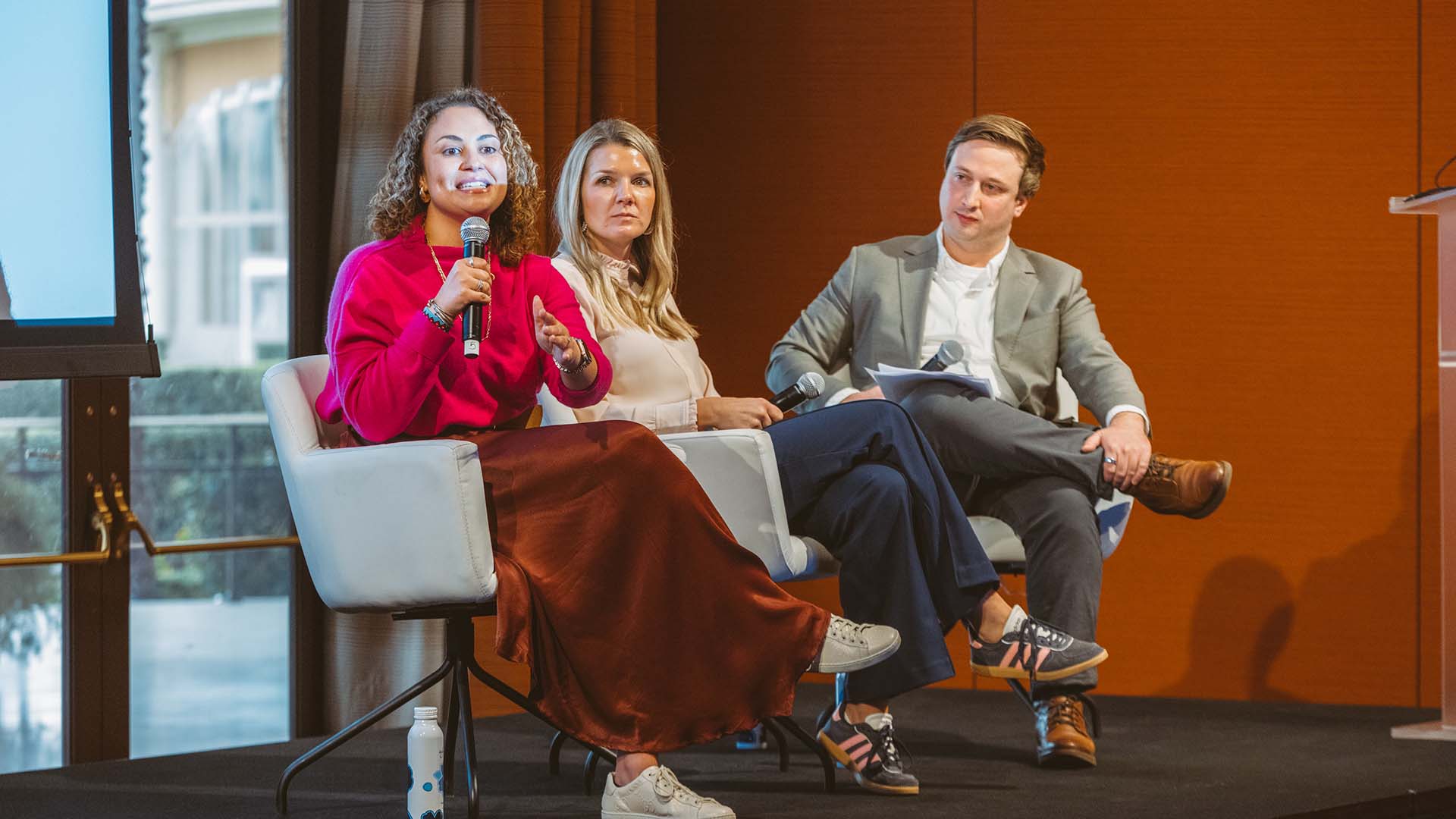
Journey, whether it’s thinking about the metrics, the business impact that we want to tie back or helping the organization drive action or measuring it. Let’s introduce our panel today. We have mayor Beth Duggins from from a casson that’s one of the largest pharmaceutical distributors in the country.
And we also have Courtney Owumi from Shipt. Shipt is a. [00:01:00] It’s a same day delivery platform also owned by Target. So you can see we have experiences from B2C to B2B. We’re gonna hear a lot about the differences here and what’s in common as well. So let’s start with with a quick introduction.
If you can tell us a little bit about your role, your industry, and also in a couple sentences, the ROI that you’ve been able to show for your program. So we can start with you, Courtney.
Courtney Owumi: Yes. Good morning. Good morning. Good afternoon everyone. I’m Courtney Owumi. I lead consumer experience and membership engagement at Shipt.
A little bit about our CX organization. It does live. Maribeth and I were just discussing. It does live within marketing at our company, which I think is really powerful. It sits alongside consumer. So we get a good taste of what our customers are experiencing, as well as that broader mindset that consumers can have when they’re shopping in the retail space.
I also have a few other pieces of the marketing organization membership engagement. ’cause we are a subscription model business as well as product marketing. Just to [00:02:00] put it in short words, how we found ROI or how we developed ROI with one of our initiatives. We turned an industry. Problem into a company differentiator and realize double digit order volume growth as a result.
Maribeth Duggins: Very proud of that and I’ll pass it over to Mary Beth. Thanks so much. I’m Mary Beth Duggans, and as Aviv mentioned, I work for McKesson. We have been around for almost 200 years working in the healthcare industry. Our goal is advancing health outcomes for all, and with the business that I sit in, we are focused on North American pharmaceuticals.
We touch about a third of the pharmaceuticals that are distributed across the United. States. So the chances that you’ve seen or use one of our products are pretty high, even if you don’t know our name. Our customer experience program really grew from probably about five years ago from just a once a year survey project, feeling like a box to check, and then not doing anything with the data, just sending out a survey, putting it on a shelf until the next year to getting to a place where when we talk about the ROI today, it’s.
It’s not just [00:03:00] connecting our customer experience to those metrics, but also being able to predict future metrics and future business performance based on how our customers experience us. For us, our customers are mostly physicians and so customer, word of mouth and likelihood to, to recommend is very important to them.
But then we also go one step further in a couple of our businesses and in our direct to patient, so we have both customer experience and also patient experience.
Aviv Glick: We wanna start with the beginning, the challenges you have identified. You mentioned that in a couple of sentences here, Courtney, you mentioned that you turned a major industry challenge.
Into a growth driver. Can you tell us more about that and then how this initiative came to be?
Courtney Owumi: Yes. So Shipt is a same day delivery company, and if you’ve ever used same day delivery or restaurant delivery, you don’t, the person who is delivering Shipt Instacart, DoorDash, they don’t own the inventory.
So part of the profitability model in that type of business is to have a markup. Is to charge you four 20 instead of $4 for your eggs, for example, [00:04:00] and keep that 26 for operation, 20 cents for operational costs. That is probably the biggest problem in our industry that customers know we charge a markup.
They do it for the convenience, but they do not like not getting the same prices in the store. As we think about solving this business challenge, we had a segment of customers. We, as Aviv mentioned, we’re owned. We’re a wholly owned subsidiary of Target, and Target does have a membership program as well.
Target Circle 360, and when we were partnering with Target to understand how do we bring enterprise value to those customers specifically, we turned to the guest data and it was so clear, like this is the number one industry problem. It’s gonna be hard for competitors to copy something like this. And this is an opportunity for us to seize, to remove that barrier, that perception barrier for those customers. So that’s how it came about when we really just turned, Hey, we have this customer problem we’re trying to solve. What does the customer data tell us? So blatantly and the stars aligned [00:05:00] for us, really seeing that this is something we could solve, we’re in the position to solve.
And how do we do that? That’s what came next.
Aviv Glick: We’re gonna get in a second to how you connected all together. In the ROI story and Maribeth, you mentioned that you moved from the soft CX metrics into actual financial returns reduction and upsell opportunities and many others. Tell us, this is one of the core opportunities that you found in the beginning.
How, how was that transformation and what were the challenges that you faced and how you overcame them as you set yourself to that journey.
Maribeth Duggins: Yeah, I think part of it was just getting invited to conversations that were happening around addressing business problems. Being in conversations earlier on where we’re like, we lost this customer account.
Our customers signed contracts with us between three to five years, and when we lose them, that means we’ve lost them for three to five years because they’ve gone to one of our competitors. And sitting in some of these conversations where they’re going, gosh, it would be so nice. To be able to know why they left.
It’s oh, guess we’ll never know. And then I was going, I actually have some of that data. I don’t know if anyone’s interested in seeing or [00:06:00] understanding why they left, and maybe let’s get ahead of that and prevent them from leaving if we can understand what are the drivers, behind churn and starting to address those.
And truly, the moment that our program changed was when we were able to attach revenue.
Aviv Glick: So part of your case was to introduce new information and new insights to business stakeholders across your company to drive that excitement around on the transformation you’ve identified opportunity.
You got people excited about it, now it’s time to do the easiest thing in the world, and that’s taking action, right? Mobilizing people in your company that already have their own priorities. To actually act on the insights. And Courtney, I wanna start with you because your initiative actually launched within four months.
So tell us what was the narrative or the data that you used to make people just drop everything and focus on that?
Courtney Owumi: Ship is a rather small company, but Target is rather large. So four months is moving Mountain. So that was record timing as we partnered together on this, as we think about how we were able to get this mobilized so quickly and take that action, I think it [00:07:00] really, a big piece of it is storytelling, right?
A big piece of it is being able to feel really grounded in what you’re doing and have the right advocates on your side to help tell that story. So what we did, how we got through that process is. We started with the customer problem because the customer is not wrong, right? You cannot argue with what the customer is telling you.
If people are saying you can, they’re not customer centric, right? If you’re truly customer centric, you’re gonna take that feedback seriously. So we were able to ground the problem in the customer problem to be solved, and we were able to paint a picture of what could be and get our executives excited about the idea.
With that executive alignment on our side, we were able to spin up a pilot. That pilot had double digit growth. It was very small, select people very small. The results were instantaneous and huge, and with that excitement, with that vision and those proof points, we were able to bring the larger organization.
On board. And I think having that [00:08:00] vision and proof point and that early proof point that the team working on it could really feel proud of and rally against, really helped build the momentum across the business to prioritize this in a bigger and bolder way.
Aviv Glick: Mary Beth, you moved from the soft metrics into focusing on financial metrics and now you need to convince people to take action on your suggestions.
But you were also a one person team at the time. And yet salespeople were acting on the risk model that you built and you made a case for ELL opportunities and you also changed processes within within other teams. So tell us how did you scale yourself like that without scaling your actual team?
And share with us some of the tactical steps that you took to influence so much in your organization.
Maribeth Duggins: I’m jealous of Courtney because ours also took four, but it was four years, probably not four months. So as a one person team, it was just pushing, beating the drum. But really, like I mentioned earlier, like fi tying those financial metrics.
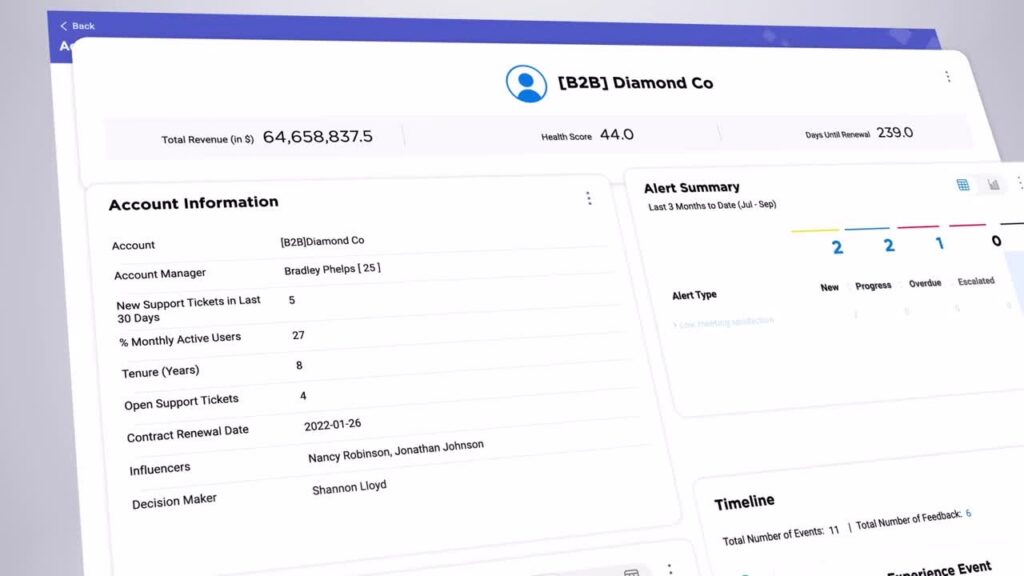
So once I built the account risk dashboard, really the problem I was trying to solve for is that [00:09:00] I own, this much of the customer insights, right? I know that we’re getting insights from our. Call center. I know we’re getting insights from the field directly. We have data on our customers in Salesforce.
What products are they using? How much are they spending with us? But the hurdle for a very long time was that all of that data lived in different places, and we were all just sitting around going I’m not gonna move mine into your thing, and you’re not gonna move yours into my thing. So finally met with the Medallia team and brainstormed on like, how do we get this all in the same place if no one’s willing to make a change?
Ultimately what we did is just say let me just pull all of your data in Medallia. You can still do your thing in your platform, but will you share your data with me? And that was the data that was going into this account risk dashboard. And once I had all that data in one place, all of a sudden it was, that I became somewhat of a source of truth to the teams, the business development teams, the sales teams who are out there with their customers, and they do know the customers very well.
They’re having conversations, but they don’t have the metrics that I have. So I found that [00:10:00] for me, success came from being able to tell them something that they didn’t already know about their current customers, and then be able to prove it to them with the data. Because theirs is more conversational.
They’re out in the field saying, I don’t think customers really like this, and I could say they don’t like it. And actually the ones who are complaining about it are worth about, in this case, of the financial process, he’s about 40, $40 million that we identified in customers at risk. Based on tying the topic of dissatisfaction with our financial process.
To, that dissatisfaction to the actual revenue that was at risk from the customers. And then the other thing we built in, because of our contract cycles was contract expiration date. So not only does it matter that they’re a large customer spending a lot of money with us and that they’re dissatisfied, but also they’re up for renewal in the next three to six months.
This is something that we need to prioritize. And it really helped because we have about 10,000 customers and we tend to focus on the big, 20 to 25, but there’s a really long tail. There that we just can, [00:11:00] can’t expect our teams to be able to understand the ins and outs, but with the right data in the right people’s hands, they were able to act on that and make decisions for themselves.
And it became less of a me pushing and then saying I have the data right in front of me. It’s really hard to ignore.
Aviv Glick: I love that advice that you give. Focus on something that they don’t know about and then prove it to them and show it to them. And show wide matters to customers. And it must also resonate with why your executives should care about that problem as well.
The metrics that you focus on, churn, upsell, how did you know what to focus on exactly, because you have several metrics that you’re focusing on. And then how did you actually connect? Bring that data to connect those metrics and the customer behavior back to your CX soft metrics.
Maribeth Duggins: What I tried to do all along the way was align it with things that I know that the business already cares about.
I can’t convince them to care about something that they don’t already care about. That’s an uphill battle. Getting down to, at the very highest level, what is, for example, our business development team care about? They care about new customer growth. [00:12:00] That is their North star, that is what they’re focused on.
And then for our account management team, they’re focused on, reducing the churn and keeping current customers. So by making those kind of the central focal points and building it around them, I was speaking their language, coming to them with a solution to something that was, part of their day to day.
Aviv Glick: How did you put together that data? You need to go to stakeholders into it. Find who has the right data, who can help you out stitching this data together, how to build that model. So walk us through these, the steps that you took to replace that. Yeah.
Maribeth Duggins: We had formed this voice of customer council.
It was very informal because we’re siloed in our different businesses. But a few of us came together and realized we were having the same problems in different areas of the business. So this informal council where we were having conversations around okay, you do this one survey. Those are like our customers too.
Let’s get together. So it happened by building these strong relationships across the business, and a lot of that was just organically, but also with that end in mind of what I’m trying to do. So even the way that I selected mentors for myself and things like that was all in [00:13:00] service of building this larger business case.
And then once we had a few of the data sources it was really neat to see. Then other people were like, can I get, can I put mine in there? I have some other customer feedback. And so once we had a few of those metrics built out, the rest came together naturally and then we were able to make hypotheses and say.
Here’s what we think is happening. Let’s look at the data and even come up with our own metrics based on, pulling two different things together. Like our customers tell us what their annual drug spend is, and we know how much they’re spending with us. Therefore, we come up with a brand new metric we were never looking at, which is what is our estimated percent, share of their spend.
And so being able to share those back was really cool.
Aviv Glick: I love the fact that you had a council, unofficial council, but I have to say that the best programs that I’ve seen are the ones where people actually talk at the top and they share what they see in the programs, what are the gaps that they see, and they can work together.
This is literally taking down the silos that we keep talking about working together across the customer journey. And then Courtney, you as a result of your no [00:14:00] markups initiative. You’ve seen ROI singles in several ways. So first of all, there’s the CX singles. Of course, we see the cost satisfaction went up, but you also saw at the same time an increasing order volume, right?
So you start to see this story comes together. Tell us more how you built that story, and specifically if you can, the correlation that you did to show that one drove the other.
Courtney Owumi: Yeah, I think what’s really important is that. Mary Beth touched on this too as she was just explaining a few things about metrics, but the financial metrics and the CX metrics they should be looked at together.
One is not more powerful than the other. And I like to think of it as the business metrics or those financial metrics as we think about increase in order volume that shows me what happened, but it doesn’t show me why. And some of these CX metrics help you understand more about why, and it helps you be able to explain.
Why something happened and if that value is sustained, which I think is what is so valuable about the CX metrics. [00:15:00] ’cause if you can move customer satisfaction and customer sentiment. That’s more of a lasting impact. That’s not a fleeting impact. That’s not order volume went up this week because there was a winter storm, so everybody ordered same day delivery, groceries to prepare for the storm.
If we’re moving, value satisfaction, that means people really think this service adds value to their life and they are going to use it over and over, and the order volume we’ve seen increase is actually sustained. And oh, it’s also going to foray and to increased retention because we know the number one predictor of retention.
Is that order engagement, right? So if we’re seeing them engage with orders, we know they will retain in our subscription base. So as we think about telling that story and building that case, I think it’s really important to know that these two things really need to go together. And as you think about how do I position it, it should always be in support of the metrics people care about.
We’re not coming up and saying, Hey, we should really care about something very nuanced. We should really care about. A [00:16:00] LV we do care about order value or the basket size, but we should really anchor to this. When everybody else in the business is anchored to order volume, we’re gonna anchor to the same thing.
And I’m gonna tell you why we are seeing changes in that. And I think that’s really the job of the CX team is to understand the why behind the results. And when you’re able to work with your business partners to see the results and the why, that is where the real powerful story comes into play. And the true value of the team comes to light.
Aviv Glick: Maribeth besides mobilizing the sales teams and account teams to act on opportunities one-on-one with a client, you’ve also helped to change processes. So specifically you saw an opportunity with a billing process with finance, but nobody likes to pay their bill and everybody knows that.
And so how did you manage to. Convince the finance team to actually say, oh, this is actually, we do have an opportunity here. What? What was the business case that you made?
Maribeth Duggins: Yeah, it’s interesting. I was thinking about this as Courtney was talking too. It’s really still, we’re talking about hard metrics here, right?
Where this whole session is on [00:17:00] ROI, but it’s still important to bring in, the quantitative and the qualitative because there is a story there and understanding kind of the why behind it. So we combine those two things, the quantitative and the qualitative, because we were actually already hearing from the field.
Customers were experiencing friction at that point in their journey anytime they had to en engage with our like billing process. And you’re right, that is not fun for anyone. But if we were seeing it across the board, just anecdotally and in our data, that kind of told us, let’s dig in a little bit there.
And that’s where we took it down. Through the account risk model to look at, okay, let’s see. All of all the customers who even mentioned this process at all, using the text analytics, we were able to pull those out and look at their NPS scores and then tie that to the revenue. And that was where we found that $40 million at risk.
And you know what was interesting? I was worried that it would feel very much like finger pointing like. You guys are messing up the whole customer experience. They’re very happy until they get to you. But you know what the finance team was like, actually, we actually would love more headcount, and now we’ve got a business case for it because you’ve just told us that [00:18:00] we can improve.
By improving this, we could help the business generate this. So instead of becoming a burden, they actually became more of a partner. What’s so cool is that now every quarter they’re like, Hey, can we see our data? Can we see what everybody’s saying about our team? And they wanna pull out the quotes, they wanna see the numbers because it helps them to improve their process.
And so they’re able to say, look what we did. We went from, from here to here. Instead of feeling like, okay, we know we’re the worst part of their journey, and everybody hates when they have to come to us for Bill.
Aviv Glick: I love to hear how contagious the excitement is and how people keep coming back to ask for more insights and for greater impact.
And in that business case you made, you also attach dollar sign, right? You also show them the potential impact that they could have.
Maribeth Duggins: And then they felt like they were part of we’re all working together. We all wanna keep our customers and we all wanna grow our business. Nobody is sitting anywhere in the organization, hopefully.
Thinking I think we’re good. We could stand to lose a few customers. So having them also tied to this overall goal really helped us all align, in support of these organizational priorities.
Aviv Glick: And the risk model [00:19:00] that you mentioned, that risk model flags when a customer might, is at risk or maybe has an opposite opportunity.
And in the model you have something like 140 variables that go into it. Can you tell us, how did you put this together? How did you figure out which ones are the right variables? It
Maribeth Duggins: was a lot of trial and error. So how we put it together was really with the Medallia team. I could not have possibly done this by myself, creating templates where we had to find one point where we could tie all this data together, right?
Because we were all measuring different things and in different ways and in different systems even. But what we found that the one constant was in this parent account ID number. All of the different data sets had this one thing, and because they all had this one thing that was consistent, we could bring it all together.
And so I can’t take credit for the technical side, it was the Medallia team who helped me build this. But what we did was start to look at some of the correlations to say what makes a customer stickier? Versus what makes a customer, less likely to leave. And so we did some trial and error and we’re able to look, for example, by solution, there [00:20:00] are offerings that McKesson has that make it.
More likely for a customer to leave us if they engage in certain offerings. And so maybe we don’t do that anymore, right? Let’s do more of the things that are satisfying our customers. Let’s upsell in the right ways because it’s not just upselling across the board. We could sell them everything we have to offer and it might not improve their experience.
We know the things that are gonna drive value to the customers and we can offer more of those things. So
Aviv Glick: you’re thinking about the impact of the customer experience in the long term as well?
Maribeth Duggins: Yeah.
Aviv Glick: Can you share with us one variable that surprised you the most in that 140? In something model,
Maribeth Duggins: the one that surprised me the most was the negative one.
So I don’t wanna tell
Aviv Glick: makes sense
Maribeth Duggins: too much about that. But it is interesting to think that, our individual teams if they’re all working separately, they’re all pushing their products. But if we can look at the overall story and say that product is actually driving down satisfaction.
And while it is an important part of the technology piece that we offer, maybe it’s not something that we offer unless it’s [00:21:00] really needed. We don’t push everything on the customers.
Aviv Glick: And Courtney, I wanna go back to the story that you started to tell with seeing the various signals for ROI and the way I see your ROI story, a pyramid where at the bottom you have the CX signals.
So you saw cost satisfaction go up, and then above that you see customer behavior and transactional which is order of value. And at the top you saw strategic impact. So you saw you’re a market differentiator hard to hard for competitors to replicate, and also you improved your partnership because it was a win situation where your partners strengthened as well.
For me, it’s like the perfect trifecta of ROI Now, when you’re in the boardroom with your executives, which one of those levels really resonated with them and gave you that trust to keep expanding your initiatives?
Courtney Owumi: Yeah, great question, Aviv. I think there’s a saying of vision. Without action is a dream, and action without vision is a nightmare.
And so with that I’m gonna say you need all of those. You need it all because people speak different [00:22:00] languages, especially in a boardroom. And you have to learn to speak everybody’s language at the table, right? So as we think about it, you need to be able to paint that picture of where can we go and having something that is.
Solving a guest problem and is a differentiator in the market, paints a very clear picture of we can carve out a space nobody else is in. That’s exciting. And then when you add to that, the proof points of what it does, it increases the engagement more than double digit growth. It’ll help increase retention.
Like these are not ideas, these are facts that we saw when we launched this. When you add the proof points, no one can argue, right? It’s that helps. That helps people stay excited after they hear the great vision. It’s like the dessert after the meal. So I think you need all of those things, and I think it’s important as you think about storytelling and understanding and bringing forward the value that you have, especially to leaders, that you keep that [00:23:00] in mind, right?
That you keep in mind, how does this help me in the bigger picture of what I know the company is trying to do? And then how do I tactically. Add in the proof points that help us understand how we get there.
Aviv Glick: I love that answer. I know when I think about the ROI stories that I’m building, I’m thinking who’s in the room and what’s their incentive.
And from that I, I reverse engineer the story.
Maribeth Duggins: And I think too, if I can add, Courtney and I were talking about this before we came up here, but it’s not a onetime thing. I’m sure you’ve all seen, it’s not okay, I approved the ROI, there it is, give me more money to invest. It is. Constant as you’re trying to build your program first and then as you’re trying to grow your program.
But it’s easier, once you can start building out that ROI. I was telling Aviv that when I was prepping for this panel, I looked back in my emails and the first time we connected was actually two years ago where my account manager brought in Aviv to help me do just this. To say like, how do I prove, I know it’s working, but how do I prove it?
And so that became the foundation of. Starting some of these conversations for going, I’m gonna have to figure out what the ROI is, [00:24:00] if I’m gonna expect the business to not only care about, but invest in it.
Aviv Glick: I love hearing that and I swear I didn’t tell her to say that. We’re almost at time and we do wanna get some questions if you have from the audience, but I do wanna ask you a couple more questions.
Let’s do a lightning round. For the folks here in this room that may not have a A CFO that has optimistic or is bought into the idea of CX and its value for a company, what would be the one. Data, input data hook or a narrative that you recommend that we take to the CFO to change your mind from thinking, CX is a nice to have, but it’s really a cost center and thinking, oh my God, it’s a profit center and it’s actually a growth engine.
Courtney Owumi: I think it’s a combination of some of the things we, we talked about here. Shout out to Stephanie, our female, CCFO. I just wanna shout her out. She’s not here, but love the girl power. But she’s tough. And as I think about how, you approach that conversation or think about how do I really show, continue to showcase the value or connect the dots, it’s more about connecting the dots, right?
For leaders, you [00:25:00] say anything about order, volume went up we have these behavior metrics. We’re helping influence these goals. Retention, for example, is a big one that. My team influences. It’s great. Can I pull that through the forecast? Is that sustainable? That’s always the next question.
It’s like gold star for that nugget, but Right. Is this real? Is this a blip? And I think the power of the CX is about the Y is about the, I can give you the confidence that what we’re saying is lasting or I can give you the confidence that we know it’s not, and these are the things we can do to make it a lasting impact.
So that’s. I think that’s what’s important to keep in mind there.
Maribeth Duggins: Yeah. For me it’s, it still goes back to the revenue. And even if you don’t have, an account risk dashboard built out, you still have access to your company’s revenue data by year, and you have access to your CX data. Just throw it in a chart and look at the correlations there.
The other thing I’ll say about that is that. I’m never gonna be in the room with the CFO, [00:26:00] so I have to make sure that the story is easy enough for someone else to tell, because I’m just not gonna be in those rooms. And so I have had to find my own champions and sponsors who can tell the story when I’m not there because chances are that I’m, it’s not gonna happen.
Aviv Glick: And that’s just an another obstacle to add, right? ’cause you need to coach them. You need to figure out who can be the representative of your ROI story when you’re not there.
Courtney Owumi: How did you find that person?
Maribeth Duggins: It’s a lot of people. It’s not just one person, making it meaningful to what each person is trying to do.
So if I’m talking to, the president of the business, that’s a different story than if I’m talking to someone at the call center, or the help desk. And so making it to where you’ve got a narrative that could be adjusted by, based on the audience is really important in making it tie to something that they care about, because.
I also can’t expect that if they are in the room with the CFO, that they’re gonna go, Hey, cx, but they are gonna talk about account retention, or they are gonna talk about new account growth and the data that they need to get there. The other thing is that it helps with [00:27:00] your frontline employees.
They are armed with this information about their customers. They’re expected to know. And so that’s a different angle of employee experience to say, how does knowing more about our customers help our field team with their own employee experience? So depending on who I talk to, I take these different avenues of what they might care about.
Aviv Glick: Fantastic. I love that. So finally any final thoughts or tips for us as what you’ve learned from that journey of creating the great ROI story from? Focusing on the right challenges and helping people, organizations to take action and then proving it prove the value and everything in between.
Any final thoughts that you have on that?
Courtney Owumi: One piece is don’t underestimate the value of verbatims, like direct feedback from the customers, especially when sometimes customer experience is not measured immediately. Sometimes they are more lagging metrics and you need time for customers to have the experience and to come up, in their minds what they think about it.
And then to tell you that. So don’t [00:28:00] underestimate the value of verbatims in the moment to help support where you’re trying to go. It can be it incredibly powerful, especially when you’re trying to paint a picture for upper level leadership.
Maribeth Duggins: I really like what Sid said in his opening session. I actually wrote it down so I didn’t forget, he was talking about mapping to outcomes because I think that’s what’s very important because all these metrics are just meaningless if you’re not thinking about what’s the outcome.
I can tell you people are unhappy or people don’t like this, but why should we care? That’s all about the outcomes. The outcome is that they’re gonna leave, they’re gonna go to a competitor, they’re not gonna join. They’re actually gonna go say something to their friends about how bad their experience is with you.
So making sure that those outcomes. Always in mind as you think about not only looking at past data, which is most of what you know this customer feedback is, but looking towards the future and thinking about, what customers might say or what your end goal is for customer experience programs.
Aviv Glick: We have about 10 minutes left and I do wanna leave some time for questions. If anybody has question, we have a mic. At the back.
Audience Question 1: My question is [00:29:00] related to some of the pieces that you’re talking about that stakeholder engagement and what do you do if you don’t really have a significant sponsor in it?
So I’m curious, as you’re thinking through customer experience and those different improvements that you’re seeing and the feedback that you’re getting, how do you balance those against other initiatives that. Other teams are arguing are going to have a bigger return on investment, are going to have a bigger impact on those outcomes that the business cares about, that you might be getting little tidbits of in your feedback, but are not necessarily customer experience oriented.
Courtney Owumi: You can’t go uphill, you gotta go with them, but that doesn’t mean that you’re not going with them to provide your insight about why it may not be the biggest opportunity. So that’s a nuance there. But I think it’s important to make sure that you have, and I think Sid mentioned this earlier in his talk as well, about embedding in the organization and having those relationships within the organization for influence.
Like we are a team of influencers. That is our job to influence the organization with everything [00:30:00] we’re hearing from the outside world and how it makes what we’re doing even better. If you are finding that you are stuck or other teams are saying they, they have other priorities. It’s important to understand, okay, what are those priorities?
Let me help you. Let me pull the insights that you need to make your priority the best it can be. And if those insights start to show that maybe this is not the biggest bang for our buck, or this is not the biggest problem we have for the customer, it’s easier to do that sort of storytelling when you’re already on their side and helping them understand what their problems really are and help influence that.
So that would be my f. Suggestion.
Maribeth Duggins: Yeah, I would say the exact same thing. Not swimming upstream, but your organization doesn’t exist without your customers. So there is some way. To connect CX to almost any priority that the business has. It’s just like Courtney said, there’s been times when people have come to me like, do you have this?
No, I don’t have that, but have you thought about this? Making some connection there is very helpful. Even if you feel like it’s insignificant, you’re, [00:31:00] it still brings you to the table.
Audience Question 2: You guys ever run into the opposite problem where you identify, a customer pain point, the investment or effort or return makes it hard to rationalize it.
You’ll have folks on the CX team or whoever, like wanting to still do it. How do you handle that situation?
Courtney Owumi: Ooh that’s the everyday, even the no markups, to be honest, it’s been a problem we’ve known about for years. We started, we really started our CX journey at shift in 2020.
Quickly found that this was a huge problem for us and it’s 2025. We just did something about it. The momentum can take time, especially if it’s something that is of high value, meaning it costs a lot to put into it. Or it’s gonna be, a large investment to make the change. I think it’s important to always think about what are the biggest problems and understand what are the ones the business is willing to solve now, versus the ones we need to remember are still big problems, but we’re not ready to tackle [00:32:00] yet.
And I think that is something that in my current role, I have really learned to appreciate. How to navigate because there are prob, there are tons of problems we could fix, but we only have so many resources and we all only have so much money and we individually only have so much time. So that’s why it’s so important to not forget about them because everything comes back around.
You sit there long enough, it will come back around. But you don’t want people to forget if they are a problem. You don’t want people to forget. You wanna find ways to continue to weave it into the narrative, to bring it to light, but you also have to respect this is not our focus at this moment. What is our focus and how do I influence what we’re focusing on?
That would be my suggestion.
Audience Question 3: Great presentation. Love the idea of bringing all these other signals in lifetime value and all this other stuff. On the ROI front, right? So have you guys done any work to get truly incremental? What I mean by that is, you all did these great CX programs downstream impact other things, but how do you tease out the [00:33:00] real value of it? So what I mean by that is there are other factors, right? Pricing, competition, macroeconomic factors that play into what that downstream impact could be. But how do you like really show the true incremental values? So executive sponsorship. You know when they ask those questions that you’re like standing firmly to say, yes, this was truly incremental
Maribeth Duggins: for me.
I’m always careful to talk about correlation, right? Because you’re just never gonna isolate every other thing that happens. Courtney’s talking about, shipping delays and things like that. We experience that too, right? There’s a big winter storm in our, we can never control all of those different variables.
Those are always gonna be blips in the experience where, we rely on third parties or whatever. But if you can prove a pretty strong correlation I’ve found that message resonates rather than trying to prove out an exact causation for dollar for dollar. I just think it’s like chasing your tail.
It’s very hard to do. So not, with the finite time that we have, not chasing down those kind of pipe dreams and focusing on the correlations.
Aviv Glick: I really appreciate you both. I think it was an [00:34:00] incredible conversation. Thank you so much. Thank you everyone. Thank
Maribeth Duggins: you.