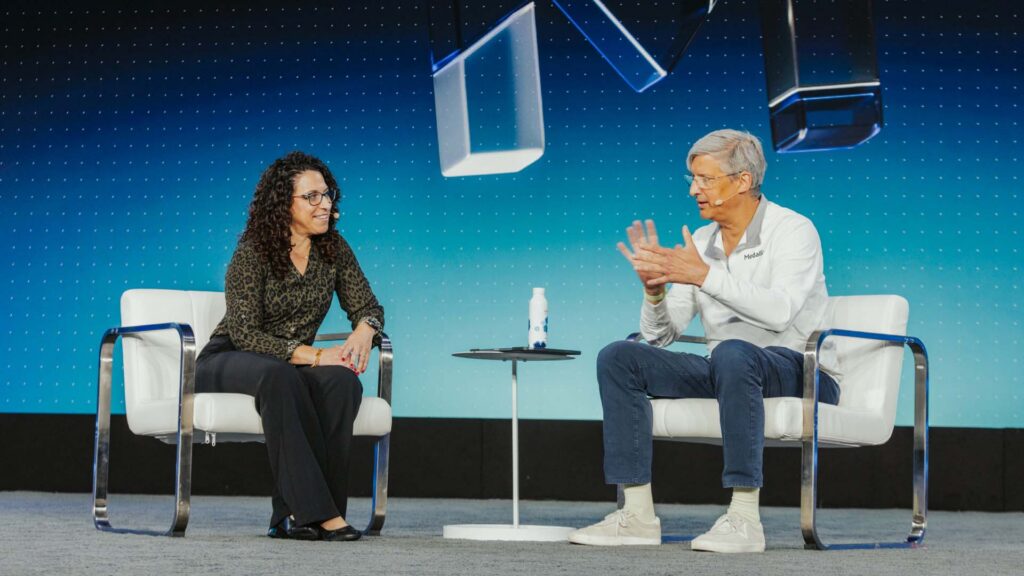
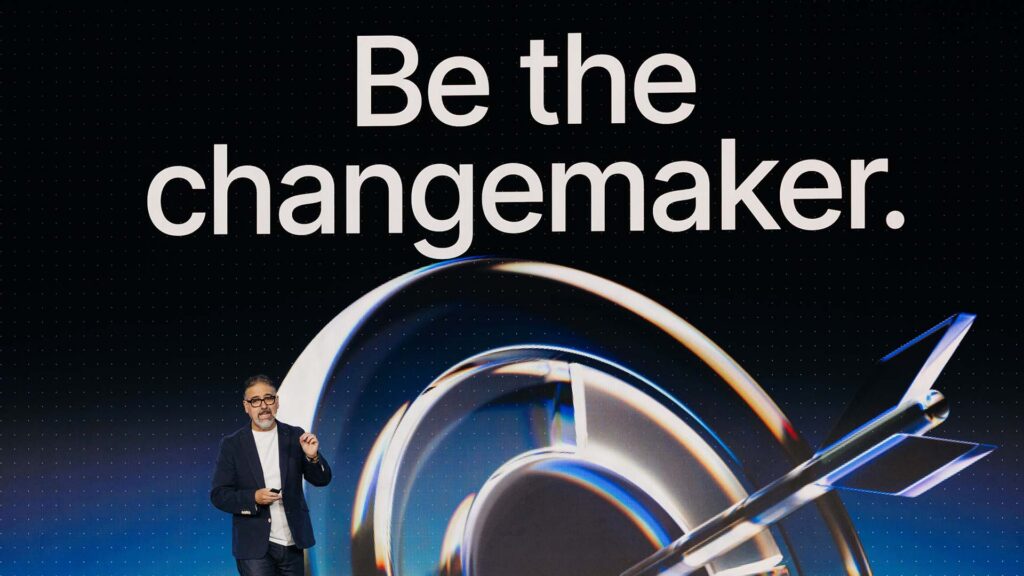
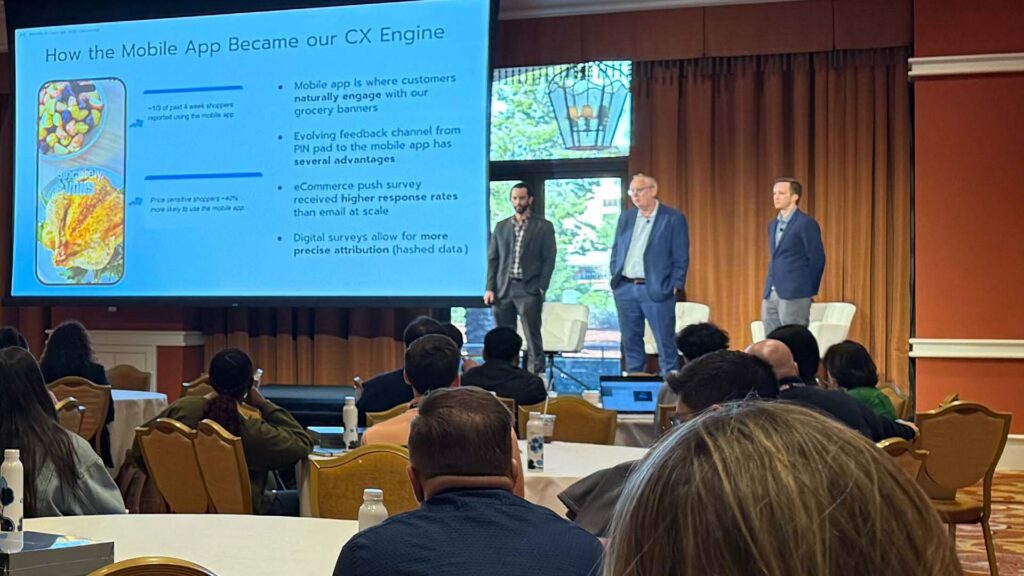
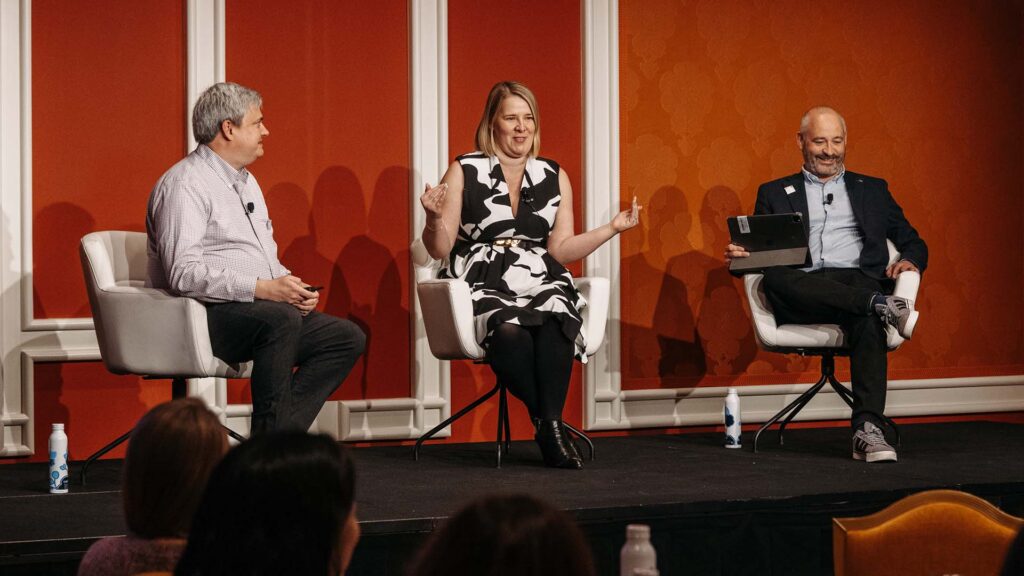
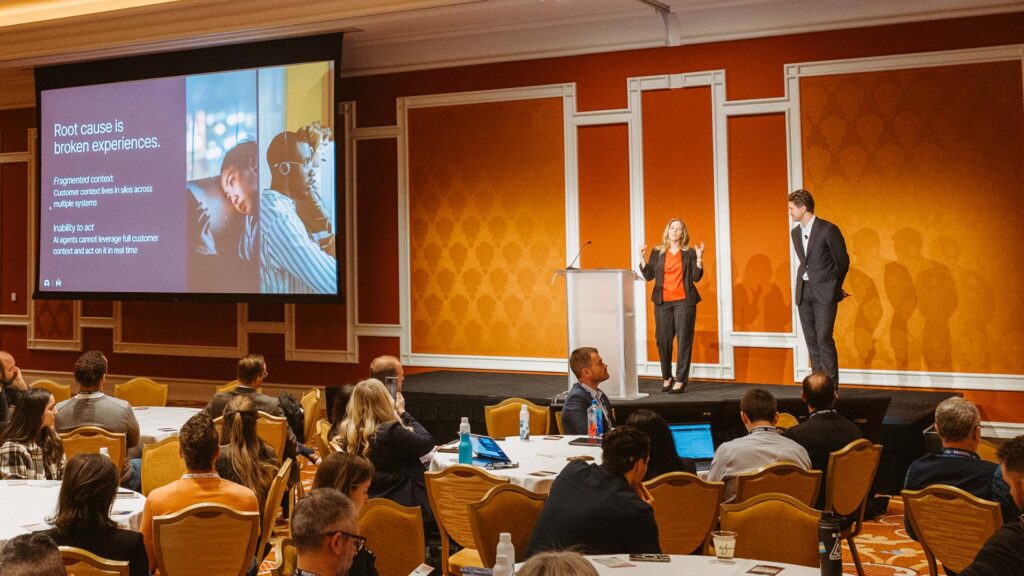
Alex Shim: [00:00:00] My name’s Alex Shim. I’m the Director of Customer Experience Strategy at Pacific Gas and Electric, or pg e for short. Anyone from California or Northern California here? Okay, we’ve got a party today. I want to talk a little bit about something that we’ve incorporated into our company called Customer at the Heart, and what that actually looks like in practice.
And for us, yes, it’s up there on a title slide. But it’s really, it’s not just a slogan, it’s really an operating discipline that we’re working by. And over the past few years, we’ve been shifting from collecting feedback to truly using it as a way to drive. Everyday improvements and it’s been really cool.
We’re calling these 10 outta 10 experiences. You’re gonna hear me say that a lot today. And I’m actually gonna walk you through what’s worked so far, what hasn’t, some things that we’re learning along the way, we’re about year three or four into our journey in this. So if you guys are thereabouts.
I’d love to benchmark with you. That’s one reason why we’re here as well this week. But also just to share the early stages of our journey in this, and not just creating a feedback program, but [00:01:00] also a way that we’re acting on that feedback. Would love to keep this an engaging dialogue too. So if you have any questions, feel free to raise your hand.
Otherwise I’ll try to save some time at the end as well. So today I don’t have a rigid agenda. All that being said, we’re here for about 45 minutes. The first thing that I wanna mention is the very notion that our customer expectations have evolved, right? And the very fact that pg e also needed to evolve as well.
And I’ll talk a little bit about that, what that means for in context for us. Second, we wanted to really build a real time view of customer and coworker feedback. And we created an engine to rebuild trust and delivering consistent 10 outta 10 experiences. Because of the scale and complexity of what we do, we realized we needed something that’s simple, like something that everyone can understand and have that have all of this resonate, right?
But third, none of this works without, true alignment of our clear goals. Committed teams getting everyone enrolled in this together. And then finally the last point I’ll make is that we’ve developed a way to run this as a [00:02:00] system. I will not take full credit for it. This is something that our entire company has done.
A lot of the work that we have done was to incorporate this into the customer. Not just the organization, but thinking about the pg e customer as well. So those are the main takeaways Before we jump deeper into our customer experience work, I think it’s important for you to, ground you in terms of who we are as a company, and the scale that we operate and why this is even a thing for us.
This thing being the customer experience. So pg e serves one of the largest territories we call it, or service areas. The United States. It’s a one big electric grid that covers about 70,000 square miles, basically just north of Los Angeles, all the way up to the Oregon border. The point of this slide is to demonstrate how complex of a system we run.
So if a customer tells us that something isn’t working, that’s impacting millions of people, not just customers, but people and lives, if you are familiar with the area that we serve, we have the privilege of serving all walks of life. And I truly mean it when I say that we’re talking the mighty Central [00:03:00] Valley, right?
That feeds the world. We have Silicon Valley, right in our backyard. We have the mountainous rural areas that where a lot of folks are retiring into, right? We just hosted the Super Bowl this past weekend. Pretty cool, right? It’s very complex and so the way we think about the customer is we gotta think about it in a way that’s incorporating like basically the entire society alongside the scale of that system.
What we’re also recognizing, and one of the reasons why we’re even in this. Is that the energy landscape seems to be changing quite a bit. It’s changing fast as well. I think that’s something to mention as well. Customers are adopting cleaner technologies, they’re electrifying more of their lives and they’re interacting with energy in very different ways.
Right Before, used to just be, as long as my lights turned on and my stove is good, I’m good, man. There’s no problem. If there was a problem with any of those two, then that’s when we have something to work on, right? But now we’re finding customers asking these interesting questions like, when is the right time to charge my car?
Knowing that the price of electricity, at least in our service area, it changes depending on the hour, right? And that seems [00:04:00] to be the direction that the world’s heading towards. Do I have enough battery storage when my power goes out, right? Can I use my car to power my home when my power’s out?
And then what if the power goes out and I need to take a shower? Some people might be down for that, but most people aren’t. I think. But the whole point of this is that people are starting to think about energy very differently, right? It’s more than just once a month when they pay their bill or when the power goes out.
It’s actually think it’s integrated now in everyone’s daily lives. And so that’s fundamentally changing. The relationship that we now have with our customers. We’ve been around for about a hundred years and this is really the first time we’re thinking, gosh, we gotta think about this differently and we gotta change the internal ways that we’re working a little bit differently as well.
So that’s been a really interesting journey for us. But then the other thing that’s really important for you guys to know is that in terms of context, expectations, they’ve been rising, right? But satisfaction has not always kept up to pace. That’s not super surprising. I think I’m preaching to the choir when I say that, but when customer’s needs change, but the systems and the processes and the experiences don’t keep up with that, [00:05:00] then that’s when we start seeing declining satisfaction.
On top of that, for us, if you guys know about our company. We’ve had some reputational challenges over the years, right? So if you pay attention to how we’ve shown up in the news, for example, since about 2018, you can see where the valleys correlate with some of the news articles that you might see when you look us up, it reminds me of those common adage.
It’s this, I don’t know who said it. Trust takes years to build, seconds to break, and forever to repair. It’s something that a coworker of mine shared with me a couple years ago, and it’s just stuck with me. But that is where our story begins, right? It’s acknowledging the gap that we have. So that we can now build a system to figure out how to regain customer’s truck trust, knowing that it takes forever to repair.
With all of this in mind, we needed a very clear answer and that answer was simple. It’s simply we gotta put customers at the heart of everything we do. It’s something that resonates, I think, with a lot of folks. Its especially our coworkers who aren’t used to like thinking about the customer in their everyday lives.
Once upon a time, I think around this time last year, [00:06:00] we got all of our senior executives in a room. I had the privilege of being able to attend those meetings. They were workshopping out a few outcome statements. This is one of those outcome statements. Our senior team loves to think about, what outcomes should we cause or drive?
And one of ’em was this. It’s that pg e will build customer trust by delivering quote, 10 out of 10 experiences. And every interaction and every word matters. My CEO really cares about every word mattering. So just to walk you through it, so to, to show you what I mean, pg e will build, not can build, will build.
Customer trust by delivering it’s in quotes, 10 out of 10. I think everyone understands generally what that means, right? Experiences in every interaction. Not just one at the end of the experience, but every interaction Sounds pretty obvious, but it’s a really powerful sentence that, we’ve even plastered it onto our walls around campus.
It’s really resonated with a lot of folks. And so that’s where the real work then becomes it comes to life. It’s how do you do this at a [00:07:00] scale where, I have 28,000 coworkers. They all have competing priorities. We have operational challenges. I mentioned that we serve all walks of life.
We have different business priorities. We have safety risk. Oh, by the way, we are an energy company, so we are heavily regulated, right? And so that’s another part of our business is that we are heavily regulated by multiple agencies in terms of what we can can’t do. So this is really an anchor.
So I’m gonna say this a lot. I’m gonna use the word 10 out of 10. You guys are gonna get annoyed by this. I think. We’ll see, this is where I come in. It’s to say. Where can we start to build trust by delivering those 10 outta 10 experiences? So I’m gonna share with you three operations, I’ll call it, or tactics of what we’ve experienced in starting that journey.
For us, our first step is really building the engine that makes that possible. So for us, that engine starts with customer feedback, right? But not just collecting it, it’s also the act of acting on it, if that makes sense. So it’s that discipline that we built for our coworkers to review it, understand it, [00:08:00] share it.
Ultimately act on it, right? Trust isn’t rebuilt through just a slogan like you gotta actually think about the day-to-day workings of our organization so that we can actually see the improvements in progress over time in support of our entire company. That’s where my team comes in, like we are a team of.
Fortunately, about 35 or so within this, within my organization, spanning market research to your traditional cx, VOC teams, to data scientists, data analysts, and we’re all working on building this engine so that we can support the entire company with customer insights and have them, even all the way down to the front line so that they can start to understand how to improve experiences.
They can feel empowered to do that. And again, we’re in the very early stages of this. The first order of business for us is to start that engine. My job, over the years, it’s turned into a coaching job. Which is pretty interesting. So for example, any operational review that I’ll attend, representing the customer experience, I’ll often ask the question, what is the work that you’re doing?
How is that impacting the customer experience? An obvious question to ask, right? [00:09:00] But then in a meeting that’s otherwise so focused on operational metrics. The question for me, I, again, I’m representing that customer in the room, is if you’re off target biometrics, then what is the impact of the customer?
Help me understand what that, how that’s working. So it’s been really fun to just engage with leaders and I think they’re starting to get it. I think they’re starting to get it, which is pretty, pretty cool. So for us, to build that engine, it starts and ends with customer feedback. And like many of you, we built a comprehensive voice of customer and voice of coworker system.
We affectionately call it CX squared or VOC squared. Although that name isn’t really resonating with our coworkers, they don’t really understand that. So we’re gonna have to work out that a little bit. This is where we begin to build that real time view, right? And it’s across all our major experiences.
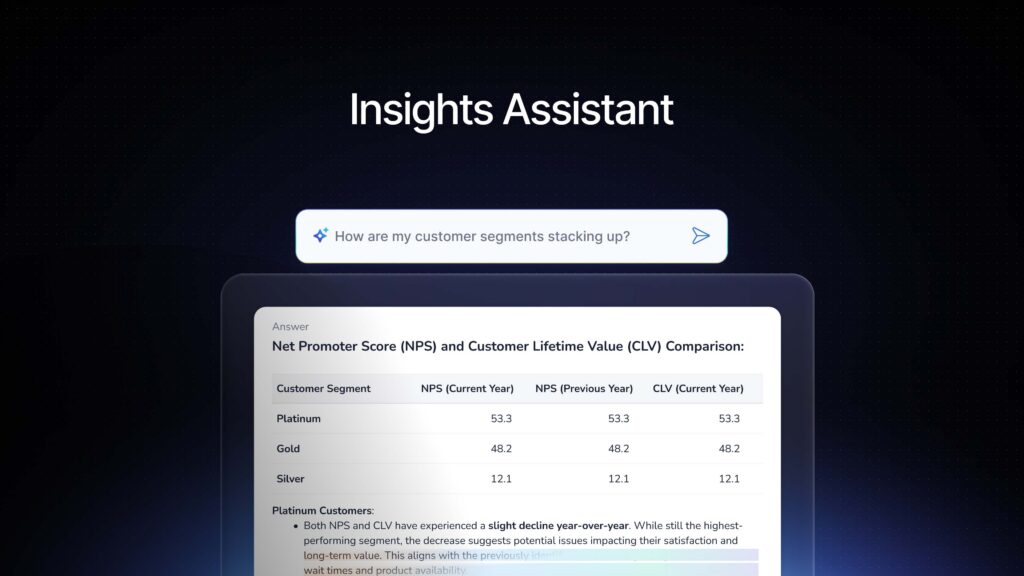
We don’t use an NPS for a variety of reasons, but we have an overall satisfaction. We measure the health of our various transactions. What we’re particularly excited about this year is that around mid-year, we’re gonna incorporate call center transcripts into our engine, all of course, in partnership with Medallia so that we could start to [00:10:00] turn away from signals eventually and of turn away from surveys rather, and look to signals that are, early indicators of good customer experiences.
And then the coworker part has been really interesting too. This is what we started this last year really as a way to migrate the existing coworker. Engagement surveys that we’ve had for a number of years. But how we’re starting to look at this program is, I’ll say selfishly as the CX guy, how might I understand the cultural insights throughout our organization that might lead to experience improvements?
So for example, if there’s a region or so where they’re underperforming on their operational metrics and the customers are complaining about that, I would love to dive into employee satisfaction for that particular region to see if there’s anything to gain from. If there’s anything cultural that we can learn from to then again, feed that into this engine that we have of building improvements in our experiences.
We get about 600,000 servers a year. That’s decent sample size, I think, for us to work with. And what’s really cool is that we’ve been able to share this data, of course, with our operational partners, we’d love more, but, we’ll see what we could do. [00:11:00] But that’s one reason why we’re we’re getting into the unstructured data space.
Listening doesn’t change anything unless you act on it. And so the next part of our engine was creating. A disciplined, repeatable process to act on customer feedback. At pg e, we use a pretty simple lean operating model. We do have this implemented across the entire organization, and it’s all centered around these four words.
Plan, do, check, act. Pretty straightforward, but this is really the backbone of how we improve customer experiences. When you do something, you should also check to see what you’ve done, to see if you need to do anything differently. That’s basically the gist of it, and the key here is also consistency.
We’re not looking for heroic. Customer experience improvements. We’re not looking for one-off things that we’ll just say, okay, great. Mission accomplished. The key here is consistency. We’ve been really inspired by manufacturing firms, Toyota kind of being the beacon of lean, but then also like aerospace industries we’ve been looking towards to see like what’s best practices we can learn.
If you represent those industries, come find me afterwards. Love to talk to you about that. This is the system by which we’re operating up. [00:12:00] So I’ll share with you very basic things that we’ve implemented. What I’m gonna share with you is not rocket science. I’ll first start by that, like we are a very process oriented company Before we get into anything that’s technology oriented, so the first thing that we’ve done, I’ll share with you is, believe it or not, visual management.
So it is literally the way that we’re displaying customer experience data, and sharing that across the company. The benefit of Lean having been implemented across the entire pg e organization is that we’re on, we’re now all speaking the same language. This is what the customer room looks like, right? All graphs at pg e look like this.
It’s pretty amazing and it all starts to look the same, but the whole idea around this is that anyone representing any part of the company can theoretically walk into the room where we’re doing work and look on the wall, which we do print out pieces on piece of paper from time to time, but they should be able to easily see where the issues are and what we’re doing to resolve those issues.
That’s the theory behind this, is that we’re all speaking the same visual management language, and the [00:13:00] opposite is true for me as well. Like I could go into our nuclear. Facilities and understand what they’re doing, like what their issues are and what they’re ultimately doing to improve whatever metrics that they’ve got.
We’re all speaking the same language. So this creates that foundational understanding, without having to explain in a lengthy way, what do these numbers mean, what not? You’ll see very clear Paretos, right? We use red green, we’ll throw in a little blue here and there, and we have a very systemized way of explaining performance.
So when you have that level of visual consistency across the organization. You don’t need long explanations. Like it’s pretty empowering. We’ve actually been able to invite a lot of partners to the meetings where we’re reviewing this stuff so that they can listen in and understand what’s going on with the customer organization.
I would say, and I’ve been with the company for more than 10 years before, that wasn’t the case. It was a lot of like closed door conversations that, that were had. Visual management is step one. Number two is. That once we standardize and visualize, we implemented what’s called [00:14:00] operating reviews, and it sounds exactly like what you’d think in our context.
We have a daily, weekly, monthly operating review, and it sounds exactly that. So we implemented this about four years ago, I’d say, but every day, my team included and other operational teams or across the company as well are reviewing feedback from the previous day. I know not rocket science, but that’s what’s happening, and then every day we’re trying to understand.
Is this a new issue? Is this something that we typically see? Is this something that we plan for? In some cases, that information gets distilled throughout the company. So for example, every morning I attend I report to the chief customer officer and I will report out any exceptions on what’s happened the day before.
And then he will go to his. So he reports to the president of our corporation. We’ll go to her operating review and report out any exceptions as well, representing that. So every single day from the bottom up, or I guess the front to back, we like to say we’re getting information to share upwards to the company.[00:15:00]
That’s been really cool. Big change management. I’ll be the first to admit that this was not something I wanted to do when we first implemented this about five years ago. But I’m also here to tell you that I’m a huge believer of this. It’s been really cool to, to get into this rhythm on a weekly basis.
We take a step back from the day to day and we go, okay, what trends are we seeing? Are we seeing patterns of something? Are we seeing seasonality? Are we seeing things that we plan for? Is that thing that we implemented on Monday actually working for us? That helps us save the month, we call it.
’cause we have metric targets and whatnot. And then on a monthly basis, we will actually take a step back further and ask ourselves, are we strategically aligned? Is everything that we’re doing working? Is there anywhere we need to pivot? Do we need to invest in new resources? Do we need to do problem solving?
It’s been really cool to see, how we’re talking about the monthly stuff. And actually, as I speak, I think our boss just concluded their monthly operating interview. And that’s the time when we discuss, what are the opportunities and where do we need to pivot, where we can. When you think about it this [00:16:00] way the kind of structure, when you apply consistently across the entire company, it really helps everyone keep focused, right?
Everyone, again, speaking the same language, moving with the same cadence. We’re not doing anything randomly. We’re not doing anything on a one-off basis to the best that we can. We’re all operating as one single unit. Again, 28,000 co-workers. The best thing we could do is at least move.
Along the same current intentionality is the key word here. We wanna be really intentional with this stuff. So once we’ve reviewed our customer feedback and we understand the patterns, the next step is the act phase, right? So plan, do, check, act. When you plan something, you do it. You then want to check to see if it’s working and if it’s not working, then you might want to do something called problem solving.
And that’s again, another language that we speak at our company where we’ll be engaging across the entire organization. We’ll start to bring in folks. That are relevant to the problems that we’re trying to solve. Go through a very standardized methodology by which we’re improving on our metrics. The one interesting thing that we’ve [00:17:00] learned along the way is that in this problem solving framework, the value that we’ve brought to the organization is to really characterize the problems from a customer’s perspective.
It’s to say it’s not an operational thing, it’s more of a, what is the customer experiencing? What problems are they encountering? How do we then enroll the entire company to solve that customer problem? Naturally, we found that’s what gets the, that’s what tends to break down silos, right? I think we heard it in the keynote that we don’t wanna operate independently as each organization or department within the company.
We instead want to figure out how to sew ourselves together and really solve the customer issues much more holistically. Really, those are the three things, right? Not very groundbreaking. What we found in the problem solving effort, I mentioned if you frame the problem from a customer’s issue, you naturally get yourself into an omni-channel opportunity.
I mentioned earlier that we are a very process driven company and before we get into any sort of solution, we’re still working on this. But in order for us to have an omni-channel perspective, we wanna be able to develop the process to actually act on [00:18:00] that. That makes sense. So we want to develop the process before we implement some sort of technology, or at least develop some sort of maturity on that.
And so that’s where the omnichannel opportunity. It helps us understand the customer’s problems. It also helps us solution out customer solutions. You’ll be surprised, if you are actually deliberate with that methodology, that sometimes those solutions can get creative. So that brings me to the second problem, right?
Or the second operation. It’s the frame, the problems and the data from the customer’s perspective. Again, I’ll show you one example of what that looked like in practice for us. Pretty straightforward, but surprisingly revealing example that we had to actually spend a lot of time on last year. Here we go.
Visual management. You guys already know where the issues are, right? I don’t even have to show the numbers here, but last year we launched a change to our website and on paper it looked simple. We basically redesigned it. We re-architected it from the ground up. We were very excited for it. But like all new UX changes or new websites, we expect a little bit of a dip in satisfaction for customers to get your users to get used to it.
And then we model in a little bit of an improvement. [00:19:00] So that was part of our planning. Now, when we checked though we saw the website score drop way more than it, than we thought it was, is going to, right? And so that naturally brought our curiosity to go, what the heck happened? And so when the website dropped, what we found was that customers were naturally shifting over to the IVR.
That led more volume to our phone system. And then those customers, the frustrated ones were also being transferred over to a live agent and those scores dropped as well. So from an omni-channel perspective, and we have these views individually in Medallia as well for us, but looking at it side by side has been really helpful for us to see what’s going on.
None of the teams did anything wrong by the way. This was it’s not one team that did that one thing. What we found though through this, is that there was this upstream issue. That caused a downstream negative experience across the customer without an omnichannel lens, or in other words, without looking at the experience the way a customer lives it, we wouldn’t have really seen the full story.
So let me look at this from an organizational standpoint. We’ll take a step back. Again, I’m gonna tie this to the keynote that we heard earlier today. So the [00:20:00] website team, we score, we see a score of zero, right? I am the website team. My online account’s not working. It’s not gonna let me log in. I just wanna pay my bill.
I’m gonna give you a zero. I’m now the IVR team. I wish I could have done this online. You need to streamline your phone payment system. We got a four, not a zero, but could be better, right? And then our live agent, I’m the call centers and I look at the feedback and I see the agent was very helpful, very knowledgeable, but your payment system needs work.
The score was an eight. When you think about each organization looking at each of these scores. Independently, they might develop their own strategies to improve that score. That is not necessarily a bad thing, right? Of course, you want to figure out how to improve those scores, but what we found in this example was more than just this website.
Issue. When you look at it from the customer’s perspective, and this is where journey mapping comes in, if you guys are familiar with that practice, it’s that most of our customers, they just wanted to pay their bill online. This is going back to our main moment of truth for us as a utility.
Most customers go to our website so that they can just pay their bill online. In this case, [00:21:00] the customer, for a variety of reasons, they couldn’t log in into their accounts, and so what was happening is that they were then. Figuring out how to resolve that issue. They’re going through our IVR and we have a pretty decent IVR I’ll say, but those customers who weren’t otherwise used to using the IVR were frustrated by that experience, and then they were.
Dialing, pressing the zeros or whatever they needed to do to reach a live agent. And so I’d say the difference here, when you look at it from a customer’s perspective, is that we have a payment problem. We don’t necessarily have a channels problem. And so what came outta the problem solving that we’ve done on this, in addition to the fixes to our website, is that we’ve actually thought through, how do we design the IVR for the frustrated user?
Instead of thinking about how do we design the IVR to be most efficient for the people who prefer to use the IVR. So it’s the website user going to the IVR and then going to live agent. We haven’t fully cracked that code. I’ll totally admit. We’re still in the beginning stages of it, but these conversations are starting to happen and so it’s been pretty, pretty cool to see.
Once we fixed [00:22:00] those problems upstream though, and it took a lot of work, this is what we saw and it was really cool. This is the check part, right? Plan, do check act, and the website transaction scores, they began to recover and we saw that also happen on the IVR and because fewer customers were being forced into a channel that they didn’t want to go, we saw also the live agent scores recovering.
This is the power of solving the right problem, right? Again, looking at it from the customer’s perspective. When you fix those upstream issues, those downstream experiences tend to get better. But this is also, and I’m highlighting, these three graphs because this is what our operating system, the engine that we built is designed to do.
It’s for us to understand, what issues should we catch early? How do we then incorporate that into our problem solving? And then are we actually validating that those changes are actually working for us? And the good news story is that. As you’ve seen, we’ve recovered since then, which is pretty cool.
But it’s also just as important from our perspective, not just to say, great, we’ve recovered. Let’s move [00:23:00] on. It’s also to share them. What I found success in doing this is, we’ve had a lot of folks, like a lot of folks doing heads down work in this. But when you show them the impact of the work that they’re doing on the customer’s experiences and how customers are reacting to that’s a very powerful tool as well.
It becomes fuel for that team to even. Bring more curiosity into the conversation and ask, what else could we do? What else could we look for to improve customer experiences? The cool thing is that, we’ve had organizations like our IT partners really important folks in delivering something like a website, and they’ve been engaged this whole time in delivering that website.
But the conversation has also shifted a little bit where the IT team now, when in partnership with us, they’re starting to think about. How are our systems actually impacting the customer experience? That’s a conversation that they’re having every single day, which is pretty cool. So the power of sharing those results becomes really important.
So after going through that example, the third area, this is where everything comes back together, is [00:24:00] that our North star, we’re still delivering 10 outta 10 experiences in every interaction. We built the engine and the discipline for coworkers to review and act on feedback consistently.
We’ve also made sure that the data is democratized. It’s viewed through the customer’s perspective, but none of this works without the organization actually aligning themselves around it. And so this is where the cultural parts of a CX program comes into play, right? It’s the engine by which you’re getting customer feedback and acting upon it, but you’re also using what you’re learning from that engine.
Instilling that into the everyday working culture of our company. And so in my experience, the cultural components of the customer experience, it’s often overlooked. And I’ll say that especially within an industry that we work in where it’s otherwise very operationally focused. Risk focused, safety focused, those are all really important things.
But to incorporate the cultural element of this has been, has been a fun project to work on. It’s a big part of our senior team’s vision, which is really, we’re very fortunate to have that executive level buy-in from the get go. But what [00:25:00] we found is what’s the how and the what to the why, right? In terms of our culture, what we care a lot a lot about here is like what mindset do we want to do we wanna develop when it comes to delivering 10 outta 10 experiences, and how do we do that across the entire organization?
So we talk about our operating system, right? And what happens when you look across the channels? When you zoom out for a moment and you look at what our customers, and quite frankly our coworkers are actually sharing with us, we see, I mentioned we get about 600,000 survey responses a year or so.
When you look across all those feedback points, it’s pretty obvious where the pain points are. For the detractors, the zeros through sixes. On one hand you’ve got a. Feedback, talking about how we’re not the best at communicating, or perhaps there are cases where we’re providing inaccurate information, especially during times of high anxiety.
I mentioned, when something goes wrong, it impacts millions of people. When there’s an outage and when customers don’t get communications from us, that’s a big, that’s a big problem, right? So we see that a lot in our feedback. The same takeaways from the outage experience can also be applied to when a customer needs their water [00:26:00] heater, relit.
By a field service technician. Very different scenario. But again, if we’re not communicating about when we’re showing up, if we’re not providing accurate time windows of when we’re gonna show up, it’s the same takeaways. And on the other hand, we see the exact opposite. True as well. Timely, clear communications and follow ups, accurate information, complete resolution.
These are all characteristics that we could all live by, right? And so what’s powerful is that, again, I mentioned our coworkers are also describing these. To be true as well. They know what good looks like and it’s been really fun to validate that with the data that we’ve been analyzing and so far, we have millions of data points now to basically conclude that this is basically what we wanna do in terms of delivering those 10 out of 10 experiences.
So for me as a CX leader, the question more becomes how do we take these insights and scale it across the organization, but not do it in a way that requires like new surveys or new operations. We generally know what these principles are. How do we get everyone to think in this way? How do we get everyone to think about timely, [00:27:00] clear communications in the everyday processes that we do?
We have so many different teams and departments and so many different support organizations that work on very different things throughout the company. So to scale that work, you have to really ingrain that into the culture of everything that we’re doing. One of the things that we also like to say too is, this might all apply to the frontline coworkers that we have, the ones that are out in the field, but this could also very well apply to our supporting coworkers as well.
The back office as we call it. So it’s almost the question that we tend to ask is, how are you serving? Your coworkers who are serving the customer, right? And if you ask that question, you think about it, the answers are pretty much the same thing, right? You think about the different handoffs that occur, maybe the reports that you’re expected from another department that helps you do your work.
These things still apply, right? And so it becomes this cultural movement. When we say delivering a 10 out of 10 experience in every interaction, this is what we mean is that we wanna maximize this type of thinking throughout the company. Some of the things that we’ve done in this, [00:28:00] with this data is we’re starting to apply this through different mediums.
For example, every day what you’re seeing on the left is a report that we export out of our Medallia platform. It is one of our top metrics, our transaction score, and every day about most of our coworkers, I’ll say, gets a report like this in their inbox. We’re not expecting to know every single detail on this.
It is a way for us to all center ourselves around how customers are experiencing this. Ideally, one day we’ll have everyone understand what this report means, again, we’re in the early stages of this. Included in that is what we’re calling a daily customer voice. Incorporating the elements of those 10 outta 10 experiences into actual messages that we’re sharing with our coworkers.
We’re actually asking most of our coworkers to review this in their daily operating reviews before they start the workday. For example, the message for this particular day was that Victor in Fresno, the mighty Central Valley, was pleased with the service that he received when he called to start his service with us.
It truly felt like I [00:29:00] was speaking with family. I appreciate her patience and was pleased having her assist me today. And the question that we also ask alongside this is, what do you do to create a personal connection with your customer? And so we are here now asking our senior leadership team to reflect on this customer moment and provide their perspectives of this.
We’re also, because everyone’s getting this, asking every organization this question and maybe thinking about how they’re creating a personal connection with their customer. So this is the mindset again, that we’re trying to develop. And one of the ways, one of the tactics that we’re. Using the data that we’re learning from the 10 out of 10 experience delivery.
We’re also looking to incorporate this into leadership competencies. There’s a form of coworker recognition that we’ve started to experiment with. And then we are obviously very much incorporating these into corporate comms as well, and highlighting good examples of good customer experiences. So again, the engine that we built that develops those insights.
We’re acting upon those. We’re measuring the results of them. We’re pivoting where we need to, and [00:30:00] then all the good news stuff and opportunity areas, we can then share that across the company and have everyone start thinking about. How else can I deliver a 10 out of 10 experience? So that’s been really great.
Not everyone understands why we’re trying to do this, right? So if you think about our operational partners we do get a lot of great questions about, Hey, how should I incorporate this into my daily work? And so a lot of the conversations that my team and I have with these operational folks is, maybe some practical application examples.
Hey, maybe instead of thinking about a personal connection with their customer, think about a personal connection that you’re making with a coworker. Instead in what ways or can we deliver a 10 out of 10 experience with our coworkers? So we’re constantly having this kind of dialogue to figure out what, what might resonate with our coworkers, and hopefully one day we’ll get everyone to really stay in sync with that.
That’s really what I have to share with you guys, and I’ll close with what I started with. These are the same four takeaways, right? It’s that we’ve evolved with our customers. We’re trying to learn to evolve with our customers because their expectations are changing. [00:31:00] We have a real time view now. Of customer and coworker feedback.
We’re becoming a customer centered organization, but it really requires a lot of alignment, not just culturally like what I mentioned, but also, going back to the plan, do check, act, and naturally enrolling all the coworkers that are involved with delivering on those experiences. And then if you do it all right, it’s a repeatable system that just feels like a natural order of operations.
In the keynote this morning it was mentioned that. Continuous improvement seems like to be a theme across throughout the week. And this is exactly what it is that we’ve incorporated this element of continuous improvement into our customer experience practice, so that we’re always evolving.
With that, thank you for your time. I’ll pause for any questions.
Audience Question 1: Do you report on the NPS scores with your customers, to your colleagues as well? Are you reporting that as well?
Alex Shim: With our customers?
Audience Question 1: With your colleagues. I’m sorry, the internal department. So I’m reporting that as well.
Alex Shim: Yeah, we
Audience Question 1: are. So everyone has a line of sight into that.
Alex Shim: They do, [00:32:00] yeah.
Audience Question 1: Feedback.
Alex Shim: Yeah. Our equivalent of the NPS, we use the oat scale. ‘Cause we made a conscious decision. One, our mass market can’t choose their energy provider in many ways. And then the other reason we decided to go with a zero to 10 scale. ’cause it’s easier to explain that than a, you’re a negative 43, but we’re still learning.
Audience Question 2: Thank you for highlighting the fact that 90% of our job is not a tech stack that we’re using, but the internal changes and the change management. And the influence that it takes to get actually things done. How did you, in, in terms of your rollout did you start small?
Did you beta test it with one organization? Was it a CEO initiative? Like how did you go about the implementation?
Alex Shim: Are you asking about the process? Like this whole thing
Audience Question 1: or
Audience Question 2: the whole, yeah, the, just the concept that we’re gonna do this differently. Was it grassroots, top down?
Just how did that roll out?
Alex Shim: A little bit of both. We were keeping track of all that stuff offline and we just were starting to develop a process to act on the feedback that we were getting. And then once the Medallia partnership came into play, that’s when we really [00:33:00] realized, oh, we gotta start to bring this to scale.
We didn’t roll out everything at once. We had. We started with just a couple, I’d say every quarter, and eventually turned into this portfolio. And along the way we were learning to develop that process muscle. So we started with the teams that were representing the survey responses, and then we figured out how to get this thing out to scale.
Then we just like dove into the deep end. Last year, this metric, this customer transaction metrics actually became part of our compensation portfolio. And we went into it going, all right, here we go. Let’s figure out how this works for us. And yeah, developing that, that lean muscle for us, as we call it, we were okay with not being perfect along the way.
That’s actually a really good point that you’re asking. It’s okay to be wrong. It’s okay to be read. The whole name of the game here is to learn. And to figure out how to be better every single day. In the very beginning of this, we had no idea what we were doing. We were like, okay, let’s see what we could do with these surveys.
Once you dive into the data and then you start to understand trends, it becomes a lot more easy to [00:34:00] explain what to do. So over time, once we started again sharing the results of like how things have improved that’s when we started getting a lot more enrollment.
Audience Question 2: Thank you so much.