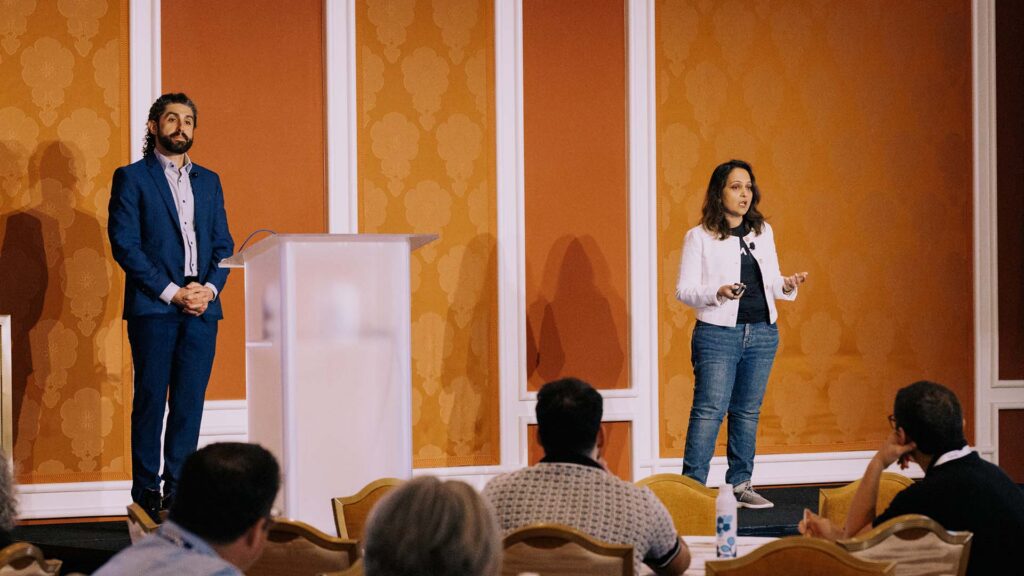
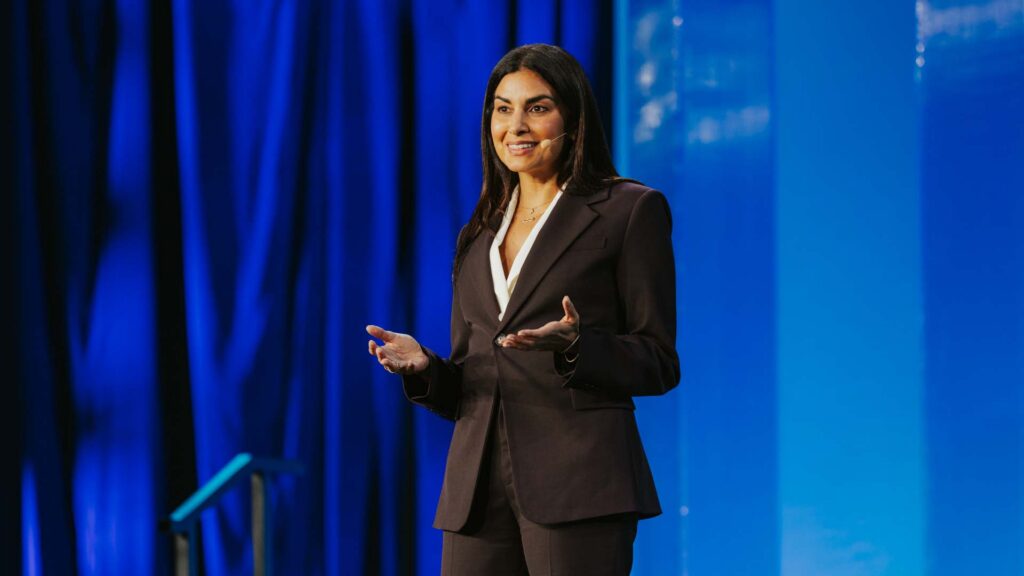
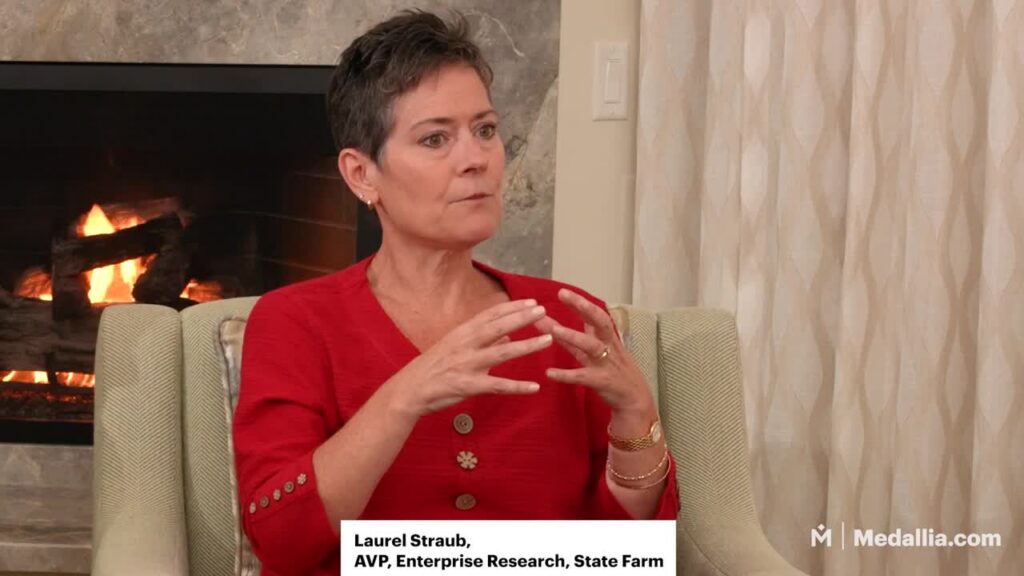
Courtney Shealy: [00:00:00] My name is Courtney Shealy. I am an SVP here at Medallia, and I run our global presales and strategy organization, which means I get to play with our software. I get to make sure I can walk a day in the life of you as users, and we get to make sure that we’re innovating and creating greater value, right?
So it’s a lot of fun for me. I love the role once I evolved to it, as you heard on main stage this morning, right? Our mission is to make sure that you as customers can listen broadly. Start to create better experiences for your customers by meeting them where they choose to give you feedback as frequently as they wish, but making sure that you can create proper omnichannel business transformation opportunities for your organization, but also most importantly for your consumers.
’cause that’s what keeps them coming back we all know that insights and dashboards alone are not going to give you. The power that you need to create some of this change, right? [00:01:00] So one of the things that we are trying to make sure that Medallia as a organization, our platform, it’s connected to create greater action.
And that’s one of the things we’re here to talk about today in our partnership with Ada, right? So let’s talk about the unfortunate truth, right? We’ve all been there, loyal customers, we don’t really understand who they are. What they really like. Bad CX is everywhere. It’s not a, it’s not something we choose, right?
We wanna create a great experience. We want to make sure that we can lead with and we understand who our customers are.
We want to know that we as CX leaders are listening and doing the right thing for our customers. We’re not just assuming because we looked at this much of the information. Make that our North Star.
Instead, we’re willing to take the risk to look across and create a greater connection, right? We don’t want to assume that when we engage with you that we are listening to one signal, but have no idea who you are, really. The next time you come to me in a different channel, a [00:02:00] different signal, you choose that, right?
We wanna make sure that our customers don’t have to repeat themselves, that we actually know who Courtney is, who Mike is.
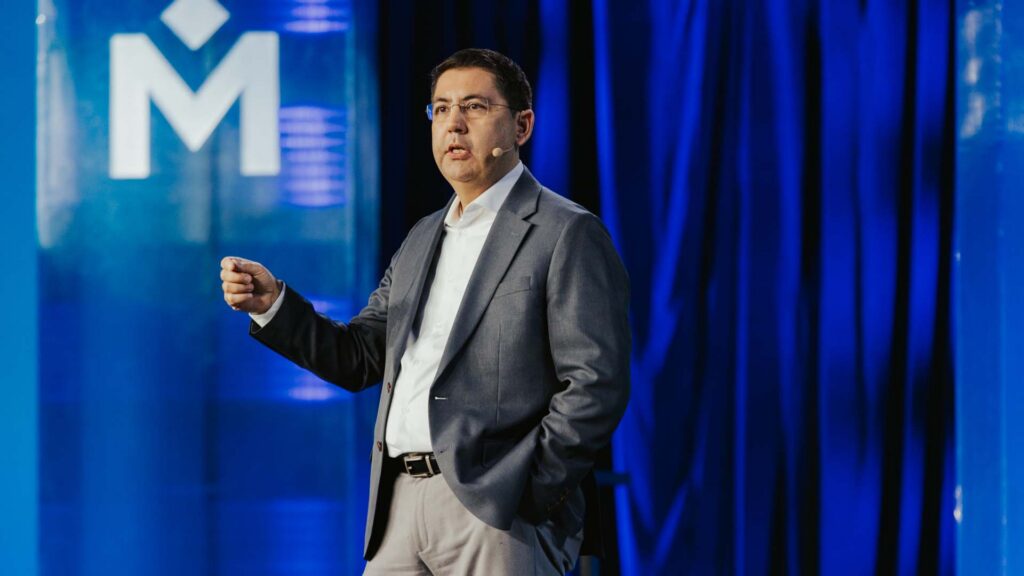
Mike Murchison: That’s right. I think there’s nothing more frustrating than calling a company who you’ve been a customer for decades, and them picking up the phone and having no idea who you are.
Maybe there actually is something more frustrating than that. It’s when like you’re in dire straits and you really actually need to pick of the phone and know who you are. But that, I think, is so reflective of the world that we’re now living in. We’re now living in a world where we’re no longer intelligence constrained.
I say that from a perspective of building at the frontier of AI and CX for almost a decade. We are now very much context constrained, and that’s what the focus of our partnership is. We’re gonna talk a lot about what happens when you have an abundance of intelligence, but fragmented context.
What happens when you can bridge that divide? What kind of new experiences can be a mod?
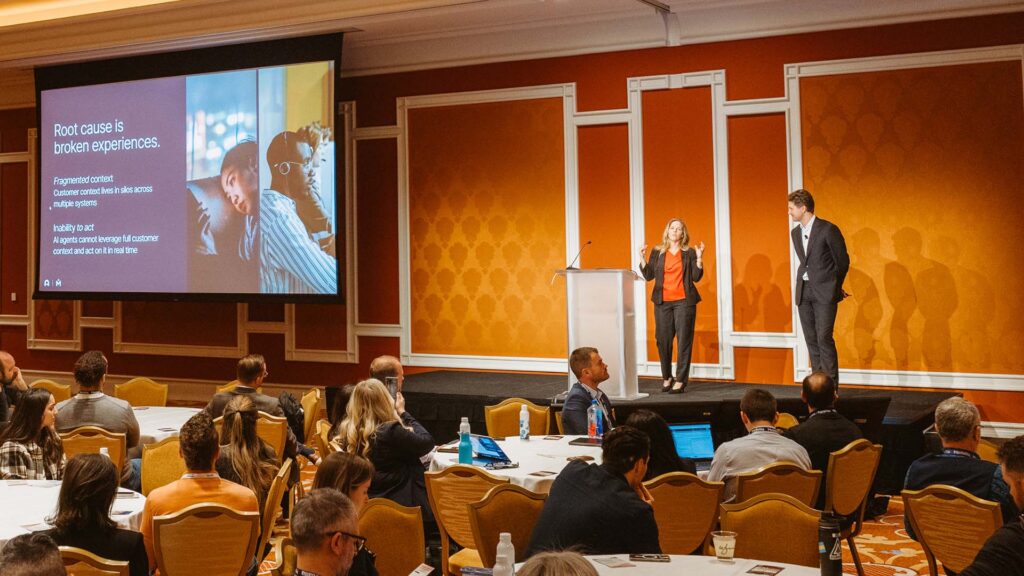
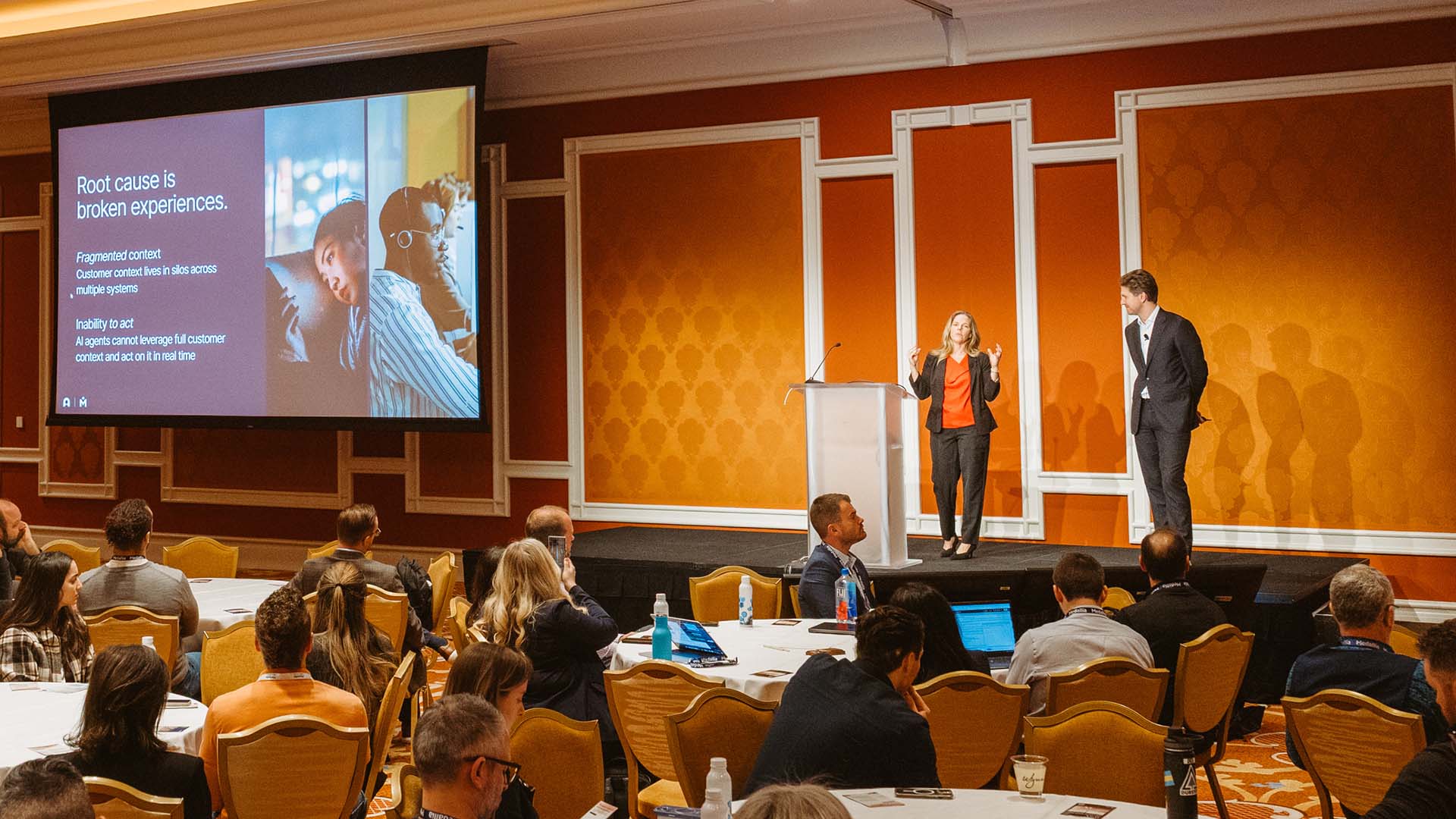
Courtney Shealy: The root cause of broken CX really is broken experiences, [00:03:00] right? It’s fragmented context. Do you understand the feedback they’ve given you? Do you understand the frequency of what they’ve given you? That feedback, right?
And then ultimately, that feedback is laced with a greater connection, right? So what emotions did it elicit? What what type of frustration did it create? Or in some cases, right? We always talk about the negative. Sometimes it can be generated a lot of excitement, a lot of buzz, right? Marketing people today, they’re constantly saying, let me lead with the positive.
And they get real people speaking on my behalf ’cause I want to amplify that, right? But if you start to take a look at the context and you’re not, you’re only looking at the context over here on the left versus the right, there’s a huge gap in understanding of what the entire customer base, the entire customer journey is.
We wanna help create and help close that gap. But understanding the context is just part of the equation, right? It’s taking that context is gonna lead you to the right action. And the inability to act is one of the reasons we’re [00:04:00] establishing this partnership.
Mike Murchison: And this is true not only in the sort of human first experiences that, that we’re all familiar with.
It’s also true in the AI first experiences that I know we’ve all had in the room as well. There’s nothing more frustrating than speaking to a dumb bot. That doesn’t know who you are. There’s also nothing more frustrating than engaging with a much more sophisticated agent, AI agent that it takes a bunch of useless action on your behalf that increasingly can be quite dangerous actually.
And many of, you’re probably looking at some of these agents that are now increasingly automating longer horizon, more and more complex tasks that’s dangerous unless there’s the right context powering the that task automation.
Courtney Shealy: So let’s think about what do we mean when we say context? To action gap where I choose to give you my information and establishing who I am, if you will.
We don’t want you to miss revenue opportunities because of something that I just said or an engagement opportunity I just had. We want you to understand that I’m I wanna be loyal, right? I am a creature of habit person. I’ll just put that out there. [00:05:00] So I like steady Eddie. I know which grocery store I wanna go to for this.
I know which grocery store I wanna go food for that. I’m a frequent flyer on a certain airline. I want the perks, but what I don’t wanna do is show up and be like, do you know who I am? I don’t wanna show up and be that person.
Mike Murchison: I’m Courtney.
Courtney Shealy: Yeah, I, but it’s irrelevant to most all these people I just mentioned, but at the same time.
We want to make sure that context gap, not only is it the relationship that you’re gonna have with your customer and your consumer, it’s also you as an organization. Connect me to my revenue, connect me to my cost to serve. Where do I actually wanna spend money to create better experiences and or innovate my organization?
The reality is a lot of CX programs are stalled and they’re focused on serving part of the population who gave you feedback in a certain construct, and we wanna better connect you to that. And we also want to allow for new investments in things like ai, right? Can you get the right return? Is that AI something that’s defensible and trustworthy and learning in this continuous loop?
Mike Murchison: That’s right. I think that [00:06:00] this model should hopefully be useful. If you look at your own organizations and you look it through a model of understanding all your contacts and understanding all the action that you’re taking, you’ll probably find there’s a quite a big divide between those, the, those two lists.
We’re gonna talk a little bit more about what it’s like when you bring those things together and they start to inform one another, and as Courtney’s saying, when those in, when those inform each other, three core problems are solved. The missed revenue opportunity that we all know is probably represents hundreds of billions of dollars in missed revenue in North America alone associated with poor CX starts to be solved.
Some of the high cost to serve you’re experiencing where you have humans performing tasks that really AI can perform on their behalf far more efficiently today. Empowering them to take much more sophisticated action, more empathic action that goes away. And then as Courtney’s saying, the idea that your CX progress is being held back, that starts to be something that’s overcome.
I think what we’re seeing is that. In this new world, it’s not sufficient to set a customer experience goal. [00:07:00] That’s just static. The leading organizations are setting growth rate goals, CX improvement goals. They’re optimizing for their rate of improvement, not just a specific target.
Courtney Shealy: The one thing I’ll highlight too, to add on to that, right? Me has spent years that create establishing value C-Suite to frontline. We all know that the CC suite needs and the frontline needs, there’s a huge context gap in there as well. So one of the things that we wanna make sure, like medal has been in the business is making sure we get the right information to the right people in the right way.
Point one. We’ve been doing that for years and we can do it, but now it’s, what does the C-suite need to learn in frequency? What does the frontline need to learn in frequency? And that’s one of the things and that closing that context gap, one of the reasons why I wanna introduce Mike, CEO of Ada and how he’s gonna walk us through.
We’re gonna spend some time walking through not only what Ada is. The value that they can bring, but also how in partnership with a lot of our joint customers, what our go [00:08:00] market plan might be.
Mike Murchison: I’m the founder and co-founder and CEO of Ada, and I spent a lot of time as a human customer service agent myself.
Part of the reason we started Ada almost 10, 10 years ago was because the previous business that we were growing and was growing quite quickly encountered a customer service problem. We couldn’t. Scale our customer service operations in line with our growth. And we felt this gap. We felt this context to action gap in our own day-to-day.
We built the first version of Ada to. Improve our own experience as human agents, and we got so good at improving our own experience that we let Ada run. We didn’t get fired from our jobs and we knew Ada was working well enough. Since then, we’ve been at the forefront of empowering organizations to deploy AI agents.
That increasingly not only meet, but are increasingly outperforming their human customer service counterparts. So we are an ag agentic customer experience company that powers customer facing agents at scale. And our core mission underpinning all of this that we are very much aligned with Medal on is the core mission of [00:09:00] making customer experience extraordinary for everyone.
We really believe that we’re on the cusp of powering experiences for brands that aren’t just. Great. It’s not just about democratizing the best experiences in your day-to-day for everyone, but actually unlock a new level of experience that weren’t possible before. And that, I think, is what’s so exciting about being a CX leader today, is that we’re entering an era of extreme creativity.
I genuinely cannot wait, especially over the next couple of days to learn more about what you all want to build because it’s it, the reward on being creative right now has never been higher ahead. A little bit of just background on who we are and what we do. We power the customer facing AI experiences for hundreds of enterprise brands around the world.
Our customers collectively serve about 16% of the world’s population, and now because of our partnership with Medallia, the agents that we are powering. They are unlocking new levels of capability. That’s because of the rich context that Medallia is affording Ada powered agents and the feedback loop that exists between those agents and the [00:10:00] Medallia intelligence infrastructure.
Courtney Shealy: One of the things that I wanna call out is that. The idea of something that’s agentic, right? It starts out as we can deploy it digitally. We can deploy it to help with calls and automation from that perspective. But when you start thinking about the power of what this is now, right? And where it’s evolving, like for some of these customers that you have listed here, you start thinking about ai.
Shouldn’t be feared. And instead it’s a living and breathing thing that’s going to be growing with us, which is why the connection, the power between us, what you established there was like, it’s gonna be learning. Like we are listening to all of these signals and we’re gonna help train and teach inside of your particular organization to make sure that it’s not a generic point of view, of generic playbook of how to move forward.
Mike Murchison: Thanks for building on that. Coordinator. I think a key thing here that we’re learning in market. Every week at this point is that the businesses who are powering the best customer facing AI experiences, they are managing their own AI agents. They [00:11:00] are new teams that are responsible for the performance of their AI agents, and they are day in, day out.
Observing the performance of those AI agents and coaching those agents to improve. And it’s never been easier to improve those agents than now because of the rich context that those agents now have across your entire customer journey. That the signals of being able to learn across the whole journey is really what, what is unlocking a new level of experience here?
I think so many of the previous generations of AI lacked so much context. They were constrained to a single channel and they couldn’t, they weren’t very capable. But that’s changing really by the day.
Courtney Shealy: So before, on the left, we’ve established that a lot of times the journey and the context of that journey and what’s happen is fragmented, we’re a little blind, and it was also difficult to take in all of that information and make sense of it.
Where we want to go in this partnership is can we be context aware? Can I create an autonomous loop and or action that sort of services and does the right thing for the right [00:12:00] customer at the right time? You may have different loyalty tiers, you may have different customer segments and things of that nature and the right action.
Something that you’re chasing, you’re trying to keep up with what’s the right action for Mike versus Courtney, for example. And so in the middle Medallia and Ada in this loop, but it is a continuous loop of information of learning. So not only is medal taking in all those signals, right?
And we’re gonna talk to an actual customer example here in a minute. We’re taking in those signals, we’re enriching those signals, but then we’re passing that through to create the right agentic opportunities. And then we’re taking the output of that agentic opportunity to make sure it gets smarter and better over time.
So that’s the connection, the before and after that we’re trying to establish.
Mike Murchison: That’s right. And part of what’s powerful about this is that many of you have deployed Medallia. You’ve deployed Medallia in all channels. So you’re capturing signals across your entire customer journey. But you’re much earlier in your ai oppor your AI journey.
You’re deploying an agent, perhaps just one channel, your SMS or live chat or the phone to start. But if you can equip that agent with the same [00:13:00] context from across the whole journey, new experiences are possible. What we call that is a system of context, married with a system of Agent cx.
Courtney Shealy: I’m gonna let Mike introduce the customer, Ipsy with in detail.
But one of the things I want you to take a look at in this particular customer, and I’m gonna wrap up with this too, is to think of what this customer has done based on their. Own organization and their organizational structure and how they have deployed both Medallia and Ada and how we’re starting to create an even stronger story as a better together.
And so now a vision, this is your company, but let’s start with, I think these are some really exciting stats from
Mike Murchison: Yeah, absolutely. Great call. Courtney Ipsy, you may be familiar with, they’re a large e-commerce brand. They own multiple brands actually, but 20 million users. So at scale, large e-commerce organization, and together.
We have catalyzed their first core AI investment. And that started in their care organization where we empowered a team that was made up of former contact center reps who [00:14:00] became part of an agentic customer experience team. They’re now called a CX managers. These a CX manager’s responsibility is to.
Make their AI agent better, and what you’ll see is that the results of them actively managing as AI agent when it’s equipped with the context that Medallia can afford it start to become pretty powerful and produce some business outcomes that weren’t possible before. A few that stand out their AI agent has increased just in the last four months alone.
Its resolution rate. By 60%, it’s now autonomously resolving more than half of all conversations. It’s powering and it’s doing so at a higher level of CSAT than ever before. 41% increase in csat.
Courtney Shealy: When you start thinking about like Medallia’s journey with Ipsy, it was about first making sure that they could listen to more than just, so it was bringing in calls, it was unifying, chat conversations with the surveys, right? The more information you have from those calls and chats you could actually have better surveys, better moments to ask a question, be [00:15:00] more targeted in the results you’re getting back, and then does volume matter as much as am I’m getting the right questions answered by the right groups of people in order to help me ascertain what my next.
Step or action should be, right? So we focused on how do we, this is a digital retailer, right? This is not someone that has a brick and mortar and the relationship is predominantly online mobile app until they have to call and ask for help. So how do you get, engage with them to get the right type of feedback?
So we establish a plan so they could increase. Their feedback rates, right? So 20% lifted there, but also thinking about how do I coach when they do reach out to me? I did have a customer, and actually this is a, a story, it was a retailer as well, where they had said to me, if they have to call me, I’ve already failed them.
So I’m gonna spend as much time as I can making sure I support their needs. So when you start thinking through, I want that white glove, I want that service. But then at the other times, like Courtney doesn’t wanna make, have a relationship with an agent, I actually would [00:16:00] just want to get. Accomplished what I’ve called my time is precious too.
So there’s this balance that you all, as CX leaders and organizations are gonna have to have, and you start thinking through, the more I listen, the more I can understand. But in order to understand, I really need to enrich to look for those emotional triggers, the right moments of empathy, the right moments of the types of actions I should take.
And that’s where, as we’ve been partnering together and thinking through what we can build is. I want a playbook for this group of people. I want a playbook for those that are mobile first. Almost always I wanna make sure that I meet the customer where they are. And when Courtney logs in, you know who I am.
And you’ve been fed the right information. I see you just shopped with us last week. How’s the sweater? Those types of things in This takes makeup, but
Mike Murchison: That’s right. And I think what’s been really exciting in particular about Ipsy is they’re a great example of a company that. It doesn’t really like case studies.
And what I mean by that is they don’t care about achieving a particular fixed goal. These are the [00:17:00] results in the last four months. And so for them, the expectation is that they are continuously improving, that these get much better next month That’s been enabled because of how they’ve operationalized AI in the, in their company.
We’ll talk more about that in a second. The second point is the way that they’ve done that. Has been very much married. Courtney mentioned the importance of being aligned top down in your, within your company on your initiatives. This effort has really catalyzed a wider AI transformation in the company.
The AI care initiative is, which what it started at is now become the new sort of operating muscle within the business. It’s starting as it expands across the entire journey.
Courtney Shealy: Ipsy first, right? Their approach was thinking. I need to make sure I look across the entire journey, which means I need to think about all these different channels and those moments of opportunity.
That customers gave me data that’s going to matter. So that signal could have been a feedback that signal could be, I’m looking for this, I want this. It’s, again, I wanna emphasize it’s not always about the negative. Like it’s not always a breakdown. It could be a missed opportunity of something to sell me, to create a different type of relationship [00:18:00] with me.
So context. Key so that we understand the entire journey. Then we think about the action that’s going to matter, right? So those stats that you saw, imagine that’s your company, what stats are gonna matter to you, and those initiatives are constantly changing, right? I know you know, sales 1 0 1 is to start thinking about, or you as a leader is probably thinking through what initiatives have been put.
At the top and how does my role contribute to probably the three different buckets that were laid out for this year. Making sure that you can listen with that intent so that you have a faster proven impact. And part of the investment in AI that we’ve made right, is how do I get you to those insights faster.
So you probably saw on main stage a lot of things that Fabrice was introducing. How can I get you there faster? How can I use AI coupled with the information that we’ve been funneled through and that we’ve enriched? Can I empower everyone through that whole contextual chain with the right information?
Then I can start to optimize of what [00:19:00] can I take out of their day to day. So that they can lean forward. I’m doing that day in and day out with my own team to say, it’s no longer old school. Go read through all these things, take notes, and then distill it. Nope, we’re gonna throw it all into ai. We’re gonna create the right story.
And then when I meet with you all as customers, let me give you some real examples, path options based on the constraints that you’re in. That’s the idea behind an agentic playbook as well, right? So let me create the right action in motion based on who you are in order to get the result and the outcome that matters.
Mike Murchison: That’s right. And based on who you are requires having the context across the whole journey. So I like a foundational investment is being able to know what your customers are doing everywhere. Otherwise, the ability to act when it matters most isn’t possible. Should we talk a little bit about how this actually works?
Courtney Shealy: We should. I think if the number one initiative, right?
Mike Murchison: Sid mentioned on stage the importance of. Not just technology alone when it comes to transforming your customer experience.
Courtney Shealy: We didn’t plant the seed for this, by the way, where we were very excited when we saw what said
Mike Murchison: that we did. Yeah. But it’s not about [00:20:00] technology alone.
It’s about people, process and technology. And that’s what Ipsy has adopted in what we call a CX, the agent customer experience operating model. They, in partnership with us, have been aligned to an a CX practice. What does this mean? It means that every time their AI agent improves, they understand what that means for their business, and their whole company actually does.
It means that when Ipsy resolves 1% more conversation volume, they know how much money that saves ’em. They know how much loyalty that tries. They know how much incremental revenue that generates that. That is an important connective tissue That is really key to accelerating AI adoption. It means that they are trained with a CX expertise.
We have swarmed Ipsy. We’ve given them our academy. We have empowered their team to identify the rock stars inside their company who know the customer best and are AI forward enough to move outta the contact center into a new a CX management role. And we help them acquire what is fundamentally a new [00:21:00] career path.
It’s been. Super exciting to see the rate at which some of these A CX managers are growing in their companies, like many of them are going from being contact center reps to literally running most of their companies customer experience in the last two years.
Courtney Shealy: What’s exciting about that Sid laid out today that.
You need to be change makers. You need to be architects for your specific journey, your particular organization, right? You need to be willing if AI has taught us anything, is that you can no longer just crawl your way through or give it time, or let things sit and settle. You actually need to be chasing the next question, right?
Making sure I, even my own team, I was like, okay, if I gave you a stat and I gave you a result. What’s the next two questions that I’m gonna get from that? And making sure. I go one step further and that overlay of is the data enrich, is all the data together in one place that’s going to allow me to then make sure I create the right action loop [00:22:00] right?
Is super, super critical. And so to say that you are part of this expert and that your organization is evolving. You get to step up and say, I’m gonna have a bigger impact because I’m going to chase the question. I’m going to make sure that I’m ahead of the next question so that I can create the right action after.
Mike Murchison: And you need to be in control to be able to do that, which is where the technology comes in. You need to be empowered to manage your own agents. You’re not delegating this competency to someone else. This is a new operating muscle within your company. I think joining like an A CX team today is probably akin to joining like a digital team in like 1995.
It’s like a weird fringe team who’s responsible for managing your company’s website, where a lot of the world’s kind of like I’ve heard of a website, it seems important. That team would go on to become the most important team in the whole company. And the whole company would evolve to become a digital company to the point where every company in the world is a digital company today.
Yeah. This is why people, process, technology is so important and how we’re trying to make it easier for you to think through this and adopt.
Courtney Shealy: So let’s get back and reminisce a little bit about [00:23:00] Ipsy and what we were laying out in the beginning. Some of your objectives and the common objectives are going to be making sure you capture revenue.
You don’t miss it. Making sure that you increase loyalty. That’s actually been the core basis of CX for decades now. But sometimes loyalty, I may be loyal, but if convenience trumps loyalty, it does happen, right? I am one of those people that’s okay, I can see that the gas is cheaper over there, but you know what I that have to do a whole loop to get there.
I don’t have time. I’m gonna pay the extra 5 cents per gallon, or whatever it is. So that higher cost to serve, knowing that. If there’s an expectation, I have a session later where you start thinking about conversational data combined with ai. What does it really mean? And the number one message I’m gonna say in there is AI is not new.
It’s just more accessible. And accessibility creates habits and expectations that you need to adopt and grow into so that your CX programs no longer stall that you’re investing in the right way and you’re using AI to be [00:24:00] creative. In your own programs and you’re making sure that you’re not shutting doors, right?
My, no. I’m constantly telling my kids, don’t shut doors. Just ’cause you don’t like the idea of listening to that or looking at that. Like just go through the door, look at it, evaluate, then make your decisions, right? That’s one thing that I will say. Don’t put blinders on to data. Don’t put blinders in on looking at different opportunities for action.
Try them, evaluate them. Everybody says fast fail like this. The same is true with this. You can do this. You fast fail very quickly and you can iterate and change. And that’s what’s so exciting to me as I geek out over our technologies working together. It’s, I get, I generate more value for you all as my customers for that and i’s Ooh, what’s exciting?
What else can we do? I get pumped by that.
Mike Murchison: Totally. And I think you’ll all, I certainly, I have been like genuinely surprised at the quality of experiences that are now possible when your AI is perfect context. And I think I, I thought about that a lot and I was really reflecting on it.
I’m like, should I be surprised? If you think about the relationships you have in your own life [00:25:00] that are like most meaningful and dear to you, like it strikes me that those relationships are the byproduct of that person having deep context in your life. It’s your best friend who knows your birthday, who knows that you had a tough week last week, or that, you were starting your first day in your new job.
They knew to reach out and say hi to you. Like the best experiences come from the richness of the context. And we are living in a moment now where the intelligence, the number of friends you could have is really abundant. And so the investment that is required to unlock the higher quality experience, that is really about context.
That is what is enabling a new type of action ahead, and it really couldn’t be a more exciting time to be marrying those two things. I think
Courtney Shealy: Medallia has established for years to be a system of context and create, help you close that gap between frontline C-suite of understanding about your customer.
Pair that with. A system of something that’s agentic action oriented, applying action in the right way at the right time. It doesn’t mean it’s the only action, but it is the action that says, can I reduce my cost to serve? Can I save the human interaction for the [00:26:00] right moments when it’s necessary from that perspective?
So that’s what we’re chasing. That’s what we wanna connect with you all about,
Mike Murchison: and we’d love to show you. So come by. We have a multiple demos set up. We, you should definitely come and see how ingesting your Medallia data can power an agent that’s probably more capable than you’ve ever played with when inside your company before.
Use it yourself. Play with it yourself. Be hands on keyboard yourself. Courtney’s saying, I think we’re living at a time right now where there’s a new creative canvas that we all have and we really can’t wait to see what you do, what you
Courtney Shealy: hold. I highly encourage you go see a live demonstration of it.
We’re gonna have live connected demos between our two organization as well that we’re gonna start to share out. And I’ll say this it’s one of those things that. You buy a new car, like I’ve I bought my daughter a Sportage for her first car, 16. Nice. And then the next thing I know, I start seeing Sportages everywhere.
Like I, but I’d never seen the car before. And it was one of those things where when we were first introduced and started, I was like, okay, what is this thing? And and what does it do? How does it work? And I’m very, I’ll ask a [00:27:00] thousand questions and I want, and then. I bought something online and I went, I think I told you this, Erica, where I was like, I used Ada for the first time.
Like I, it literally came up and it was the agent supporting my return on something, and it was very interactive and it was handling everything that I needed until there was one glitch and it says, hang on, this is a moment where I needed to go hand you off to a live agent. The live agent. It took them three seconds to solve whatever, but it was probably a procedural thing that had to happen in terms of the refund, but.
That agent had to spend that live agent way less time with me. It had all the information that it needed, and the identity agent had walked me through all the steps of what I had to do to get there, and then at the end so it was a lot easier of an experience for me, and I didn’t have to rebuild with the live person, what I was doing. And so just to say that I was like, oh, I was all excited. I was like, I hadn’t seen it as a consumer. I had seen it in a business sense. So it was a lot of fun. So
Mike Murchison: good example of a higher cost to serve being eliminated. We’d love your feedback on today’s [00:28:00] session.
So scan the code and let’s open up the floor. We’d love, let’s dive into some topics that are top of mind for you guys. Some questions that might be. In particular your, what you guys are going through right now.
Audience Question 1: Great presentation. Thank you. Very excited to hear about this partnership. One of the questions that I have is that obviously there’s a lot of concern about ai from a customer facing perspective.
There’s a lot of companies that are very hesitant about. Putting that out there, we’ve all heard the horror stories over the last couple years of how that can go. What are some of the ways that you’re looking to address and protect with Ada?
Mike Murchison: Are there specific concerns in particular that would be helpful to, to touch on?
Audience Question 1: I think just, with regards to like, policies, procedures different compliance. I work within banking and we’re thinking about customers asking questions or dealing with some very sensitive data. We have those kinds of concerns about customer facing AI agents.
That right now we are currently working on how we can try and overcome [00:29:00] that. So I am, I’m kinda curious to see what are some of the safeguards, because that’s a lot of what we get is like, how is this gonna pro? How are we gonna be protecting ourselves? While still, providing some of those really customized solutions for the customers,
Mike Murchison: I thinks succinctly.
There’s a couple things that I would keep in mind as you think. About deploying customer facing ai. One is the level of control that you have over your agents, like it’s one thing we’ve invested so much in is ensuring that every instruction that you feed your agent is actually adhered to. That’s especially important in regulated industries.
The other BA bucket to deeply consider is what is your agent doing with your customer data and being empowered to identify sensitive types of data and ensure that you’re not storing that data, that you’re adhering to like strict compliance standards. I think it’s like really table stakes when you’re deploying customer facing ai.
We, for example, in our partnership, we’re HIPAA compliant, we’re PCI compliant, we’re SOC two type two compliant. We are handling lots of sensitive data medical data, financial data. We’re processing financial transactions all at [00:30:00] scale while adhering to those standards. But I think the last thing that I’d consider, and this is really representative of the new.
Evaluation and testing infrastructure that I think is really core to evaluating your customer experiences increasingly ahead. And that’s thinking about the evals or test sets that you employ to ensure that your customer experience is adhering to your brand standards. That’s something we can talk a lot more about in our partnership.
Can talk more about with you, but in general, building a, a testing infrastructure that allows you at any point to. Truly evaluate that the experience you’re powering, that your AI is powering is is strictly adherent to your specific business policies is something that I think is becoming a new standard for how to scale ccf.
Courtney Shealy: So two other things that I’ll add. When you start thinking about the data that comes in, we have a lot of sensitive data that flows into medallion. We’re evaluating, right? Making sure that we are masking. Certain information when it comes in. The same is gonna be true when that agentic stuff comes through.
’cause I don’t need all that information in making sure I create, Hey, this was the problem, the next action update the playbook. [00:31:00] The other thing, you start thinking about some of these playbooks and I, as I’ve been talking with some of the folks that Ada, there could be different playbooks that are really short because if it’s something super, super sensitive, you don’t want it to go through an AgTech workflow at all.
You immediately wanna hand that off. So that example I gave of the re custom retailer to say, if so and so has called me, I’ve already failed them. So I’m going to make sure I give them white glove of service. I think every organization’s gonna start thinking through what does that really look like for them?
So that they can reduce cost to serve, but they can also maintain a quality of an experience. So any data that’s coming back through into Medallia we’re gonna create. The same safeguards we would if it was a phone call, if it was a chat, versus even just the ent so that make sure what you’re querying, one of the, one of our strengths is making sure that the frontline people have access to the data they’re supposed to. That democratization of the data is role-based and hierarchy based. We will make sure that those parameters are in place as well.
Mike Murchison: A lot of organizations are thinking about progressively affording their AI agent more [00:32:00] responsibility over time.
That’s because they really treat their AI agent as like a new team member, a new employee. And that’s what we do in our teams anyway, right? You’re new, you get some responsibility. You grow in your career, you get more responsibility, more autonomy. A lot of organizations are layering on access to internal systems and tools with the same sort of model.
So they start with their agent having very limited access. They watch its performance, it’s adhering to your standards, and then they progressively integrate that agent more deeply over time to a point where it’s starting to automate quite complex tasks that perhaps maybe your only tier two or tier three agents, human agents would be able to do.
The question was, yeah, are we using human agent performance data for the training sets? No. Not in, at least not human agent transcripts are a form of insight about your customer experience that do that, that do provide opportunities to improve your AI agent. But the core training.
Of these models is not from your customer data, if that makes sense. So the underneath the hood in Ada an ensemble of large language models, and those large language models have not been trained on your company data.
Courtney Shealy: Let me give you another example of thinking [00:33:00] through how me starts to look at some of that data too, and what we might wanna feed for a playbook.
So imagine I am a subscriber based business. So it was an Ipsy and I’m calling to cancel. Part of what a live agent is trying to do, and what they always force that to go to a live agent is because they’re trying to save the subscription. And how do you create a save? And how do you coach when it’s that moment?
So we start thinking through this was when it’s a live agent, right? We did an analysis where we said, okay, let’s take a look at all the seeds when. Maybe they downgraded a little bit, but they still save. We still save some revenue. And when you looked at the behavior of the agent, not just what they said, but when they said it, we realized that if you were in the first part of the call and you suggested something versus waiting till the very end you had, it was, I believe it was a 35% more chance to enter a save, which is huge revenue on a subscription based business right at that time.[00:34:00]
So the training that came. Was, Hey, if someone says they wanna cancel, I want you to lead with this as a live agent rather than waiting. To get their subs story of why they’re, they’re canceling just to try to create the optionality for a save. So now imagine we feed what happens with live agents to a playbook from an agentic perspective and pe sometimes people wanna avoid the conflict, right?
They don’t wanna talk about, say, so that’s when they really like the idea of an agentic agent. Could you handle this for me? Start feeding those sales plays. Into that storyline to create the outcome that matters to you, right? The more we evaluate that, the better. Outcome for everyone, hopefully consumer as well as the organization.
Mike Murchison: Yeah, that’s a great point of clarification. Like the McCourtney says Playbook which she means is an AI workflow. So many of you have standard operating procedures or, logic decision trees in your organization that govern how your IVR works or the scripts that your human agents follow.
A playbook is a [00:35:00] next generation version of that. You’re making up a good point. Like one way you can get started quickly is you can actually just drag and drop those existing SOPs or those existing workflows you have and you can drag them whether right into Ada. Ada will generate a, an AI workflow from that, like automatically.
As Courtney’s saying, the performance of that will flood back into Medallia. And you get to see the sort of virtual cycle system of continuous improvement unfold.
Audience Question 1: Does Ada work with RID with regards to a Gentech network? So thinking about it from a multiple agents that are working together or potentially have like a, yeah.
You think about it from almost like a hierarchy, right? You have a one, almost like an a agent manager who then is able to then direct different things to the different agents that might be best able to ha handle that specific question. Does it work as in a single agent or Morgan in that more gentech network?
Mike Murchison: Ada integrates. If you have an agentic network, Ada will integrate [00:36:00] into that. As you are a customer facing AI agent. And the way we’ll integrate is really in, in two ways. If you have agents that are running AI, agents that are running inside your company, let’s say, that are helping process a new loan, Ada can integrate with that agent, keep the customer on the phone, be speaking with that other agent in the background to collect, capture whatever information’s needed around how to issue that loan, and then report that information back to your user.
That’s one way. Another way is that many of you probably have MCP strategies that are underway or starting to mature. One way to refining our customers are really super charging. The number of agent experiences they’re powering with us is by integrating their MCP servers into their customer facing agent.
And that’s been really exciting to, to see. So the whole agent to agent world, the handoff world is unfolding very quickly. And I’d be happy to spend some more time with you if it’s useful to kinda share what we’re learning in that front.
Audience Question 1: Great, thank you. The other question I had is that the agents that for Ada, do they do they understand customer conversational [00:37:00] preferences?
For example, we have folks who, they have tons of time on their hands, and so they want nothing more than to sit there and just chat, wait with people. Or we might have someone who, you know what? I got very little time. Just do it. Like we have. We have a wide range. And when we think about giving that white glove experience, one of the best ways is to make sure that we’re conversing with them in their the way that they wanna be conversed with.
Does the agent recognize or understand that based on previous context other conversations?
Mike Murchison: Yeah, so some of the coolest experiences that our trend customers are powering, are making use of our user profile. So your agent is personalizing it, its conversation with your individual user based on whatever profile data it is accessed to.
And so increasingly that is things like specific tone, so level of empathy. Language is a big one. I know that you speak Spanish, I’m not gonna greet you in English. And so the whole like old premise of hey, cohorts of one we all used to talk about, like that’s starting, like [00:38:00] genuinely starting to play out.
That question does relate to your first question, which is the security privacy. And so these are very related, right? A lot of customers aren’t starting with that level of rich personalization. Yeah, they are. They’re progressively building to it.
Audience Question 1: Exactly. Yeah.
Mike Murchison: Yeah.
Audience Question 1: Thank you.
Courtney Shealy: Thank you all very much for the time.
Please give us your feedback. Visit the booths.