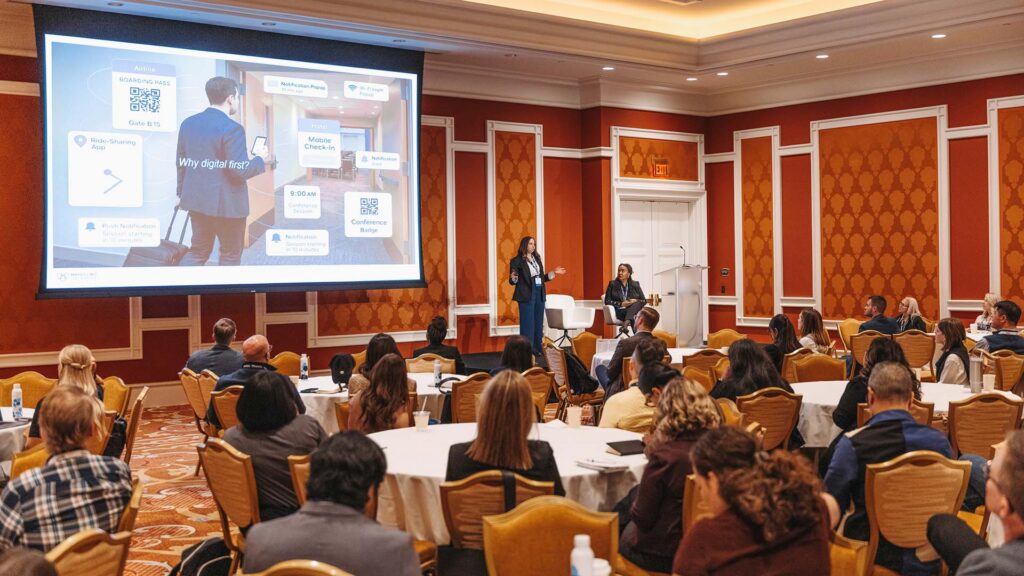
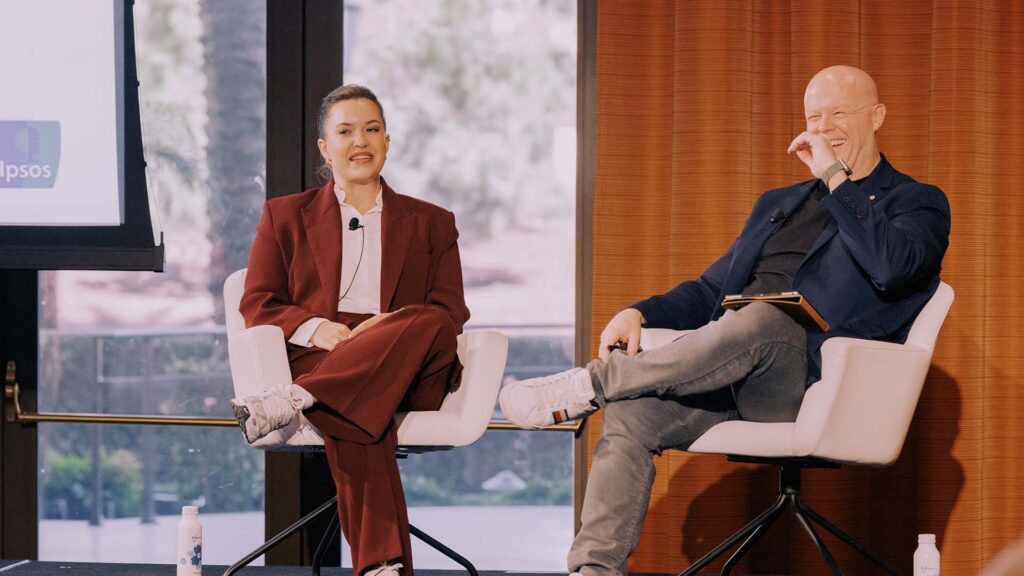
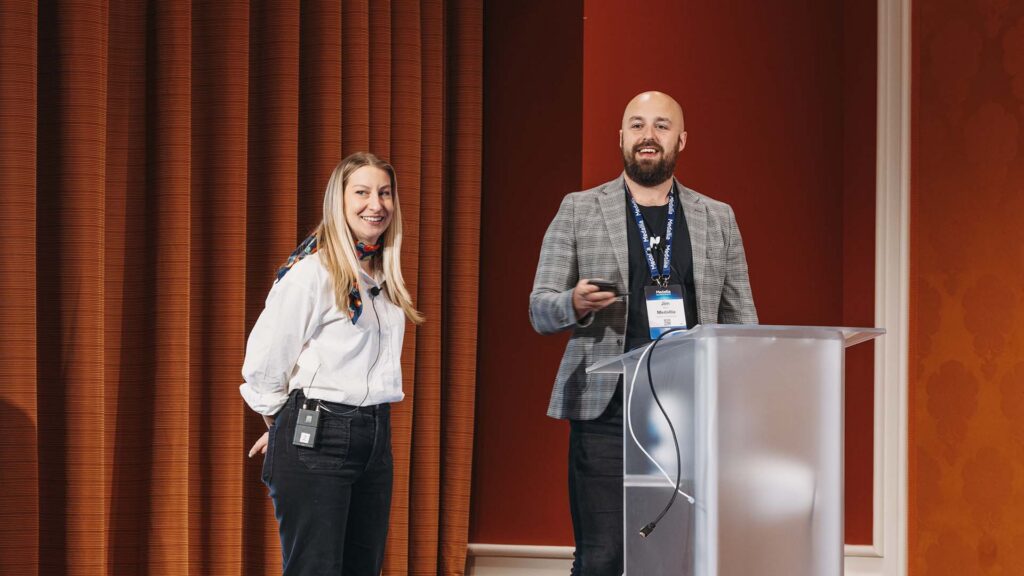
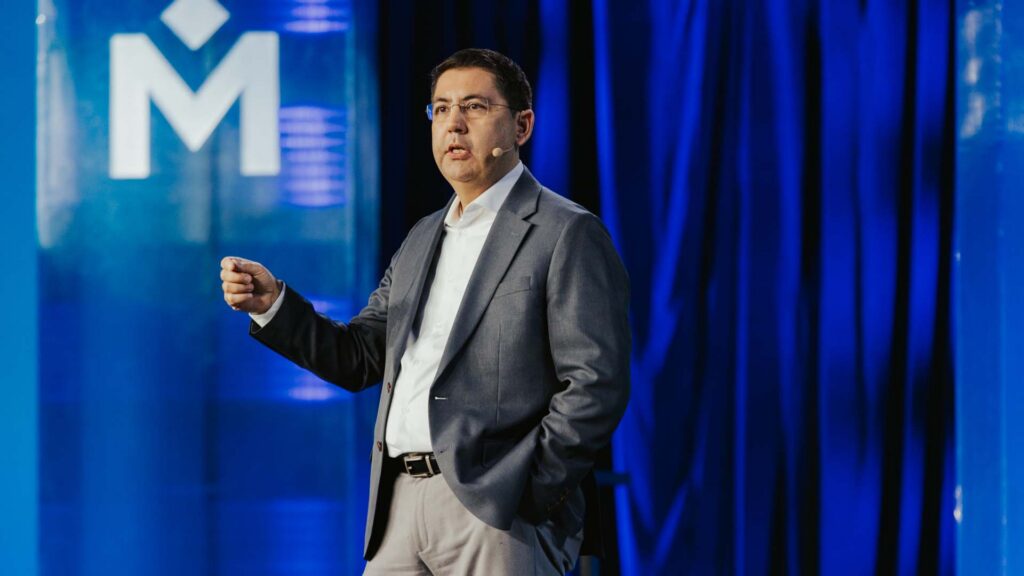
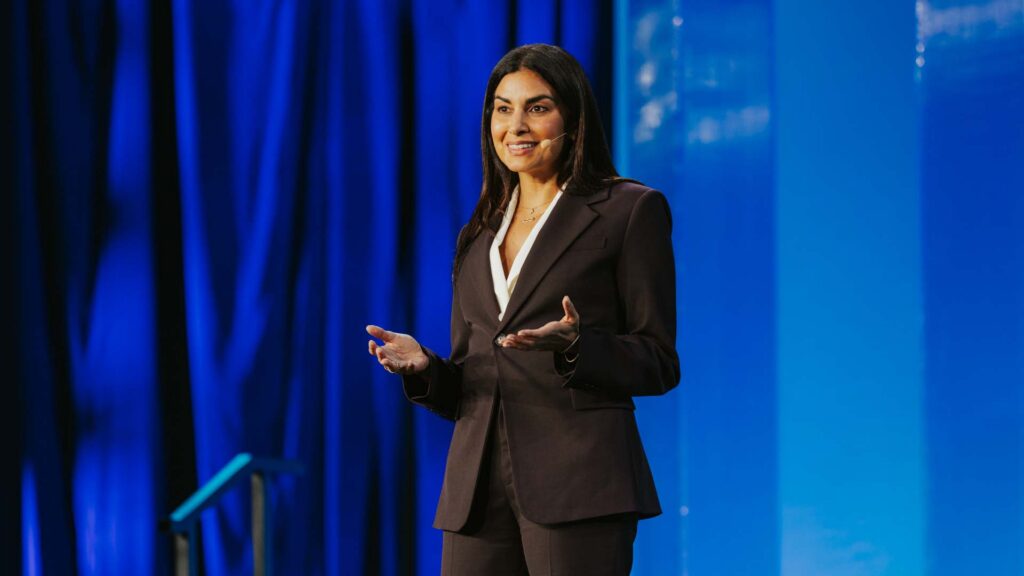
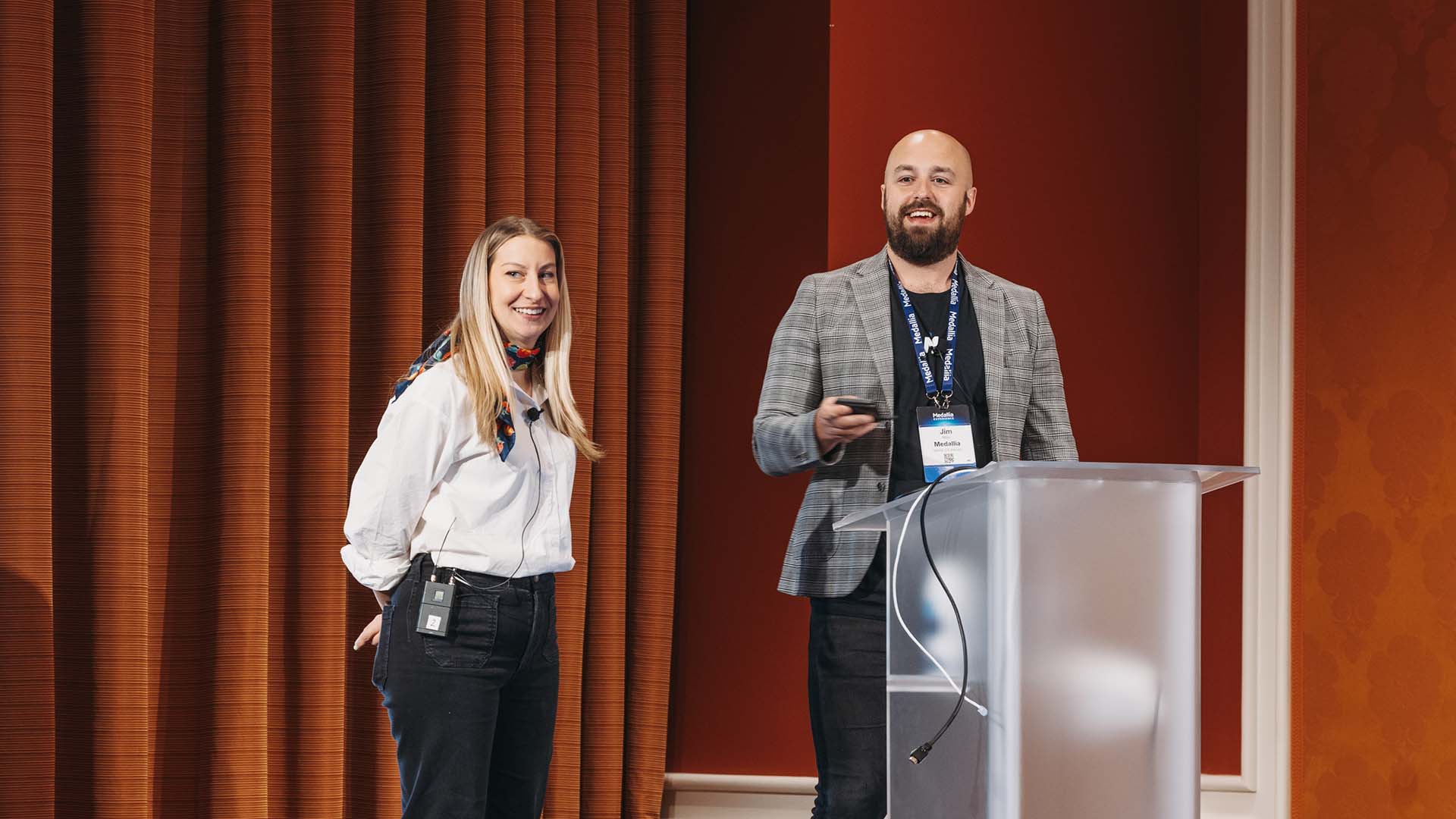
Jim Miller: [00:00:00] I am Jim Miller. I’m a senior CX advisor at Medallia, and I’m joined by my wonderful colleague, Cari Martini.
Cari Martini: Hello.
Jim Miller: Would you explain your role?
Cari Martini: Sure. I’m a Director of Product Management here at Medallia. I lead the data and AI platform teams here.
Jim Miller: Today we are going to talk to you about AI that fits.
Actually mapping the right use cases to the role that you’re looking at. So essentially, we are very aware that AI has become a little bit of a buzzword in some respects, and we wanna show how as CX practitioners, we can actually get the most out of it, particularly with the tools that we have within Medallia.
So we’re gonna have some really interesting conversations today. We are gonna keep the energy high despite the fact that my colleague here got up at 1:00 AM like a lunatic. So yeah, super excited and we will talk to you for about 10 minutes and then we will kick off our session. So Cari,
Cari Martini: awesome, thanks.
So we’re all living in a world where AI is everywhere. It’s in our tools, our co-pilots and assistance. What’s much harder to find is real measurable [00:01:00] value. Most organizations are experimenting but struggling to bridge the gap between AI activity and AI impact, and that’s why we wanted to run this session today.
This is intentionally not an AI 1 0 1 session. You will walk away with three concrete things. You’ll be able to know how to apply Medallia Gen AI to your role and adjacent roles within your organization. How to explain that value to the stakeholders back at home and in front of you. You have a role-based use case map that you’ll be filling out, and you’ll be able to act on that and bring it back to your organization.
Most organizations are using a mix of general purpose and what we call fit for purpose ai. Medallia AI is one of those systems. General purpose AI is things like chatt. Some of you might be using one right now on your phones. And Medallia’s fit for purpose. AI is a little bit different from that, right?[00:02:00]
General purpose. AI is amazing for exploration. It’s amazing for ideation, but it’s disconnected from your CX workflows, so it’s really hard to govern at scale. Medallia AI is a fit for purpose system and it’s built within your Medallia ecosystem, and what that means is it’s embedded in your workflows.
It’s frontline ready, it’s governed and doesn’t require prompt engineering expertise. Today for our workshop, we’re going to be mapping against our generally available features and the two amazing features that Fabrice and Joanna, who’s somewhere in the room just presented to you at the keynote. So I’m gonna run through these really quickly to give you a high level understanding, but on your table, there’s a QR code.
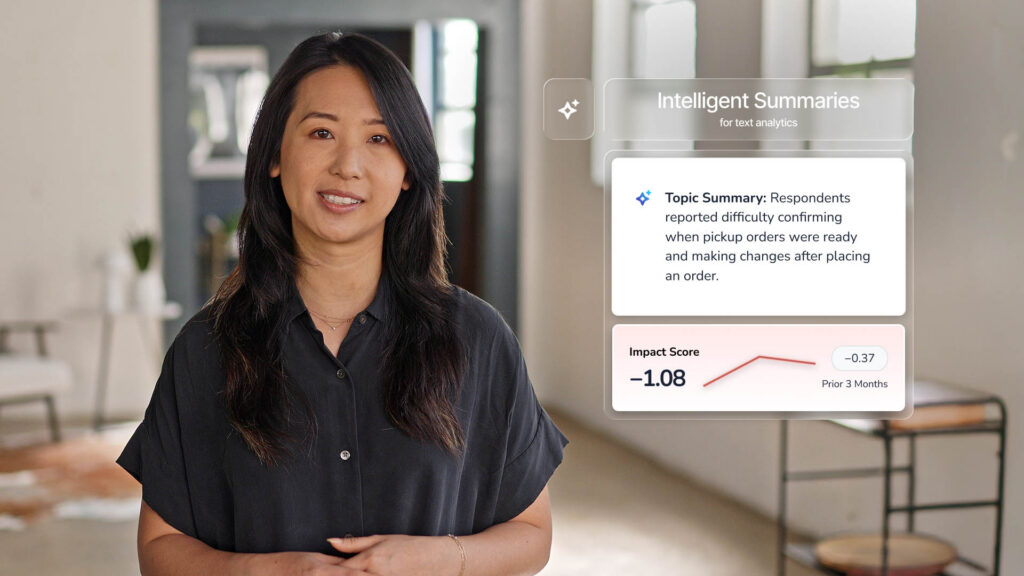
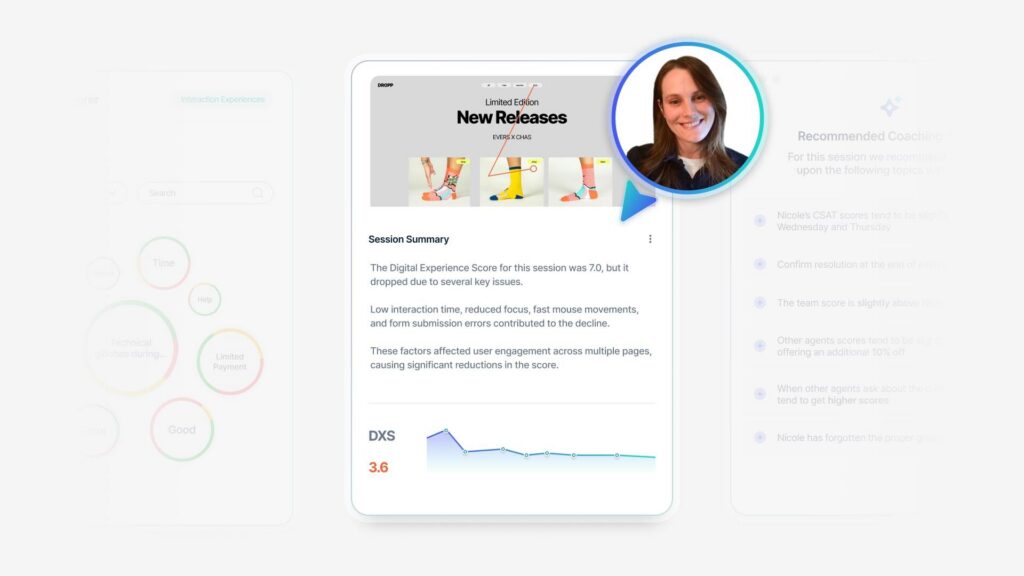
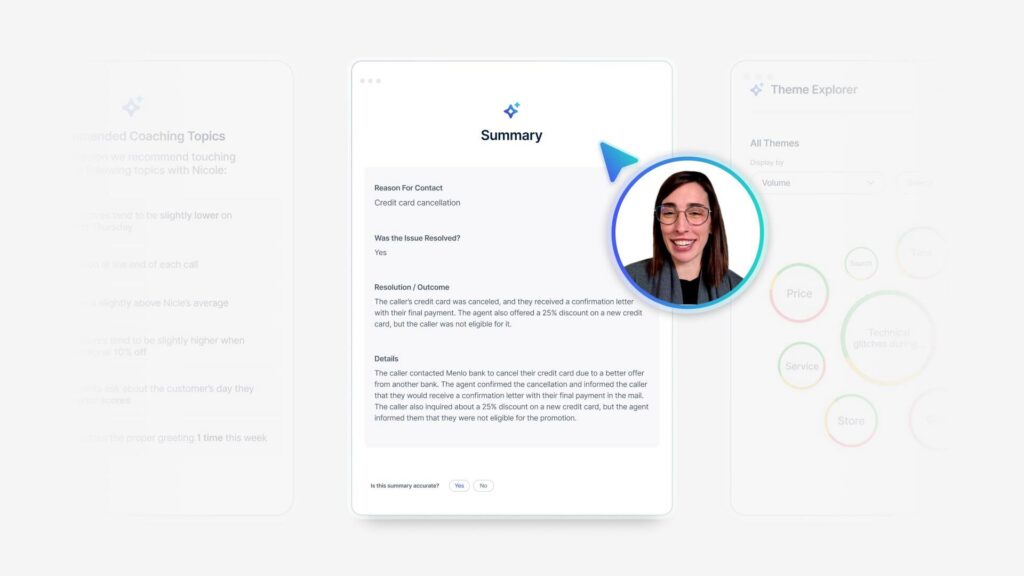
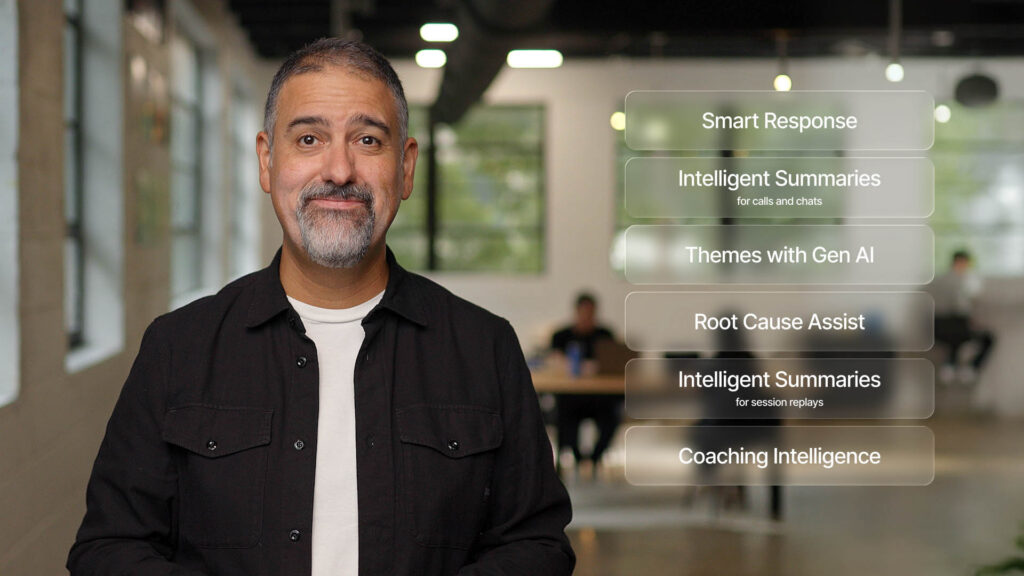
So do not feel like there’s a test you’ll be able to access. The descriptions of these features as part of the workshop. So for intelligent summaries, this allows our teams to reduce the effort of understanding [00:03:00] those interactions. So this is conversations, feedback, and that allows teams to get to what matters most faster.
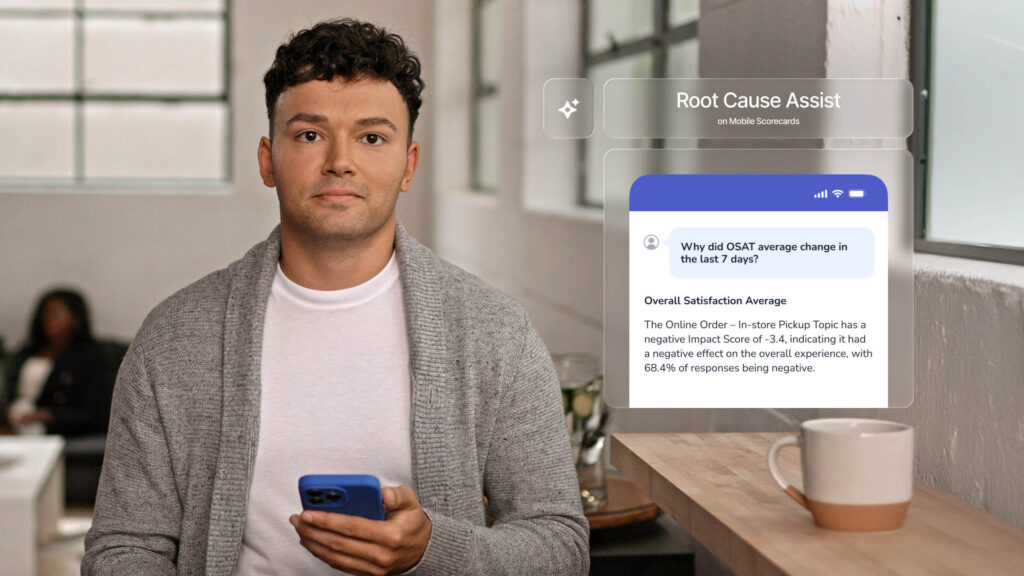
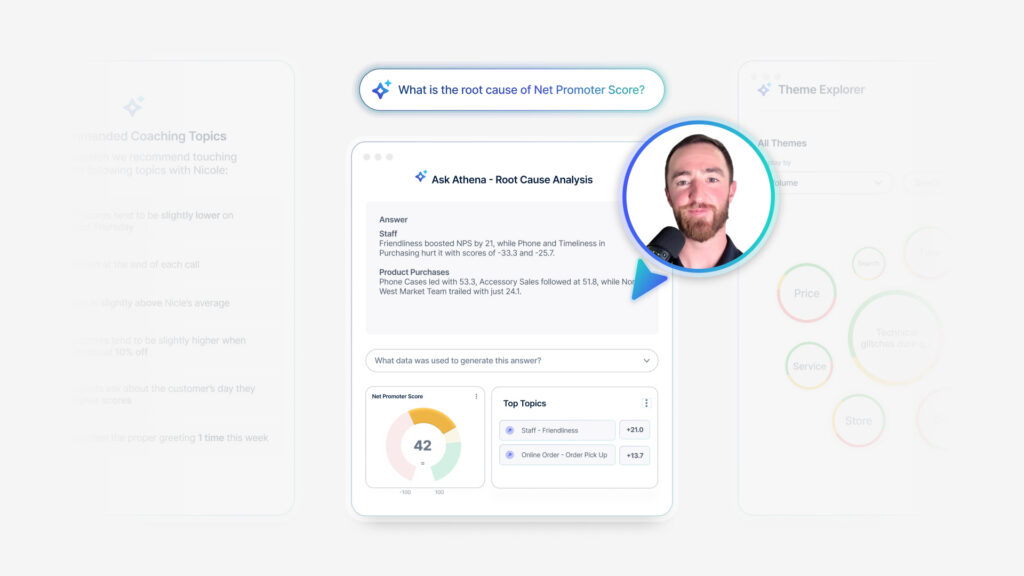
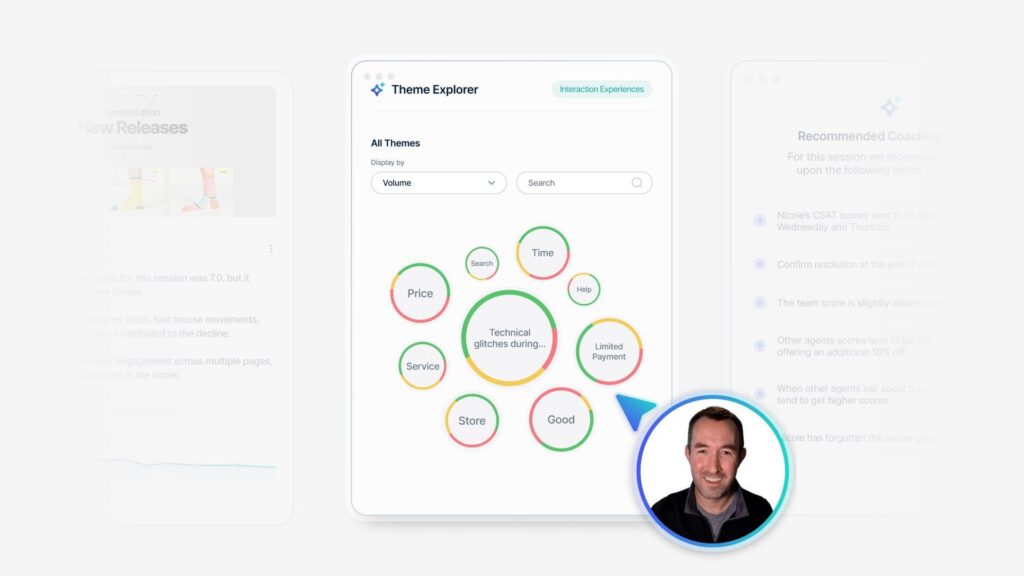
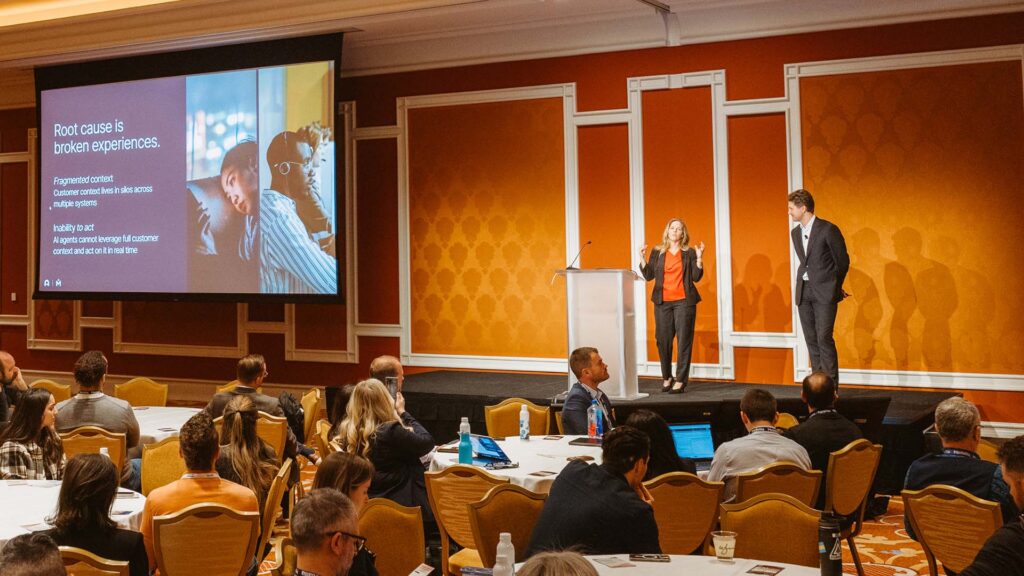
Root cause assist. This helps teams to understand the why behind why their score is changing, and that makes it so that they can not have to wait for that offline analysis. Themes with Gen ai uncovers granular themes and trends without the manual intervention and management of those models. And smart response is our frontline ai.
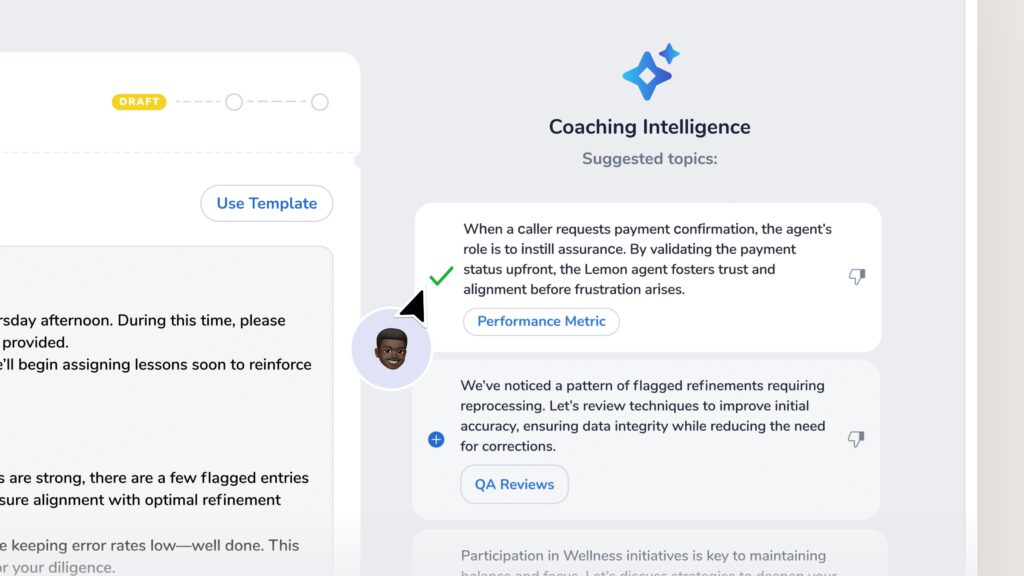
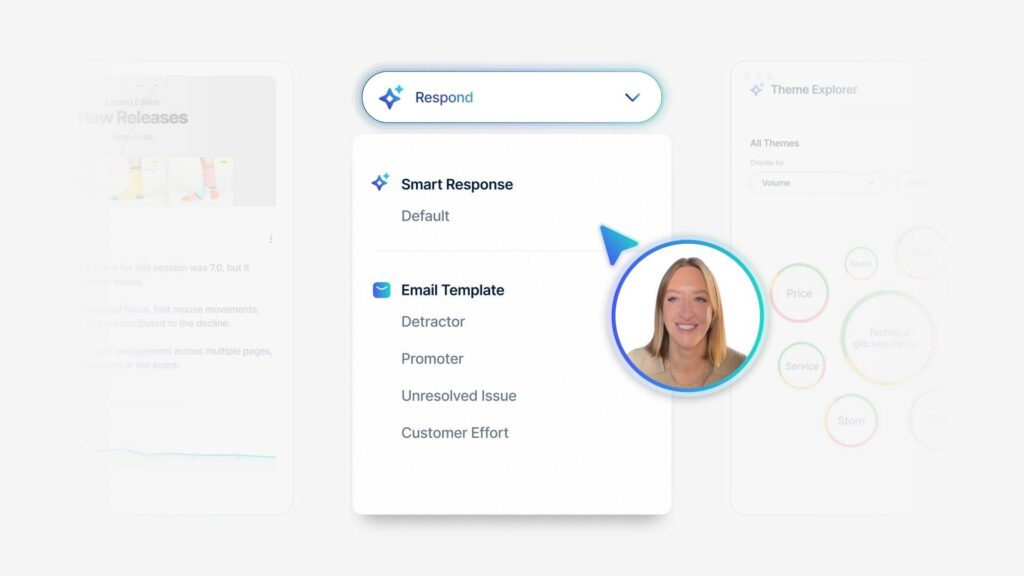
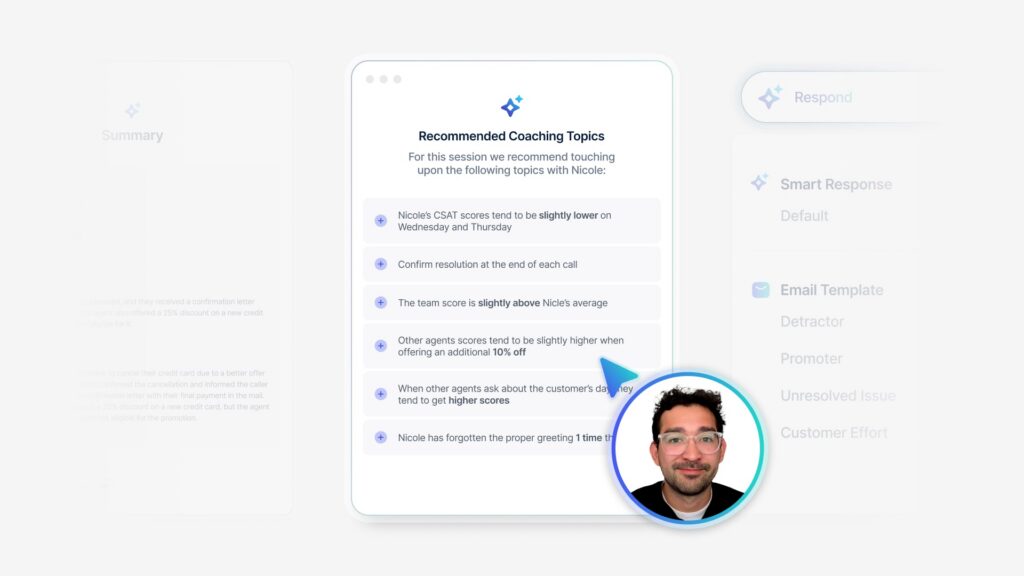
Beauty, it helps generate personalized on-brand replies in seconds so you can reach more of your customers more quickly. Coaching intelligence will tailor those coaching plans to agent and data goals, so you can really hit those high impact areas across those interactions. I won’t spend too much time on these.
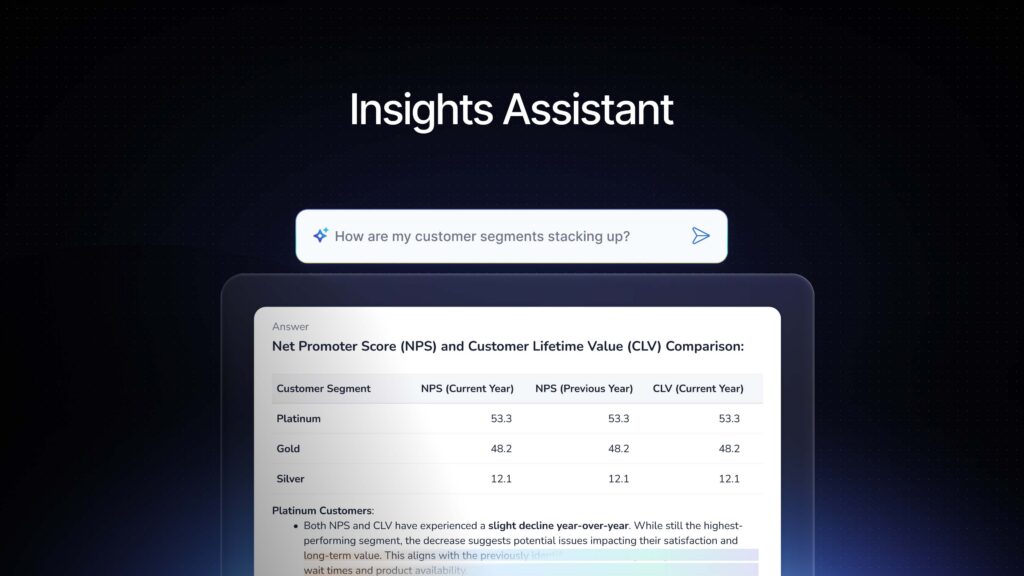
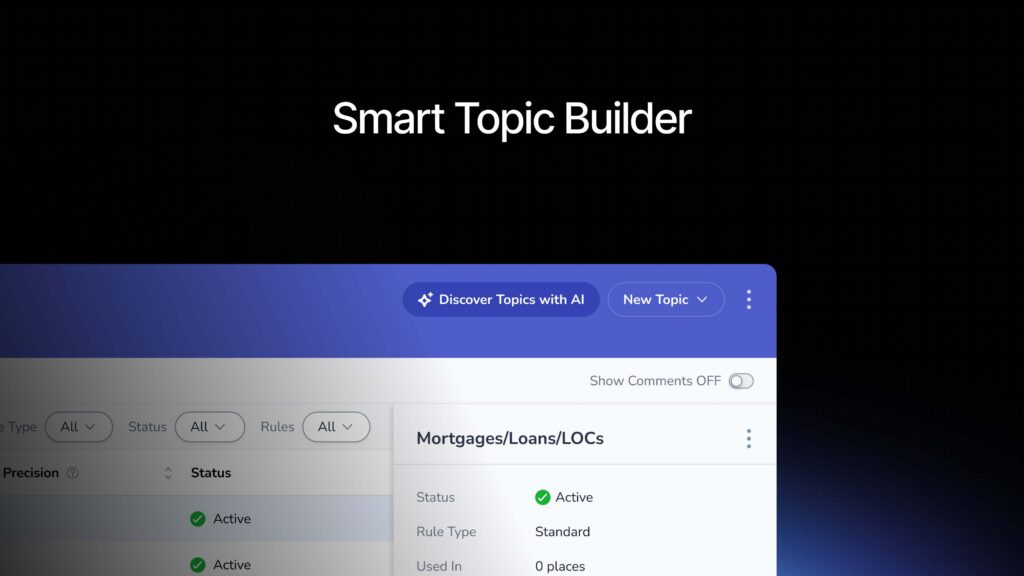
Hopefully everyone was able to attend the keynote and you were able to see the demo of Insights Assistant. This is being able to [00:04:00] talk to your data. And for smart topic builder, this allows you to discover new topics in your untagged data. This is not theoretical, as Fabrice mentioned on stage. We have many customers that are already using this today, and you are going to attend other talks where you’ll hear many more proof points.
So I won’t belabor too many of these, but I’ll call a few out. We have a global hospitality brand that reported saving 80% time saved annually. What that equated to is three and a half years for their brand and for CX and ops teams. They’re getting to the key insights with themes in days and not weeks For one of our pet retailers, that meant identifying a surcharge, fixing it, and moving on to the next issue.
From here, Jim is gonna walk us through the mental model behind the idea of AI fit.
Jim Miller: In terms of when we talk about AI [00:05:00] fit, we are really thinking about for your individual, and again, as all of us are CX practitioners in the room, there’s a very specific way to consider how we’re actually using this.
And essentially, we cannot say that one tool fits all, right? So we really need to consider, first of all. Role. So actually, is there a specific AI tool that is gonna fit that role that you need to do the job that role is trying to actually do and trying to achieve the workflow that the people actually live in every single day.
So for example, does it actually fit with what you have available in your organization? The data behind it? Is it rich enough? Have you actually got what you need to be able to actually understand the data that’s coming from your gen AI tool? Finally the way that you can actually then govern that data.
How can you actually push it into the organization? Is it appropriate? Is there actually stuff that you should share and you potentially shouldn’t share? Now if we miss any of these, using the actual tool potentially breaks down, right? It’s not as useful as you need it to be. So it’s something we really need to consider when we’re looking at each of these tools, what fits for the individual job, right?
And looking at that job level, [00:06:00] not from an overall kind of org chart perspective. We’re gonna have a look at a couple of examples here of different jobs and how they might look at something like the Geni tools we have available. So first of all, we have our director of cx. Now, obviously from their perspective, they’re making sure that the business is running the way it should be.
We’re looking at our CX and we’re making sure it’s as efficient as positive as we want it to be, but ultimately. This person is extremely busy. There’s lots of different priorities in the organization. There’s lots of different points of view, different data they’ve got to assess. So maybe they might actually look at their geni tools and say I’m gonna look at root cause assist.
I wanna get straight into why is my NPS score going up or down? What are the key segments that’s affecting it? What are the key topics that are leaning into. We then have our insight analyst. Again, we have someone who’s trying to get into the data, but essentially they are dealing with issues of timeliness, of getting insight to the actual organization, providing actionable insights that they can actually do things with, and actually making sure that they’re getting it to the right people at the right time.
When we’re talking about our insight analysts, they might look at something like intelligent summaries and [00:07:00] actually say, I want to get a quick understanding about why a certain topic is doing something. Can I therefore actually get a better understanding of how we can develop that and actually get some actionable insights quickly to the organization.
And finally, we have our frontline team leader. Now, despite his headset, this doesn’t have to be a customer service. This could be engineer lead, this could be someone that’s actually looking over any kind of frontline team, right? They’re essentially looking at a number of different frontline team members who essentially have.
Their own skillset. They have different way of managing them, different kind of approaches and what they need. Now for each of these people, they could potentially look at a tool like coaching intelligence, right? So understanding what are the goals that we want to achieve as an organization and looking at the conversations that their colleagues are having and that their kind of direct reports are looking at what is the best approach to actually coaching them to get the most from it.
So hopefully that’s given you guys a quick understanding of kind of how we can approach different tools depending on different roles and the kind of solutions that you’re trying to achieve. Our workshop today, we have [00:08:00] obviously just gone through the AI tools with you. We’ve also got them on the sheet, as we said down there.
So you’ve got the QR code. You can see all of them in a little bit more detail, but there is a quick explanation on each of them. Now, the first thing we want you to do, and I mentioned it before, those of you that are sat on your own or in ones and twos, join another table. The whole idea of today is to collaborate and get some good ideas flowing.
Okay? Now we want you to familiarize yourself with the tools. Then as a table, you’re gonna select one of the business problems on the sheet that’s in front of you. Now, the idea of this is to try and actually come up with one goal that could work for your pretend organization, for your table, and actually understand how can you use the tools to really get the insights and actually solve a problem.
Because ultimately, if we can’t drive action with what we’re trying to do today, there is no point any of us doing this right, because otherwise we’re just hoarding data we want at the end to have a little bit of an open discussion. We might ask you to provide a bit of feedback in terms of what you guys have looked at.
And again, we’ll come round and we’ll have a bit of discussion time at the end. Hopefully that makes sense to everybody. So we have [00:09:00] 25 minutes to go through this. If you have any questions, as I say, Gary and I are around, you’ve also got the guys over there that can also help. Any questions at all, ask away.
Okay. So I’m gonna ask as we start, can we just get a little raise of hands who did, which kind of mission? So can we have those that did that? Why blind spots. So number one, just so I can get understanding if who’s done what, one there, one there. Perfect. Number two, pretty much everybody else. Okay.
Number three. Anyone do number three? Okay. And anyone do number four. Yay. Okay, good. So we’ve got some, we’ve got spread around. Okay. I wanna dive, first of all, let’s do the Y blind spot. Sorry guys that you’re the only ones that did it. So I’m gonna ask a lit, if you can share a little bit in terms of the context that you went through.
Share a little bit in terms of some of the nice areas. So things when we’re talking about what’s the bottlenecks, cost in action, things like that. And then your tools, if you don’t mind. So we have a mic runner. This table here,
Audience Participant 1: we picked the wide blind [00:10:00] spot. As far as the bottleneck is concerned, we said things like time, lack of responses, data accessibility, data specificity.
One of the examples we talked about was just our ability to have access to different segments of data, race, ethnicity, gender, et cetera, and being able to include that in our Gen ai. The. Amount of human resource we have to complete any given work. So full-time employees. For example, for cost of inaction, we talked about brand value.
Essentially going into word of mouth for how it affects the human team. We’re we were thinking about loss of confidence. In presentation, leaders do feel blind. It could be that you go in a wrong strategic direction. You have a wrong approach to Yep. Addressing the problem, and that could just have larger consequences on the business in general.
Jim Miller: With all of that in mind, and I know I talked to a few people about this, obviously. One thing that we were focusing on is that business outcome perspective. And I know we talked about that in a little bit of detail as well. I think one thing to consider for everyone is when you are then having a conversation, when [00:11:00] you get the insights from this and you are having a conversation with leadership about why it’s really important to actually get stuff done.
Business outcomes make it really easy because that’s what they care about. They care about bottom line. They care about how they’re actually the business making money. I think Sid mentioned it this morning, that’s. Kind of what they’re focusing on. So for you guys, when you’re doing this, I want you to constantly refer back to what is the business objective, business outcome of why we would look at this.
So can you share a little bit around the tool that you, the tools you might go, you guys might use for that?
Audience Participant 1: We got a little bit into the tools, but we just mainly identified root cause assist themes with gen ai, insight assistant and smart topic builder.
Jim Miller: That’s really useful guys. Thank you so much for sharing.
Number one there. I am going to I, ’cause I know this table we’re talking a lot. The table next to that one please. They were talking about number two, so it’d be great if they could go into a little bit of detail as well, please.
Audience Participant 2: Sure. So we took it actually from an ex perspective on the employee side.
So in terms of bottleneck, we experience HR folks, they’re extremely busy with a zillion different things going [00:12:00] on, and so that’s where the bottleneck is like they just don’t have time to go through and reap. Thousands of comments on what employees are saying about their experience. And the cost of that from an employee relations standpoint could be somebody may be giving a comment regarding harassment or a threat or something like that could have a really negative impact.
And so of course those are the things we want us. Rise to the top really quickly. And then also from an engagement perspective, if they don’t feel like they’re having the tools or the resources or the training to help them succeed in their role, then they’re out the door. They’re like, you’re not helping me.
Why should I help you? And that’s a huge investment that we of course make in their training. And so that’s the. Effect, I think is folks could lead to lower engagement scores, could lead to not feeling safe. Which of course has a downstream impact into how they’re interacting with customers, how they’re talking about our brand and don’t come work here, right?
So that’s impacting our attrition. And we talked about intelligence summaries, root cause assist, and the insights. Insights assistant.
Jim Miller: Perfect. So one of the reasons [00:13:00] why I wanted to focus on you guys was because there’s a slightly different perspective when it comes to ex, which I think is really interesting.
I also think that speed to action thing really came when we were talking to you guys in terms of make, it’s important to get to something quickly, which when we’re talking about our Gen AI tools is gonna be really important, right? Because the longer things drift on the more harm it’s potentially having.
So I think it was really interesting hearing you guys talk, so thank you so much for that.
Audience Participant 3: We took a look at number two as well. Bottlenecks. Lots and lots of data. Just difficult to diagnose what the problem actually is.
Silos that departments aren’t talking to each other. And opportunity. So difficult to root cause underlying issues, cost interaction, ultimately losing customers and impact on retention.
And then how does it affect the human team leaders feeling blind. In areas of opportunity. So we too talked about smart topic builders so we could get to the topics very quickly and clearly the human impact is time. We have day jobs. Besides this, clearly that solution is retention, but the other tools we looked at was root cause analysis.
Jim Miller: Yep.
Audience Participant 3: Insights Assistant.
Jim Miller: Perfect. One of the [00:14:00] reasons why I wanted to focus on these guys as well is one of the things we talked about was. The actual role of text analytics and topics in our JI features, so essentially similar to what you’re talking earlier, we have our chat GPTs of the world, which go out and it’s quite unstructured and it can be a little bit different and you’re getting a lot of different kind of inputs.
What we’re trying to provide is a structure for you guys to work within, so it becomes a lot easier to actually understand your business and then you can get speed of action through that. And I think something like smart Topic builder is something that could be really useful, particularly as the guys mentioned, they’re not necessarily using text analytics at this point, so actually you can get ’em up and running quite quickly and we can actually then start to look at some of the really cool stuff there.
So thank you guys. I really appreciate that. And then we have one last one, which I think was four. So was it you guys at the front? Yeah.
Audience Participant 4: For us it was a context trap and it went beyond just integrating between different platforms, between different channels. But one of the things that we were really looking at is a client can give you a bad score once, and maybe that bad score is for digital.
Maybe that bad score is for a phone [00:15:00] call.
But when they’re giving you a bad score for the same thing across six different channels. They’re not integrated. You’re now identifying a trend that maybe was compartmentalized, but it’s truthfully not. There’s multiple ways we see that AI can help tackle that.
And it’s a bit of an iterative approach, smart topic builder combined with insights assistant. I think that is how we’d really want to structure our. Then int intelligence summaries, we get per year around 10 million responses and if you take that 10 million, each response probably has two to three actual verbatim Yeah.
Fields. It’s an overwhelming amount of unstructured data. The human impact is, we used to have a enterprise wide insights team of six to eight people. They can’t manage that. Yeah. We push that down to the line of business teams, 52 programs. They really can’t manage
it.
Jim Miller: Yeah.
Audience Participant 4: So you need those intelligent summaries.
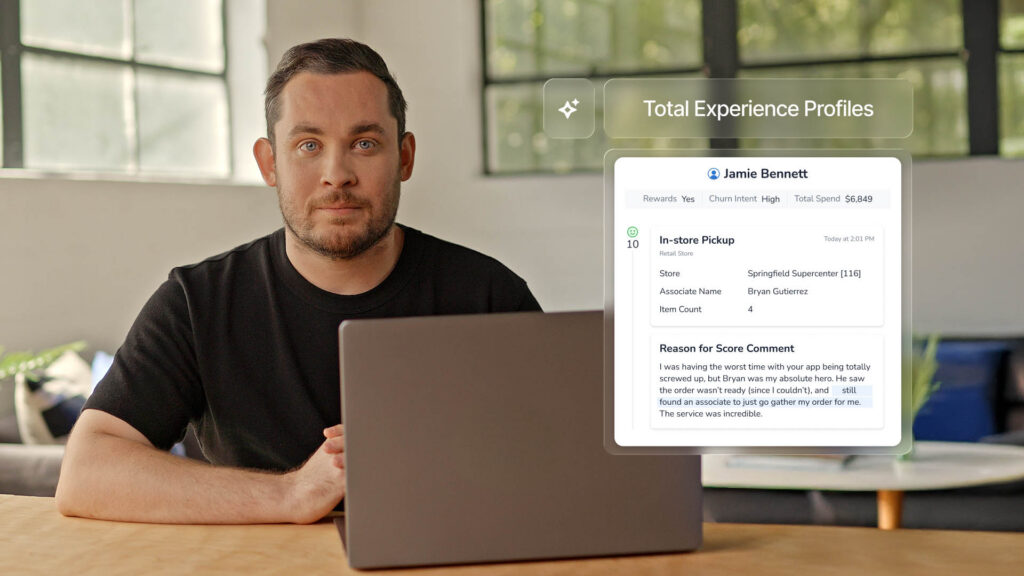
And for problem four, intelligent summaries is gonna be huge impact for middle level [00:16:00] leadership executives for strategy. I think we’re really, the more value it’s gonna be. And Carrie exposed you to this yesterday is integrating those intelligent summaries into TX profiles. Yeah. So it’s no longer a strategic decision.
It’s a tactical frontline decision to where you have the six most recent feedbacks a client gave, and when they’re now interacting on the seventh time. You can, you could give a summary of those six interactions for the associates that’s working with them right then and there.
Jim Miller: Yep.
Audience Participant 4: It’s an immediate return.
It’s not a, we’re seeing a trend maybe over a month, maybe over a quarter. We’re building a strategy or an action plan We’re gonna implement next month or next quarter. You can start doing things like same day or next day. Really like the human impact is, for one if we are able to identify those multiple pain points that are common.
Immediate impact for clients is attrition. Like I said before, a client can have one bad experience. Yeah. When they have that [00:17:00] bad experience six times, that’s when they leave. And then the human impact for our teams is you now have informed teams. You have informed associates, yeah. Where they can actually take action on that real world feedback.
Jim Miller: I love that. I actually love the fact that you’re thinking about it over a time period as well. They’re not isolated instances realistically. And actually what we do find, the more you look at things like TX profiles, particularly, you can actually see someone’s literary time period of how they’re flowing.
And you can literally see they’re getting more annoyed. And so actually being able to capture that, going back to what you guys are saying about retention and things like word of mouth, it gets to it really quickly so that you’re not having to try and solve that problem later on. So it allows you to get ahead of the game a little bit.
So thank you so much for sharing. I really appreciate that.
Audience Participant 4: Thank you.
Jim Miller: Okay, we are at time. I am gonna thank, first of all, thank you guys for sharing another thing. Just very quickly before we wrap up the workshop, take your worksheets home, please apply it to your businesses. Keep thinking about it. It’s a really useful way just to consider how you commit the [00:18:00] most out the tool and actually get the most for your business as well.
And Cari’s gonna wrap us up
Cari Martini: please, if you have time now, we would love your feedback. Do that. You’re gonna be doing this a lot but we would really love to hear from you.
Jim Miller: Yeah. And look forward to seeing you throughout the conference. Thank you all
Cari Martini: much for your engagement. Thank you.