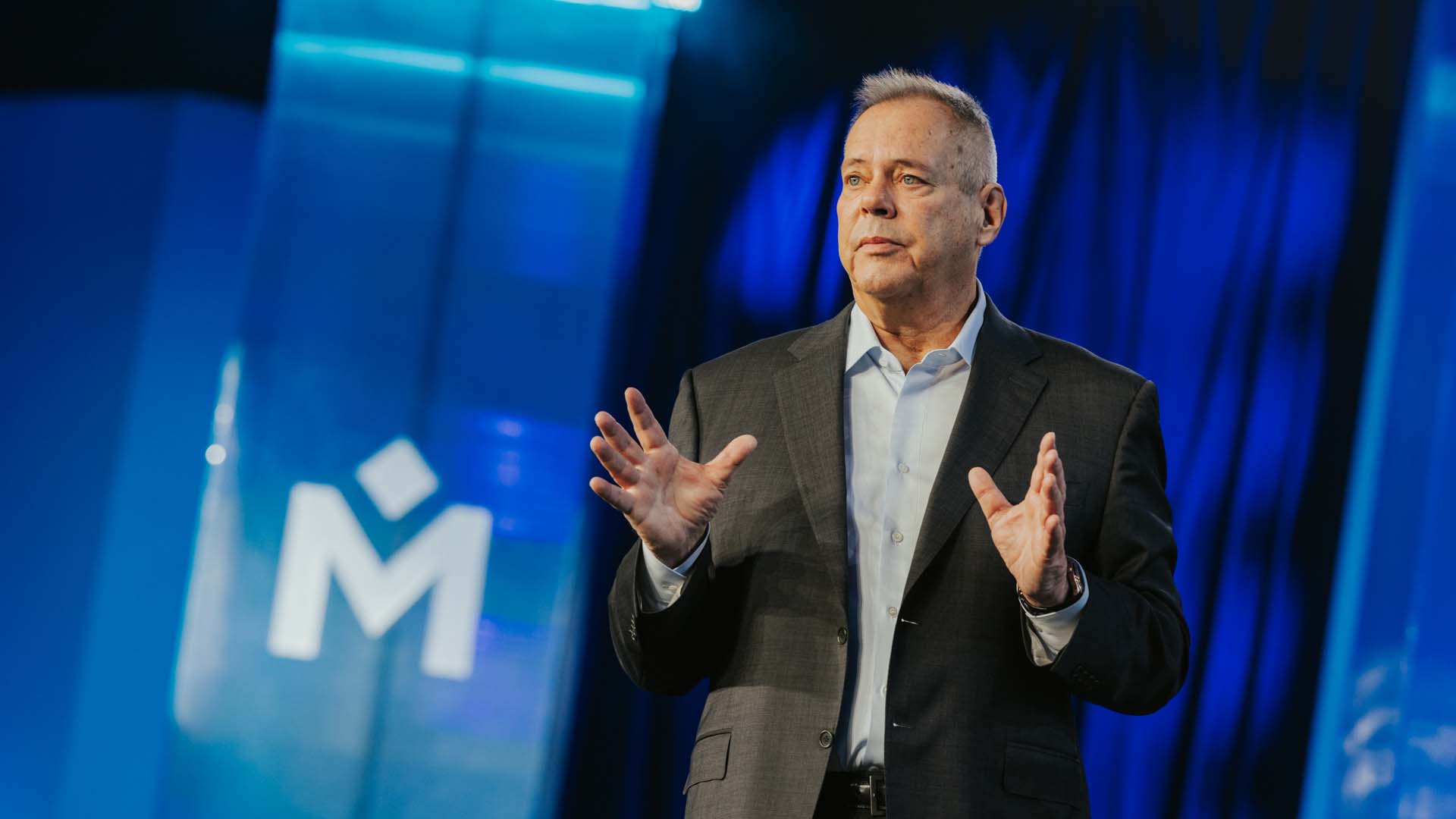
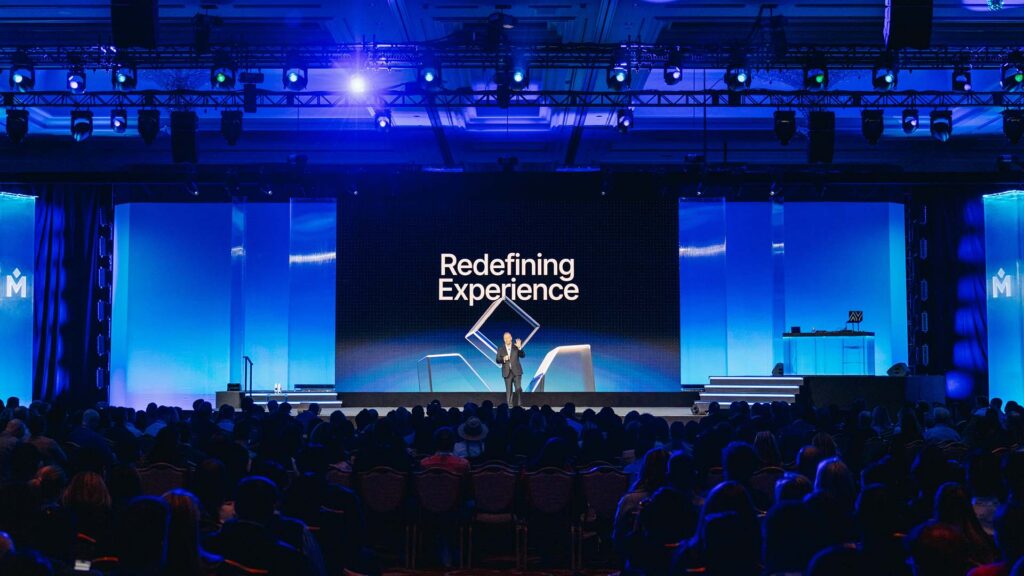
MC: ladies and gentlemen, please give a warm welcome to Chief Experience Officer Jodi Searl.
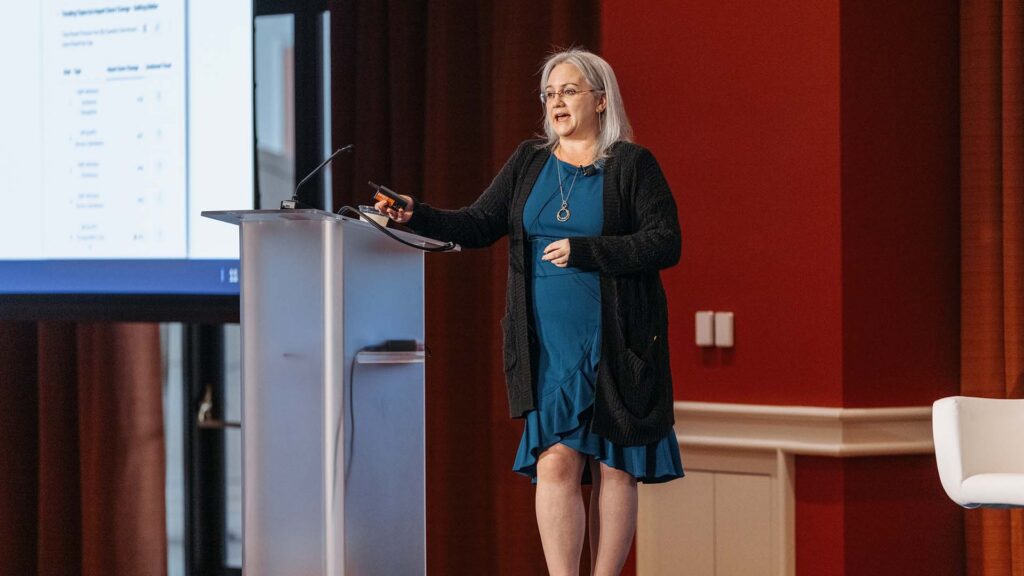
Jodi Searl: Wow, thank you. Good morning everyone. Good morning everyone. All right, let’s get that Vegas energy back up ’cause I didn’t see any of you at the bar last night. Very excited to be here this morning. We’ve spent a lot of time over the last. Day and a half for some of you who arrived early, talking about change makers and talking about people who are really making a difference in their organizations, in their businesses, and leveraging experience to drive business value.
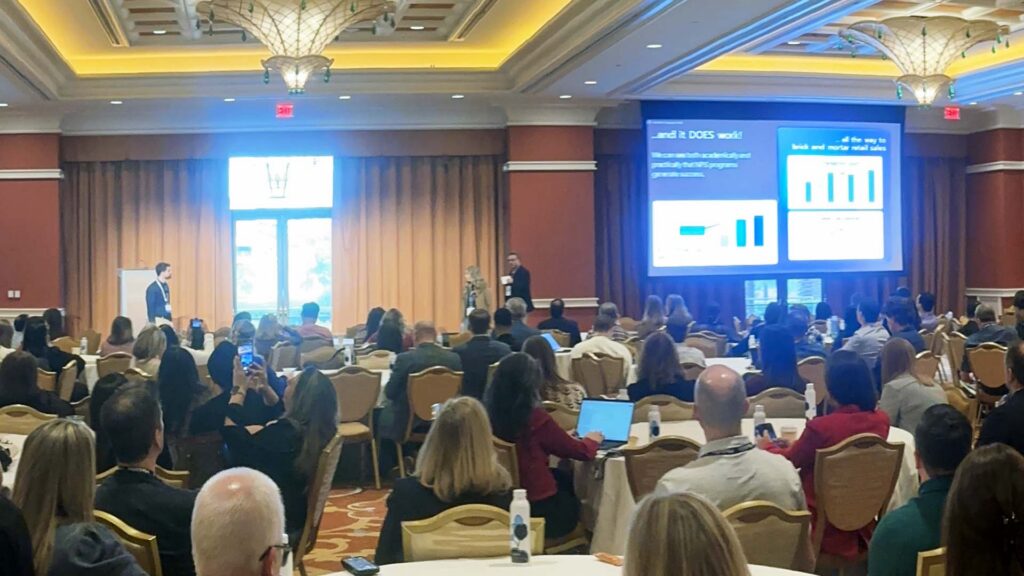
I am very excited this morning to be joined by three of our XP award winners, which are the exemplifying, the best of the work that’s happening out there with all of you. And what I’m really excited about to be joined by these three incredible ladies this morning is that I’ve [00:01:00] had a couple dozen conversations with many of you, which has been great.
I’ve learned a lot from people. It’s been a really great sharing of ideas. But one theme keeps coming true throughout these conversations, and it is. I need to know how, I need to understand what were the steps that people took in order to make experience a true differentiator for their business. So these incredible women are coming out here in just a few minutes to tell you exactly what they’ve done.
They’re gonna share their learnings, they’re going to share their success stories. They might even talk a little bit about what they wish they would’ve known a couple of years ago. So they’re gonna share with you all of that experience. To give you real, tangible ideas of things that you can take back to your organizations and implement right away to be those true change makers.
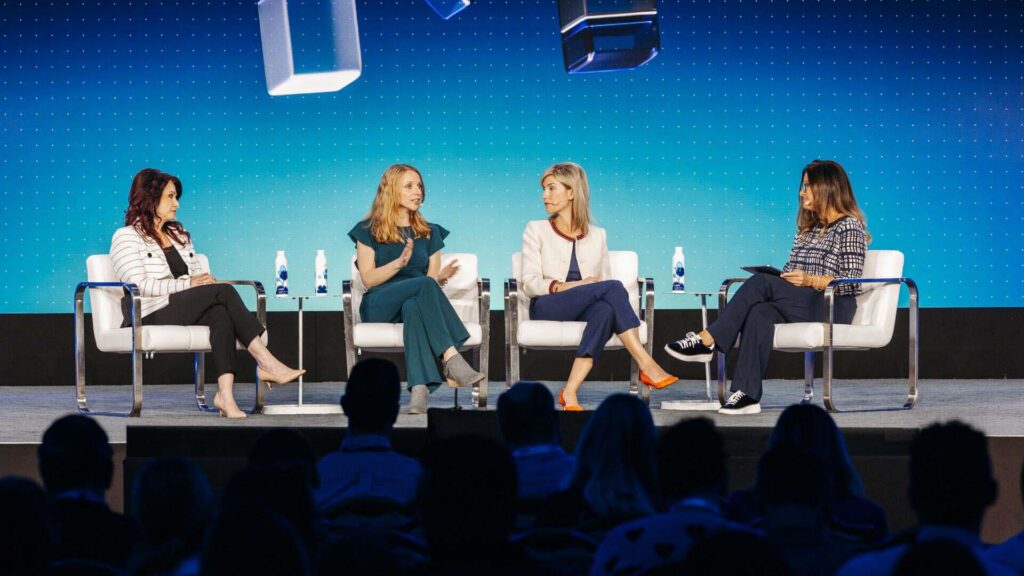
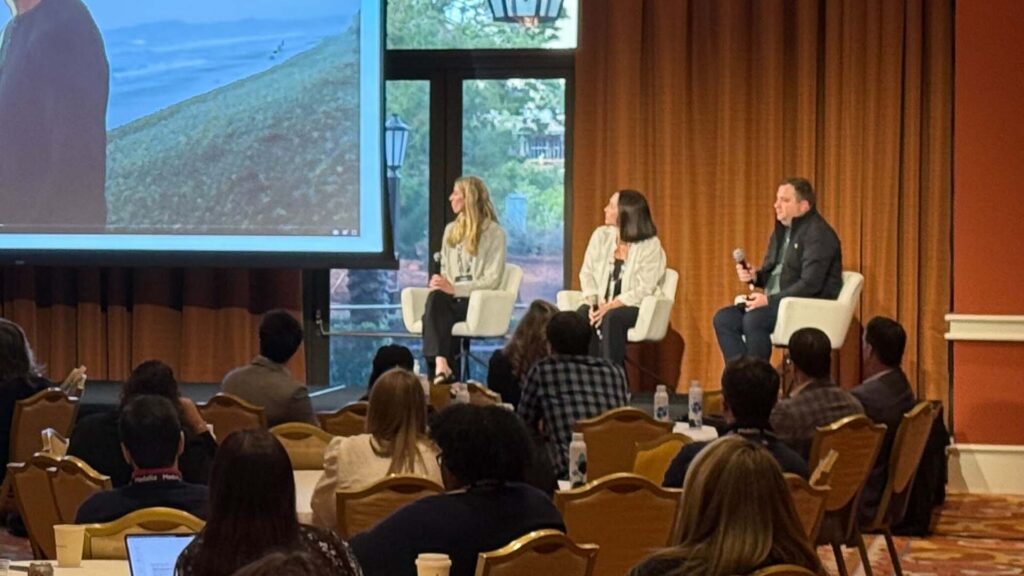
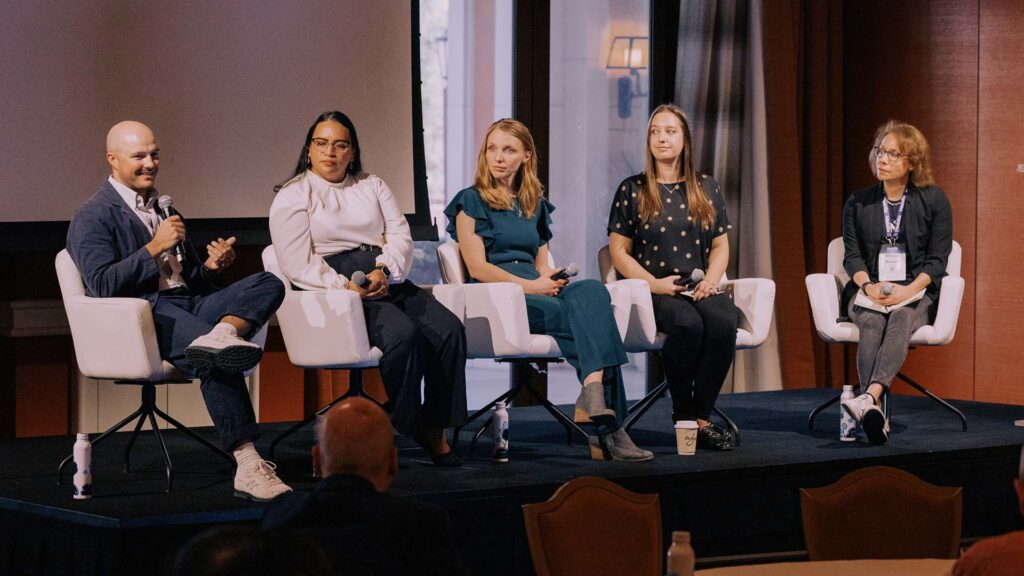
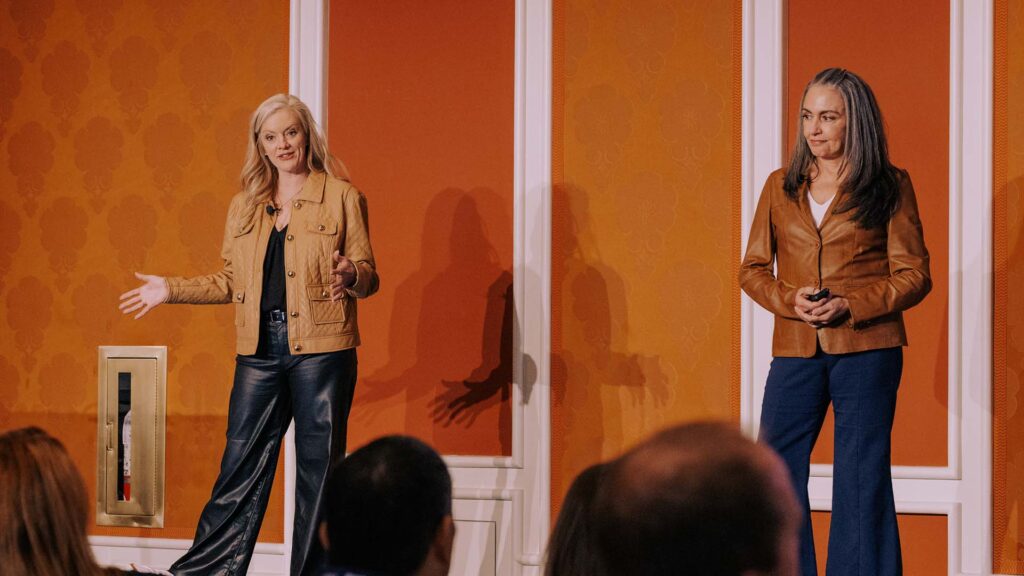
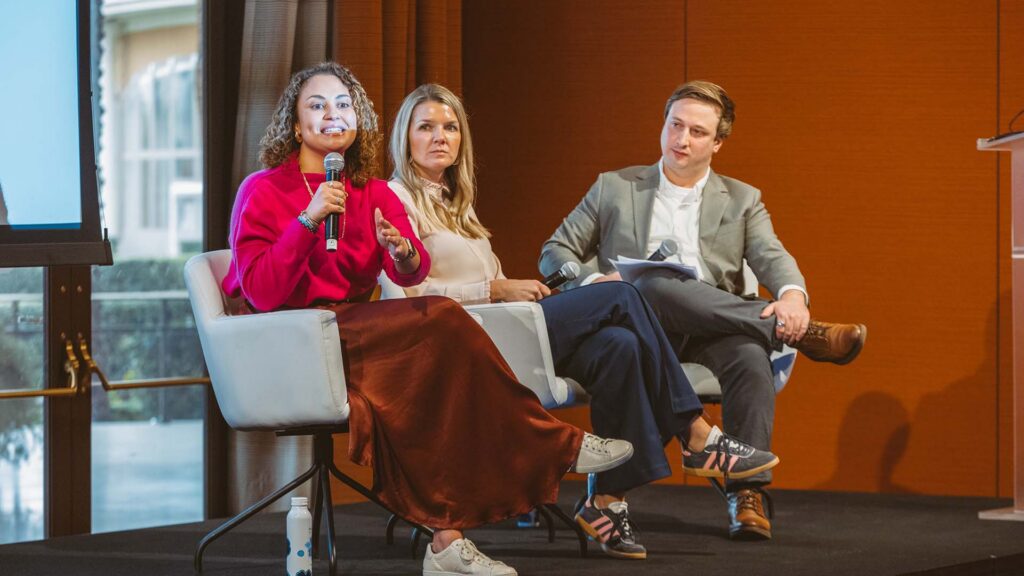
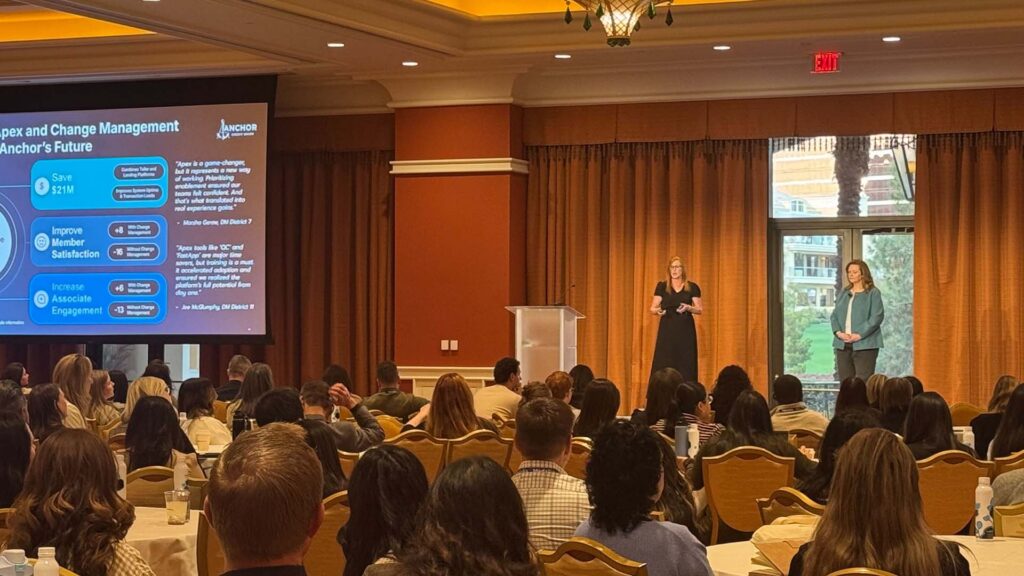
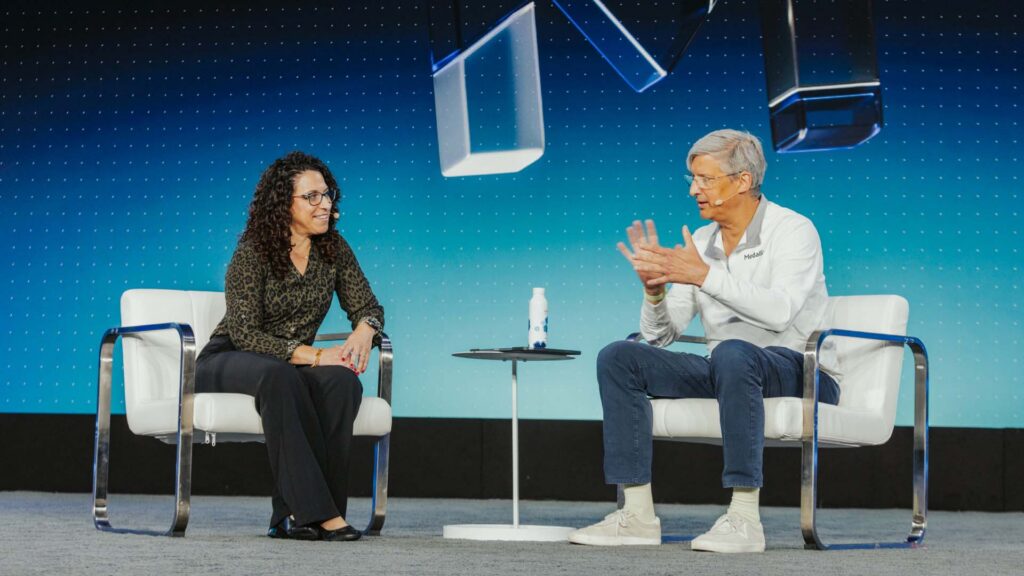
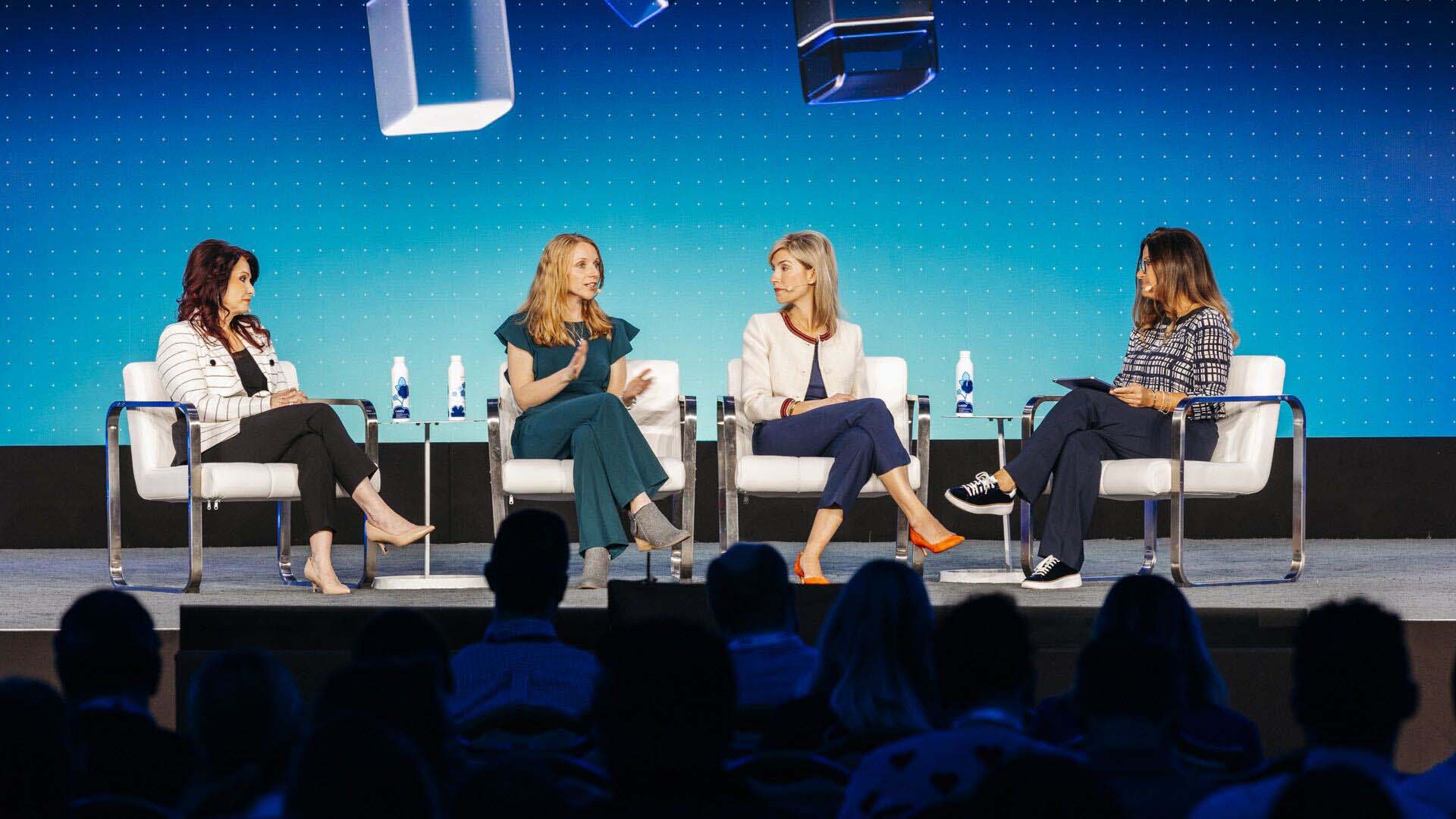
So please join me in giving a warm welcome to Stephanie Lata, Samantha Scott, and Aimee s[00:02:00]
Hi ladies. Come on in.
Have a seat. Anybody. Everybody has water. Okay, great. Before we jump into the questions and you start to share your experiences, why don’t you just tell us a little bit about yourselves? Let’s start with you Stephanie.
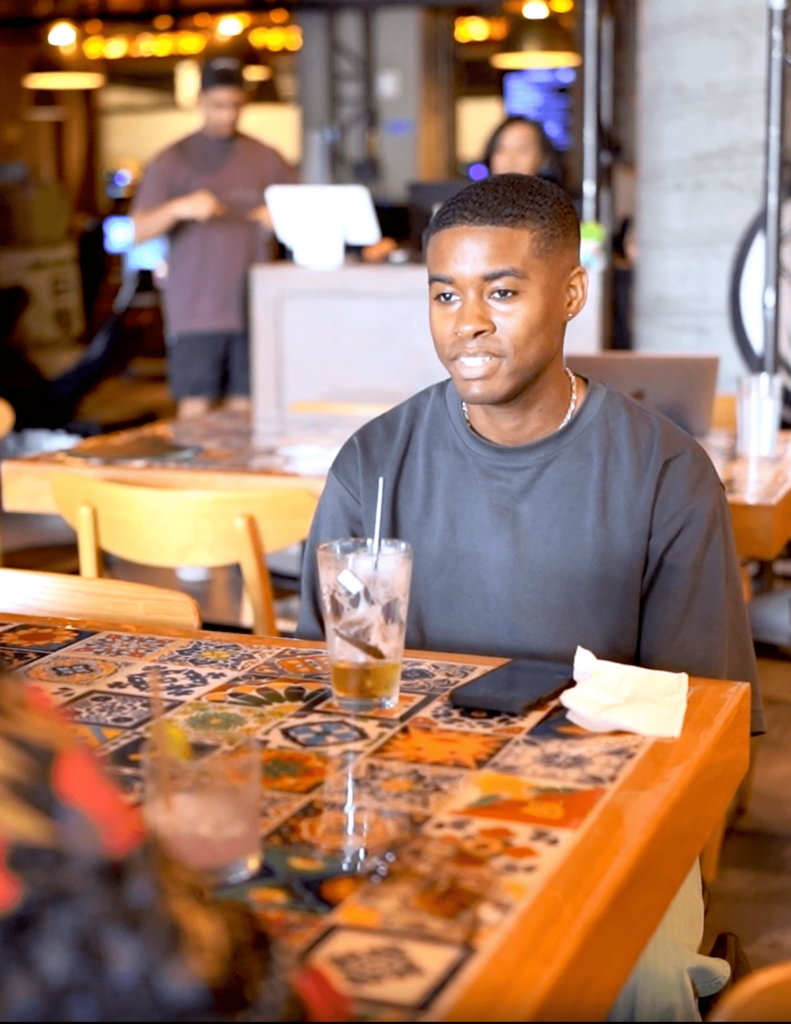
Stephanie Leheta: I’m Stephanie and I lead the enterprise client experience, strategy, governance, and design for CIBC.
And our mandate is really about driving client-centric, data-driven decisioning that helps strengthen business outcomes.
Jodi Searl: Love that. And how about you Samantha?
Samantha Scott: My name is Samantha Scott. I work for Verizon Business. I’ve been there for about 15 years and I lead the customer and employee experience program for the organization.
Aimee Civera: And Hi, I’m Aimee Civera. I lead the engagement technology team at Vanguard for our workplace solutions division. And I’m responsible for our marketing technology stack, which means really making sure that we’re bringing in [00:03:00] solutions to help solve business needs, as well as making sure that we get the most out of the technology that we already have at our disposal.
I also have a team of individuals who are focused on the user experience for our B2B public facing website.
Jodi Searl: Amazing. So all of you in. Specific teams within your organizations, but we’re gonna talk about how you were able to get your messaging around experience mattering to everybody around the organization.
So let’s start, Stephanie, let’s start with you. Let’s start with a moment when you realized that what you were doing wasn’t quite enough. What were you thinking about from a. Gosh, what signal that CX really needs to scale differently to drive growth, to deliver that business value?
Stephanie Leheta: Yeah, Jodi. Our signal happened almost a decade ago when we realized that we had really lost sight of our core purpose.
Our brand felt somewhat outdated. Our [00:04:00] infrastructure really wasn’t supporting growth. And when we looked at our client experience performance, we were lagging our peers. The big tell is that everything felt somewhat fragmented, and we knew that wasn’t going to be sustainable to drive growth. That’s when our new CEO set a bold new ambition to transform our organization into a modern relationship oriented bank.
Now, as you can expect, that was a lofty goal. Not only required a shift, complete shift in strategy. But in also how we operated day to day. And so he started by grounding us in a shared purpose of making our clients’ ambitions real. And so armed with that, he rallied our senior leadership team around this shared purpose, and he began to act.
So we did several things starting with a brand refresh, but we also began to invest heavily, not only in our front end. But our backend infrastructure and then really work deliberately across the enterprise to build a strong culture around that shared [00:05:00] purpose. Now from a CX perspective, we also knew we were gonna have to evolve and scale well beyond just fixing moment.
We were gonna need to build a really mature operating model so that we were listening, learning, and acting from our client insights in a meaningful way, especially in those moments that matter most. I think one of the biggest game changers for us was when we introduced our client experience index. But we didn’t just do that.
We also tied it to variable comp for all employees from Frontline right to the CEO. That was a real game changer for us for sure. This index tracks about 20 metrics from across all of our lines of business, and it’s important because we actually are measuring what our clients are truly experiencing.
But it also forces us to be really honest about our performance and focus our efforts on those improvements. The signal was fragmentation and we rallied around [00:06:00] that shared purpose, which has really driven the meaningful transformation and strong performance the IBC now sees today.
Jodi Searl: Two things that you said there, really stick with me.
The idea of having that executive level sponsorship. It sounds very simple in its inception, right? But it really is a true game changer once you have your C-suite saying experience matters. People pay attention to it. And then I love the story about how you were able to bring everything together that way.
The other piece, the other thing that you said, which I thought is really great, is you’re looking at 20 different things. It’s not just a score scores. Are important. They’re things you can track. There’re things you can look at, but you’re really looking across all of the touch points that your clients have with you, which I think is, it’s aspirational really for all of us.
So that’s really great. I think Aimee, over to you, when we were talking before we came out on stage, we were talking about [00:07:00] these moments of real clarity around. I’ve got surveys, but that might not be enough. When did you realize that you needed more than that?
Aimee Civera: So CX is also a really top priority for us at Vanguard, and we’re committed to really leaning in and making sure that we’re optimizing our experiences for our clients.
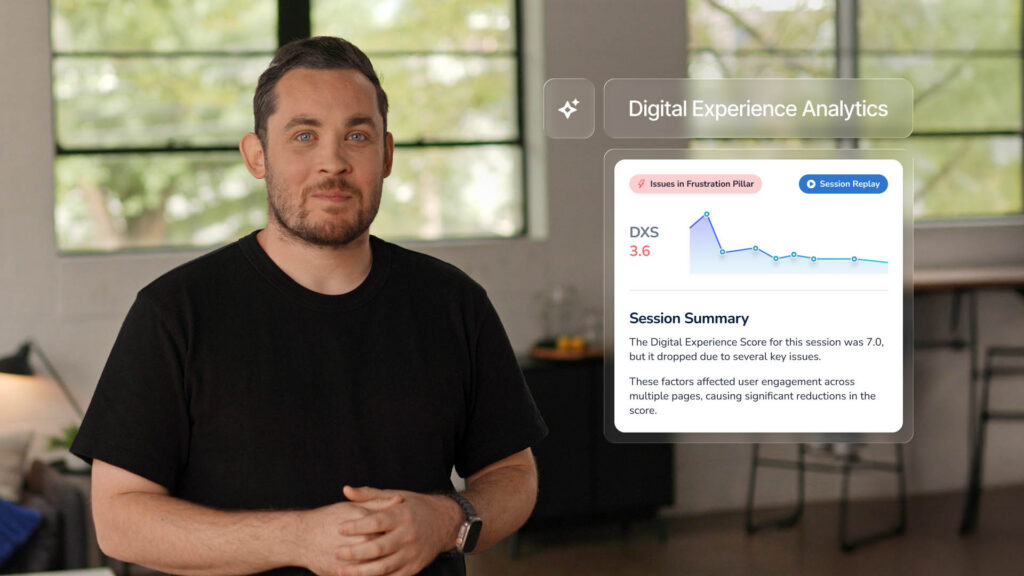
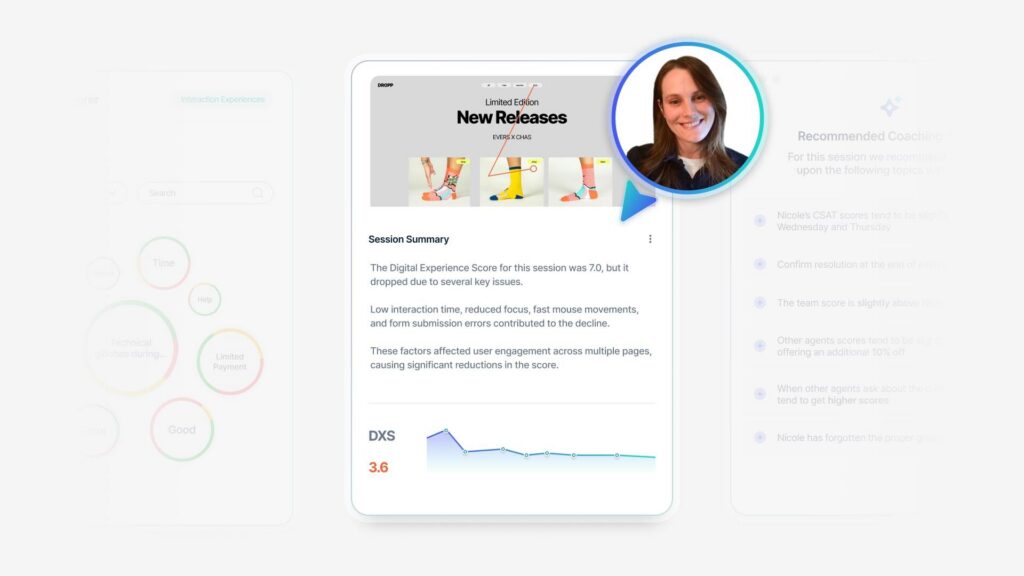
And now there’s technology that allows us to go beyond just the surveys. So with digital insights, we’re able to see things through heat maps and session replays and path analysis that we hadn’t been able to see before. And that’s exactly what our clients were doing on our web experiences, and that’s really been tremendously helpful in allowing us to.
Understand the root cause of why maybe a client is engaging with a call to action or finding important information on our website that we hope that they would. And so not only did this help us optimize our pages, but we were able to experiment with new designs and it’s really driven much more positive business outcomes.[00:08:00]
Jodi Searl: That’s great. What I love about that is what you were focusing on was behaviors that they were telling you. But not words that they were telling you. Exactly. Things that you could pick up without actually hearing from them.
Aimee Civera: Yeah.
Jodi Searl: And then using that to drive your actioning. I, yeah. So powerful there. I think Samantha you’re bringing a little different lens to this and that is, when did you realize that what you really needed to do to finish this off was activate with your employee?
Samantha Scott: Yeah, so we I started leading just the customer experience team about three years ago. And at the time my team was hyper-focused on making sure that we were modernizing our insights program, bringing it up to industry standards that had fallen by the wayside at one point. Natalie, who was in the audience, did an amazing job with that.
But we. Started looking and really peeling at away at the different things that customers were telling us. And customers don’t speak our language they don’t like In Verizon, we have [00:09:00] a very specific way of speaking. I’m sure a lot of big companies that are sitting in the audience probably know exactly what I’m talking about.
You have your internal jargon, but customers don’t speak Verizon, right? So when they are telling us something like I, my bill is never correct, this is no this never works for me. We really could activate our voice of the employee program that at the time was sitting in a different organization.
We’ve since brought them under our same umbrella and allow us to dig a little bit deeper on what my bill is never right. Actually means that can be so layered, right? It could mean that you had an employee that tra traveled internationally and didn’t alert the account administrator so they didn’t have the right feature, or maybe there was a, an additional.
Requirement for a promo to be applied or something along those lines. It could be a lot of different things, but by working closely with our voice of the employee program and then eventually bringing them in and being more connected, we could get much [00:10:00] deeper and really truly understand what the customers are telling us, and then in turn, act far more quickly on prioritizing a solution and then making something better on, on behalf of the customers.
Jodi Searl: And your voice of your employee is not that just traditional. How is, how do you like working here? Oh, no it’s so much more powerful the way you’re leveraging it because it helps them also understand how what they’re doing
Impacts the overall experience. And the boots on the ground are really the most powerful voice about where those friction points are, where the pain points are, and the best ideas about the solutioning.
Samantha Scott: 100%. ’cause they’re in it every single day. So they can tell you exactly. A recommendation, something that’s broken, something that’s outdated and you give really robust feedback from the team.
Jodi Searl: So was this kind of a light bulb type of moment when you realized what you were doing at the time wasn’t enough?
Or was it more of a slow build for any of you?
Samantha Scott: For, for me it was truly a light bulb. Once we brought the [00:11:00] team under our umbrella. The, just the unlock that we felt and really being able to understand exactly what customers were telling us in their language, but translated to Verizon it was so beneficial.
Anybody else? Low buildup or light bulb?
Stephanie Leheta: It. It was, I think it was a light bulb, but it had been a slow build.
Jodi Searl: A little bit of both.
Stephanie Leheta: Absolutely. And it was a multi-year transformation to get to the point where we are today.
Jodi Searl: Yeah. None of this happens overnight. It’s just that Absolutely. I think the next sort of thing is we talk a lot with organizations who say that they are data rich, maybe are able to pull some insights, but.
Aren’t quite at a spot where the actioning becomes that natural next step. And I think, laying the foundation of having everybody understand how their role [00:12:00] in their work impacts that overall experience it’s a key moment that you need to have your organization at in order to get to that actioning.
So as you’re thinking about that. Aimee when did this move from being just interesting stuff to the data that you were leveraging to drive that overall actioning?
Aimee Civera: So prior to us having digital insights, our CX experts, some of which are in the audience here today, really struggled, like I said, to understand what clients were doing on our experiences.
But they also had a really difficult time conveying to our leadership team when we needed to make improvements. They couldn’t explain like why that was the case. And so now with having these insights that can be visualized, everybody is able to really clearly see the opportunity areas. The adage that a picture tells a thousand words really describes what it’s like to work with this information.
The teams always have this aha moment, and so not only have these un these insulates. [00:13:00] Unlocked business results, but they’ve really helped to build trust and credibility that our leaders have in our UX team, and that we’re making data-driven decisions,
Jodi Searl: data-driven decisions that will ultimately deliver that business value.
Aimee Civera: Exactly. Yep.
Jodi Searl: Samantha, when you, once you got to the point that you realized the power that you had by pulling in those employee signals as well as your customer signals, you talked a little bit about. Some organizational change internally. What did you have to do internally so that you could begin to action?
Samantha Scott: Honestly, the first thing that we did is we found out that we needed to make like a true cultural shift across Verizon business. And in order to do that we needed to make sure that everyone knew that CX is part of your job. And so we launched an experience hero program, and that was a phased approach of awareness of cx, enablement of CX over to employee activation around customer [00:14:00] experience.
And the first component of that is we did a quarterly CX training, very foundational, making sure that everyone knows that CX isn’t just about surveys. It’s about delivering on an experience that we can be proud of. And that was a required training for the entire organization, not just the sales and service teams, finance, marketing, our technical teams.
Everyone needed to know that the work that you do on a daily basis eventually produces something that your customer will see. And there that is a very important responsibility. So we started with the training. We actually created little badges that you can put on your internal profile that, so if you look me up on my internal profile, it says I’m a CX hero.
But we have different ones, like we have caught in the ACT badge where we can recognize people that have been found delivering a really positive experience. And by doing that phased approach, we’ve really seen a true cultural shift happening in the [00:15:00] organization. And people that don’t interact with customers in their normal day to day are now proactively bringing it up When we’re doing a new product launch or discussing a new promo concept, you hear people that would’ve never done this before raising their hand and asking.
How will this present to the customer and how will this look and feel to them when they are turning it on or trying to make a change or something along those lines. And that has been like truly the most empowering moment, I think,
Jodi Searl: and impactful just that. Absolutely. The fact that people are, that’s part of the dialogue, it’s part of their consideration, it’s part of how they’re thinking about it through that outside in look versus inside out, and.
Me and my organization and my silo that everybody understands. There’s, we’re all in service of our customers.
Samantha Scott: 100%. Yeah.
Jodi Searl: That’s incredible. And I know Stephanie, we talked about having CX and a team and having it, having a [00:16:00] group of people being really passionate about it. How do you move it outside of the CX team to be a true team sport across the company?
What were your learnings? What steps did you all take?
Stephanie Leheta: Yeah. To align an entire organization around CX was absolutely a journey, and it started with getting crystal clear on where we wanted to win. And where we wanted to compete. And so armed with now a shared purpose as well as a view of what success looked like, we actually partnered with Medallia at that point to say, we need to assess our CX maturity.
We need to understand from a CX team perspective, what’s our unique contribution. How do we bring that to life? And so we worked with all of our lines of business partners who our CX team support as well as Medallia. And we built an enterprise CX strategy and roadmap. And over the next three years, we focused on first building a robust client sentiment data ecosystem [00:17:00] within Medallia.
And that involved bringing key client signals around sentiment from many different sources into one platform so that we could really understand. Relevant, contextualized timely insights to help inform strategic decisions. But a key step was connecting that platform with our CRM tools, with our data lakes so that we could actually do something with that and truly affect change.
And that helped build an understanding of our client beyond transactional and behavioral data. Now, we were layering in that sentiment and you’re able to. Fur so much, right? Silent signals as well as active ones and really derive and interpret what the client is telling us what they need, what are those moments that matter, and that really was the catalyst of being able to help bring all of that to life.
We also made a point of staying really close [00:18:00] with our lines of business. Other modernization initiatives, and that was really important because leaders started to see CX as an enabler. They started to be able to envision, okay, these client insights, they go beyond that transactional behavior. I can actually do something to act quickly to inform next best action.
And all of that really unlocked our ability to personalize experiences at scale. When I look back, that was a transition point. Where people started to look at the CX team differently. No longer were we seen as the survey shop or the CX shop. We were actually seen as business leaders and trusted advisors who were using insight strategically to help inform decisions.
That transition happened when we stopped speaking only in the language of CX and started speaking our partner’s language of value for the business.
Jodi Searl: Yeah, [00:19:00] incredible impact there as well. When you start to become that deep well of data and information and insights that people know they need in order to prioritize their business decisions, then you’re unstoppable.
That’s incredible. I think as we look around the room and as I’ve talked with a number of our clients and you’ve had conversations as well with people throughout your time here. A lot of people are. At different points in this journey. So where we started with you understanding that surveys were only a part of the picture, that you didn’t have your employee experience married up into this yet you needed to get that entire organizational alignment going.
What would you say from a being stuck in this kind of insights to action piece, what did you put in place, Stephanie? So that CX became. Your overall system, not just the one [00:20:00] time win. And I hope this is okay to say this. Because I do know a little bit about CIBC. Yeah. But you had an outgoing CEO, you’re getting a new CEO.
And your new CEO almost out of the gate, reiterated, underscored, and said, we are going to be the most customer led client led company out there. So with that, and as you’re thinking about that overall, if you were stuck or when you were stuck what would you, what sort of advice would you give.
Stephanie Leheta: Yeah, no, that’s a great question. In order to make it repeatable, you have to really build CX into everything you do, into how you operate, and we implemented three governance tactics that I think really made all the difference. The first thing we did is we actually built CX into our enterprise delivery framework that ensures that day one on every project CX is at the table, and we’re using our outside in lens and our view of the client to help [00:21:00] inform solution design to help spot client risks early and make sure that the client’s voice is heard throughout, that is absolutely pivotal, but in order to make it consistent and build in accountability.
We actually made it a formal gate for funding. Projects do not get funded unless they complete this client experience assessment. We get to be at the table and we’re actually evaluating client risk, so that’s pretty powerful. The second thing we did is we actually built a human centered design practice right within.
CX team that, again, keeps the client at the center and them as that filter for all of our decisioning. In addition, we actually develop what we call a dress rehearsal process. We bring 25 leaders from across the organization together and we stress test the client experience. It’s such a powerful way, not only to ensure we’re checking that we’re operationally ready for a launch, a new product, a new service.[00:22:00]
But that we’re anticipating surprises and we’re delivering what’s right for the client. The third thing that we do is we actually interlock our CX strategy with all of our product and channel partner roadmaps every year. This makes sure that not only are we aligned in our priorities, but we’re synchronizing our efforts.
So there’s none of those competing objectives happening, and it really reinforces the working as one enterprise to deliver growth. It’s this type of operational focus and governance models that I think really builds this repeatable system that I actually think is a differentiator for us,
Jodi Searl: a differentiator and a bottom line mover.
So over to you, Samantha. We talked about the CX Hero. Piece. What became different for your Frontline org once they realized how impactful and how important [00:23:00] they were in delivering the experience? From the data stories, from the training, from everything that you were doing, what did you see different in your frontline employees?
Samantha Scott: I can tell you when we started, Verizon is a massive organization and we have a lot of, I started my intro with, I’ve been with Verizon for 15 years, but that’s mid tenure at Verizon. Most of my peers are 20 plus years. My boss is approaching 30 years at the company, and that’s normal.
It’s absolutely normal for that to be the case. But. When you’re trying to make this level of a cultural shift, you can, you feel like you’re trying to move the Titanic. But what we saw across time is people were completing the trainings and they were adding the badges to their profile and all of the gamification that goes along with it.
We saw a lot of proactive employee feedback coming into. Every process that we were doing on a day-to-day basis. And so employees were raising their hand saying, have we thought about this? Can we do this a little bit differently? Can we make [00:24:00] sure that this works at the point of activation?
Whatever the case may be. But when you have that and you, the employee actually feels like their voice is being heard. That they are part of the process. They are far more engaged and we all know that a more engaged employee is more likely to be retained and more likely to have a higher EMPS as well.
But it’s really important to make sure that not only the employee has an opportunity to have their voice heard, but like truly be part of the process as well.
Jodi Searl: So great and so powerful, and I love that you tie that back to the retention piece and the long tenure. Because when you think about business impact from that acquisition costs of new employees and onboarding and recruiting, all of that helps to settle that and get you to a place where people not only identify with how great they’re doing on behalf of your clients, but they’re really proud to be an employee of your organization.
True Business impact there. We talked a little bit too about when did you realize [00:25:00] that your CX efforts were actually driving results that the business cared about?
Aimee Civera: I think it was we hit on it earlier, but for our stakeholders, what really resonated with them is the business outcomes that we’ve been able to achieve since we’ve been using new technology and, it. It really, an example of that is when we were able to pinpoint and address an issue with why we weren’t converting sales leads, and with this information that we now have access to, we were able to really get to the root cause and diagnose. What’s happening, use that information as insight into improving our experiences.
And now we’re seeing double the amount of sales leads from our website. And so it’s just, that’s just one example, but there’s many examples like that. But examples like that are really reassuring our leaders that this focus on CX is really moving the dial towards our business outcomes.
Jodi Searl: And I think all three of you did a really nice job talking about.[00:26:00]
CX speak is, it’s great. It’s important it’s the way we all communicate with each other, but it’s not the way we communicate with our business stakeholders. And I think that’s been one real clear theme in everything that you said is in order to get that buy-in, in order to get that connective tissue where you need it to be, you have to start to talk like that.
I, when I started, before I introed you all, I said that you were gonna share some of your experiences and some of your insights and talk about your journey in a way that maybe there are some things you didn’t do that you wish you would have. So if you could go back to your two to three years ago person and say, get on this right away.
What’s one thing you wish you would’ve done sooner?
Stephanie Leheta: I would say prioritize progress over perfection and start where you can make an impact. If I think back, it’s so easy to get caught up in [00:27:00] wanting to wait until everything’s flawless before you act or before you move, but it’s really momentum that matters.
So that for me is the biggest learning. So even if you can move the needle a bit, even if those first few steps aren’t perfect, you’ll actually build confidence and maybe earn the right to do a little bit more. I think the other thing I do is I’d identify a group of allies early on, leaders that are willing to start small test, experiment, maybe not even be afraid to fail fast.
Again, it’s those early wins that will open up other doors for bigger opportunities and I think that started for us when we. Stopped speaking only in CX language or in terms of CX metrics, but we actually started to speak as business leaders and speaking our partners language. That’s what really earned us a seat at the table and allowed us the opportunity to influence meaningful change.
Jodi Searl: How about you, [00:28:00] Aimee?
Aimee Civera: Similar to Stephanie. I really think that a mindset shift for CX that needs to happen is moving away from the pursuit of perfection into a culture of continuous improvement. And so if I was to go back two to three years, I think I would be much more of a champion and advocate for experimentation.
And especially today, we have so many tools at our disposal that allow us to see what’s happening that allow us to iterate and improve and really adapt to the changing needs of our customers.
Samantha Scott: Great. How about you? I hate to be repetitive, but I would say, I would tell myself to be bold and to normalize failure as a moment to learn.
It can be very scary to explore things that you’ve never tried before. But at the same time, if you find something on the other end that you’ve, you just would’ve never considered had you not done it like. How rewarding is that? And honestly the moments of failure are okay too.
Take stock of what you [00:29:00] learned from that moment. Is there anything that works out of it? And then if there was, maybe you can incorporate it into something else that might work down the line. But I would encourage my former self to, to just be bold and to try to do new things.
Jodi Searl: Yeah, knowing what you know now, right?
Which is some really incredible work that you’ve all delivered. True examples of the best of clients that we work with. Very well deserved recipients of our XB awards. A great big congratulations to all three of you again, really appreciate you sharing your insights, your experience, your learnings, your knowledge with all of us.
Please help me in thanking these incredible women for these great stories.
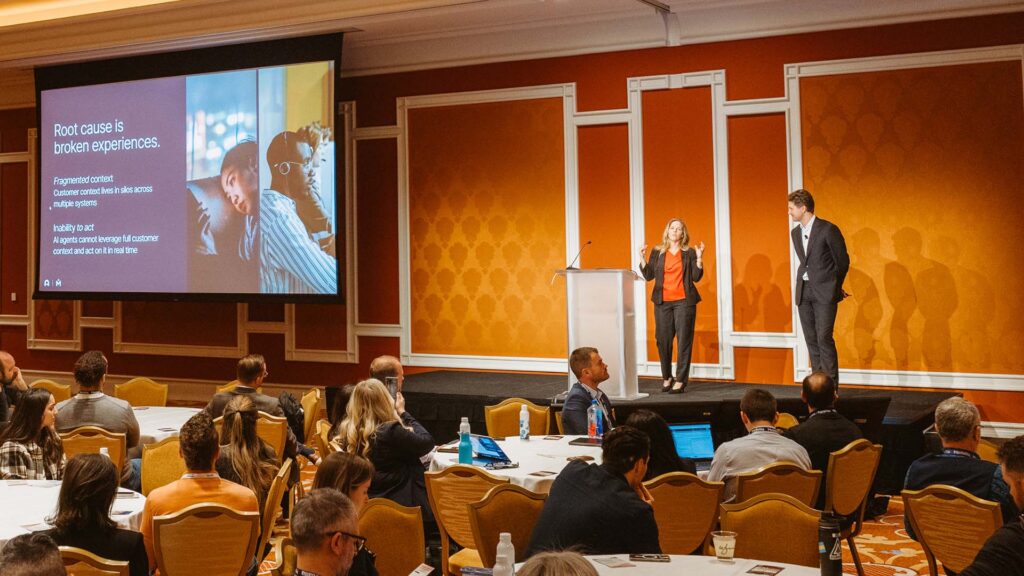
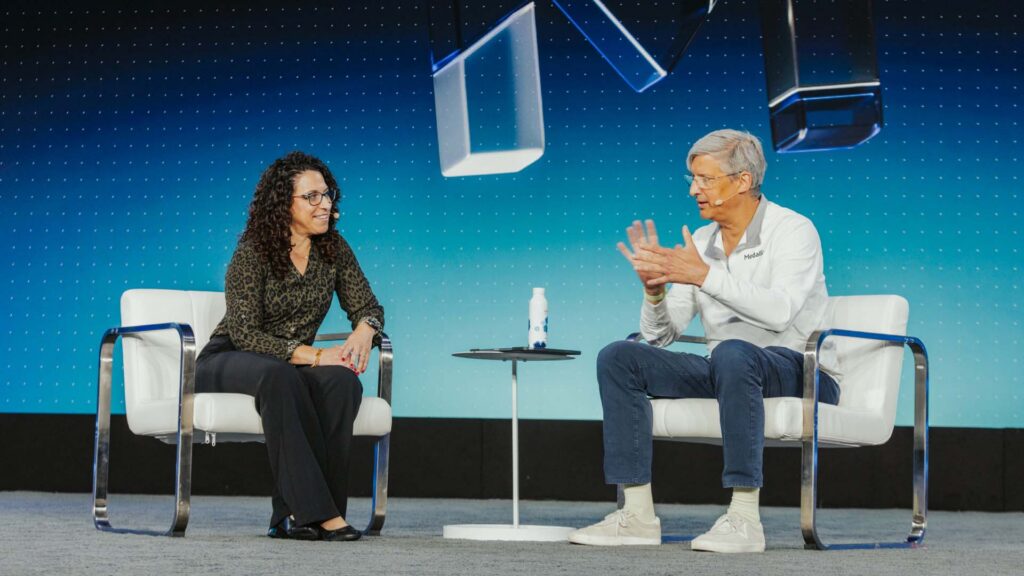
And with that, we are going to shift gears a little bit, and I am going to welcome Sid Banerjee back to the stage who is gonna spend some time talking to our customer experience leader [00:30:00] Award of the year with Paloma Perha. So Sid and Paloma, welcome back.
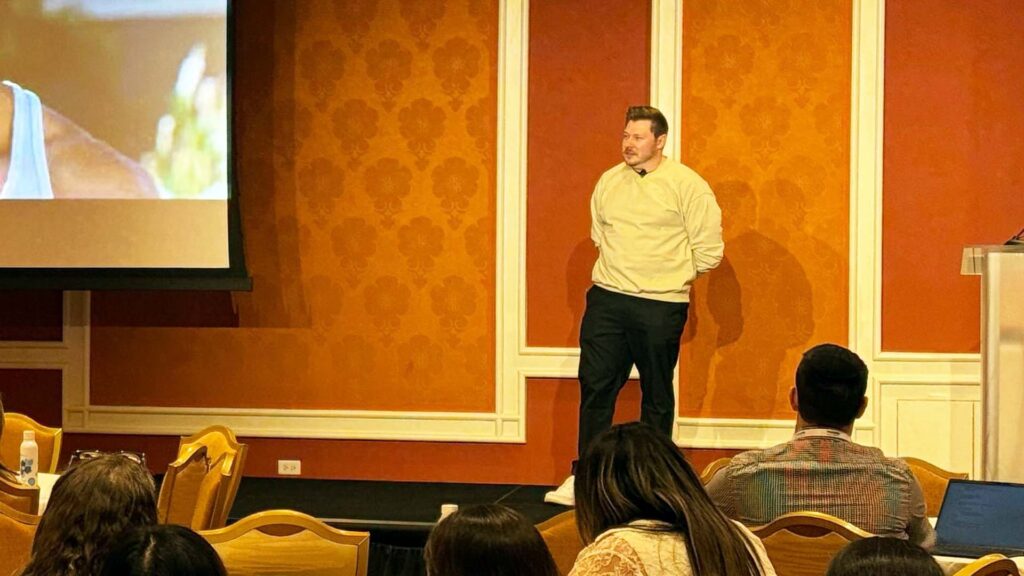
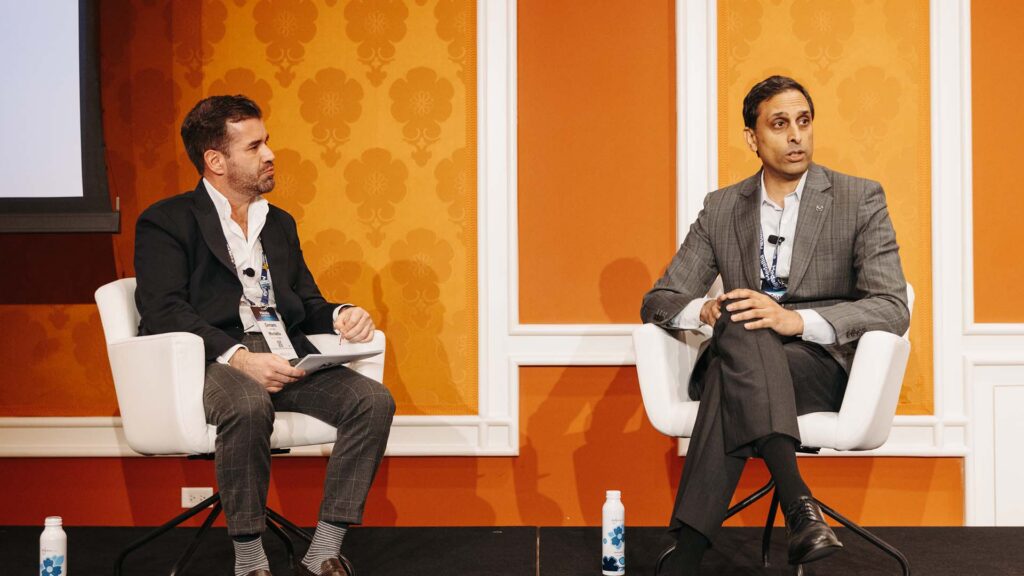
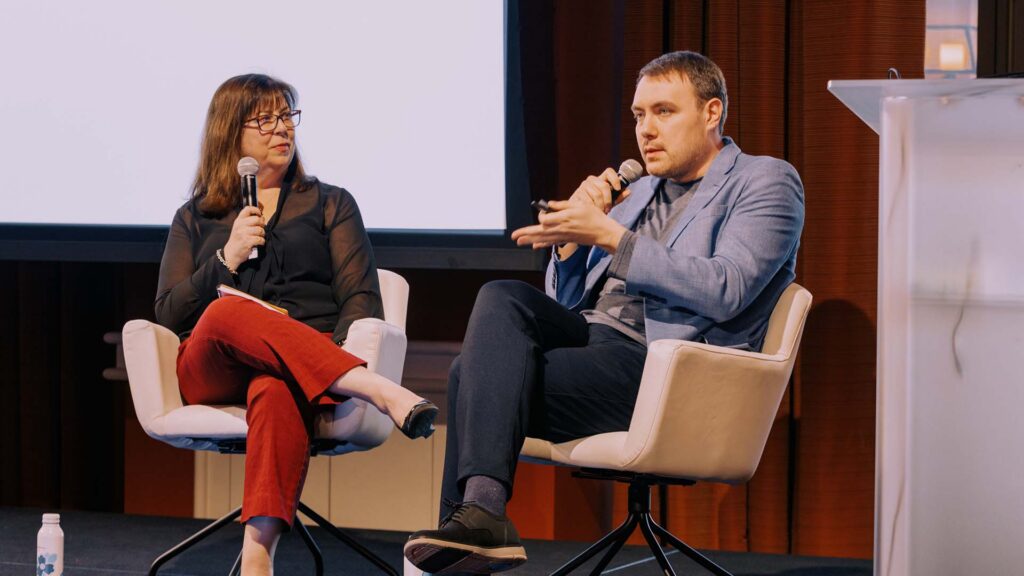
Sid Banerjee: All right. Okay. Good morning everybody. I enjoyed dancing with some of you late last night. Maybe we’ll do some more dancing tomorrow. I am very pleased to welcome Paloma Paha to the stage. Paloma is a customer experience manager for San Lucia Ros in Spain. And she was basically not she, the company was awarded the the XP award for experience transformation.
And I would love to take the next few minutes, 20 minutes or so to really talk about how that program was conceived, how it was developed, and really [00:31:00] how you’ve developed good, value realization and ROI from that solution. What I can start with, if you don’t mind, I’m gonna get my notes up here, is maybe if you could Paloma, first of all, just tell us a little bit about first about your, about yourself and then where you started.
You. I understand that you had traditional CX programs and a desire to evolve the program. If you could tell us a little bit about your story.
Paloma Paraja: Yes. When I arrived to San three years ago, I think more or less, okay. We had a very solid service, I think as many of you still have today.
We rely heavily on NPS. I have nothing against NPS, at least not much more, but I think,
Aimee Civera: nor do I,
Paloma Paraja: it serves some debate, but we have two big problems. Timing and the lack of context.
Timing. Because usually when you send a survey, you wait until an interaction or a process finish.
And then you ask how did it go? So if something went wrong during this process, you are missing the opportunity to change the outcome.
So we were just measuring dissatisfaction, but we were doing nothing to [00:32:00] prevent it. And an insurance sector as us. This is a huge problem because behind any customer’s interaction, there is a moment of truth.
With a huge emotional church as flow leaking fire, the loss of someone you love of a health problem. So missing this time for Act 10 was a big problem. And also the, on the other hand, we were lacked of context. We were sharing NPS reports. But these are just numbers, right? So trying to get Tim simple by sharing them numbers is something almost impossible.
Don’t waste your time to try to do it because it’s not going to work. We realize, and we took a moment for doing something that is very simple, but we forget sometimes in our workout day to day which is putting really on our customers shoes and thinking what. What would I prefer if I was living the situation?
And we [00:33:00] realized at me, and maybe many of you, if I’ll be passing through one of those complicated situations, damaging my home to my family or whatever happens, I will make sure that the company knows it.
Maybe through the phone, maybe takes in, maybe shouting or not, doesn’t matter, but you will do it.
Sid Banerjee: Yes.
Paloma Paraja: And we realized that customers were telling already us everything we needed to know, but we were not listening. And that was the, I think the thought that made the big change.
Sid Banerjee: I, yeah. I, no, and we should probably tell, for those of you who don’t know the kind of industry that that San Lucia is in, it’s an insurance company.
And insurance for those of us who’ve ever had to file a claim or deal with anything. It is a very personal business. Yes. So there is a lot of storytelling from your customers, a lot of emotion, understanding really those drivers and how to handle that. I think that empathy at scale is a very important part of, yes.
[00:34:00] Your role when you’re supporting those customers
Paloma Paraja: and you spend many time paying for almost nothing. So when it happens, you expect a good. Response.
Sid Banerjee: That makes a ton of sense. Switching to a different topic, but obviously connected to the transformation it’s not uncommon in organizations particularly for CX leaders that it’s not just about technology adoption, it’s really about organizational alignment, right?
Getting everybody in the organization to say. We don’t want to just look at a score. We want to do more. There’s decision making. There may be, different opinions or maybe bureaucracy. How did you manage that? And it’s also ownership, right? Who owns the data? Who owns the systems?
How did you manage that kind of outreach and process of convincing people to try something new?
Paloma Paraja: I think it was maybe our biggest challenge. We are a hundred year old company and everything has been created like progressively, but in a very fragmented way.
Sid Banerjee: Yeah.
Paloma Paraja: All our systems and even the teams that work on them are not prepared to speak to [00:35:00] another.
Sid Banerjee: Sure.
Paloma Paraja: And they work in that way. So breaking these silos was a big challenge.
And we are studied by. Forgetting NPS scores and these kind of reports and starting to speak their own language by bringing Medallia information from internal systems and operational data. We are not just mapping different interactions, but linked to each one of these interactions.
We bring very powerful information. For example, in a home repair, we know. Who the claim handle was, which repair technicians were involved, how long took them to finish his work.
How much cost they repair for us. And we bring also many information about the customer itself. To better understand, we connect this data with the information we still have in Medallia from all the different interactions, like to better understand the whole picture of the customer.
And by doing that, they started to understand what we were. [00:36:00] Saying to them,
Sid Banerjee: sure.
Paloma Paraja: Not just numbers but realities and customer stories. We were not just sharing more, this is what customer is saying, but this is what’s happening in your service and your processes, and this is how it’s impacting customers.
Sid Banerjee: What is the the the cadence? Are you meeting with the business on a regular basis? Are you sharing reports? Is there, is it a collaborative approach in terms of Yeah.
Paloma Paraja: Yes. In fact, we have. In a way end of sharing reports and their own teams access to Medallia.
Sid Banerjee: Okay.
Paloma Paraja: They are heavy users.
Sid Banerjee: So they’re on, they’re getting access to
Paloma Paraja: it
Sid Banerjee: directly.
Paloma Paraja: Yes. And they have the own reports with the information they need.
Sid Banerjee: Yep.
Paloma Paraja: To. See it at the moment they need and they are daily entering medallion using the information. We don’t need to share them. Okay. And to collect
Sid Banerjee: so they can self service if they
Paloma Paraja: need.
Yes.
Sid Banerjee: Okay.
Paloma Paraja: And this was fantastic because at the beginning, and I think in many c extent this happened, you have to be behind the people saying, we need to change these. We have a problem here. We need to work. And nowadays. The other [00:37:00] teams in the company
Are what are asking us for made new projects and to get into new initiatives to improve customer experience.
Sid Banerjee: Very good. And I wanna maybe just describe a little bit of the architecture of what you’re doing today. So with me, you’re bringing in calls. You’re bringing in
Paloma Paraja: Yes.
Sid Banerjee: Digital sessions from the DXA. Yes. You’re bringing in obviously surveys. You’re also bringing in social comments, correct?
Paloma Paraja: Yes.
Sid Banerjee: Yeah. How, tell us a little bit about that architecture. So how did build it and how does it get used today from a process perspective?
Paloma Paraja: The first was completing service because they were stabilized. So we decided to move the context and to make it a little bit more understandable.
Then we started with social. Which was maybe the easiest to implement Sure. Because of the connectors. Okay. In social, you need to spend many time by learning what you’re receiving and cl cleaning. It’s
Sid Banerjee: noisy. Yes. Yes. Social can be noisy. Yeah. But
Paloma Paraja: when you clean all this noise, you start finding some insights that are very very valuable.
And then [00:38:00] we start with a speech.
We made it through, small connection at the beginning with 1000 calls per day. Okay. Now we are listening a hundred percent of them. A
Sid Banerjee: hundred percent of calls,
Paloma Paraja: yes.
Sid Banerjee: Okay. A
Paloma Paraja: hundred percent.
Sid Banerjee: Yep.
Paloma Paraja: Then we move into the digital world to better understand behavior.
But all these happen because we were convincing the teams and our CEO and our structure that every step we were made in had value. We do it progressively. It took us two years. Not too much.
Sid Banerjee: Okay.
Paloma Paraja: But we were like showing results in any step with it and then finding a use case for the next one with very or high impact in business.
Deploying it, and then evolving into the whole.
Sid Banerjee: Good. And at this point you are, very much this is the definition of a truly omnichannel solution. Yes, of course. Not just bringing in surveys, but bringing in all of the omnichannel content and insight. Yes. Yeah. And I, the I wanna bring it back to some of the [00:39:00] conversations we had yesterday around driving efficiencies, driving value.
How do you measure success? What do you, when you look back at, were you able to improve quality or decrease cost or drive more efficiency? Is that a big part of how you justify the value going forward or.
Paloma Paraja: Of course we have KPIs and we have to measure them.
Of course, we need to continue measuring NPS. Yeah. We have increased more than 10 points since we met you.
Sid Banerjee: 10%? Yeah. 10 points.
Aimee Civera: Yeah. Yeah. Okay.
Paloma Paraja: But this is just to reflect of what we are doing. Sure.
Aimee Civera: That
Paloma Paraja: is. Is actioning everything. We are listening. Nowadays, the last year, and it was an increasing one, we have listened to more than 1.6 million calls.
Okay. 1.2 million digital sessions through DXA and 115 surveys, which is with their comments, text comments. So this is all about unstructured feedback,
Aimee Civera: okay?
Paloma Paraja: It’s the only way of truly understanding.
And, but I think that. What really makes the [00:40:00] change and how we measure is by the action. We don’t follow too much these numbers, but we always have an eye on how many alerts we are closing on time.
We are now on a 98%, which means within 48 hours. This is our most important KPI. Okay. But we also are achieving all the things with teams that are really involved. For example, we are recovering. One out to four policies more or less after a cancellation. Because we detect it right through sebi, through a call, through wherever.
We’re avoiding 54% I think, of churn risk that we detect over all these patterns.
Sid Banerjee: So you’re predicting or at least capturing it before the event happened?
Paloma Paraja: Yes.
Sid Banerjee: Yeah. Yeah.
Paloma Paraja: Yes. And. By aggregating thousands and millions of these interactions is where we can find patterns that help us to move forward the organization.
Sid Banerjee: Fantastic. [00:41:00] Fantastic. I think I want to, you, you and I were talking before the session about the fact that you are very much linking CX and ex together. Can you talk a little bit about how that works in the context of this program?
Paloma Paraja: Yes. In fact, we have Medallia for both programs. Okay. Which will help us a lot to, to implement it.
Nowadays, the first approach we have done it is it’s through the contact center because we are analyzing a hundred percent of the calls and obviously we know the agent behind Sure. Each call. And after the call, we made a survey to the customer and we asked him how it was. So we are starting to see that.
It’s a reality with numbers and with percentage that the employee experience is affecting the customer experience. Sure. But we are now very focused on understanding this to the whole organization because it’s very easy to imagine how the experience of a person that is in front of the customers.
Directly influence in customer experience. But there are many other [00:42:00] teams behind the scenes that also have an impact.
So with our EX program, we are constantly measuring the temperature of experience for the whole organization. Both in front of the customer or not, and. We have the idea of measuring this impact in the complete customer journey with all the teams involved in each part of the process and how it’s affecting the customer experience.
Sid Banerjee: Yeah. I think this is, to me a very powerful kind of observation because it, and a lot of organizations we think about how is the employee that’s serving the customer, the employee on the phone, the employee in the office? Yes, but that employee is only as good as all of the employees behind the curtain that are basically allowing that employee to do the job.
So the feedback of everyone in that almost think of it as a organizational supply chain, is as important as the feedback from that customer facing employee.
Stephanie Leheta: Yes.
Sid Banerjee: And I think you’ve done a very good job of trying to understand how each of those employees affects the value and the efficiency and.
The emotional state [00:43:00] of the employees that ultimately
Paloma Paraja: Absolutely. Touch the customer.
Sid Banerjee: Yeah. ‘
Paloma Paraja: cause in fact the employees that are in front of the customer, they’re just like translating the message.
But all this message is done, but many of the people that is behind.
Sid Banerjee: Exactly. Fantastic. We have a couple minutes left.
I maybe if I could look at a kind of a forward, maybe forward forecast. What do you are, what do you foresee? What do you predict? How this program might continue to evolve and maybe what might be coming in the future?
Paloma Paraja: First this big focus on joining EX and CEX world and making like a kind of unique voice through the whole company.
But we are also very focused on predictability and productivity because now we have enough information from unstructured feedback to do that. We want to be able to. Resize our contact center teams, depending on demand. Also our work provider networks and to communicating proactively customers with some advice when we detect the first [00:44:00] thing of something that is going to happen.
So we are starting to work on this. We have made the first steps especially on the providers network because it’s something that really has big impact on customer experience of course.
And, but I think the future will. Bring us for this.
Sid Banerjee: Yes. So it’s predicting and proactively communicating.
Yes. That makes a lot of sense. All right. My, I guess my my last question is a similar question we’ve asked other people, but advice, what advice should you give to people who might be saying, I like what you’re doing at Santo Lucia? How do I build a program like this?
What did? Yeah.
Paloma Paraja: I think that the first one, I’ve said it before many times, and you said it too in communications, but instructor feedback is the only way of truly understanding.
It’s very important to know that and to. Don’t waste time thinking if it should be important or not, or how to implement it.
Yes, try it. Maybe with little showcase or pilots, but try it because you will [00:45:00] find a gold mine with that.
Aimee Civera: Perfect.
Paloma Paraja: Another big learning is that leadership trust should be shown through. Tangible changes, right? Not slides. You need to show the whole organization that insight can move and change a lot about operations, economics, and customer lives.
Maybe another one is that context. Brings empathy.
MC: Sure.
Paloma Paraja: And when you are able to understand everything that it’s behind the scenes, you can connect better with other teams, other, the people in your organization, of course, with the customers. But when you start to see it, the actions came alone.
It’s like obvious.
Sid Banerjee: Fantastic.
Paloma Paraja: And the last one is that. Listening is not a project or something very technological. It’s a discipline.
It’s a daily habit that you [00:46:00] have to take in every decision that is made in a company
Sid Banerjee: listening is discipline. My wife tells me that all the time. I do better job of listening by the way, I called my wife last night and told her, you are like a main part of my presentations the last two days.
She loves it. She loves it Anyway. Alright. I I really appreciate your time today. Thank you. And I, I might just end I was reading the submission for your, your award. And I, if you don’t mind, I just wanna read some of the outcomes here. So you touched on some of these, your program has had produced a 10%, a 10 point increase in NPS.
A success rate of triggered alert resolution of over 60% on several thou, tens of thousands of alerts a year. Identifying threats, right? Complaint churn, et cetera. So that’s a key use case of what you’re doing. And then also trying to understand how to recover policies, right? You’re using this to make sure even if something does go to cancellation, you look for ways to proactively recover those.
So there’s really good business outcomes that you’ve really focused this program on. It’s not [00:47:00] just about listening. Obviously empathy is a big part of this, but. Empathy gives you understanding helps you make decisions. Absolutely. And do better things. And it’s, it is just a fantastic use case.
Congratulations on the award. And again, thank you for sharing your story with
Paloma Paraja: us. Thank you. Thank you so much. Thank
Sid Banerjee: you.
Paloma Paraja: Thank you. Thank
Sid Banerjee: you so much.
Alright. We are done with the morning mainstay sessions. I, oops. I would encourage all of you to attend the further breakouts. There’s more customer meetings, there’s more product and technology overviews. Four 15, please come back here for a great keynote from Alison Levine. And then this evening more dancing.
So enjoy your day. Thank you very much. [00:48:00] Alright.