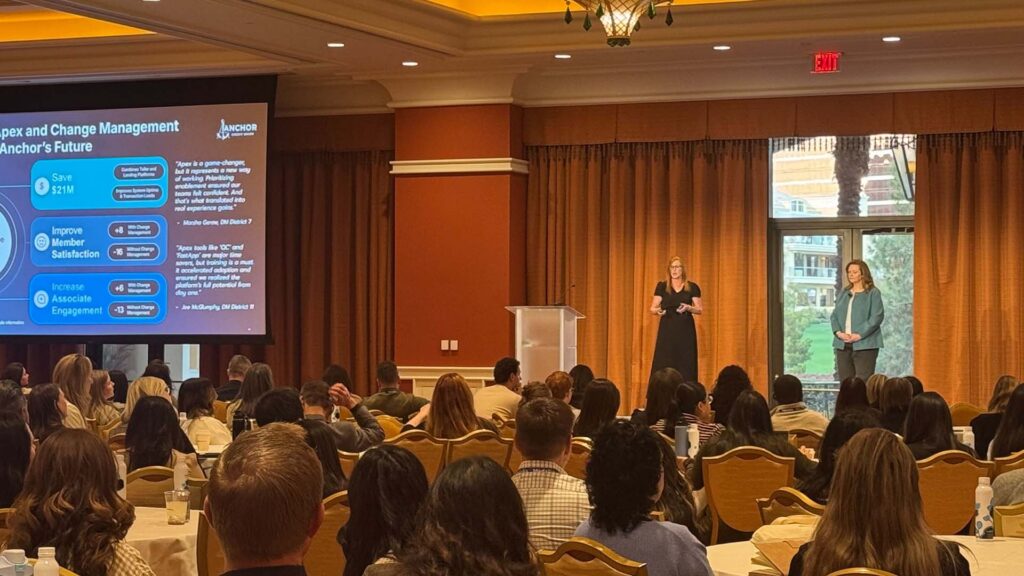
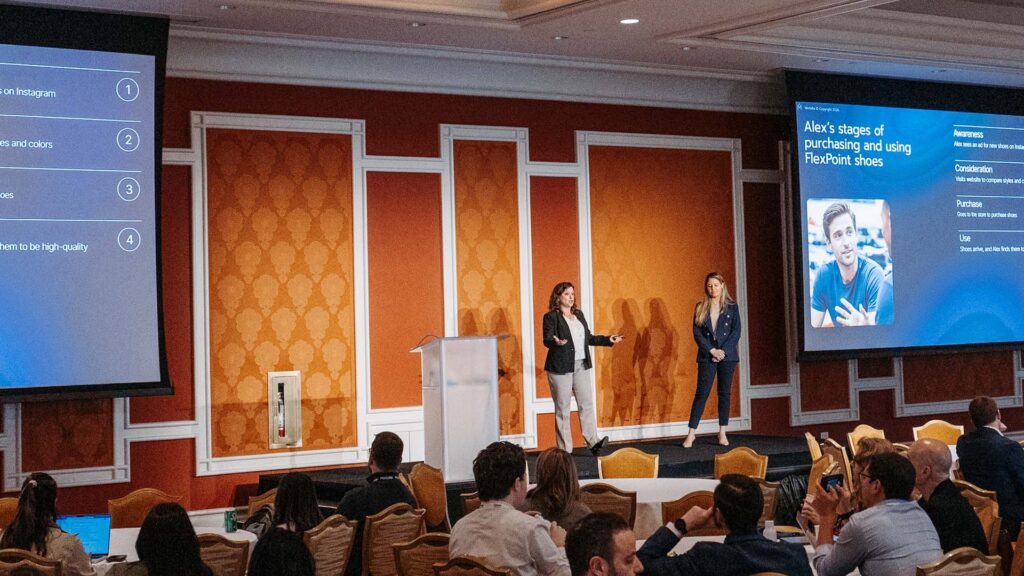
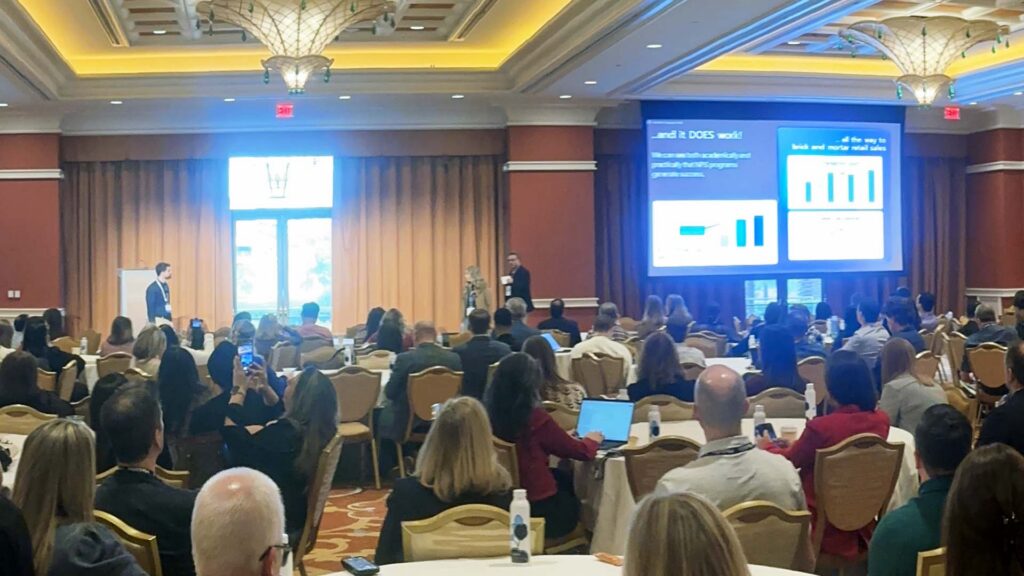
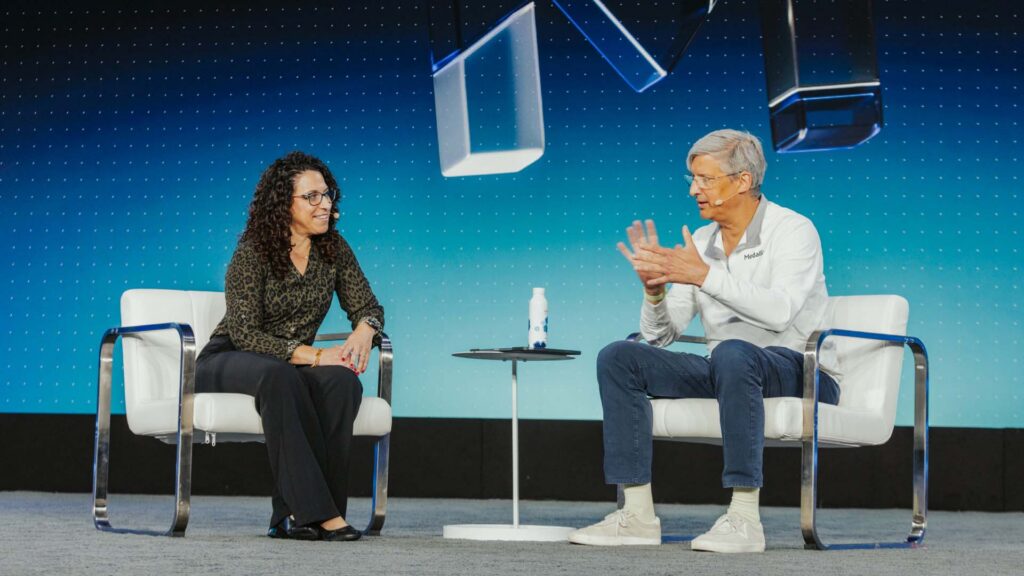
MC: [00:00:00] Can I get a woo.
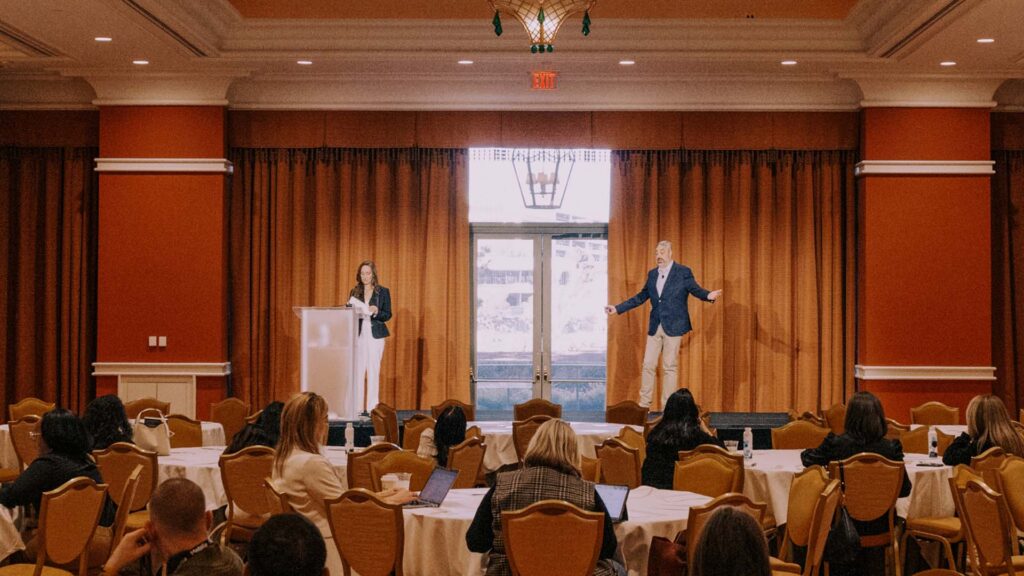
Ladies and gentlemen, please give a warm welcome to Sid Banerjee.
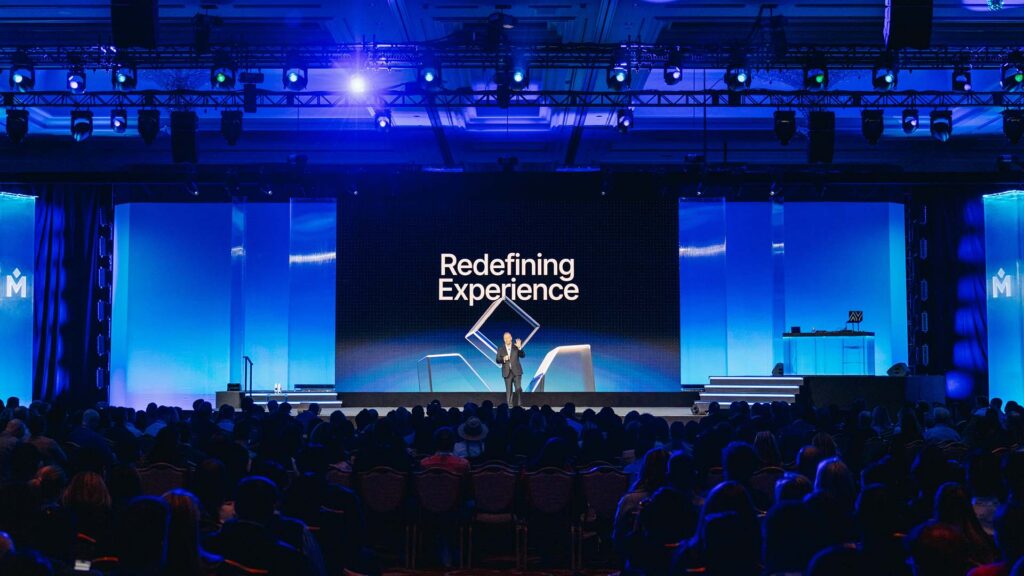
Sid Banerjee: All right, let’s do it. [00:01:00] Hello? Hello.
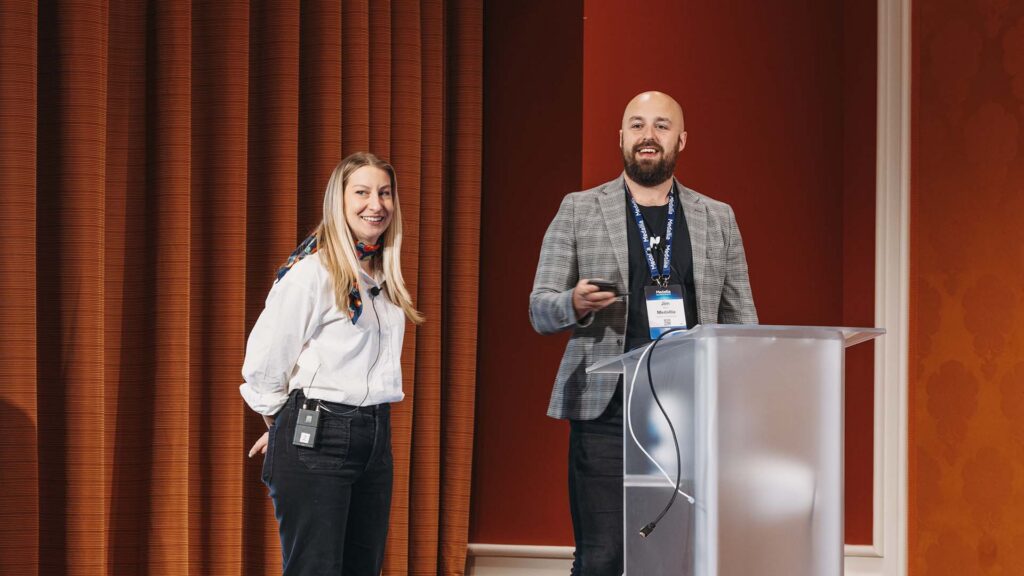
Good to see all you again. I pulled a little Taylor Swift and did a costume change. I hope you don’t mind. All right. So earlier today we talked about becoming a change maker within your organization and I wanted to spend time this afternoon. To introduce what four and chat with four people who are doing just that.
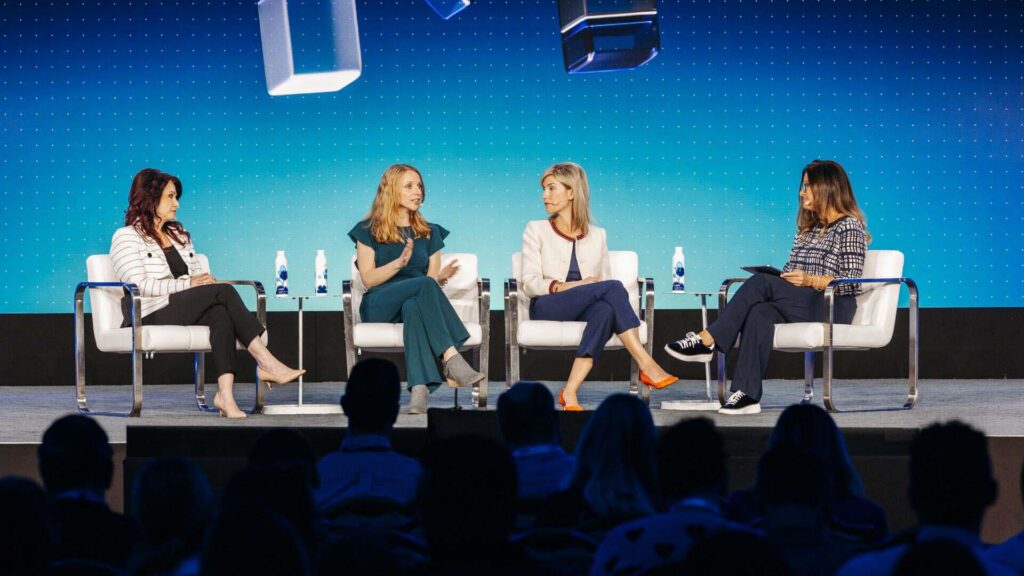
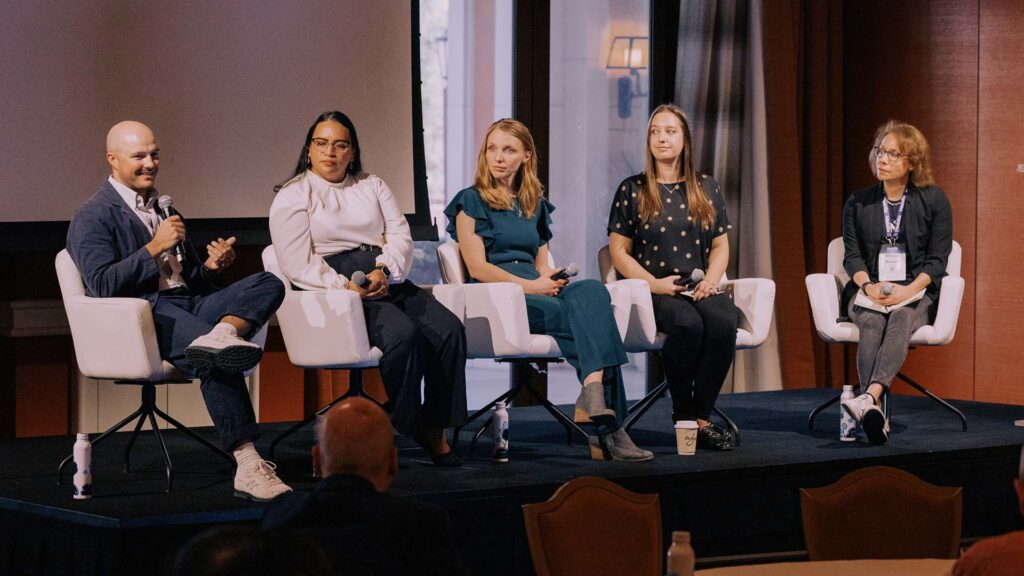
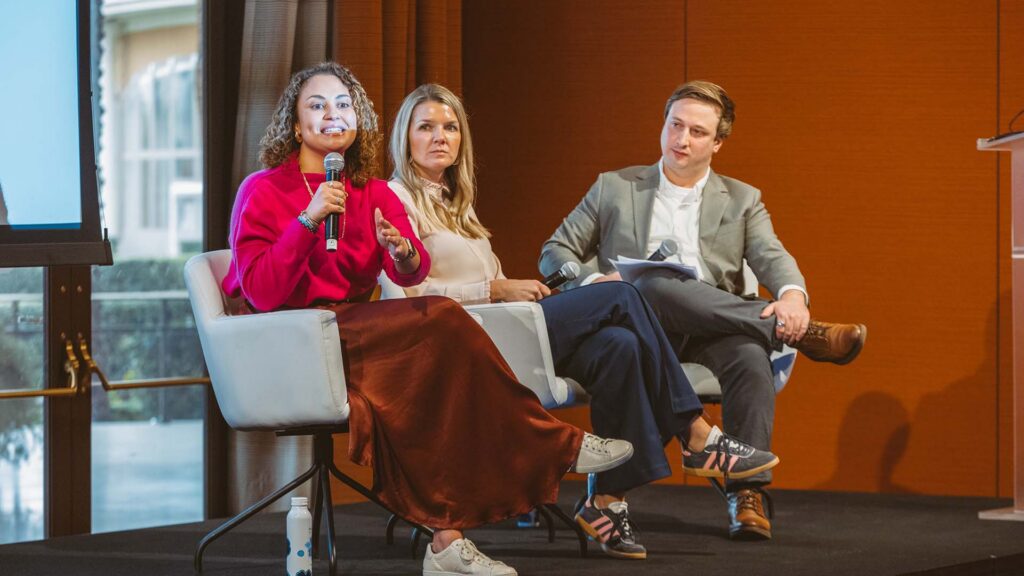
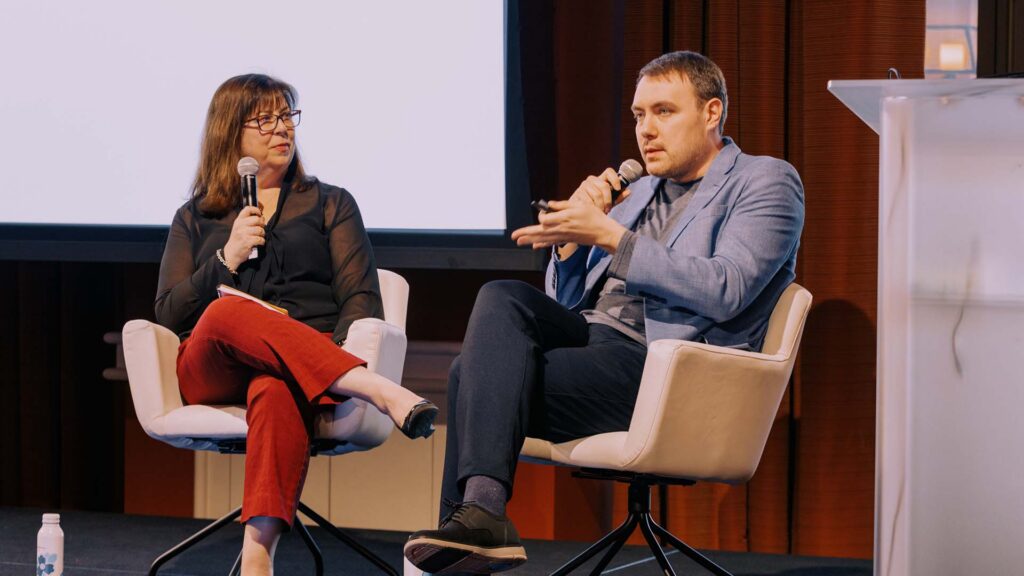
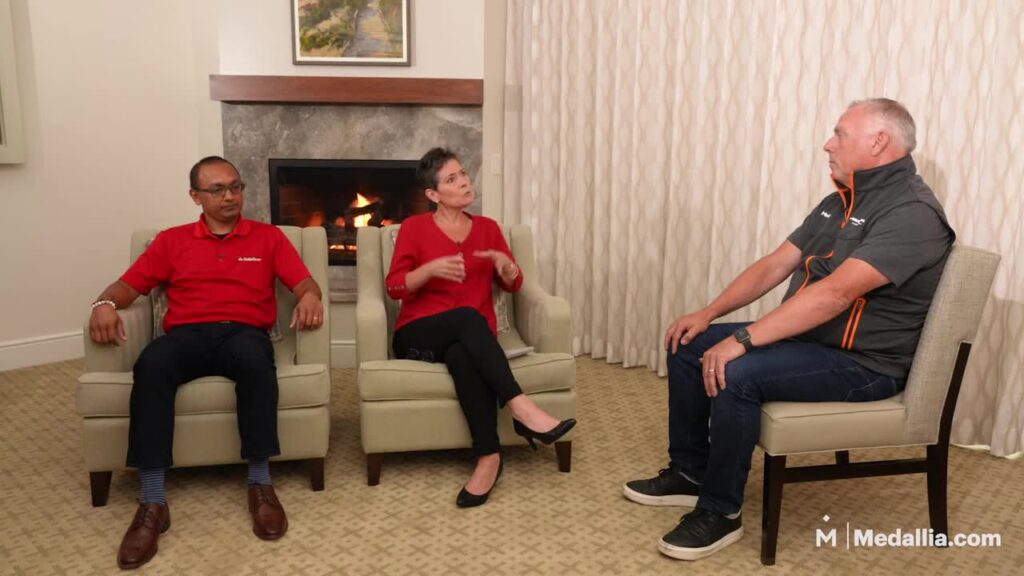
They’re bringing the bus business together around driving business transformation, aligning around outcomes, all the things we talked about today. The four folks come from a variety of backgrounds, work in different organizations, and even in different career stages and jobs stages in their careers.
But I think the common thread you’ll see is that they have good perspectives, good experiences, and hopefully they’ll inspire you, give you ideas, and help you understand how can you. Visualize the change that you might be able to drive in your organizations as well. And with that, I’d like to introduce our first guest, vice [00:02:00] president of Consumer Experience and Membership Engagement at Shipped.
Courtney Oui. Come on out.
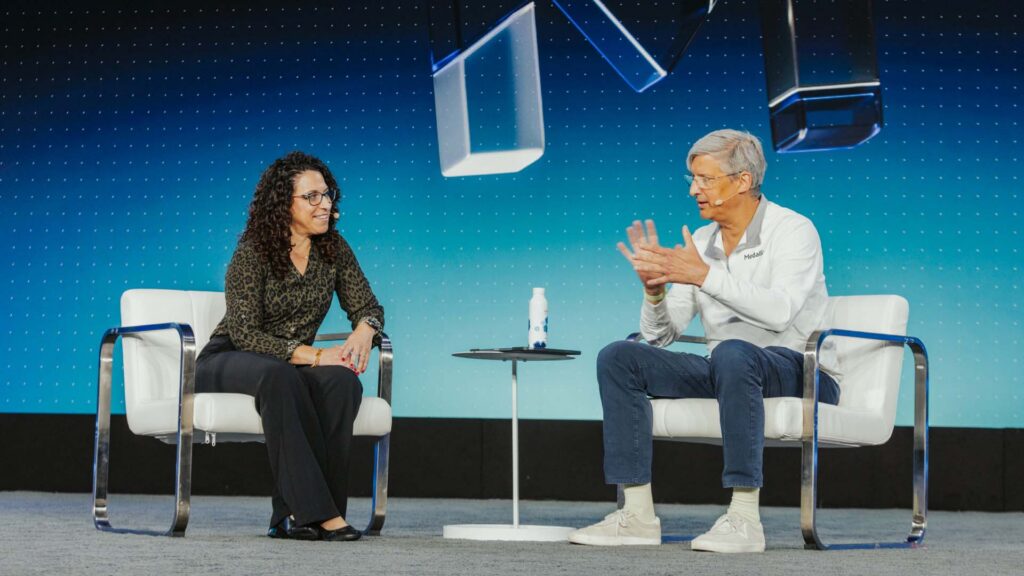
Yeah. Welcome Courtney. Hey, very good. Have a seat. All right. All right. I don’t know how many people know about ship, but maybe you can tell us a little bit about you and your role and just generally what, what Shipt does is for a business. That’d
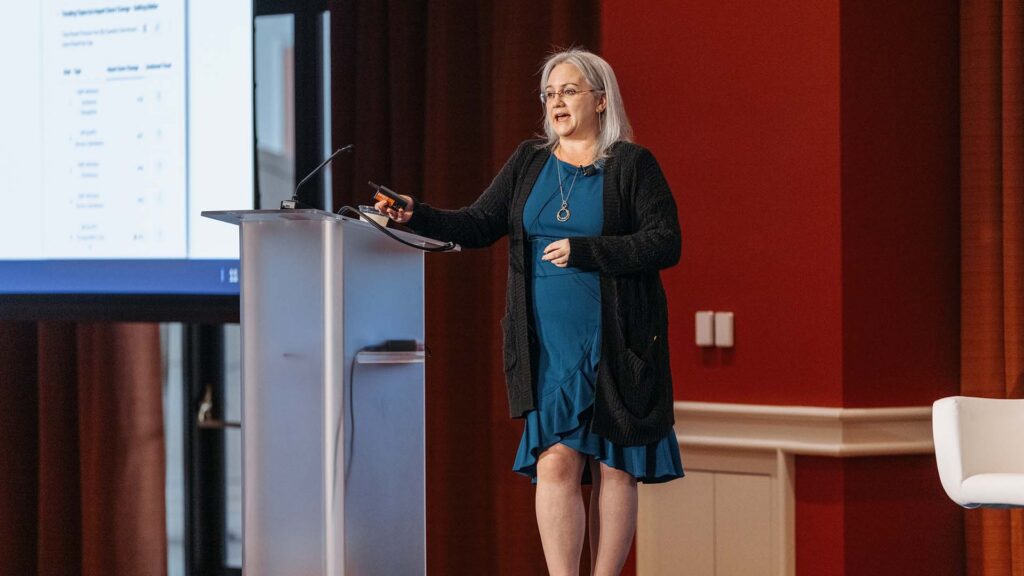
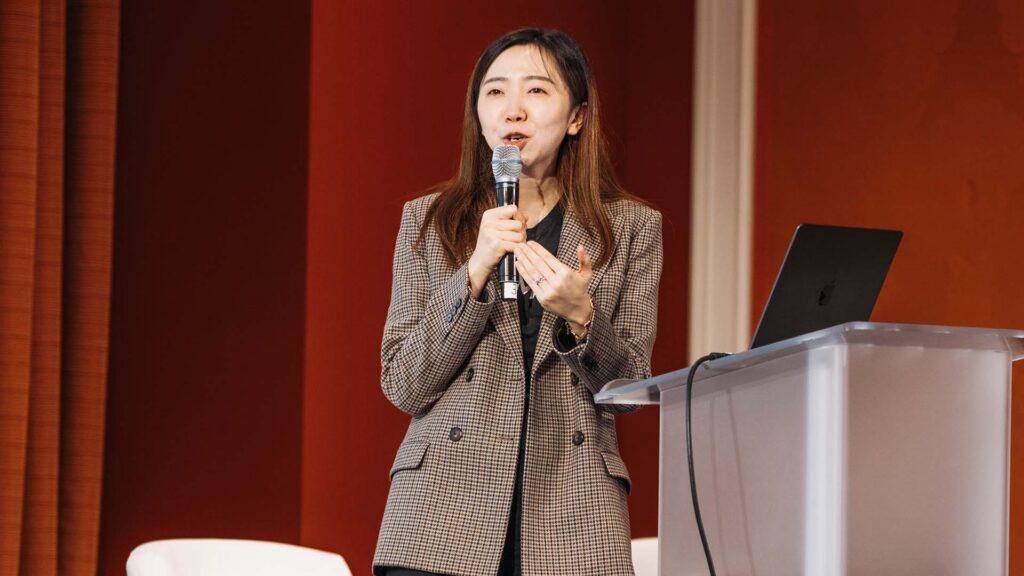
Courtney Owumi: be great. Yeah, for sure. I’m Courtney Owumi, vice President of Consumer Experience and Membership Engagement at Shipt.
Under my remit, I have consumer and experience. They live together to help us tell a well-rounded story of what we’re experiencing. I also have membership marketing because our program, our company is run off of a subscription model primarily. And then I also have product marketing for those not familiar with Shipt.
Shipt is a tech enabler for same day delivery. We partner with national retailers and local grocers. And with gig [00:03:00] workers, we have a contracted workforce to provide same day delivery to our customers and subscribers. We are a wholly owned subsidiary of Target, and we also play a key role in Target’s membership program, target Circle 360.
Sid Banerjee: And now you’re not based in Minnesota though, you were down in in the South, if that’s right? Correct.
Courtney Owumi: Yes. Yes. I live in Atlanta.
Sid Banerjee: Atlanta. Okay. Very good. So you mentioned that everyone says, you’ve talked about this in the past. Everyone says they’re customer centric, but shift took the step of putting customer metrics into your actual OKRs, your objectives and key results.
How did that change the way that different departments. Not just the customer facing groups, but finance product. How do they collaborate with your team and what are they looking to try to do?
Courtney Owumi: Yeah. About two years ago, we made a really conscious decision as an enterprise to elevate some of our customer experience metrics into our company OKRs, as well as our strategic priority, our company strategic Priority KPIs.
What that did is that helped us put at the ta, put us at the table of all the conversations. We [00:04:00] see customer experience as a tool to understand what are the guest problems to solve. So we’re always in those beginning conversations to understand what it is we’re trying to do, what we’re trying to do, and then we also help understand the impact of those things.
As we think about the non-customer facing orgs, they’re, at the end of the day, we’re all ultimately trying to do what’s best for the customer. And so I think having that elevation really made that true to our company’s ethos.
Sid Banerjee: Very good. And when you think about driving business model changes, can you talk a little bit about, maybe an example where you were able to really tap into that insight that came from customer experience and try to figure out what should you do and how does it balance against, a score, like maybe an osap, but also the financial risk and financial opportunities that making a change might.
Might produce.
Courtney Owumi: Yeah. I think one thing that really comes to my mind immediately is some of the work we’ve done in this past year around working closely with Target to launch a new benefit to Target Circle 360 members in particular, [00:05:00] right when we were thinking about. What we could bring as an enterprise to value those members.
We turn to our customer data and in our industry, third party delivery, the biggest barrier or biggest perception barrier among customers is the markup. It, we’ve all used third party delivery services before. I’m sure many of us Shipt, Instacart, DoorDash, Uber Eats. The price you pay through those apps is not the same price as you would pay at the store.
That is the markup and that’s. That’s part of the business model of these companies. When we look to say, what could we do to bring enterprise value? We know that’s the number one barrier. To order engagement. And we thought, what if we could remove that barrier for this segment of guests?
How amazing would that be? What kind of business results would we achieve? So that’s one way that we foundationally used our CX program to understand how could we solve this business problem and leveraging those insights to create a business case to ultimately be able to deliver such a capability.
Sid Banerjee: And just to put a fine point on it, [00:06:00] the business case was, I’m gonna lower the charge, I charge my customers. But I can make a business case that I’ll get more engagement, more shopping, more ultimately revenue.
Courtney Owumi: Exactly right. We’re gonna get more orders, we’re gonna get more engagement, and we’re gonna increase retention of those customers.
More importantly, the overall lifetime value of the customer will increase.
Sid Banerjee: So this gets to everything we were talking about this morning. It’s about focus on the outcome and when you can get your C-Suite to say, I like more revenue, then they’ll help you make that change. Very good. And you, last question, I guess I’d ask, do you have a unique perspective on this?
Kind of three party relationship between the customer on the one side the shopper, and then you who are really serving as that platform, that connector. How has focusing on the shopper’s desire actually improved that bottom line experience for the end consumer? I, we just talked about that.
Courtney Owumi: Yeah. But I think leaning into that a little bit more, the shopper is we call ’em our secret sauce, right? They are that last interaction that somebody has with our product. So enabling them to do the best that they can do is ultimately what’s gonna equal [00:07:00] satisfaction for our customers.
We know through our data that shoppers shop with us because they like the flexibility of the work. They like making money, but also what makes Shipt different is they like the connection with the members. Which is really special, vice versa, members like the connection they can have with the shopper.
So we’ve been able to harness that to another differentiator of our brand, which we call preferred shopper. Where you can increase your likelihood of getting the same shopper over and over to really increase that fulfillment experience. So
Sid Banerjee: you build a relationship and again, I want to clarify this ’cause that’s when, I didn’t quite get this initially when we talked.
The member is the person buying things. The shopper is the gig worker that’s actually delivering shopping and then delivering things.
Courtney Owumi: Yes.
Sid Banerjee: So you’re giving that person in the middle, that person that works with you power to control how they interact with not just you, but with. The actual members themselves.
Courtney Owumi: Absolutely. And the results are amazing. We see double digit increase in our NPS when they have orders fulfilled by a preferred shopper. We see double the order engagement rates of the member. Yeah. So focusing just [00:08:00] as much as we do on our customers our end customers as we do as our, on our shoppers, yeah.
Helps provide that total benefit.
Sid Banerjee: And what I love about this story is that. Again, in the case they’re not technically employees because they’re actually, they’re gig workers, but
Courtney Owumi: they’re not employees. Legal team.
Sid Banerjee: Yes. If the IRS is here, they’re not employees. But it is a form of employee experience.
Or kind of worker experience. And again, I think it ties together the importance of not just understanding what the customers want, but also understand what the workers need. To feel like they’re having an engaged and fulfilled job working in the, in an organization. That’s fantastic. Looking at your path, I know you’re not a, the, a typical CX leader.
You’ve had, you were an engineer. You, I, you worked on missiles in your first career after you had your engineering degree, and you’ve also been a management consultant for AT Kearney. Do you think I guess question is how do you think that background. Has shaped the way you think about your work at shift and generally about customer experience?
Courtney Owumi: Yeah, I think if you would’ve told Courtney sitting in fluid mechanics when she was in [00:09:00] college that she would end up being a vice president in marketing, she would’ve laughed you out the door. But as I reflect on what my experiences helped mold me or helped me into today, I think it settles on two key pieces.
One is. This innate desire to understand the why behind a problem. I think that probably comes a lot from my consulting background. If anybody’s been in consulting and you’re on a small team, you learn very quickly that you have to pull your weight to get those in deliverables done. And so I learned very quickly about how to ask the right questions, how to make sure I understood the root cause, the why of how my piece fit into the puzzle.
And I think that’s so important as you think about our CX journey. I think the other thing is just a strong appreciation for data-driven decision making. But also not just quantitative data, but qualitative data. They work together they tell a full picture. So having those two pieces of the puzzle are equally important.
And I think those two key [00:10:00] ideals in mind. I think that’s I think what helped shaped,
Sid Banerjee: And we had talked about that. I can relate. I was an electrical engineering college and everything I learned about CX I learned. No, I didn’t learn any
Courtney Owumi: engineer. No. Didn’t learn any of it.
Sid Banerjee: Alright, thank you very much Courtney.
I appreciate your time and your insights.
Courtney Owumi: Thank you so much. Thank you.
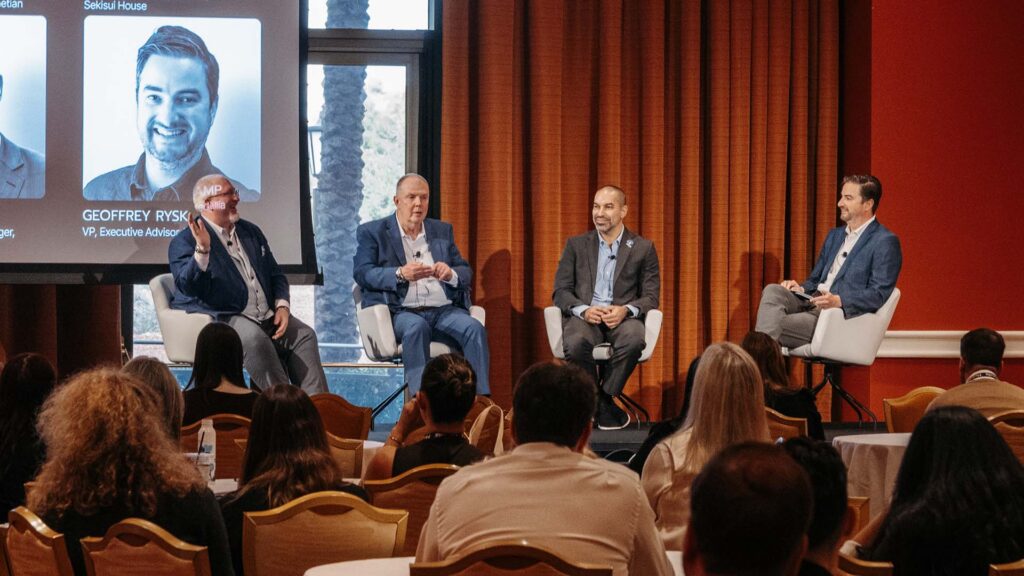
Sid Banerjee: Alright. While you think about, when you think about industries that are often setting the standard for experience and frankly we’re pioneers in the experience management space, you probably think about hospitality. And with that I’d like to welcome our next guest. The Director of Global Guest Experience, insights and Strategy at Hyatt Hotels.
Brendan Stroheim, come on out, Brendan.
Hey,
thank you. Good. Thank you very much. Alright. I’ll ask you the same question I asked Courtney. Tell me a little bit about you and your role at Hyatt and what that entails. Yeah.
Brandon Stroschein: Happy to, first of [00:11:00] all, thank you for having me here. Great to see everyone today. I’m Brandon Stroheim with Hyatt Hotels.
I lead Hyatt’s Global Guest Experience Program team. As a team, we sit within a portfolio health organization. We’re together, we operate in service to over 1,450 franchise and managed properties operating in 82 countries. Together we have a common set of functions and agreeable data language anchored in guest experience, core measures that we built agreement with in the organization to move our operations and see guests seek out guest experience outcomes. As a program we use an internal brand language called Hiat. So Hiat is our program that’s primarily powered by Medallia technology. And provide us provides us the product to reach our users.
We, we’ve made some pretty major recent milestones following some strong growth. In 2025, we had over 80,000 active users have collected over 10 million data signals and have several fully scaled programs that [00:12:00] including our stay experience through several channels such as post stay, in stay, Medallia concierge with large events meetings and events program.
We’ve done some significant expansion in our contact center.
And we have a colleague experience program as well. Aside from that, we operate many sub-programs in support of ancillary services that support offerings such as spa, f and b, wellbeing, the list goes on. In summary, our team’s extremely data driven.
Sid Banerjee: Yep.
Brandon Stroschein: And we’re really aligned to support Hyatt in their direction to be insights led and brand focused.
Sid Banerjee: Fantastic. I I recall, and I think you know this, Brendan shortly after I came into Medallia last year, I had the opportunity to attend a vendor conference and. I was very impressed by how much change is happening in the business.
Bringing in new products, bringing in new service offerings, changing the technology, really altering the experience and really keeping it current with what’s going on in the market and what’s going on with market demand. In addition, I know Hyatt has had incredible portfolio expansion over the last few years, especially in the [00:13:00] in the luxury and the all-inclusive areas.
I’d love to understand how you’ve scaled that guest performance program to put measurement. Top of mind for every new property that joins the family and really make it part of the culture of excellence.
Brandon Stroschein: Of course over the past decade, Hyatt’s completed an asset light shift. Has significantly expanded and diversified our brand portfolio and has built our world of Hyatt program to be the industry’s fastest growing global loyal hospitality loyalty program.
It’s very exciting to be a part of this growth where world of Hyatt members have more choices than ever before. To choose from our five brand portfolios of luxury lifestyle. Classics Essentials and inclusive. The guest experience is what brings our brands to life. And we aim to support our properties on that mission of driving insights that are extremely actionable to elevate and ultimately deliver our, deliver on our promise of care.
In order to do this, we’ve also built a ton of understanding with our key stakeholders, including our owners, operators, properties and several corporate teams to [00:14:00] identify a shared. Need and shared value for our most key core metrics, which are room cleanliness, room work, in order customer service and condition.
And we know confidently that when we do those things right, we’ll see positive outcomes such as improved NPS scores financial performance, and everybody can win when we work together. On elevating the guest experience. It’s that background that has made it a day one priority. For all new brands that join Hyatt.
Okay. And new launches and changes to make experience measurement. Day one, when we’re hosting and delivering benefits to our members on property. To do this, we’ve partnered with internal teams Medallia teams as well, and have done a great job at building. Scalable operations to both keep up with our growth and remain efficient. But what I’m most proud of is that we’ve also been able to deliver customized experiences for our brand users. Or I’m sorry, for our different brands such that [00:15:00] we can meet the unique needs of their brand. To quickly name an example.
Sid Banerjee: Yeah.
Brandon Stroschein: When we brought in our inclusive collection all inclusive resort properties.
What is true in that case is that the stay links are often longer. People will spend more time on property and develop strong relationships with our colleagues. In order to collect more input from that, we added questions specific to recognition and built processes that hotels could celebrate and recognize colleagues.
That was immensely successful and we scaled that to more brands. And today we have a number of properties that are. Really focusing on recognition as a way to celebrate the delivery of care straight from our programs.
Sid Banerjee: Fantastic. Yeah, and it’s constantly questioning how do I make the program better and making exactly improve over time and over space and over locations.
The other, you and I talked a little bit about some of the work that’s going on in the contact centers and you recently saw a massive increase in kind of signal capture when you changed the way that you engage with guests. Can you talk a little bit about how you evolved that touchpoint and [00:16:00] technology platform and.
And why being being location aware and being responsive to the locations is so critical.
Brandon Stroschein: Absolutely. Yeah. Our global care centers are critical to the business. They provide service channels including voice, chat and email to reach our ever-growing base of members and guests who choose to stay with us.
One of the goals we have universally and for our centers is to bring data collection closer to the experience.
We did an assessment in late 2024 and spanning into 2025. Recognize some gaps with our existing channels in the center space. And we tackled that in a couple ways.
One, we rebuilt data connections for some of our existing channels.
Sid Banerjee: Okay.
Brandon Stroschein: And strengthened our reporting invested in our user experience. And we also launched new channels such as in IVR, so that we can collect feedback after, at the conclusion of a voice call.
Through a combination of our, those improvements, we’ve seen a 10 x increase in sample within the year.
And we’ve significantly increased the attribution of service interaction [00:17:00] to feedback. Whereas before, in the case where there were several service interactions and then a survey we struggled with that attribution in some cases. So the combination of those things has given our centers more data than ever before to work with.
To funnel into a number of things, agent coaching improvement. And we’re just starting to, we’re on a path to do more with unstructured data and intend to bring in. Bring and do more with voice and come up with even more streamlined ways to share insights from our interactions with our great agents, with corporate teams and property teams.
Sid Banerjee: Yeah, I think, the story here is something I’ve seen in a lot of accounts lately, which is that you want to really look at getting signal in channel, not doing it after the fact. And by doing that, you can get a much more kind of high fidelity and frankly, greater capture rate. Exactly. And understand what’s working in the channels themselves.
My last question, I guess is when you think about the, the technology stack not just in one channel, but really all, all around the organization. How do you see gen AI adoption capabilities like using gen AI to close the loop to [00:18:00] intelligent analyze and summarize information and ultimately changing the way your employees interact at that last mile in the line with guests.
And I guess I’ll ask you the personal question too, which is I know you’re a bit of a travel enthusiast. Can you talk a little bit about how, that background led you to the career you have and how it shapes your vision for Hyatt?
Brandon Stroschein: Yeah, of course. First of all to address the AI question.
Yeah. Hospitality at its core is a people business.
We see AI as really an enabler of care. We should be able to enhance our human connections by enabling property teams to spend more time doing what they do best, meeting the needs and serving our customers and guests versus trying to be data analysts and spending time.
Sifting through data and dashboards. With that, our goal is to deliver the most targeted, precise, and actionable insights, especially to our hotel teams.
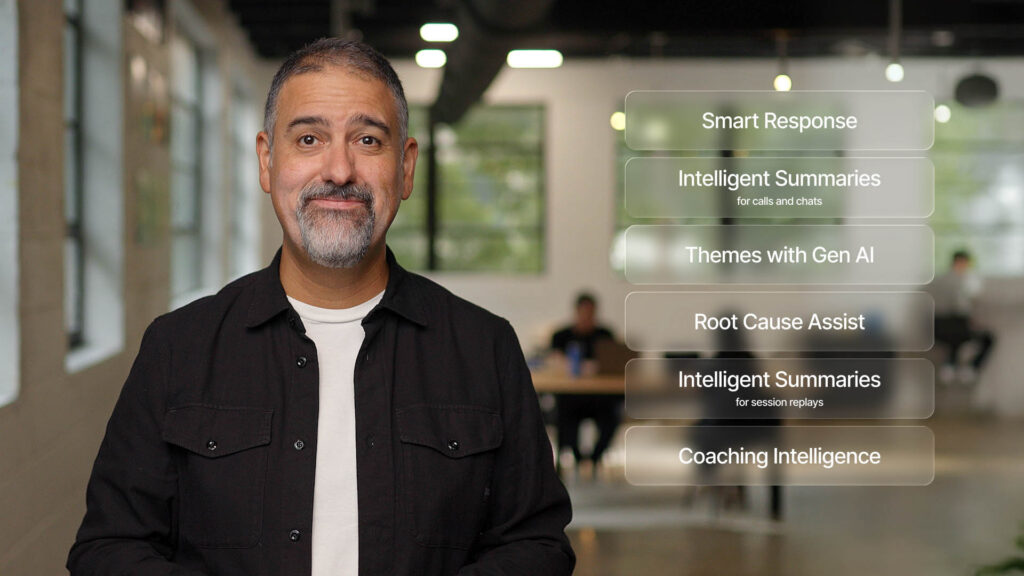
And we’re working through a few prerequisites before we can launch the Medallia based AI features. But we are all about AI and adopting it initially within our immediate team for doing things like insights work or focus [00:19:00] deep dives to meet the needs of our loyalty programs and certain. Properties. But we’re really looking forward to scaling. We’ve already given ourselves a strong pathway to scale. We’re collaborating with other AI initiatives in the organization to make sure that we can fit our capabilities within that and really can’t wait for smart responses, root cause, intelligence summaries, and even some of the features shown this morning to really make a difference.
Yeah. We think they’ll be very complimentary to what we’ve already built and look forward to. Getting a lot of value outta the AI based tools.
Sid Banerjee: Yeah. I wanna plug a lot of the great work I know that Medallia has been doing as well on this. ’cause you were like a lot of customers in this room that had a program that was running relatively consistently, but I would say predictably over many years.
Sure. And we six, seven months ago said, what are we gonna need to do to turn on the new capabilities, activate more value and work together to scope that out and do that? My challenge I think to everybody in this room is if you feel like we need to lean in, we Medallia and you, your teams to do a lot of that, activating the additional capabilities, the [00:20:00] initial value.
Talk to your rep, talk to your account team, talk to your, success manager. Something we want to do everywhere. I think that’s gonna be important. And I will say one final note on travel. I took a year off before I came back to work here at Medallia and I stayed at the Park Hyatt in job Jakarta, Indonesia
Brandon Stroschein: amazing.
Sid Banerjee: And in Jakarta and also in Ho Chi Min City, Vietnam. And they were excellent experiences. So little direct feedback for you. So thank you.
Brandon Stroschein: Fantastic to hear. Love
Sid Banerjee: that. Alright. Thank you so much man. It very much appreciate
Brandon Stroschein: it.
Sid Banerjee: All right. I would like to, and I’m excited to introduce our next guest, global Head of Customer Insights at Maersk Aade. Alu. Thank you. I think I got that all right. Hopefully that’s okay. Okay. Ade.
Ade Adeluwoye: Hi.
Sid Banerjee: Thank you so much. How? Come on out. Very good. Very good. Okay. Alright. So again, quick introduction.
Tell us a little bit about you and your role at Maersk.
Ade Adeluwoye: I’d probably start [00:21:00] with Maersk. I’m not sure if people know much about Maersk. It’s one of the largest shipping and logistic companies in the world.
Sid Banerjee: Yep.
Ade Adeluwoye: We are based in Copenhagen. We are we do end-to-end transportation. We own, we do ocean, we do planes we own warehouses, we do trucks.
In fact, I would say 20% of stuff in here or what you’re wearing has probably been transported by Maersk. What’s interesting at Maersk we have two different types of customers. We have really big customers like Target and Apple, really complex supply chains. By the same time, we would look after aist.
In Honduras. So it’s quite a complex industry and company. I run the customer insight team there. We translate millions of customer interactions. It’s quite unique at Maersk. We don’t sit with cx, but that’s more customer service. We have three teams a customer feedback [00:22:00] team. A data team we really believe is important.
It’s such a data rich organization that we have customer data analytics within the insight team. And we have a larger strategic insights team as well that brings all of the big stories outside stories into the team.
Sid Banerjee: Very good. You know what I love about these conversations is that, pretty much all the folks we’re talking to today have interesting career backgrounds, and I understand your background actually started out.
At the BBC Yeah. British Broadcasting. And also in the music world, how does one get from broadcasting and music to shipping and logistics?
Ade Adeluwoye: Sometimes I wonder myself to be honest on days, but essentially and this is a cliche customers are the same.
Whether you are a fan of Taylor Swift
Whether you’re avid watcher of the blue planet, or whether you are a logistics manager. He sells seafood. Essentially, you are the same. All customers want to feel to be understood. All customers [00:23:00] feel, they want to feel confident in their choices. But most importantly, they wanna feel respected when things don’t go wrong.
I’ll give you an example, A nice B2B example, a nice emotional example. We all know the geopolitical situation happening at the moment.
Courtney Owumi: Yes.
Ade Adeluwoye: And tariffs over the last 18 months has been. A big core subject and it’s escalated over the last couple of years. Real uncertainty for our customers and real uncertainty within Mercer as well.
We did a, but when we looked at the data, real data rich, we got a lot of interaction from feedback. What was interesting was they were actually more emotionally connected to tariffs than ever before, and because they had a personal relationship with tariffs,
Sid Banerjee: right?
Ade Adeluwoye: If tariffs were to work, they would lose their job.
Some of them we didn’t get bonuses if the logistics weren’t delivered.
Sid Banerjee: Sure.
Ade Adeluwoye: Based on that, B2B is just as emotional with the data rich organization we have, we’ll be able to understand where MER fitted in with our customers and [00:24:00] we got some really great results on how we need to be more partner led.
Sid Banerjee: Yeah.
Ade Adeluwoye: So there’s a lot of emotion with in B2B as well. I would like just to say that.
Sid Banerjee: Yeah.
Ade Adeluwoye: It is about the complexity of the journey is different, but essentially the psychology of the customer is exactly the same.
Sid Banerjee: Interesting. So what I’m hearing, if I could paraphrase, music, broadcasting and CX are all about connection.
Ade Adeluwoye: Yeah.
Sid Banerjee: Emotion.
Ade Adeluwoye: Yeah.
Sid Banerjee: And empathy.
Ade Adeluwoye: Empathy. Love it. I would even to say it’s a B2B
Sid Banerjee: Yeah.
Ade Adeluwoye: Emotion. But there’s more anxiety if you’re a B2B. Yeah, you are. If you are the. VP of supply chain for Amazon.
Sid Banerjee: Yeah.
Ade Adeluwoye: And that’s not being shipped. That’s a lot. So
Sid Banerjee: I do know some daughters and of friends of mine who are quite anxious waiting for the next Taylor Swift album.
So
Ade Adeluwoye: see, I’m losing in touch.
Sid Banerjee: Touch. You never know. You never know. All right. In a legacy industry like shipping, I know there’s obviously a lot of long-term personal relationships in the B2B world and those [00:25:00] relationships really are an important part of how you do business. What are the biggest barriers you find when you’re trying to shift the mindset from, from relationship centric to using data to help inform decisions and actions?
Ade Adeluwoye: That, that’s the big one. Shipping is a, at Maersk it’s over 150 years old. And relationships are our strongest assets.
Sid Banerjee: Yeah.
Ade Adeluwoye: Our best account managers know their customers deeply. Our CCO knows our biggest customers deeply.
Amber Lewis: Yeah.
Ade Adeluwoye: But working in customer inside cx, that’s a big barrier.
I see that our leaders trust what they can see and what they can touch. Our executives trust their personal experience, their personal anecdotes.
Over the data we have one powerful story where outweighs server data of 50,000 customers. I get this constantly when we show insights. The big so what, Abby, so what.
So there’s a data gap, but more importantly, there’s a insight gap where we believe [00:26:00] that insights have to have actions and insights. Have to have outcomes. I was in a session yesterday, and I apologize if you’re here. I will steal this, where the person said, we’re not head of insights, we are head of actions.
And that’s one of the ways that we are trying to move. Within mes we do, we need to be better at the storytelling and we need to be better with the C-Suite language. We are integrating Medallion to Salesforce.
Sid Banerjee: Okay?
Ade Adeluwoye: We, what we did within the organizing, what my team did, we positioned it definitely in the language of the C-suite.
We called it closing the revenue feedback gap.
Sid Banerjee: Okay?
Ade Adeluwoye: It then became a growth. The other issue that we are trying to do as well is create accountability and ownership,
Sid Banerjee: right?
Ade Adeluwoye: We don’t ship insights. Commercial organizations has to be accountable for the insights that we do.
Sid Banerjee: Yeah, that makes a lot of sense.
And I think, the fact that you’ve linked the feedback, the experience with the outcome, which is loyalty and revenue, I think that’s important. You’re keeping the other thing is, data can tell stories too, right? Yeah. Stories don’t have to just be what [00:27:00] you heard from your customer. In an executive meeting before you close that multimillion dollar deal, it can be.
The sum total of the data telling a story. And I think storytelling is gonna be important, whether you’re data driven or relationship driven. I think that’s very true.
Ade Adeluwoye: Totally.
Sid Banerjee: Yeah. Last question. I think if you think about driving change I’d love to maybe ask how you’ve utilize technology and the external partnerships you have to help your internal teams to see that customer at scale.
And actually to understand how those insights do affect outcomes. Key performance outcomes.
Ade Adeluwoye: Yeah. Thanks to you guys. We use Medallia. What I love about Medallia, it gives me peace of mind. It allows me to do my job,
My job is to do insight at Maersk. A big organization like Maersk loves to build stuff.
Is the plug and play in Medallia allows us to capture customer feedback in real time. It allows, we have this term here. Some, someone in my team will tell me off for saying this. We like to democratize insight.
Amber Lewis: Yes.
Ade Adeluwoye: And Medallia allows us to do that, and [00:28:00] it’s a great tool and we’ve seen Medallia usage really grow.
We are trying to move away from long insight PowerPoints to instant data and insights.
We also work with exos who brings a real external perspective. They, we can be quite insular. They challenge our thinking. Dare I say, they keep us completely honest. And they bring the outside in.
As a as someone who works in cx, we have to constantly think differently. Yeah. And the technology and our agency allows us to do that. I might say this and Laura who’s in my team would be with Ipsos. I’m doing a bit of a pitch for her 1115. Here you’d be able to really showcase our journey.
What we want to do at me is that we want to ensure that we have the right insight. To reach the right people at the right time, in the right format, in easy to digest business ways, and she’ll be able to show that tomorrow. 1115 guys, 1115
Sid Banerjee: tomorrow story will continue. All right. Very good.
Ade Adeluwoye: And then for us, it doesn’t end there.
We want, we create [00:29:00] customer advocates. So we have a customer, they, we have a big role of trying to make everyone own the mission of being customer centricity. It’s just not about having better data. And better stories. It for us at Maers is to build a culture where everyone thinks like the customer and
Sid Banerjee: fantastic.
Ade Adeluwoye: That’s where we, that’s our aim of where we want to get to.
Sid Banerjee: Alright. Appreciate your insights, ADE. Thank you so much. And we’ll look forward to hearing more from Ipsos tomorrow. Thank you very much.
Ade Adeluwoye: Thank you.
Sid Banerjee: Alright, we have one final guest. And, I would, I’m looking forward to introducing and having a conversation with her.
She’s one of the more, one of the most passionate CX practitioners I’ve had the chance to meet with and engage with this week. Please join me in welcoming the National Manager of Customer Experience Strategy for Toyota Financial Services. Amber Lewis.
Hello. Hello.
Thank you. Thank you. Thanks for coming in.
Hello? Alright.
Speaker 7: Hi. [00:30:00]
Sid Banerjee: Okay. Hi back. So I will ask you the same first question. Tell me a little bit about you and. Your role at Toyota and Toyota Financial Services?
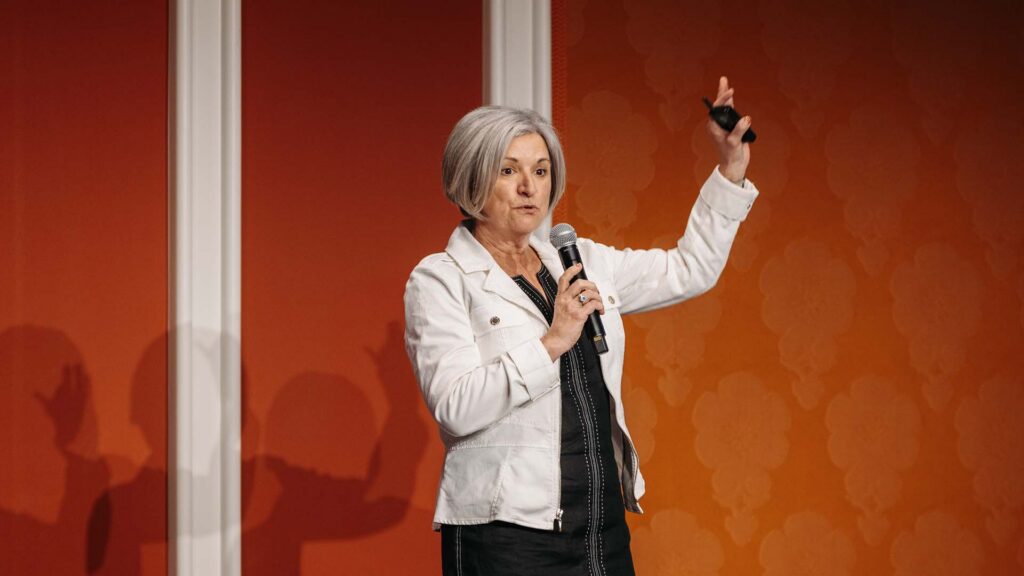
Speaker 7: Yeah. My name’s Amber Lewis customer experience strategy national manager. We created the customer experience strategy team about four years ago.
And I was able to really build my own team. So small but mighty. Really no official funding, right? Got into the game, but my team is made up of really two sides of customer experience. One is customer insights and the other is customer, excuse me, connected experience within Toyota Financial Services.
And we support Toyota, but we also support Lexus financial services and a couple private label brands, including Mazda Financial Services and Bass. Pro shops financial services but ultimately driving those insights across the brands. I’ve worked with TFS Toyota Financial for 21 years I’ve really been focused my entire career on servicing and servicing our customers and also the [00:31:00] customer’s experience.
So really blessed to inspire and influence our uplifting and transformation for our customer’s experience.
Sid Banerjee: Fantastic. So 21 years. That’s a long career in one place. Across Toyota and Toyota Financial. Can you talk us, talk to us a little bit about that journey from the front lines into CX and how that early experience actually being in that direct customer engagement model, how does that shape your view of CX and how to drive change today in the customer experience world?
Speaker 7: Yeah. When I started as a frontline team member I’m sure many of us did. I really, truly think I had the coolest. Call center job out there, really, it was it was the loyalty department. And our focus was to drive retention to the brand. We were doing outbound call campaigns to our lease end customers, and the objective was just to ask questions about customers experiences and their memories they made in their Toyota and Lexus vehicles.
Because our objective was let’s get you into the next vehicle. And, in reality, this was the first opportunity or [00:32:00] connection that I ever had with my most used Maya Angelou quote. And I think many of you guys are probably aware of this, and I say this very often, but
Amber Lewis: make you feel, yeah.
Speaker 7: The people will forget what you said. People will forget what you did, but they’ll never forget how you made them feel.
And the feeling that I would get from talking to our Toyota and Lexus customers at the end of their lease about the memories they made, the moments they had in their vehicle, and how it impacted.
Them, their family, their lifestyles was just such a great feeling. It’s so cool. And either one or you are one a Toyota Lexus customer and you always gonna tell stories about your car. In fact, Dave last night that I rode with to dinner, he shared a story about his four runner.
But it was so exciting, right? And that really connected me to. The brand. Yeah. And it really really helped me build a passion and I really do still reflect on all of those stories as a leader in my space and those feelings that I had about listening to our customers so many [00:33:00] years ago.
In my current role and as a change maker.
Sid Banerjee: Fantastic. I, we shared this story when we were talking about your your career and progress there. We are a loyal Toyota family as well. My wife the Patriots fan, she has had three Toyota Siennas. The first one our kids went from zero to eight or nine years old.
The second they went from eight to 16 or 17, and we’re starting to go off to college. And I was so excited we could move into a different car because Sienna’s a minivan, right? And she bought a third one.
Speaker 7: I know they’re the best.
Sid Banerjee: I don’t understand that she’s that loyal, but I mean they’re great.
Cars don’t, no, they really hard. But I could, we have gotten an SUV. Could we have gotten Lexus? Could we have gotten anything? But anyway, it’s all good. Incredible loyal fan base.
Speaker 7: Thank you for being a customer. You’re very
Sid Banerjee: welcome. Exactly. But I sit in the back seat, I call it the business class seat.
Speaker 7: I love
Sid Banerjee: it because we’ve got the nice consoles
in
Sid Banerjee: the back, of course. Anyway when you stepped into the CX role, you mentioned that you didn’t have a big budget or a big team or anything. You had to grassroots it. Can you talk a little bit how you managed to influence your organization and.
Drive that value when you were when you were really [00:34:00] focusing on that efficiency and opex reduction?
Speaker 7: Yeah. I think many of us in this room have been or are in that position. And so as I look back on the first four years of of this role, I think there’s a couple critical things that that we did that were successful. First was. Bring voice of customer into my team. And really when voice of customer insights, it’s surveys, right? They were a little disparate, lots of different channels, not always managed by the same group. And so we got the opportunity to narrate the story and the customer experience across those channels to the broader organization.
But the second thing we did was we brought life to those journeys, right? We brought life to what we are hearing from our customers, and quarterly, we will take an experience and really journey that, right? We showcase the customer’s gaps, their struggles, their successes the frustration we might hear from those customers, and we present it to a large portion of our organization.
Not just the survey comments, the verbatims. We love [00:35:00] sharing that.
But then we’ll also in, in many cases, connect it to a phone call. And it really gives the leaders across our organization the opportunity to hear. That customer. We’re
Sid Banerjee: stitching,
Speaker 7: connecting, we’re stitching, connecting
Sid Banerjee: across the channels and across
Speaker 7: fully stitching, manually stitching
Sid Banerjee: Sure.
Manually to start. Yeah.
Speaker 7: Yeah. It takes time to put it together but it really brings the insights to life, right? And really gives it keeps our leaders across the organization and really gives them the impact that the customer’s feeling, right? So that was critical. And I think the third and probably what I’m most proud about is really.
Gathering advocates across our organization part, particularly in the data and technology teams, right? They’re so critical to the full story. And not only am I building those relationships continually, but I’m bringing those folks into the activities that my teams regularly doing. So capability mapping, capability assessments.
Design thinking strategies and stages, they’re part of it, right? So they get invested and truly it becomes a routine for them to come to [00:36:00] us, not only for questions, but for validation. By building those advocates. I know that we, they have high expectations. Our data and technology teams want better and faster actionable insights.
They’re trying to drive business outcomes just like we are, right? And by gaining those advocates and really seeing the passion in them really validates our inspiration and influence when it relates to customer experience value.
Sid Banerjee: Yeah. You, you’ve developed, I think that three-pronged strategy, you’ve got a.
You, you’re creating executive alignment and sponsorship. You’re driving collaboration not just within your team, but really directly with those lines of business so that you can show you’re writing real value. And that’s a recipe for a good high performing program.
Amber Lewis: Thanks.
Sid Banerjee: So I know that recently we’ve expanded the work that we do together and you’re driving that transition from feedback to actionable insights partly through leaning into conversational analytics and digital analytics and insight.
As you do that a bit, and you’re gonna be evolving this program pretty meaningfully over the next few months, what are the specific friction [00:37:00] points that you’re most excited to really understand solve for Toyota and Lexus customers so that. They’re even more loyal and they buy a fourth or a fifth miniman after That’s right.
Speaker 7: I need your next si. Exactly. Initially I think those friction points I know that we’re gonna be able to tackle a lot quicker will be things like transparency and clear communication with customers across their journey, throughout a lease or a loan. But what I’m most excited about the friction point is what I don’t know yet. Yes.
Sid Banerjee: The unknown
Speaker 7: unknowns,
Sid Banerjee: the unknown. What do you know?
Speaker 7: I’m really eager, I’m really eager to stitch all those signals to expand the customer lens and really identify that disconnected experience. And Mark mentioned this morning and I took note of it, is that customers fall into the gaps.
Sid Banerjee: Yeah.
Speaker 7: And that’s what I’m ready to get into. Those gaps. I really think that, expanding our scope. Really my focus is going to be on that connected experience, the behind the scenes, the why customers do things, because we truly wanna offer that seamless and effortless experience and guarantee brand retention for the next Sienna.
But [00:38:00] it’s important that we make it seamless and effortless and I know we’ll get there.
Sid Banerjee: Yeah.
Speaker 7: I’m excited that we’ll get there a little, maybe sooner rather than later.
Sid Banerjee: I hope so too. And I think with some of the new AI capabilities, it’ll be even easier to surface those unknown.
So looking forward to that. Yeah. We have time for maybe one more question, if you don’t mind. I wanted to talk a little bit about the the work outside of the Toyota family of of of kind of products and companies. You mentioned that you’ve expanded into bass Pro Shops, Mazda, et cetera.
How do you how do you think about that CX experience you had within Toy Toyota is gonna help you? Drive value and competitive advantage as you expand your kind of. Your your mandate.
Speaker 7: Yeah.
Sid Banerjee: Yeah.
Speaker 7: The financial services industry is pretty competitive. We are captive lenders, so we partner also with our dealers.
Our dealers Sure. Are our customers as well. And so there’s opportunities to make experiences seamless and effortless, like I just mentioned. But also driving those customers back to our dealers to help increase their retention and their brand loyalty. The brands that we offer private label services to have an incredible customer base.
And they also have high [00:39:00] expectations. In fact, some of the pilots that we’ve been launching for improvements over the last few months have been within our private label business. Okay. So they’re getting a little glimpse of what we can do sooner than Toyota and Lexus. But they know the brands that we partner with know our objectives in transforming the customer experience and they’ve been really supportive in our efforts to connect our mutual customers experience end to end.
And
Sid Banerjee: you get to use them as almost laboratories ’cause you try different things with different groups. That makes sense.
Speaker 7: Yeah. Yeah.
Sid Banerjee: Fantastic. Thank you so much Amber. I really appreciate your your time and insights today. And thank you also to Courtney and Brendan and and AADE as well.
I appreciate it. Thank you so much. Thank you. Very good.
I’m gonna take this, so while we move a few chairs around, I do want to just make a few closing comments. I hope that what we’ve shared and what they’ve shared with you today has helped you see how progress is possible at any stage, whether you’re starting a grassroots effort, you’re expanding to different businesses, even inside your own [00:40:00] financial organizations.
And you’re using new technologies to open the aperture to shine different lights and lenses on how customer experience impacts the business. Before we recognize another special group of customers, I do want to take a moment to recognize our partner award winners who received their partner awards earlier this week at our partner summit.
That was yesterday. They’re on the screen here so we can get a huge hand of applause for this group of people. These folks have been critical in helping all of you and really helping us to drive value across the CX landscape, both here in the US and around the globe. All right oh, wow.
That was quick. Thank you. All right, I’m gonna come back here. Thank you, Lauren. I think about the companies who have seen great progress and results from driving change across your organization to. I immediately Thank you. Yeah, we just put those down. Really think about the the folks that we’re gonna be recognizing today, our XP winners.
This year, we brought back the XP award program, which recognizes Medallia, customers who transcend [00:41:00] departmental silos to listen comprehensively, act decisively at scale, and drive measurable impact through fundamentally transformed connections with customers and employees. And I would like to, and I’m pleased to welcome our XB Award winners to the stage and receive so that they can receive their awards and we can all applaud their efforts.
So I’ll hand it over to you. Please recognize our 2026 XB Award winners. Alright,
MC: it’s time to honor our award winners winner of the Growth Accelerator Award. CIB. C. Come on up.
Sid Banerjee: Thank you so much. Thank you. Here you go. Very good. Thanks so much guys. Thank you. Appreciate it. Thank you. Alright.
Alright.
MC: Winner of the Insights to [00:42:00] Impact Award.
Sid Banerjee: Try
Amber Lewis: do it this
Sid Banerjee: way.
MC: Our next award goes to Verizon Business Employee Empowerment Award. Let’s go.
Congratulations. Congratulations. Thank you. Congratulations,
and the experienced transformation leader of the year. Paloma Perta,
all the way from St. Lucia Sea.[00:43:00]
Congratulations.
Sid Banerjee: Alright. Thank you all so much for joining us today. We will see you tonight at six 30 for the x. Palooza, I believe is what we were calling at, the opening party at the event pavilion, which is back towards registration and outside. They’ll there’ll be people to direct you with signs to get you there.
And don’t forget, you’ll need your badge to get in. And then finally, don’t forget to join us here. Don’t have too much fun. Join us tomorrow morning, bright and early at 9:00 AM for the XB winner spotlight behind the breakthroughs where we will be digging into the XB winner stories with a panel and a fireside chat that you won’t want to miss.
Have a good night. Thank [00:44:00] you.