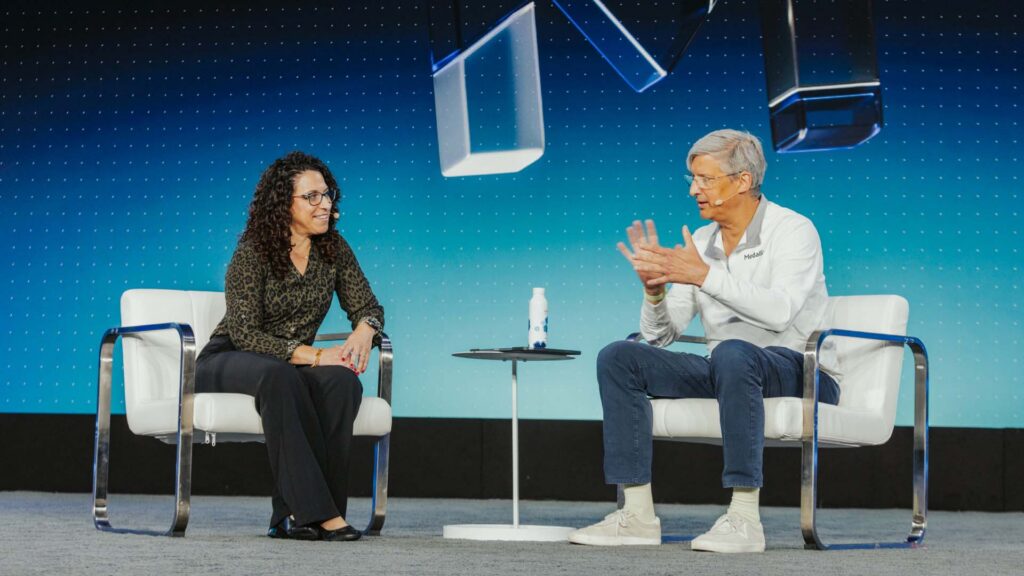
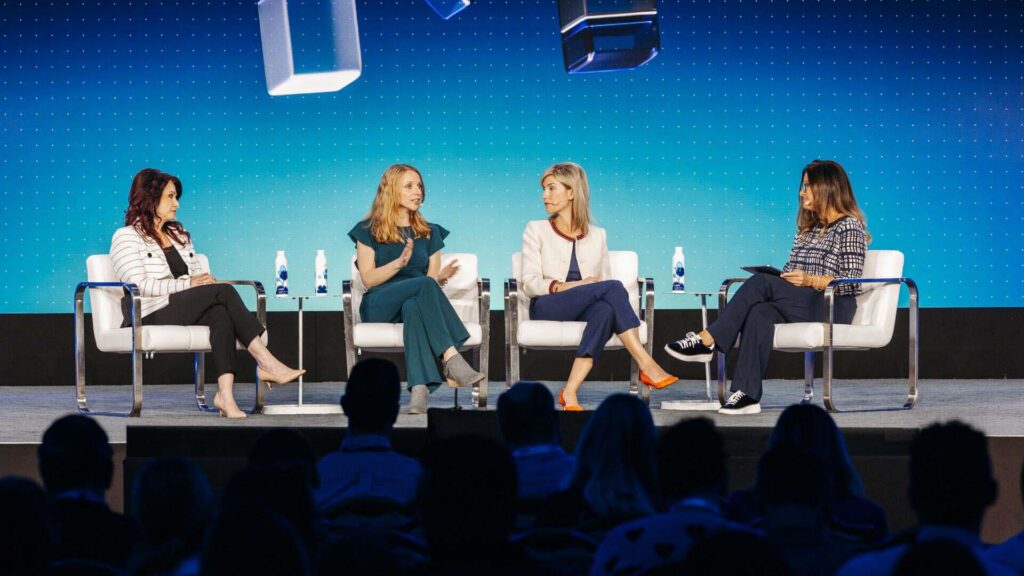
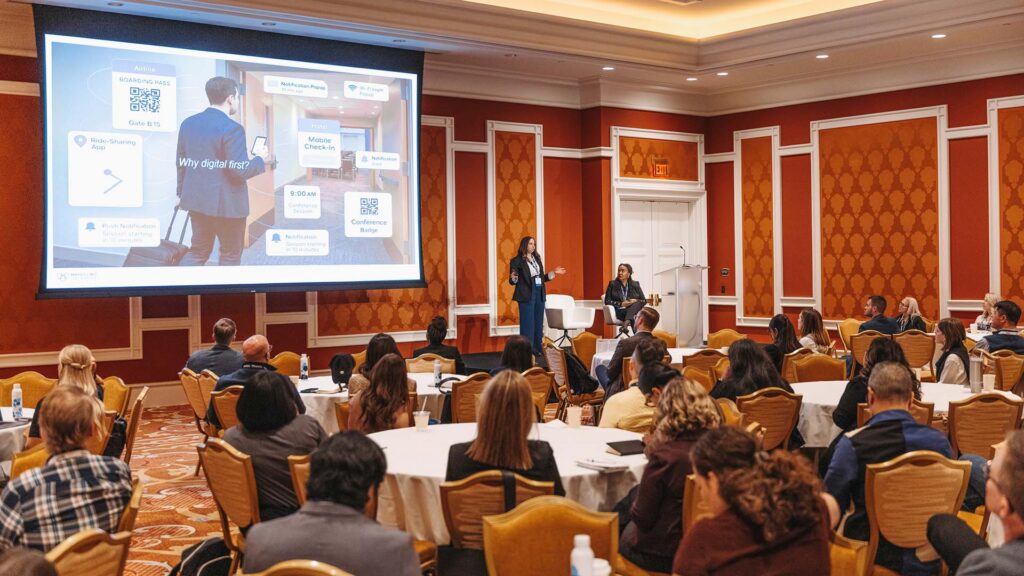
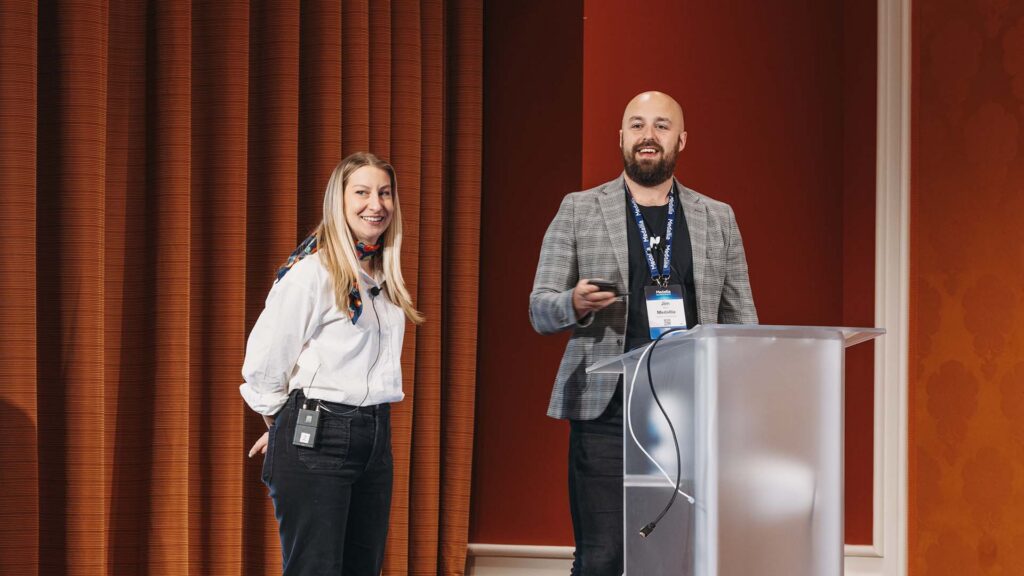
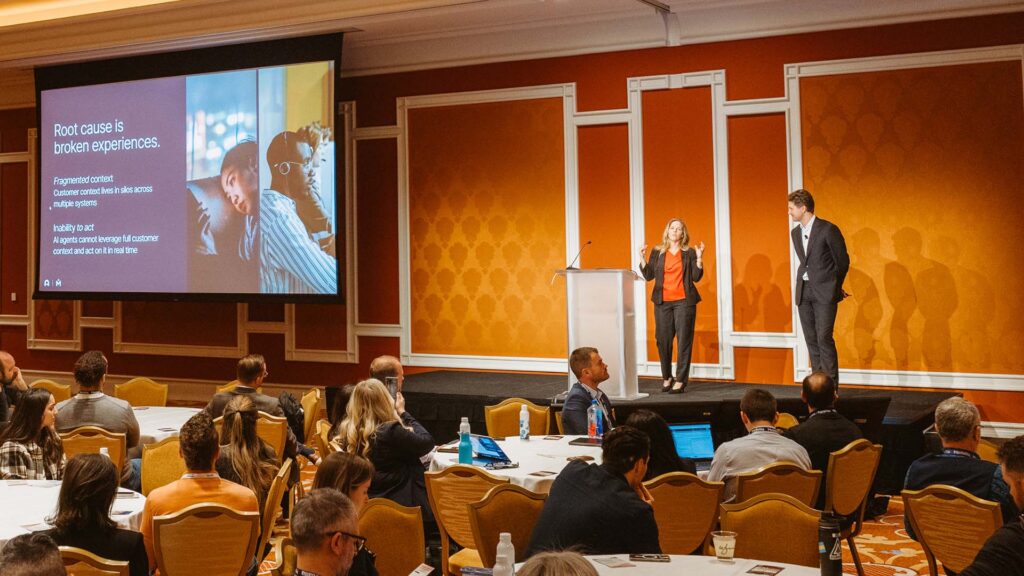
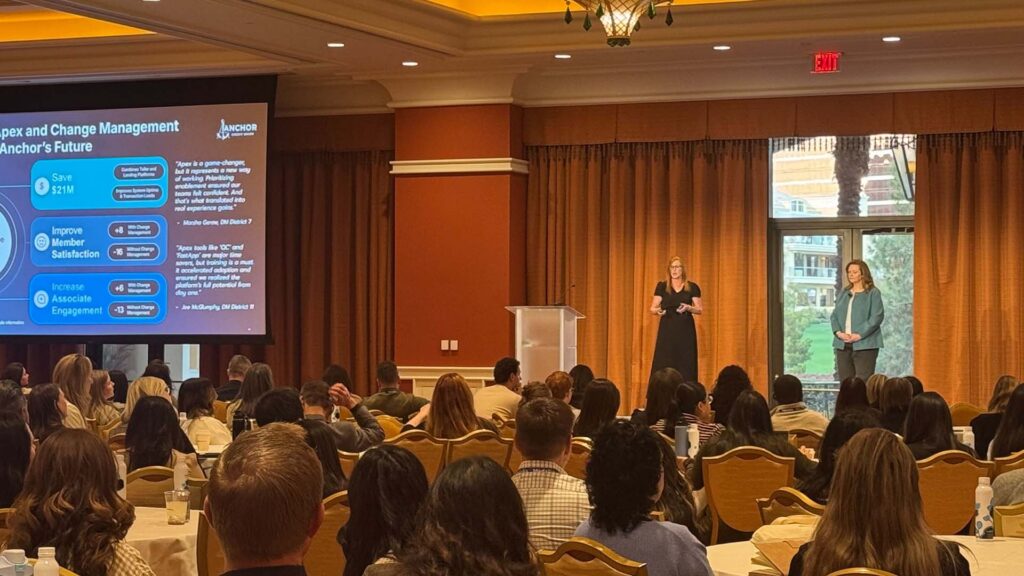
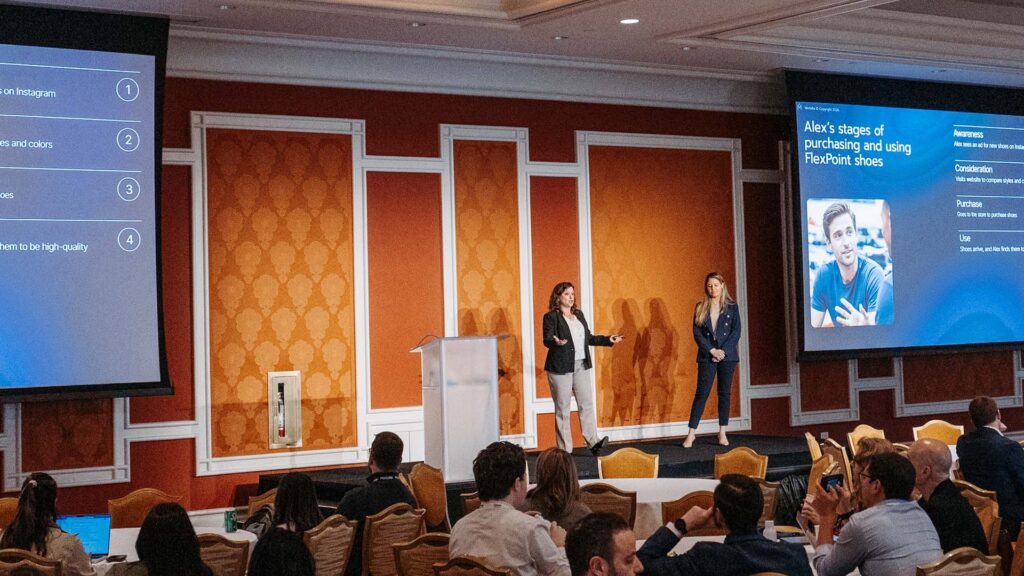
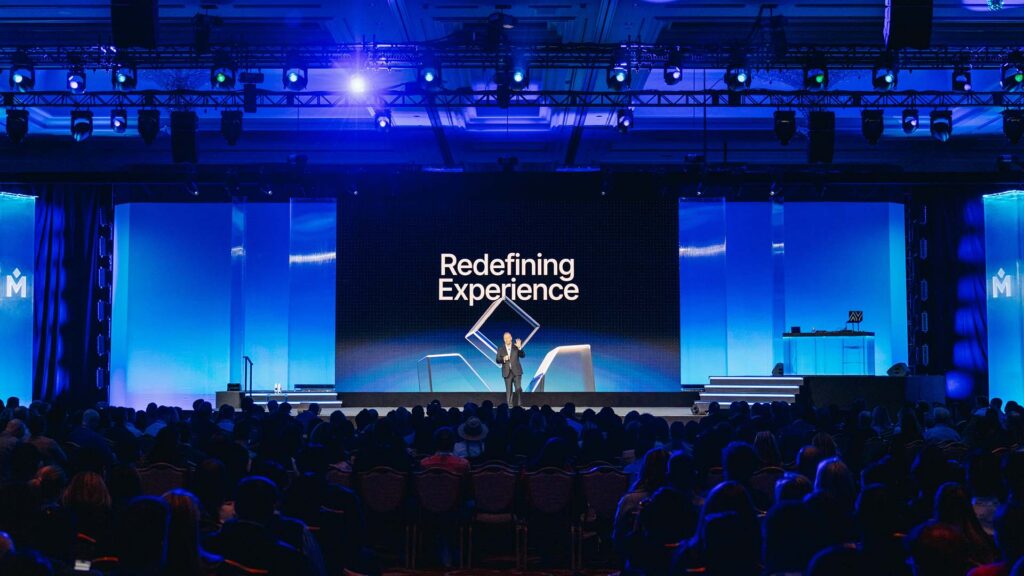
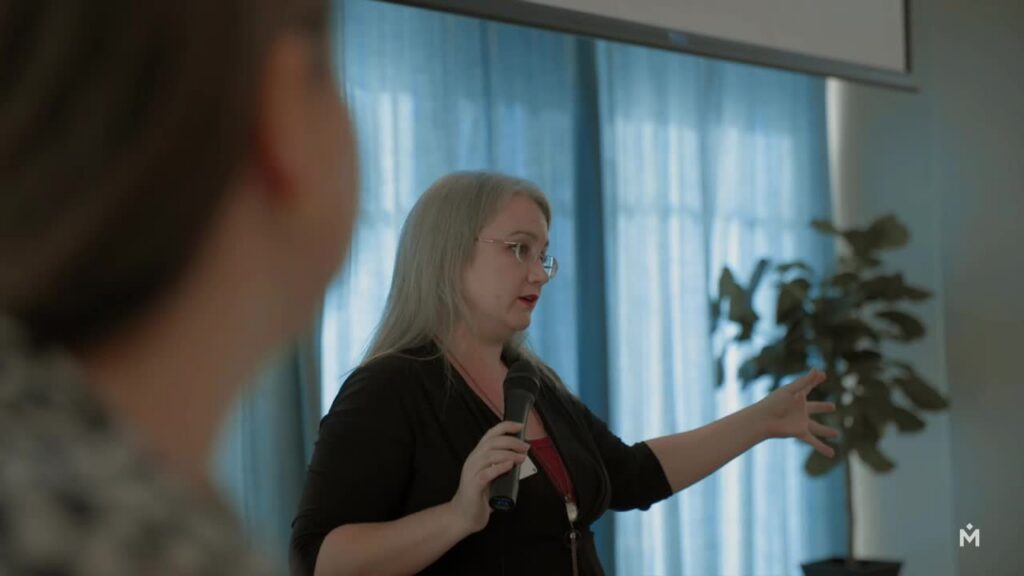
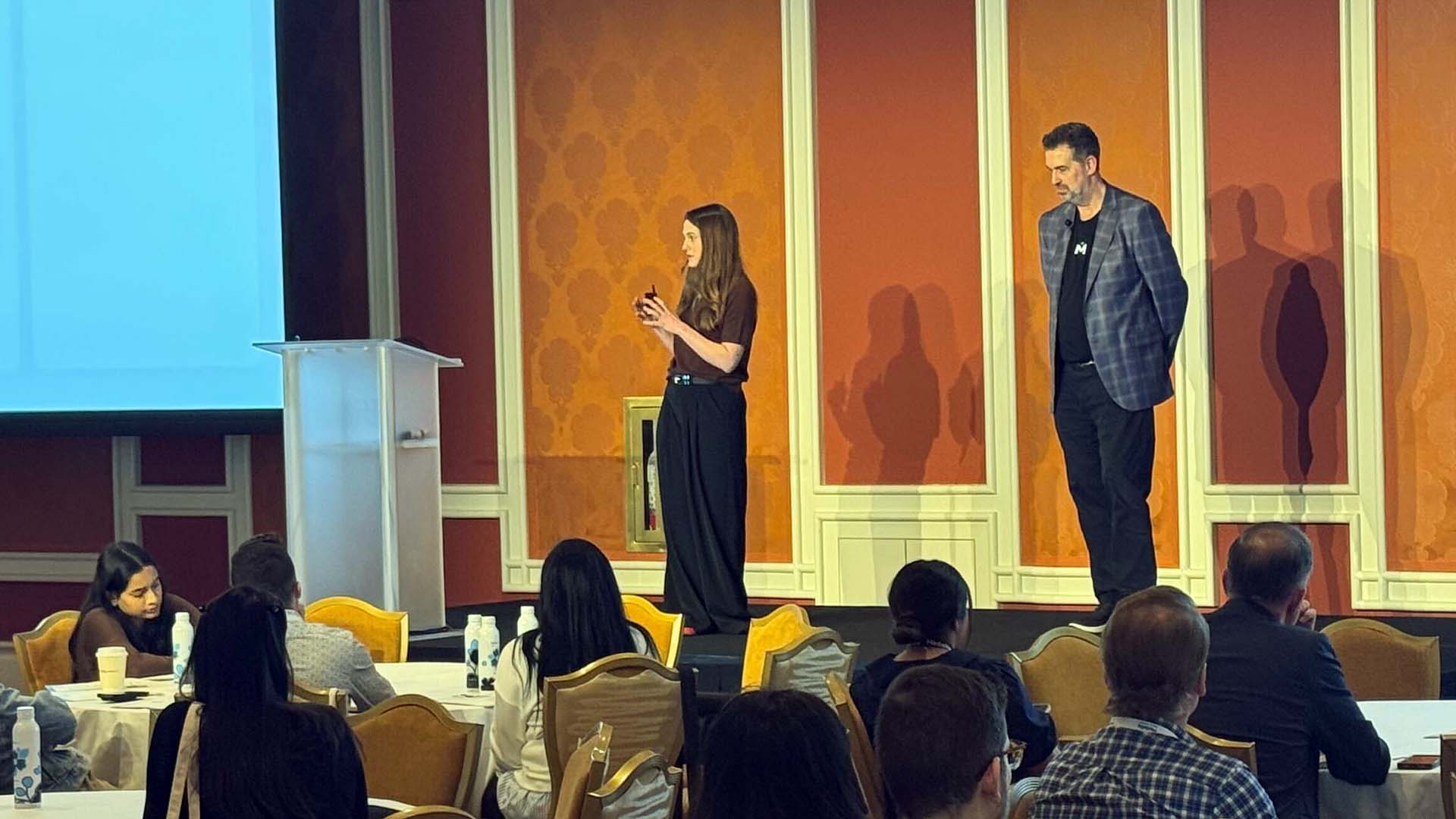
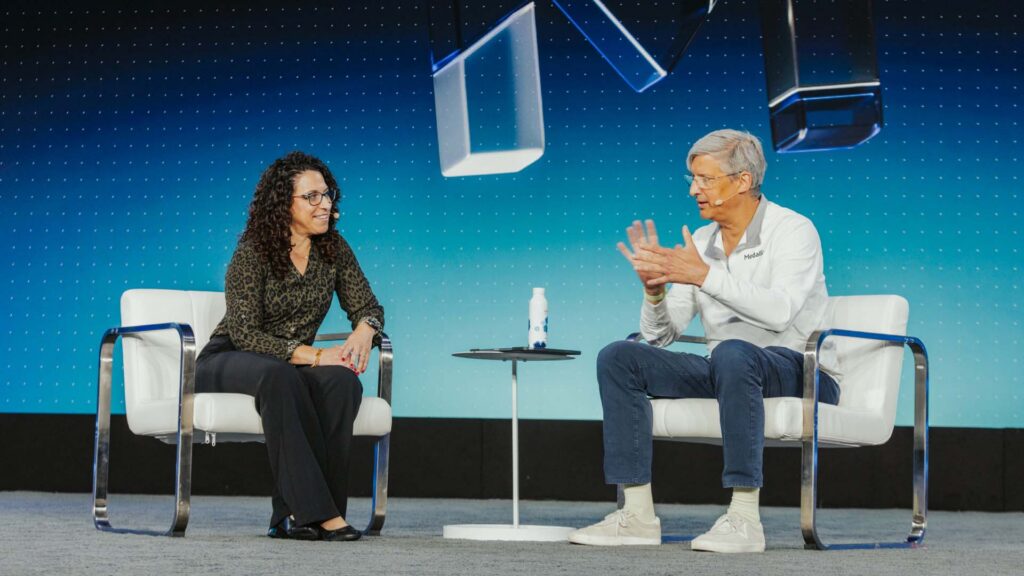
Jessica Gangemi: [00:00:00] I’m Jessica. I’m a senior solution advisor here at Medallia, and I’m joined by Jason Balliet, our VP of Product, and we’re really, we specialize not only in just digital transformation, but, real time orchestration. What does that mean? It’s that term’s thrown around a lot. So today we’re gonna talk about what it means to close the loop across digital channels and signals.
And you’re gonna be working with your tables today on a workshop that we’re gonna train you on how to work more effectively with your digital teams to close the loop. And what does that really mean? Because as CX practitioners we’re trained to believe. I gotta follow up with that customer and that just doesn’t work with the volumes that we have on digital channels.
Does anyone know what does it mean to close the loop with digital? I’m curious. I’ve gotten this question now. I’ve been in Medallia for almost a decade and I’ve gotten the question of even 10 years ago, how do I close the loop with customers in digital and they’re always thinking about, do I have to follow up with that customer?
And I say, you don’t. It’s just not [00:01:00] possible. We’re in a world where resources. Are not abundant to, to have that, have those experiences with our customers. So here’s what we’re gonna do today. We’re gonna define what closed loop means in digital, and this means a few different things. We’re gonna work on a workshop together, and then we’re gonna give you some best practices to take home with you.
Let’s get into it. So what does it mean to close the loop in digital? I see this as three things. First is one you’re probably familiar with, which is the outer loop improvements. So you’ve identified something where either your customers are leaving your feedback or you’re hearing from the call center that calls are going up because a promo code didn’t work, or something’s wrong overall in the experience, and you go fix that.
You go work with your product teams, you complain to the other guys. You go point figures and say, someone needs to fix this. Let’s change this experience. So this is very common. This is what’s done as CX practitioners across all organizations. So you’re probably familiar with this. This is where we’re going and this is where clients are going, and you’d be surprised.[00:02:00]
How possible it is. Real time intervention, acknowledging something’s happening and intervening in the moment as near real time as possible. We think at organizations that this is too hard to do. We don’t have the technology, but that’s really not true. If you have Medallia, you actually have one part of the equation to listen for what the customer is telling you.
Then do something about it. But what are examples of this? So we could have a situation where, a customer’s trying to do something, maybe sign up for a small business loan or upgrade their phone. We’ve all tried to upgrade our phone on the website, and I see people nodding their heads, and you end up just going to the store.
How can you take that and ask, did you find what you were looking for? Or you sense the frustration is happening and maybe direct them to chat. Give them a call back. I was just at dinner with Dick’s Sporting Goods last night. Bill from Dick’s Sporting Goods was saying, in the store experience, it’s all about the store experience for them, right?
But digital is a tool to capture data, and it [00:03:00] already has a ton of data, right? So when someone leaves the store and you ask them how their store experience was, you’re getting store feedback, sure. But what if that customer says, I couldn’t find what I was looking for in that moment. We can take that data from the survey from Medallia and maybe call back that customer because we can say, Hey, I found your order that you’re looking for in another store, or trigger a chat experience to be able to capture the sale.
So what does this mean for your business? Think about the organizations that you’re in. What are the moments that there’s friction occurring and it’s high value that you need to capture the sale or save loyalty or improve that experience to do something about. Acknowledgement. And then the last piece is when you’re putting this all in action and you’re doing it together with teams and you built an ownership action and governance model around this.
So you have steering committees, customer care, and digital teams really working together. So this is what it means, and a [00:04:00] lot of our clients are really afraid of the one in the middle. But I promise you, you probably have the tools to do it. You just have to put your mind together and figure out the right use case.
So that’s what we’re gonna train you to do today.
Jason Balliet: Jess, another way that you all can look at this is through an actioning lens, right? So if you think about it from taking action, that first level, the outer loop, think of that as reactive. You’re finding things that have happened already. You’re reacting to them, but you’re trying to mitigate or minimize them, right?
Think of the middle one as proactive. You are proactively trying to guide them down the right path and get them to a better outcome. The last one, think of as preemptive, which is you are putting governance and policies in place so that you mitigate or stop things from happening in the future. So when you look at it, you have to look at it through that lens as well.
Jessica Gangemi: The challenge with a lot of our clients, and it’s not a, it’s not a bad challenge. It’s a good challenge, but that’s why we’re here to help you advance, is a lot of teams stop at number one, [00:05:00] and even number one is hard to do, right? Going to tell your teams to fix something. And I know that’s sometimes the bane of our existence as CX practitioners, but how do you build this together when you can do real-time intervention?
I promise you, someone in marketing is gonna care about it. Someone in revenue or product is gonna care about it. Or the, because they’re gonna, they’re gonna get the sale. We’re gonna save the loyalty and you can really drive the outcomes. Like I said, true digital CX maturity requires all three working together.
Jason Balliet: Okay, so before we dive into the hands-on portion, I just wanna share a core principle that really we’re gonna work with today. And it’s a statement that I believe perfectly encapsulates our goal today. Data without insights is meaningless, and I love the second part. Insights without action is pointless.
There is no need for us to be gathering insights if we don’t have them. So think about that for a moment, right? We have the data and we’ve begun to uncover those [00:06:00] insights. Now for the rest of the session in our workshop, it’s dedicated to actually taking that to execution, right? How do we turn that into something that’s going to set us up for great outcomes?
You heard that today the last few days over. Through the different keynotes, outcomes drive everything, right? So we wanna really use actioning to drive outcomes. So we’re, moving from that understanding to execution phase. But when we take action across all of those pillars, it really does unlock a lot of value, right?
You can think of it in the three major buckets, right? First is it saves money by lowering the cost to serve, resolving problems in journeys and. Deflecting those avoidable contacts from high cost service channels, right? So that will save you the money that’s there. It’s a revenue generator, so it makes you money.
So by growing revenue through smarter experiences that remove conversational blockers and unlock cross sell and upsell and things of that nature, right? And it also reduces risk, [00:07:00] right? Allows those faster, more confident decisions. Align teams around shared signals and make strategic investments backed by real behavior.
So you’re not making those investments based on assumption. You actually have the behavior to do it. So by taking action based on that, it’s gonna unlock a lot of those outcomes we talked about over the last few days. So what we want you to do is select a use case and I’ll walk through them in a second.
And outline the strategy for developing your closed loop workflow designed to prompt real time action and achieve specific business goals that are there. So the use cases that you can pick from choose anyone you want is one your organization wants to increase the percentage of upgrades that happen online, right?
So in channel upgrades. So customers end up going in store or in the call center versus. Fulfilling online, right? The second one you could choose is your organization wants to increase small business signups, but [00:08:00] currently digital feedback mentions that those offerings are too confusing. And then third, your organization wants to increase mobile app conversions.
Notices that a lot of customers. Leave items in the cart, like in the mobile app, then go to purchase in store, or go to a web browser or desktop. They don’t complete that’s there. So you can choose any one of those that you wanna work with as your baseline premise from an organization perspective.
Audience Participant 1: And we are gonna call on a table afterwards.
Jessica Gangemi: Here’s how to go about it. Think about your hypothesis, go back to grade school and think about what are you trying to do. So a hypothesis could be. Customers aren’t upgrading, or customers aren’t doing this because it’s too confusing and there’s too many options.
We all have these opinions, right? So how do you form a hypothesis on something that’s causing friction within a journey and write that down. And then think about the data that you have. What do we know? What can we collect? What are we asking? [00:09:00] Is this data information that we can use to. Acknowledge and drive some level of action.
So for example, when we know when they submit a survey and they say this is what I consult a lot of our clients on. If you know someone has answered the survey in the moment and said, I can’t find what I’m looking for. By the way, we expose that technically so you can pick it up and do something about it at Medallia.
So they told us they couldn’t achieve what they came here to do, or they told us they were confused. So we know we have that data. We can collect this information from them. So that could be around your data strategy as well. The survey answers are a part of it. You’re gonna get a cheat sheet after this, and it’s on your tables as well, of what other data do we know?
What can we collect? How do we take the hypothesis and start to build the next thing, which is the workflow design. So determine how you’re gonna rebuild a new experience. Think, really think innovatively and think what is the workflow when they do this trigger, this pop a chat, whatever it is that we need [00:10:00] to save that customer experience.
And then you can really measure the outcomes. So this is gonna be the workshop and it helps when you can organize your brain in this way. And so that is how we’ve organized the activity today.
Jason Balliet: Here are your data sources, right? So we’re gonna use these five critical data sources to define and refine your closed loop.
Okay? I won’t go through each one, they’re all at your desk, right? But just as a general premise though, these data sources, it’s complete. Hopefully you all have access to this everywhere you go, but we’re giving you the best leg up to define the best strategy possible, right? This will give you a total comprehensive view of everything you might know about a customer, right?
Combines direct feedback with behavioral data from digital, from omnichannel journeys, and it’s further enriched by contact center interactions and factual information from your other systems of record, CDPs, CRMs, things of that nature. So this is really a holistic set of data that should inform your strategy.
So as you start to pick [00:11:00] data sources, one thing we’d like to hear from you is also why, what did you see in that data set that might help you form out that strategy that’s there? And we’re all gonna walk around and talk and help you with these things. So
Jessica Gangemi: we’ve got three use cases. If you’re feeling crazy and you wanna make up your own, make it by all means.
But
Jason Balliet: yeah,
Jessica Gangemi: think about the problem. We try to categorize it by a telco, a bank, and particularly just like the digital team wants in app, conversions to occur. So what can we do? And then when we come back, we will talk to you about how we would do it. Or we’d love for any of the tables to share.
Jason Balliet: Someone asked about whether some of these swim lanes are the same, the verticals reactive, proactive, preemptive sort of things. They are different. They may be nuanced, but they are related as well. For example, your reactive side where you close the loop, if you found somebody was not getting done something online, you had feedback that said it was because they had.
The [00:12:00] website was too confusing, whatever that might be, you’re gonna close that and fix those problems. But when you get to proactive, I’m gonna put something like digital experience in the middle of that, and I’m gonna know when someone’s having a bad experience right then and there. I’m gonna pop those chat messages to help them resolve that, right?
And then I’m gonna fix the policy side or the technical side preemptively to mitigate those problems from happening in the future. So again, they don’t have to be thought of as separate, although they might have separate hypothesis as to why you’re running into those problems. They’re not necessarily distinct things that you solve.
Individually. They can be, and most likely will be related.
Jessica Gangemi: And don’t be afraid to actually use the survey to validate
Jason Balliet: Yep.
Jessica Gangemi: That is an issue, because then otherwise we’re. We’re dreaming up a use case or a workflow that may not be right for the customer. So the survey in these scenarios becomes the tool to [00:13:00] orchestrate a new experience.
It comes the tool to give us the data that we need to prove is right in our hypothesis that this customer was confused, they did not do this, and they could not do this because of X. Now you have every right to
Jason Balliet: Yep,
Jessica Gangemi: do something about that.
Jason Balliet: Okay. So who’s gonna go first? We’re not gonna do all three. For one team who wants to volunteer for the clo, the outer loop.
Anyone wanna share their outer loop? My back table with too many medallions on it. Yes.
Audience Participant 2: All right. So we chose the major telco wanting to increase the percentage of upgrades happening online.
Jason Balliet: Yep.
Audience Participant 2: Our hypothesis was that people were frustrated about the fees and didn’t understand why they were being charged certain.
Prices as they were going through the process and as measured by abandonment percentage going down. When they were about to upgrade, we said that some of the data that we could use was journey behaviors, like increased online upgrades and decreased agent and in-store upgrades, and then digital card abandonment going down.
Kinda like [00:14:00] what we mentioned just this moment ago. And then. For the workflow, we said we would want to show some new pricing transparency upfront. And then if someone still closes that out, maybe trigger a digital intercept, asking them why, and then the outcome is improving. This pricing transparency we think are gonna lead to more online upgrades,
Jason Balliet: so how would you measure the outcome though? Any ideas about how you might. KPIs, would it just be around the abandonment percentages changing? What would be the outcome that we might focus on?
Audience Participant 2: The abandonment percentages going up. Or down? Going down. Going
Jason Balliet: down.
Audience Participant 2: And the revenue. And of course, like we, we can probably see from the journey that in that online upgrades are ticking
Jason Balliet: up.
Okay. Cool. Anyone else wanna share column one?
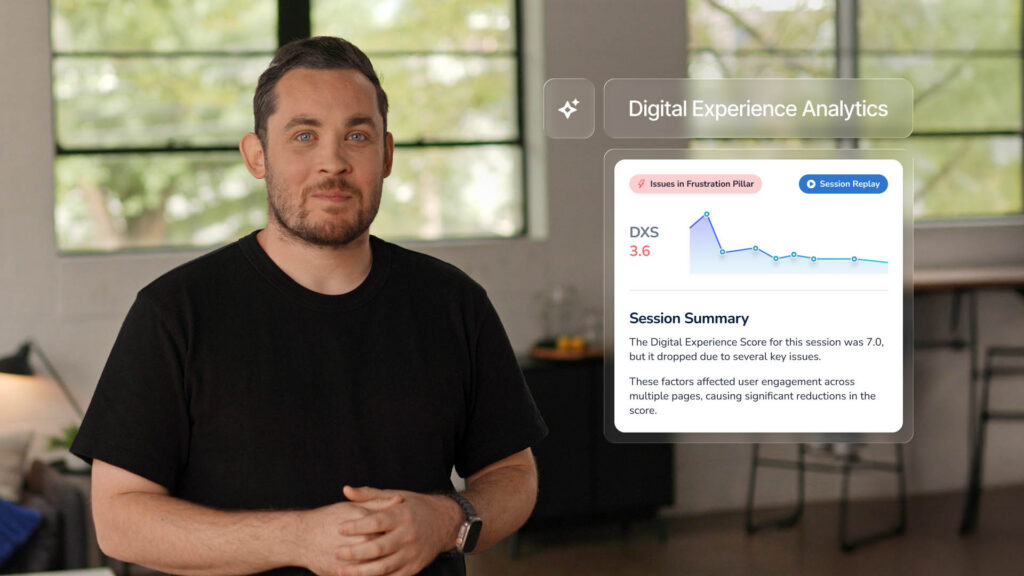
Audience Participant 1: We also picked scenario number one. But we did the intervention piece. So our hypothesis, if we. Pro automatically identify friction to offer some sort of proactive intervention, then we can help customers complete their upgrade and convert the data that we’re, that [00:15:00] we can potentially use Is DXA to measure friction in the experience?
Jessica Gangemi: Yep.
Audience Participant 1: But also how many customers actually enter the purchase flow? Complete that call to action to complete purchase or upgrade. And then also follow off stats throughout the purchase funnel. So if there’s three, four, or five pages, where is that fall off happening? Yeah.
Jessica Gangemi: Yeah.
Audience Participant 1: Some workflows, intervention ideas that we had is if the customer encounters some sort of error message, so clear messaging.
So instead of just, oops, something went wrong, actually give them a next step or where to go or what to do next. Also offer guided AI driven assistance. So if we see them having friction around particular area. Give them that additional guidance based on what they’re they’ve already done and what they’re doing.
Jessica Gangemi: Yep.
Audience Participant 1: Or if it gets to the point where they want to talk to somebody, give them that proactive chat option. Or even if they wanna go to this store, help them make an appointment, connect with someone, and then pass that information and have it ready for when they go to that visit.
Jessica Gangemi: Yes. Your real time tools [00:16:00] chat is always an option.
It’s like survey first, then chat to validate, and then help validate then help. There’s also the and almost every client has their own chat vendor. So Medallia can work with that chat vendor to send the customers to the right experience so that you can decrease actually the calls to the call center and solve that issue in the channel.
That’s great.
Jason Balliet: So two more things you might think of using there. One is your CRM data because maybe there’s some channel preferences or things would tell you whether chat or something else might be a better option, right? So you can make sure it’s very tailored to the people that are there. So that might be one that we could also add to that.
But that’s great. Very good. Yeah.
Jessica Gangemi: So we’ve got one last slide to show you how we do it. Then we are going to head out and see the amazing ending keynote. But this is the way that we were thinking about this, and this is a real life example. Actually, I’m working with a client on this right now.
[00:17:00] Customers are confused during the upgrade process. And it’s funny, everyone knows we all go through this. You just go to a store, telcos are trying to fix this, and I think this happens across a lot of industries. And what are those experiences that don’t? End up finishing within the digital channel, and it’s on us as CX practitioners to figure out how to remove it from the other channels because nobody wants in the call center.
Stores are expensive to sustain. We know the customers are confused during the upgrade process or sign up process. We know that there’s some operational data to validate that there’s an actual issue. We hear it in the call center. We see it in where the traffic’s happening either in the stores and we’ve got an abandonment event.
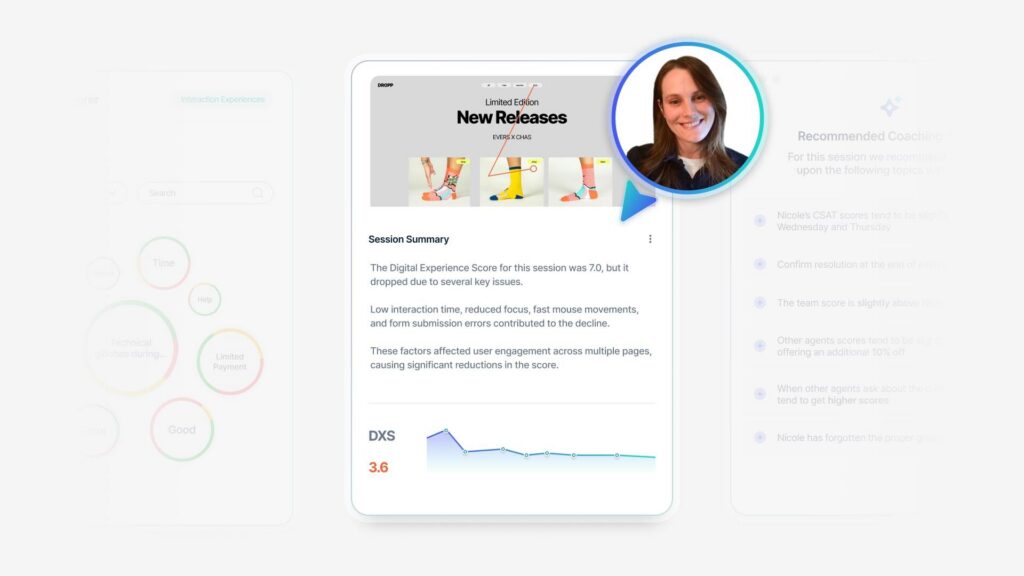
We know that someone is taking their mouse and leaving the page. That is a data source that you can use all day long, and your digital teams and Medallia both can recognize that to then. Ask a survey of do you need help? Are you trying to complete the process? Is it and building out the design of that survey that again, validates the experience.
And the closed [00:18:00] loop workflow becomes when customers are in the upgrade or purchase or sign up flow, we recognize frustration or confusion. And that can be in really any ways. You don’t have to have digital experience analytics or behavior analytics to get that. You can recognize the abandonment is happening.
And offer a survey that asks ’em if they need help, and when they say they need help, trigger a chat for on demand assistance and the outcomes become increase upgrades or signups within that low cost channel, reduced call volume, and ultimately happier customers.
Jason Balliet: Hopefully you had fun talking to each other.
I saw a lot of people interacting. It was awesome. It was great. We’re here for any other questions. We’re here for some follow ups. I hope you guys had some fun doing this. We hope it was. Insightful and we appreciate your time, so thank,
Jessica Gangemi: thank you everyone.