Sid Banerjee: [00:00:00] Thank you, Mark.
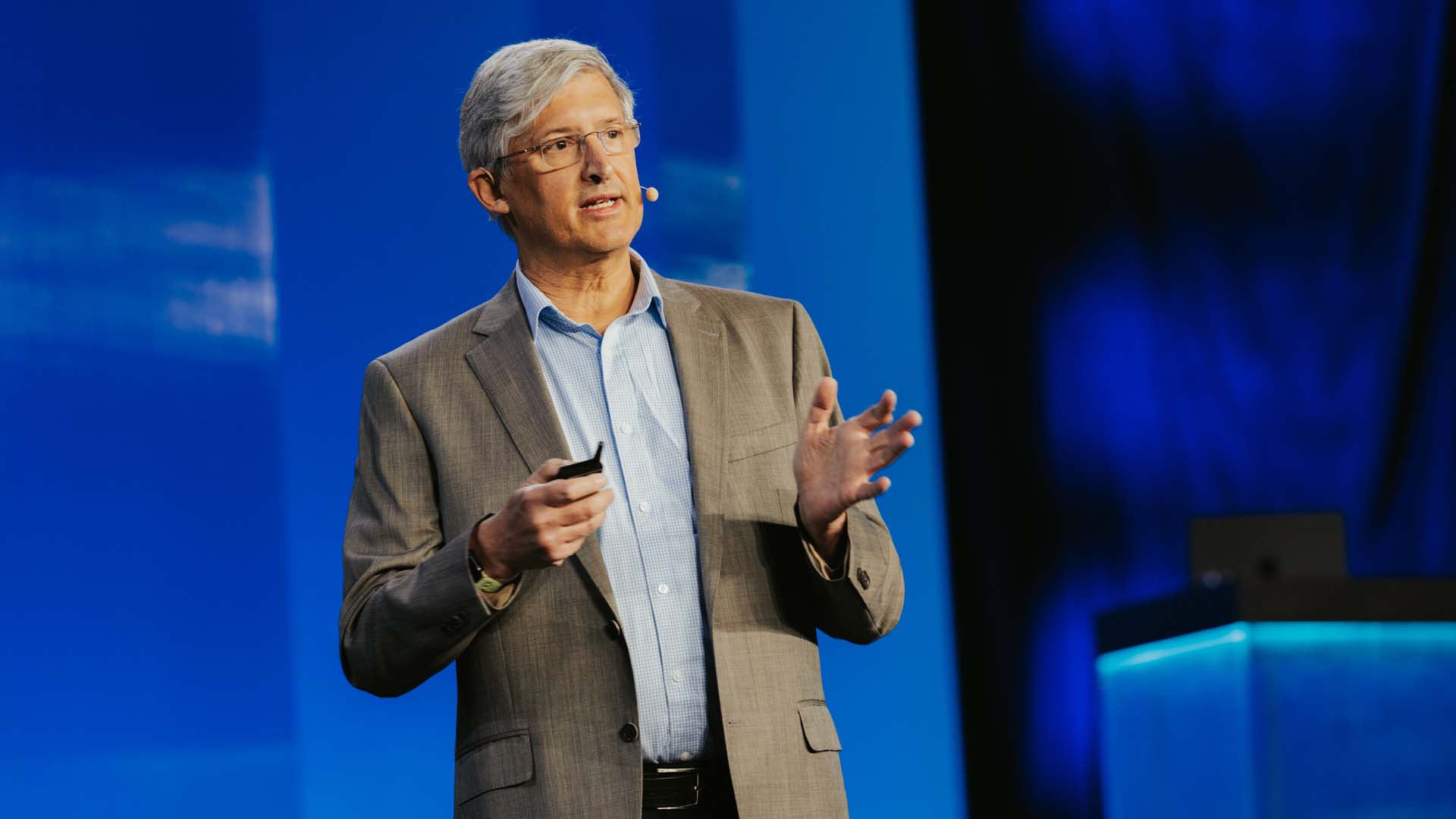
All right. Thank you every much, very much Mark for that great introduction. And what I’d like to do is take the next 15 or so minutes and talk a little bit about how we translate that vision that Mark just described into practical, actionable solution in organizations like all of yours. But to put a little bit of context I think it’s important to take a few minutes and just talk about how we got here.
And why where we got here, where we came from is gonna help us figure out where we need to go as we evolve CX programs. If I click to the next slide here, I wanna make a point here. Most of us grew up in CX when it was very much survey led, right? Meaning you had to pull information from customers by asking them questions explicitly after a conversation, an interaction online or in a store and other things.
But the world has changed dramatically over the last 25 years. I used ai, of course, Gemini and Chat GPT, and then I clicked to the source material to make sure I was getting the right information. But based on the market research, I [00:01:00] did a few weeks ago, it looks like the survey market, EFM, customer experience powered systems that are being used for customer analytics and customer improvement, that market’s growing about 10% a year over the next few years.
It wasn’t that even five, six years ago, it was growing 2, 3, 4 times that. Now if you look where companies are investing in transformation. It is in the automations that come from AI powered interactions and AI powered conversations and AI powered automations in the actual backend systems that power a lot of customer experiences.
That market is growing about 35 as high as 40% depending on who you look at from those numbers. And in the middle, there’s actually a fair amount of transformation also happening in the conversational domain of contact centers. Where we’re creating these hybrid human and bot powered chat bots and voice bots that are basically augmenting the way people interact in the contact center that’s growing about 20, 25%.
So if you’re in CX today and you’re running your programs the same way they were being run four or [00:02:00] five years ago, or even two or three years ago, you’re probably not keeping pace with where companies are actually spending time and money and driving transformation. And it’s worth rethinking how to move beyond what today is in many organizations, a process of collecting and watching and distributing scores to thinking of CX as a process of continuing to evolve and modernize and bring together the signals to drive business insights, and more importantly, business and experience transformation.
It’s about connecting all those silos and all those dots of information so that we can understand and frankly applying AI to better understand and better act on that information. Now again I grew up, we all grew up in the age before all of this AI stuff, when I was in high school after what class to classes, I would go to the local Wendy’s near my high school, and I dunno if you remember.
In Wendy’s, they had those little colorful tables with pictures and there was typically a bottle of [00:03:00] ketchup, some salt and pepper and an index card and a little number two pencil. And that was customer experience when I was in high school. I’m not gonna say when that was. And that is effectively what Borga and Amy, the founders of Medallia, said, we can do better.
And what they did is they took a transformative approach. To say we need to figure out how to make these things online. We need to make them digital. We need to make them analyzable. We need to make them distributable so that surveys don’t end up in the circular file, which basically means the garbage can, they actually be used to activate closed loop that was revolutionary 25 years ago. Okay. And it’s still useful. I don’t mean to say it’s not useful in organizations, but it’s not enough. Today, data is everywhere. It’s basically in the calls, in the chats, in the digital sessions, increasingly your org in your organizations, it’s gonna be in ag agentic sessions, which are applications talking to each other.
They’re not gonna be talking in language like English, they, but they will be [00:04:00] talking through different types of signals and processes and all of that information is the customer experience. We don’t want to force all of that insight into a question. A single question. The ultimate question is no longer ultimate anymore.
An NPS survey, a CSAT survey is a good instrumentation, but it is not the detail that you need to drive and act on transformation. And so it’s important to be constantly evolving, connecting all those dots into that understanding. That’s what this picture is representing. Of insight, experience, and understanding how customers are evolving as you’re evolving your customer experiences through the use of all this technology.
So lean into the change and lean into the insights and basically drive those insights that you pick up because you now have a much more holistic view back into your business so that they can continuously improve and continuously evolve. Because companies that do evolve are going to stay ahead.
Companies that do not. [00:05:00] We’ll have challenges, I think in the next 10, 15 years, even the next five years. So let’s talk a little bit about what connecting those dots is about. Loyalty is everywhere in those dots, in those signals that are being come, that are coming into the modern enterprise. And those signals that we’re talking about are.
Calls which have rich conversational nuance and information and features. You can extract chat bots and voice bots, which is a human talking to a bot. Also language based, but a lot of metadata ’cause you typically know where that information where that interaction came from and often where it’s going.
In location-based cx, even the traditional location survey for some of our more innovative customers today is being enhanced with geocode signals. So you can walk into certain large department stores, and even if you don’t buy anything, you can trigger feedback, right? You can understand that this is a person that had a non shopping event, which is still a feedback worthy event.
Digital sessions, of course, digital experience, analytics, understanding how people click and move [00:06:00] throughout their digital journeys. Why they buy, why they abandoned. Where they get confused. That itself is qualitative feedback. That’s super important because constantly these digital journeys are being evolved and updated by the digital organizations in your business.
And then finally, I mentioned the Gentech sessions. This is not something that we do today, but I can pretty much guarantee you that in the coming years you’re going to see a XA Agentic session Analytics, right? Which is analyzing how bots talk to each other. And what they do and where they get right and where they get wrong.
The customer journeys, because that’s gonna be something you want to continuously understand and improve as well. So you need to collect all of these signals and you need to put them together into a framework. Don’t think about all these journeys in lots of different places. And then say, my customer experience is.
Did the agent solve your problem, as Mark mentioned, right? We can’t just ask that question. That doesn’t get to anywhere near the level of understanding. We [00:07:00] need to know if all those millions of dollars your companies are spending are paying out in the right experiences and the right outcomes, right?
It’s really about taking the data, connecting it into a holistic view, right? And once you have that holistic view. Understand what is good and what is bad, right? And that is an important measure. I think that’s really important when we think about customer journeys. So what is customer good and bad is, I was thinking when I was watching the the Super Bowl, my wife is from Boston.
That was a bad game. Sometimes bad is bad, okay? Now if you’re a Seattle fan, you probably have a different view. But I was watching the halftime show and also thinking sometimes bad is good, right? I know it’s an opinion, not everyone’s gonna agree. Lady Gaga, bad romance, great song Breaking Bad, great TV show, right?
But in CX mostly bad is bad, okay? A bad journey produces a bad [00:08:00] outcome, right? A bad experience typically has a bad financial impact to the business. And pisses off the customer, right? And so our job is not just to score watch. Our job is to understand what’s good and what’s bad, and increase the good and decrease the bad, right?
In journeys, there’s not just a concept of making something good better or making something bad good. It’s actually about eliminating the bad, right? A bad call is a call that should not have happened. A bad escalation from a chat bot to an IVR, to an agent, to someone filling out a complaint.
There’s a lot of bad there. What you wanna do is go find the original interaction that didn’t work and fix it so that it becomes good and all those other bad demand interactions disappear. They just go poof. And companies save tons of money and organizations develop reputations for quality and customers develop more loyalty for the good.
So to do that, we have to take all of those journey [00:09:00] touchpoint. We have to extract features, which I’m showing here on this screen. Emotions, that’s a feature, qualitatively good and bad, right? Issues. There are good issues, bad issues. Mostly issues are bad, but to the extent you understand what they are, and you can fix them if it’s a product issue or a journey issue, or a service quality issue, right?
Effort markers. What’s good is easy. What’s bad is hard. Maximize the good. Minimize the bad, and then also understand the quantitative measures that typically are kind of part of the metadata of experiences. Things that are long or generally bad, try to make them short, right? Things that are repetitive, generally bad, make them get done right the first time.
Those are the ways when you analyze the journeys at scale, when you apply traditional analytics and increasingly AI analytics, that’s the focus we all ought to be thinking about when we instrument CX across our organizations. Ultimately the best way to make bad, good or bad go away is to map them to outcomes.
So [00:10:00] what is an outcome? There’s a lot of outcomes that typically the folks at the C-Suite are always thinking about. I know my CFO here at Medallia Boz call out wherever we are, wants to make money and wants to grow the business. So anything that can drive revenue and growth, that’s good because it ultimately gives you the power the.
The the capability to invest, to grow, to differentiate, to become a better company. You also want to get rid of inefficiency, right? Take away the long, take away the hard take away the repetitive, that saves money and it actually drives, again, an a company’s ability to improve the experience for the customer and also to drive more financial benefit to the business so that it continues to evolve and innovate.
And then the last area, I would say is. Reducing risk. Risk is about identifying markers that can cause financial risk. You waste money, operational risk, things go wrong and they cost you money, like a bad product that needs to be returned or bad service experience that requires multiple [00:11:00] escalations.
And then finally, regulatory risk. Regulatory risk is anything that happens in your business that if unresolved could rise to the level. Of a regulatory complaint, a regulatory consent order, or a regulatory fine. And in some large businesses, those fines can add up to tens, hundreds of millions of dollars.
So also that’s financial exposure. And so to the extent that you tap into the signals and you can find the revenue markers, the efficiency markers, the risk markers, and you do it not in a point session one at a point at a time, but you do it across the journey. You can drive efficiencies across everything and you can fix things where they happen and you can drive outcomes that you want, that basically benefit you and your C-Suite.
And to the extent that your C-Suite sees CX programs are about better outcomes, they will also invest in helping you and us to modernize those programs as the rest of the company is transforming. So if I leave you with one comment on all of this, it [00:12:00] is you, we. We are more than survey people, right? We have to be, we cannot be CX practitioners in the 21st century by just relying mostly on surveys, right?
We have to be connectors, which means we connect the dots across the organization and across the signals and across the customer journeys. We have to be conductors. We have to orchestrate better experiences, better journeys, and change in our organization. We have to be consultants to the rest of the company to help them figure out how information, the valuable information we have, makes their jobs better and makes their customer experiences better.
We have to be an architect. We have to think about the technology that we should be bringing into CX just as the rest of the company is thinking about the technology and how they architect it. To drive that frontline, to drive that [00:13:00] web, to drive that digital, to drive that conversational technology that is in the system, in the business now that wasn’t there five years ago.
And then finally, when we do all those things together, we have to be business transformation agents. We have to be business changers where we create a culture of continuous communication, continuous engagement, and ultimately continuous improvement of experiences. ’cause we see everything, right? When we architect these kinds of solutions, we see the entire journey in ways that a lot of the business lines do not.
It comes down to really three things, people, technology and process, and organization. When we think of CX as driving awareness of all of this technology and process and improvement, if we have the right people, we have the right technology. And we work with process and mindfulness and deliberateness to drive process and organization back out to the business.
That’s when we [00:14:00] drive high performance CX programs. Now I’m gonna start with people. Step one is thinking about it. You and CX experts inside your organizations and partners that you work with, and technology vendors like Medallia and others that you engage with, understand the data. We know how to collect it.
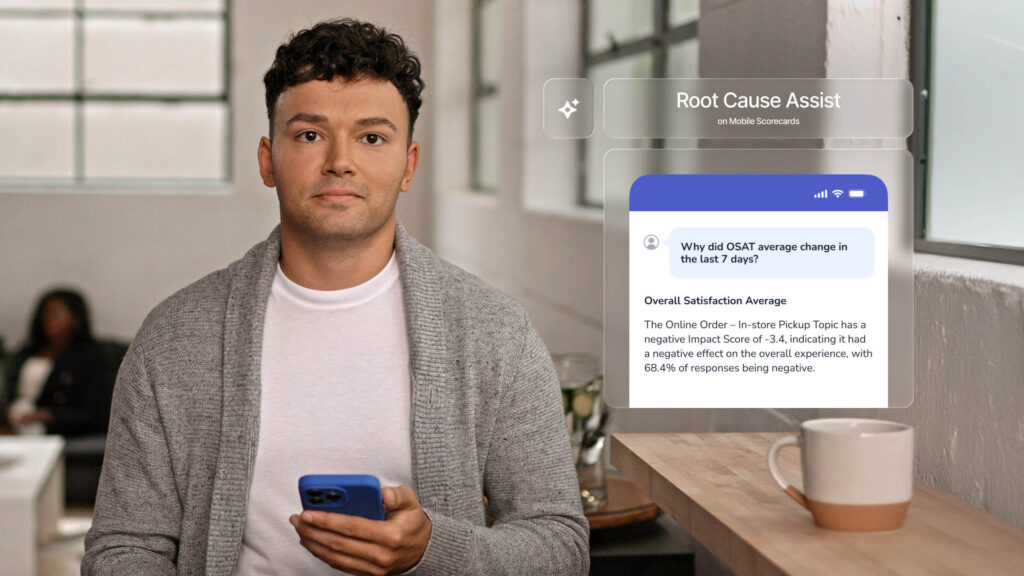
We know how to analyze it. But we have to continuously be asking questions about are we doing it the right way? Is something changing in the business? We have to understand how to get to root cause using ai, not just in the way that we interact with customers, employees, but the way we analyze and understand things.
And Fabrice is gonna show you some pretty cool stuff that we’ve added to our products over the last 12 months about doing that. Okay. And when we do that, we become essentially the nucleus. The energy that drives the atomic change. Inside our organizations, we help improve the contact center.
We help improve digital interactions and journeys. We help modernize lines of business as they move from traditional to AI powered. Experiences in their front lines or [00:15:00] in their operations parts of the business. And we also improve brand perceptions, brand capabilities, product capabilities, because feedback that comes through cx, particularly when it’s rich, is actually useful to be able to recommend how to improve products and brand experiences.
And one company is that’s really driving that kind of ecosystem within their organization is Bank of America. Their experience team operates widely across many lines of business from the digital, the contact center journey teams, both in the physical and the online to drive transformation, not just scores.
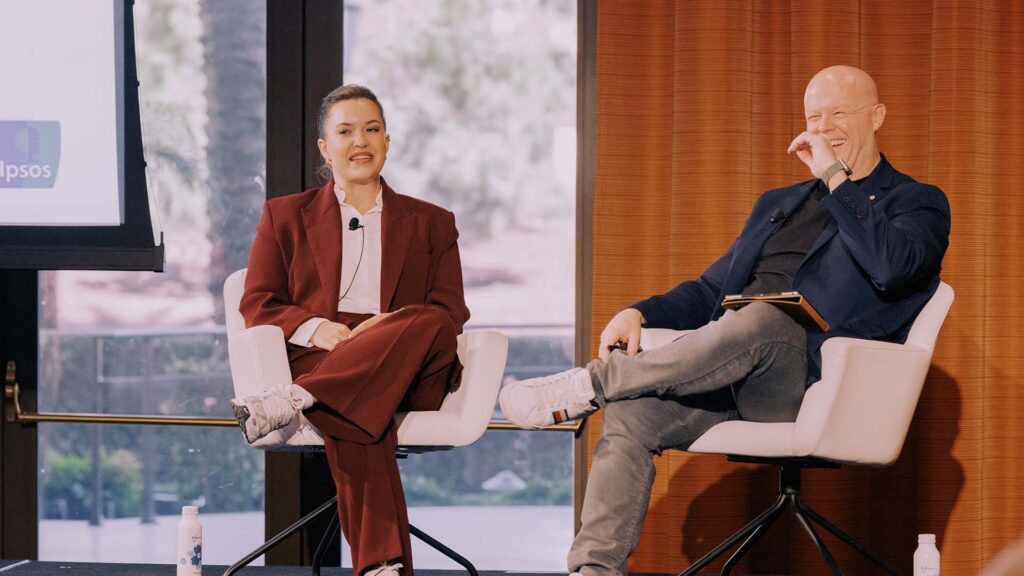
And they’ve led, they’re led by a person that I’m excited to bring on the stage. To tell us more, I’d like to welcome Jason Renteria, our s the SVP of client Experience. And the client experience executive at Bank of America. So let’s please give Jason a warm welcome.
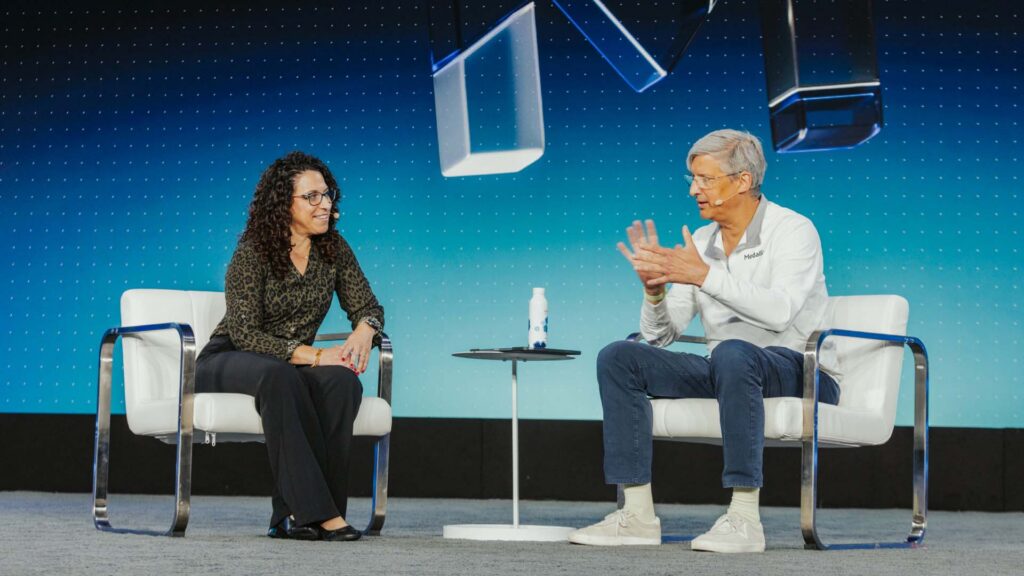
Thank you, Jason. Thank you very much. All right. So Jason, tell [00:16:00] me a little bit about you and your role within the bank, if you don’t mind.
Jason Renteria: Yeah. Thanks Sid first for the warm welcome. I’m always happy to talk about Bank of America with you and. Maybe a few friends. But I lead enterprise client experience, client feedback and insights for the consumer bank.
And my team runs Bank of America Voices, which is our always on platform where we’re listening to clients hundreds of millions of times every single year. We support 60,000 frontline teammates, and really my focus is to put client listening at the forefront of everything we do. So that we can know and understand, anticipate our client needs and actually take action on that.
But my focus is really putting client feedback in the places where we make decisions. Those decisions are all over the place. With the company our size. It’s certainly with the front line, it’s with our product owners, it’s with our journey teams and our executives wanna know what clients want and need as well.[00:17:00]
Sid Banerjee: Very good. Very good. How, can you talk a little about how you built the program and how does it support such scale within an organization so big as B of A?
Jason Renteria: Yeah, I get that question a lot because we do operate at a very large scale. Yeah. Billions of interactions. Every year we service nearly 70 million clients, and so at our scale, client experience only works if it’s deeply embedded into how we run the business.
It cannot be a side program, it just doesn’t work. So from the top down, we have a shared purpose. And I think that’s one of the things that makes it run is having the executive sponsorship. But our purpose is to help make clients financial lives better through the power of every interaction.
So everything that we do is client centric, but I think what that does is it gives our employees permission and empowers them to pick up the phone. We don’t have to. Say to each other, Hey, is client experience a priority? We know it, it gives us permission to work [00:18:00] together and it makes client experience everybody’s job.
So even though I’m on a client experience team, everybody plays, everybody wins. The other thing that happens is we’ve made clear investments into making it work. Technology investments, internal. We have a dedicated technology team. They’re. The leader of it is here today. We also have made investments with Medallia and that relationship is going almost a decade now.
We’ve also made investments into dedicated subject matter experts. So across the organization we have teams that work on client experience and own the client feedback, own the action plans. And they know their spaces better than anybody, and they have a lot of passion around it. And that is key because there’s a sense of ownership around that.
And it all rolls up to the shared purpose. So again, client experience only works when it’s part of how we run our [00:19:00] business. Another thing I would say that I’ve learned along the way when it comes to scaling up, scaling does not come from more dashboards, right? More reports. I think we’ve built hundreds of dashboards, hundreds of reports.
And what it really comes down to is clear ownership, strong relationships across the organization that we invest a lot into and shared accountability into that higher purpose.
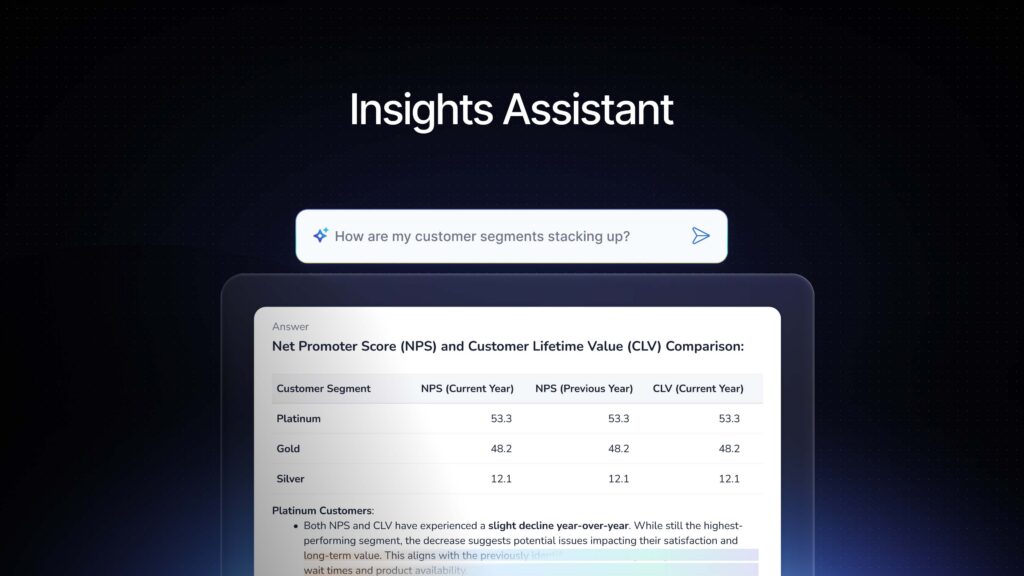
Sid Banerjee: Yeah. We violently agree that CX programs are not defined by the number of dashboards. Wouldn’t it be great if you could just ask a question to your CX application and it would just answer it for you?
Hold my beer. We’ll talk about that in a few minutes. Tell me a little bit about the structure. I, again, we talked about the size and the people, but how have you involved that kind of structure to innovate your CX programs from both the technology and just generally a people perspective?
Jason Renteria: Yeah we’ve done a lot of growth and yeah. And learning along the way. When we first started it, we started with six points, so six survey programs,
Sid Banerjee: right?
Jason Renteria: We’re getting ready to launch number 53. So [00:20:00] essentially we’re listening wherever clients interact with us. And and the center of that is digital.
Last year we had, 4 billion logins into our digital spaces, and client and Erica, as our clients are getting more familiar with Erica. We had, since we’ve launched that in 2018, we’ve had 3 billion interactions with Erica. And what that tells us is very important because. It tells us that our clients are getting more comfortable.
Sid Banerjee: Yeah,
Jason Renteria: with using Erica and as they get more comfortable with using Erica, if it’s not only our high tech, high touch strategy, but it also opens the door for a safe space for us to listen and also have a two-way dialogue. So you may not know this, but for everybody who’s banking with Bank of America, you can actually go to Erica today.
Say leave feedback and it will flow into our [00:21:00] client experience program, into our Medallia dashboards.
Sid Banerjee: Yeah. We are linked,
Jason Renteria: We
Sid Banerjee: get feedback
Jason Renteria: from doing that, so we’re do, we’re doubling down on Erica and we’re working on now making it a two-way so that Erica understands when and how to ask for feedback based on recent interactions.
Sid Banerjee: Yeah. I like to say, you can’t have Bank of America anymore, America. Without Erica.
Amy Palen: That’s right.
Sid Banerjee: AI is not the strategy. It enables the strategy, basically. Yeah. So let’s talk about AI generally. Where do you see AI and digital tools influencing your CX for, from a customer and even an employee perspective?
Jason Renteria: Yeah. AI is certainly a focal point for us, as it is for, I think just about everybody.
Sid Banerjee: Yeah.
Jason Renteria: Right now. But at Bank of America, AI is not the strategy. AI enables the strategy
Sid Banerjee: right.
Jason Renteria: And if we can use ai it’s going to give our employees superpowers. It’s gonna take away the no joy work [00:22:00] and free them up to focus on the client so they can be more equipped to help with complex needs, give more personalized advice, make that human connection.
And those are the things that clients really want,
Sid Banerjee: right?
Jason Renteria: They don’t want us fumbling around looking for procedures. They don’t want those types of things. And so the same way we are investing into Erica as a way to automate for our clients, we’re also investing in Erica Assist, which is the digital assistant for our employees.
And so our teams will have their own guided assistant which enables them to deliver for the client, increase client satisfaction, gain efficiency. But what’s critical about AI is it has to be trustworthy. I think we acknowledge that. I think everybody does. And so financial decisions.
When clients interact with the bank, financial decisions are deeply personal. And so AI needs to be transparent. Our clients wanna know how we’re using it, it needs to be secure [00:23:00] and it needs to be responsible.
Amy Palen: Right?
Jason Renteria: So our goal is to be able to use ai, client feedback and human judgment, and we have them all work together.
And then you don’t just get efficiency, you actually get better experiences and you build, ultimately build trust, which is what our goal is. Yeah.
Sid Banerjee: Fantastic. Fantastic. You touched on one thing I wanna just pull out of your last comments, which is that you’re using or building out air assist to actually help your employees use AI to do a better job supporting their customers.
And there’s another interesting sort of subtext to that, which is as you change the employee experiences, collecting employee feedback also is a really valuable way of understanding how employees are adjusting. To change and that feedback helps to improve the way employees work as well. So experience transformation doesn’t just happen at the customer level, it happens at the employee level too.
Absolutely. And a big part of that is using those signals to help improve employee experience too.
Jason Renteria: Absolutely.
Sid Banerjee: Thank you very much Jason. I really appreciate our talk and great insights.
All right, so let’s [00:24:00] talk about step two now, which is the technology, applying the technology to connect. Collect, analyze, and then drive insights and actions, right? This is where you move from a lot of static, often, siloed systems of collection like surveys, to really creating a more always on operationally kind of robust collection and analytics and activation architecture.
And it’s where to Jason’s point, you move away from static dashboards to dynamic insights, dynamic recommendations. And increasingly those recommendations get automated in the way that they flow back to systems and processes inside your organization, right? It’s really about moving from asking to operating, right?
Experience is no longer just about people in the middle, but people driving change, right? So when we do that, we can actually get better connection. We can actually drive better understanding, and we can drive transformation of organizations to get to those good outcomes. Understand the bad [00:25:00] outcomes and reduce them or improve them so that they become shorter and more efficient and ultimately drive better business outcomes.
A good organization that’s actually doing that is CIBC. CIBC is actually working across a wide range of groups in the organization, their organization and they’ve been winning awards over the last few years. Forrester’s Customer Obsessed Enterprise Award in 2025. Digital Bankers. Best use of AI award.
They’ve got over 50 programs across the organization. They push information out to over a million logins a year from thousands of users across the bank. And they’re bringing in signals and connecting those insights, not just back to people and to process, but to other operational systems. So that information is tightly linked and driving continuous and always on situational awareness.
And they have a truly organization-wide focus. They use technology as the connective glue that really drives improvement to contact centers, banking centers, their digital journeys, their [00:26:00] product areas, from cards to consumer banking, business banking, digital banking, and even their digital bank division.
Simply, and they have also been successful because they have a very much, as Jason described, very tight coordinated group of people that work together across the different business functions to set priorities. Make sure the investments are aligned to those priorities and essentially drive business outcomes that matter from the top of the company down to the lowest level employee.
I’m not gonna introduce them here because they actually are speaking in a couple of sessions over the next the next day or so, both here on the main stage and in a breakout session. But I encourage you to attend that and learn more about how they’re using people and technology to drive transformation and change.
All right, the last playbook component I want to talk about is process and organization. So really the question of process is how do you create both the rules, but also the culture of activation to drive change in your organization and also how do you organize what [00:27:00] organizational constructs tend to be best at creating scale, whether your business is small or as large as CIB, C or B of A.
Typically, it starts with really three components. And again, you will rightsize these components, depa, depending on the size of your organization. And it’s not rocket science. The first is it’s important to have an executive sponsor. Could be a CXO. It could be customer experience leaders or SVPs. It could be line of business owners that say, this is important to the way we do business, and they provide the oversight, often the sponsorship, and increasingly they lobby for or own the funding to really help you modernize the way you think about cx.
The second pillar is to drive the process of using information and collaborating across that central function to the specific stakeholders that are gonna get benefit. And again, it’s not just about collecting data and pushing it out in dashboards. It’s about truly being a consultative, trusted partner [00:28:00] to the lines of business and being aligned to delivering insights and actions and data that align to optimization.
Business outcomes and ultimately reducing risk and increasing the revenue and the performance of those organizations. So you align on the business outcomes, not just on the traditional kind of limited bandwidth scores. That might have been how we’d think about CX five or 10 years ago. And then the last piece is frontline enablement and empowerment, and that’s about making the information consumable by the people in the brick and mortar locations.
In the contact centers, in the frontline folks at, complex journey environments like insurance processing or hospitality where there’s a literally, dozens of people that touch a customer through a journey in the front lines. And then of course, because of all the CX transformation happening in the digital and the mobile world, making sure that information is continuously feeding back to understand what’s working, what’s not working, what’s returning, what’s not returning value.
What I’d like to do to provide a little bit more kind of color [00:29:00] to all this is introduce. A woman who has seen a lot of transformation programs at Accenture where she leads a practice. I’d like to welcome Amy Palen, who is the senior managing director at Accenture Song.
Hello. Hello.
Amy Palen: How are you?
Sid Banerjee: Hello, Amy. How are you
Amy Palen: to
Sid Banerjee: see you? Good good
Amy Palen: to see you.
Sid Banerjee: So Amy, tell us a little bit about your role at at Accenture as a quick introduction.
Amy Palen: Yes. So at Accenture, I’ve got responsibility for what we call our song business. And song, for those of you that don’t know, is essentially our customer practice.
So all things marketing, sales, service, customer experience, and essentially what we’re helping our clients do is really focus on. Strategy design and implementation of their front office reinvention. So that’s why our partnership with technology platforms like Medallia are so important. So we can help our clients to realize the value [00:30:00] that they can get from their customer and front office transformation programs.
Sid Banerjee: Fantastic. Fantastic. So I know at Accenture you have really, a window, a bird’s eye view to a lot of transformation programs across companies. In, in every industry, public and private sector. Can you give us maybe some of the observations, biggest observations that you have, and how do organizations evolve CX in the ways that we’re talking about it?
What works from an organization? Or operating model perspective?
Amy Palen: Yeah. I’ll start by telling you all, and I think this is something that everybody can appreciate and that is the pace of change now is faster than it’s ever been before because of the technology advancements and what’s happening with AI and the evolution that we’re in right now.
We’re all customers, we’re all consumers of different products and services, and I can tell you. What we experience is elevating the bar and resetting the bar for our own expectations. I like to use an example of the meta ray band glasses. I don’t know how many people have the glasses, but I bought those a couple months ago and I recently [00:31:00] used them at an art festival.
Where I was looking at an exhibit and the glasses were transcribing what I was seeing. So it fundamentally changed the way that I wanna experience a museum. Another example I like to give is Waymo. And I’m sure a lot of people have now ridden around in a Waymo. And the thing that really struck me was you can set your preferences before you actually get in the car.
You can be in an environment where you don’t have to engage with the driver and there’s, a degree of privacy there.
Sid Banerjee: It even configures your Spotify, it plays the music you want to
hear.
Amy Palen: Absolutely. Yeah. It’s amazing. Absolutely. You can customize it and you’re
Sid Banerjee: yeah.
Amy Palen: Hearing what you wanna hear from the get go. But also the safety element. I know that there’s, a lot of or there were, was a lot of controversy on, is it safe to be in a car without a driver? And my experience was the technology allows detection of obstacles, in a road.
Sooner than a human might experience that. And so the impact is much more gentle and what I found to be safe. So just a few examples of, what we’re all seeing as customers. What I can also [00:32:00] say is the transformation fatigue and the change fatigue that our clients are experiencing is real.
There’s a lot of investment that’s gone into transformation programs to build technology and to, really invest in the shiny new object or the Ferrari, as we like to say.
Sid Banerjee: Right.
Amy Palen: But without the transformation of the culture and the people and the process, like you touched on, the technology can only take you.
So far.
And it’s imperative that we are looking at talent and culture. We’re looking at operating model and governance, and we’re also looking at new ways to measure performance and measure impact as a result of what the technology is. Empowering CX organizations and companies overall in front office transformation to accomplish Right.
Sid Banerjee: That makes a lot of sense. If you if you were to give this audience advice on the three things that you should really strive to get right, as you think about CX transformation, what would those be?
Amy Palen: The first thing I would say is lead with outcomes, not experiments. Every dollar invested [00:33:00] is an opportunity to drive revenue and really deliver a better customer experience.
The second thing I would say is empower your people at pace. There’s a need to ensure all of our people are digitally fluent, and know what to do with the technology that we’re building. And then I would say put agility into the core. So we wanna use, cloud native composable solutions that allow you to embrace disruption like the AI disruption that’s happening now.
And just on that point too, we’re seeing. A lot of companies experiment with how they think about AI and technology. And so a couple of scenarios are emerging in that regard. We’re seeing what’s called the traditional scenario where there is a lot of piloting of use cases and thinking about how do I apply advanced technology and ai.
We’re seeing a second scenario, which is more about evolution and having. Human labor and agents and AI work together to drive more efficiency and scale. And then we’re seeing what’s called the reinvention scenario, where you’re really putting AI into the [00:34:00] core of both the architecture and the operation.
So we’re really trying to push, our clients in the thinking that our clients have into more of that reinvention scenario.
Sid Banerjee: That makes sense. And when you do that, and you do that right, you empower your employees, your customers feel heard. Overall, you end up with the right outcomes.
Amy Palen: Yeah, absolutely.
And there’s an example, quickly that we did together Accenture and Medallia where it was a large contact center transformation. And the issue that leadership was solving for was what they thought that the agents weren’t moving fast enough to respond to customers, when in fact, what the issue was.
Is that customers didn’t feel heard. And so together, we, Accenture, Medallia predicted NPS across the entire base, not just the survey respondents. And we were able to build AI into the contact center for next best action for the agents. And what happened was, in the end, customers felt heard, agents felt empowered with the technology and overall satisfaction [00:35:00] went dramatically up.
Sid Banerjee: Yeah. And I wanna pull the thread on this topic ’cause I think it’s an important, interesting kind of. Auxiliary value of working together with partners like Accenture. We collect a lot of signals, but oftentimes to really infer for all the cohort of people that don’t give us those signals, there’s value in kind of using this kind of productive or almost synthetic analysis to bring in operational data.
Say I see people that have good or bad experiences. Let’s figure out the universe of everybody else that I should be thinking about. And that’s when you drive true transformation at scale.
Amy Palen: You got it.
Sid Banerjee: Absolutely. Alright, thank you very much, Amy, for your comments. Appreciate it. Very provocative. I appreciate it.
Take care.
Alright, so let’s recap. Before I, I heal the stage to my colleague Fabrice, I think it’s important for everybody to think about where we are and where we want to go, but also really where this market, this business of CX is going. We have a choice. We can, lead with the same stuff we’ve always done, right?
We can, in some cases maybe. Lemme be [00:36:00] careful how I say this. We can just buy up the market, right? Or we can innovate, we can invest, we can drive transformation. We can use technology in the way that technology is going to be used across all of our organizations, and we can be a connector across the organization.
In short, we want to be, I think, change makers in the way that organizations think about experience and experience management and experience transformation. So if you ask yourself what can you do to change the paradigm a bit in your organizations? What are the three questions you might want to ask yourself now and after you leave Las Vegas this week?
The first one might be, who should I talk to and how am I gonna understand the outcomes that I want to actually really focus my experience programs on? What are the that one or two outcomes that are gonna really take my experience game up to the next level? Second question I would ask is, who will benefit?
And can I align myself with a person or a department that sees value in [00:37:00] changing the way we think about experience to get disruptive, positive benefit from this new way of thinking about customer experience. And then finally, I would say. How do we actually get started? Find that person and start that conversation.
Who is that person in your organization? Jason was talking about at B of A that they have a whole team that thinks about experience. I checked our attendee list. They have over 20 people here. They’re not all CX people. There are some of those line of business folks here because they know how important CX is to drive transformation in their business.
They benefit from talking to all of you. They benefit from learning about what we’re doing technologically and from innovation perspective. There are probably people in your organization that if you can start that conversation, you can create all kinds of virtuous things that’ll happen over the next months and years.
Last thing I’ll just say is how do we fit in as Medallia? We have built a capability that has been over the last 20 plus years, one of the most enterprise scale, operationally robust systems for collecting and distributing [00:38:00] information at scale. In small, medium, and large organizations, that’s not gonna change.
As we evolve the way we collect and analyze information, as you see ai, in the collection, in the analysis and the recommendations, and even in the integrations, it’s still gonna be designed and built for scale, right? The insights and the actions are designed to be pushed out to the frontline from the top of the business to the bottom of the business.
That’s not gonna change either, but what coming into those systems, how you use it. That’s gonna radically change because the technology allows us to make it easier to get information into the hands and into the systems that drive impact and the technology. Hopefully you’ll come away from this week realizing that we are not standing still.
There’s continuous investment. It’s a big part of our business model is radically changed the way our product works because we have to, because this market is so dynamic right now. And then finally. We are not here to do this without you. A big part of our ideas, a lot of what you’re gonna hear in the next presentation are [00:39:00] ideas that came from you.
And we continue to value the ideas, the feedback, the criticisms, maybe the threats, probably not the threats. We like everything but the threats. But they allow us to be co-creators. They allow us to innovate at every step of the way with what’s happening in your world. So we want to continue to be that partner as we enter, I think a very dynamic period in this industry.