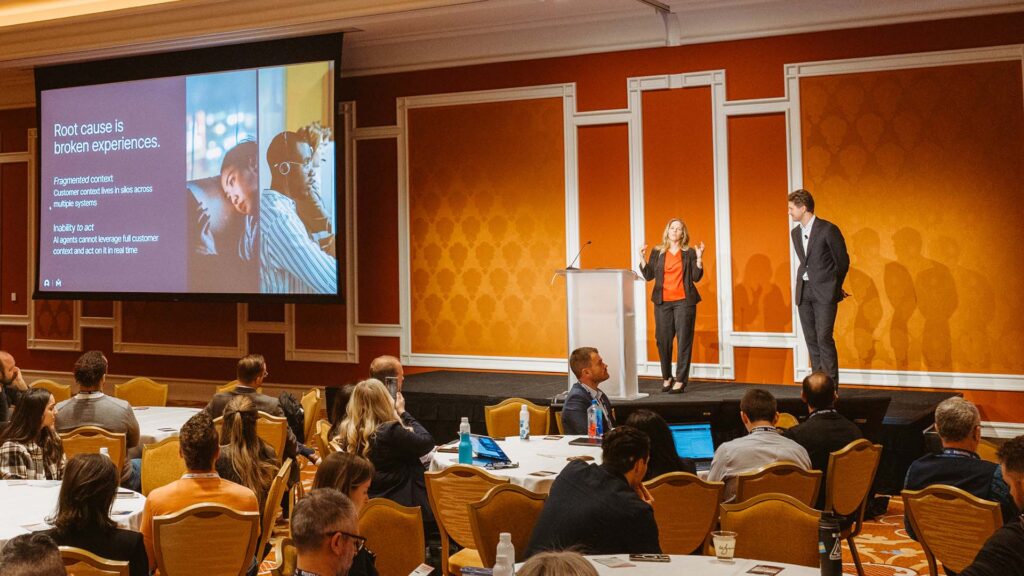
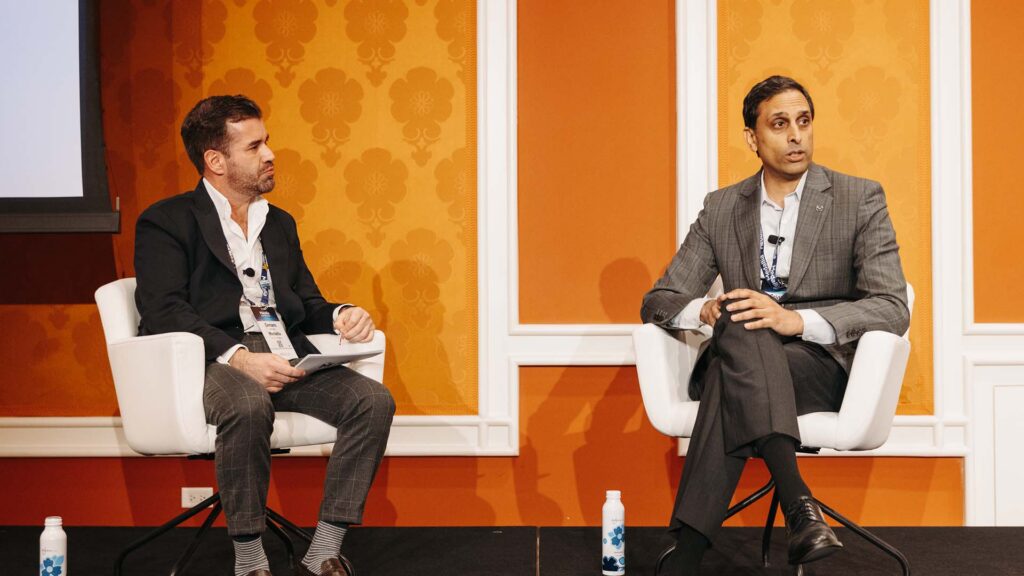
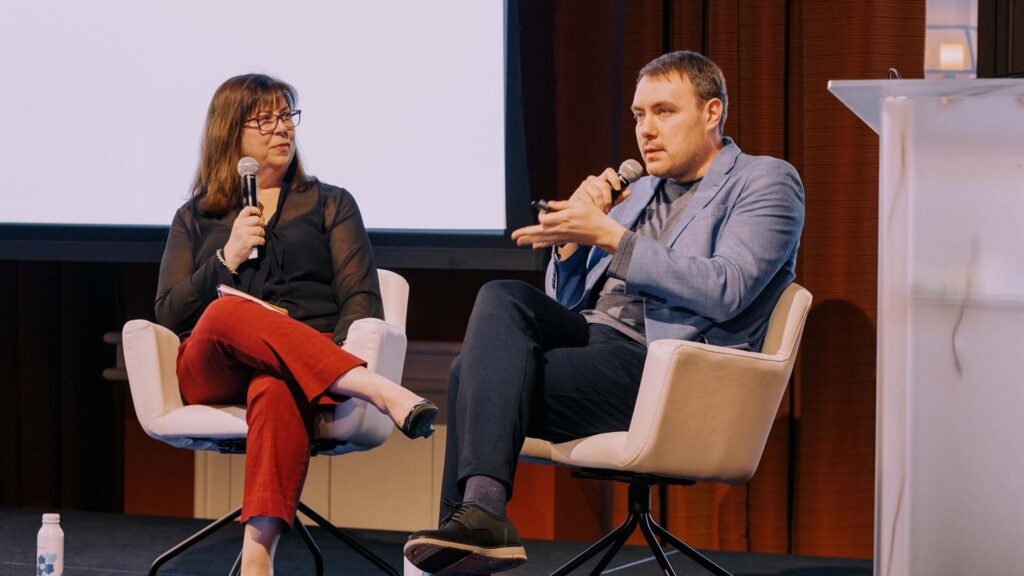
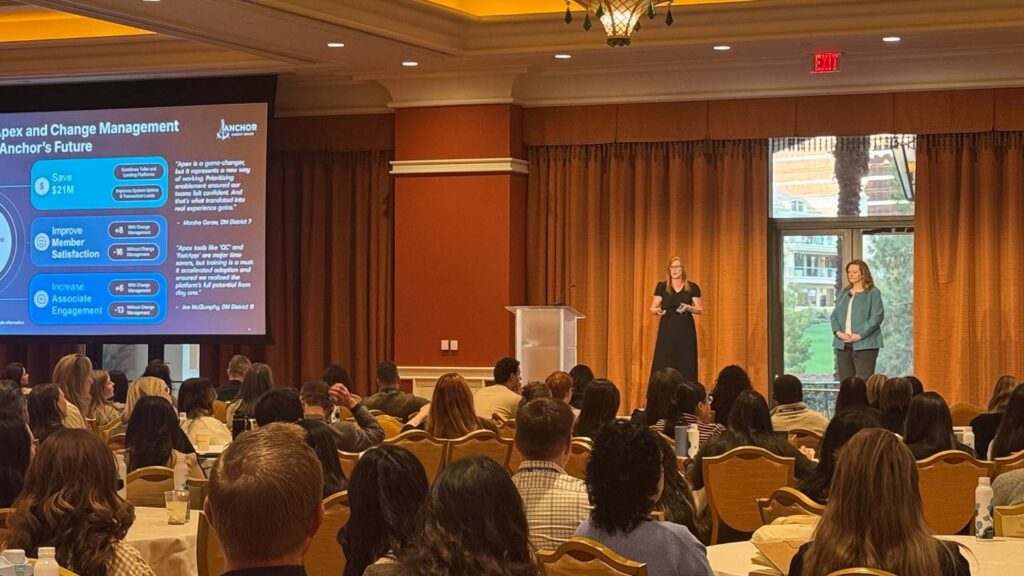
Geoffrey Ryskamp: [00:00:00] Really thrilled to have all of you here and we’re gonna have a great conversation today. Really continuing what we’ve been talking about earlier in the product keynote about AI. What I wanna do is really bring it to life and I think the thing that’s interesting about this, as I’ve thought about our evolution here at Medallia and a lot of different organizations evolution, it made me think of something that, like professors in business school teach a lot.
Really this idea of an iron triangle speed, quality cost, and you have to pick two. You can’t have all three because there’s compromises on every side of this, right? So you can have fast and cheap, but it’s probably gonna be garbage. You can have fast and high quality, but it’ll cost you a fortune.
And there’s this idea of compromises all around this. And I think a lot of businesses, as they’ve thought about automation and kind of basic levels of AI, not generative AI. But I think the obsession has been on this idea of fast and cheap, and I think in this type of engineering, we’ve actually automated a lot of the [00:01:00] humanity out of these processes, right?
Optimizing for this transaction, but maybe not the interaction around it as a whole. But here’s the thing I think with generative AI and when I think, see some of the things that we’ve rolled out that are really out there with the frontier AI models available. I actually think the triangle that we believed in is actually broken.
And what we’re finding now is that companies that are scaling Agentic AI, and scaling, even some of the Medallia AI products, they’re actually finding ways to contain costs on their side. In fact, a recent study came out saying about, 15% or so, drop in costs, but also increasing overall customer satisfaction and quality by 20%.
So really this idea of the overall curve and the curve of compromise being broken, I think is really interesting. And I think right now, really what we’re seeing is this idea of, competency on demand from ai, you can actually get high quality in a fast, very quick delivery.
And it maybe isn’t always all that expensive either. So we’re gonna go beyond the hype of all of this. There’s a [00:02:00] ton of hype. There’s way more hype than I think anything probably in my professional career. If you actually think about what people are talking about. We’re not gonna be talking about delving into a tapestry of synergy or any other word salads.
We’re gonna talk to actual companies that are doing this in their businesses with Medallia and what they’re seeing. And I think we have a great panelist of leaders here. We actually have a company that’s joining us where they’re building homes, the most consequential thing in any person’s, life and the purchase that they’ll make to build their home.
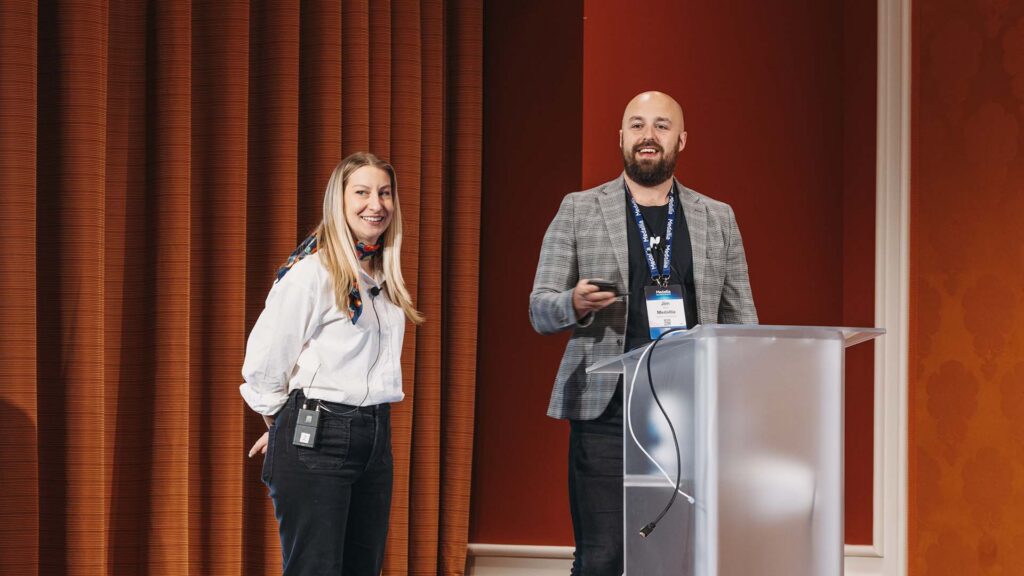
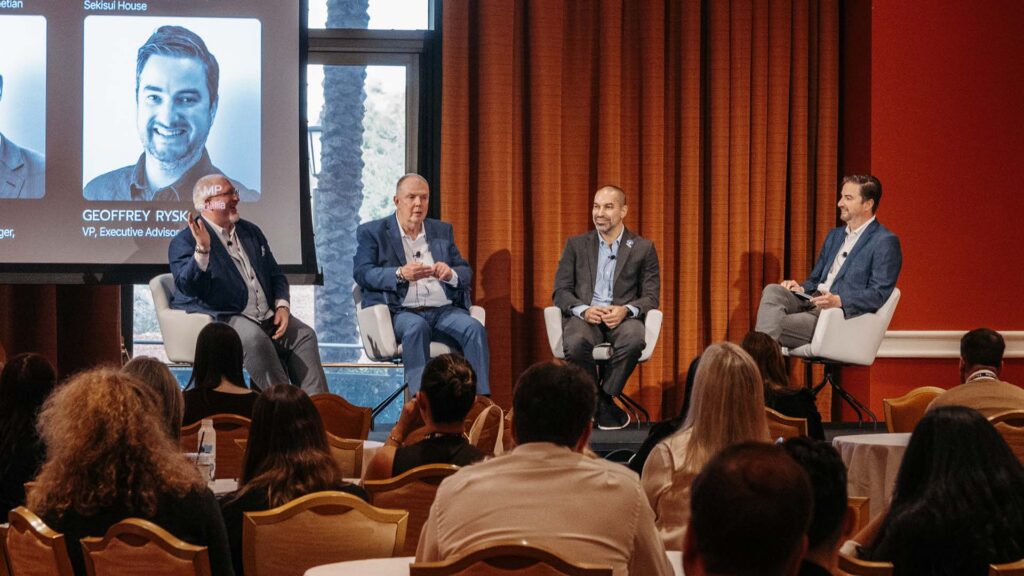
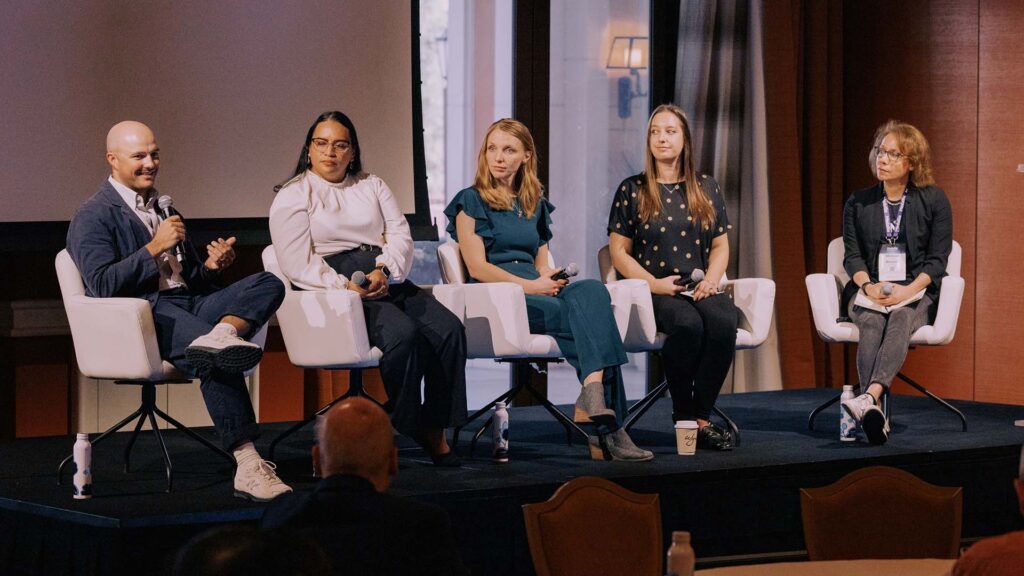
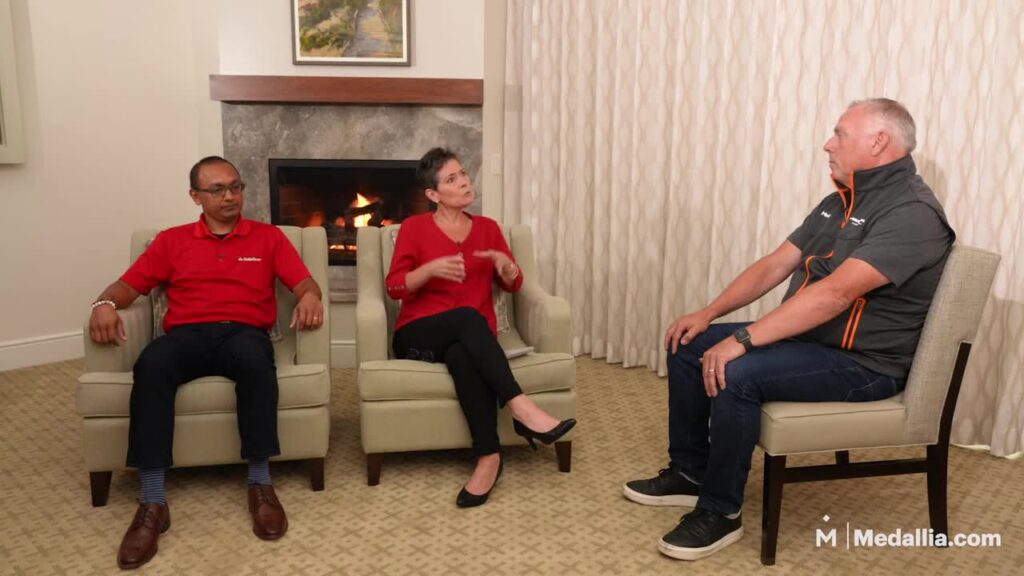
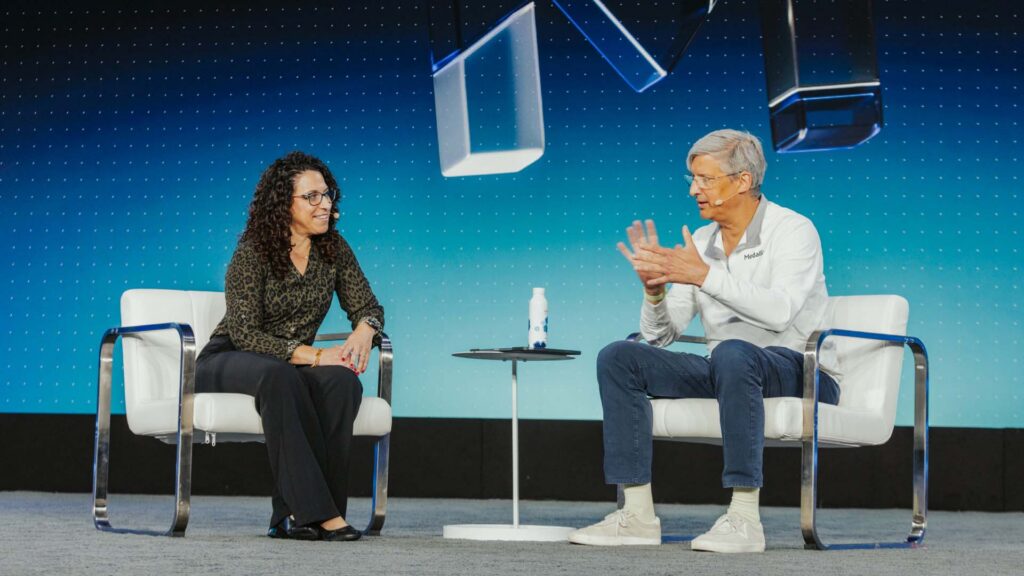
One of the world’s largest marketplaces that’s available is gonna be here, and then a company that’s operating a full-blown city within a city. So I’d like to welcome our panelists up here and we’re gonna have a conversation about this. So please welcome Alex, Terry and Colby to the stage.
Thanks.
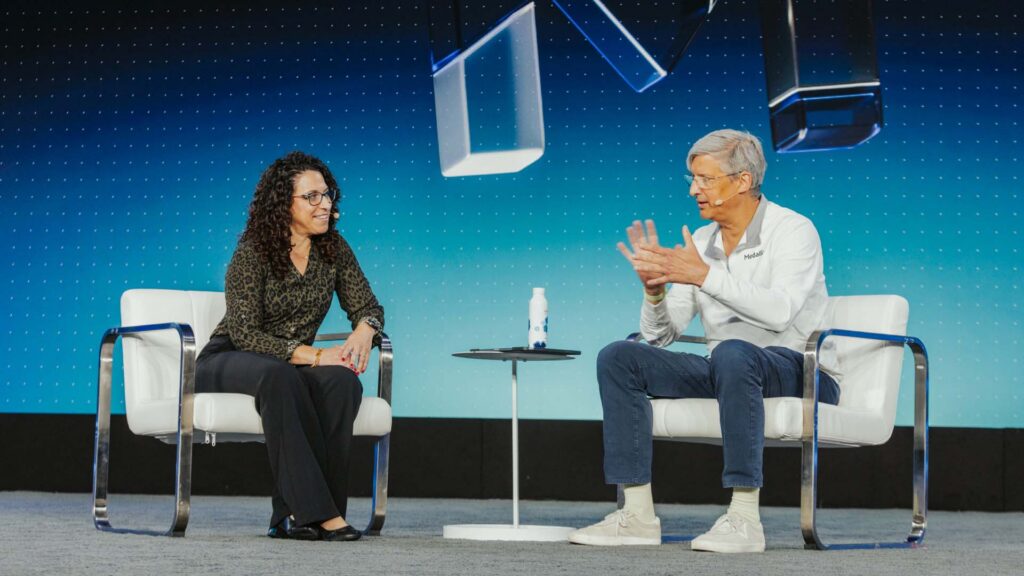
Excellent. And if you forget what we look like, I guess our faces are gonna be up there the whole time as well. So hopefully we’re close enough to that. Okay. Why don’t you guys introduce yourselves. So I took a swing at it. But Alex, maybe [00:03:00] starting with you, tell us a little bit about yourself, your company what you’re doing and where you’re operating.
Alex Lopez: Alex Lopez, I am the head of global research for. The RRB Auctions, RRB Global is a, the world’s largest auction company of commercial assets for agriculture or construction and vehicles. We have locations across 13 countries. We have 13 or 14 brands. And we have customers from 170 countries.
Terry Byrnes: So I’m Terry from Venetian Resort, Las Vegas.
So short commute. I’m just two and a half years at Venetian Resort. Venetian, 26 years ago was born as an homage to Venice and Italian culture. And I feel like the folks that have run Venetian over that time have just done an amazing job of making that vision bigger and better every year to where we got to today.
I like to say Venetian’s equal parts. Big and beautiful. We’re the biggest resort in North America with 7,100 all suite guest rooms, [00:04:00] two big casinos, over 80 food and beverage outlets. We could host the largest meetings or expos on the Las Vegas strip in our expo and convention center. Really just in endless.
Maze of things to do and get engaged in. We’d like to say, we’d like to make Venetian your reason to visit Las Vegas. Not that you’re visiting the Venetian while you visit. ’cause we’d like to keep you inside while you’re there. On the beautiful side, there’s the Italian architecture, the painted ceilings two sets of canals.
I like to say one of the most beautiful parts of Venetian are the 8,500 team members that bring that to life every day. That’s a hard working group.
Geoffrey Ryskamp: Excellent. If you haven’t been there yet on your trip, it’s really nearby. Don’t wanna take too much business away from the wind, but yeah, go to the Venetian and check it out.
But it’s pretty. And I wanted to show if you haven’t been to their YouTube, they’ve got some crazy wild marketing and advertising. Terry wouldn’t let me show the video here. I wanted to, but you can check it out on your own. Some really cool content. Colby with Sec Sui House.
Colby Hutchinson: My likelihood to recommend is like an 11 got married.
We were talking before we came up here on [00:05:00] stage and I’ve come back to the Venetian numerous times. So second it, if you haven’t been there come. I am Kolby. I get to lead the customer experience initiative for SEC Sui House us. We have quietly become the fifth largest home builder in the United States.
And our vision is really to drive, homes and li and home living, not just home building but how you live in your home by making home the happiest place in the world. And we do that through our love of humanity. So as a takeaway, does anybody have an idea what the optimum angle is? For your toilet handle coming out of the bathroom.
We have studied this in our research center in Osaka. I work for Disney, I’m not kidding. It’s 15 degrees, right? The optimum angle for a grab bar in a bathroom is is 15 degrees.
Geoffrey Ryskamp: I think everybody’s spouses are really thankful ’cause you just gave them another thing to fix at the house.
Right? That’s one thing I think like we’re gonna, I’m gonna have that conversation with my spouse when I get home to make sure, but excellent. So very diverse backgrounds, [00:06:00] very different businesses and that’s really why we assembled this group. I think it’s really interesting and there’s a few things I want to get into here.
When I think. Ai, right? We often measure success as second saves, right? Like time to action, like getting the insight that you need. But really, I think the quality of the interaction is often what matters, perhaps even more. Especially in our industries, we’re all dealing with industries.
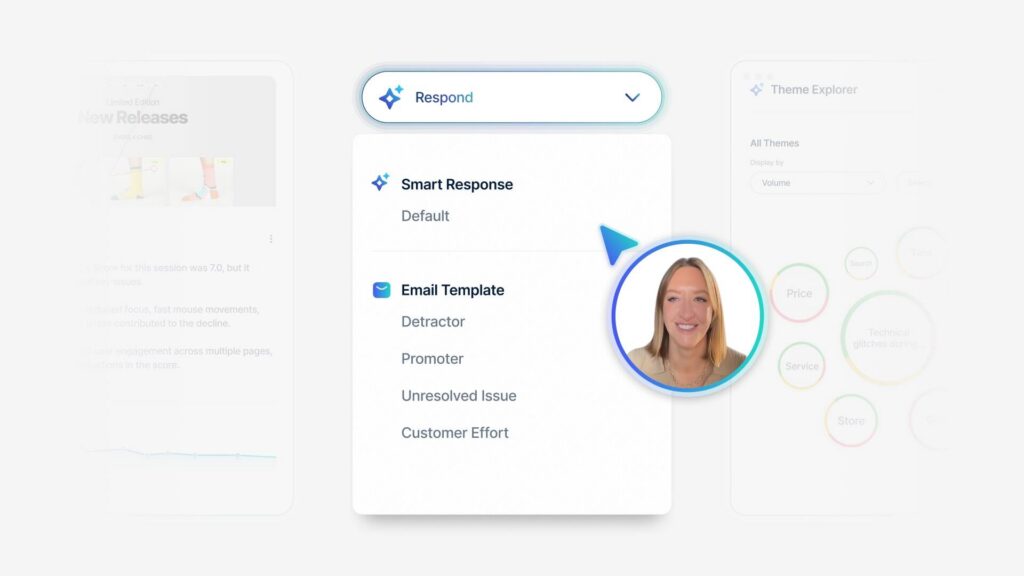
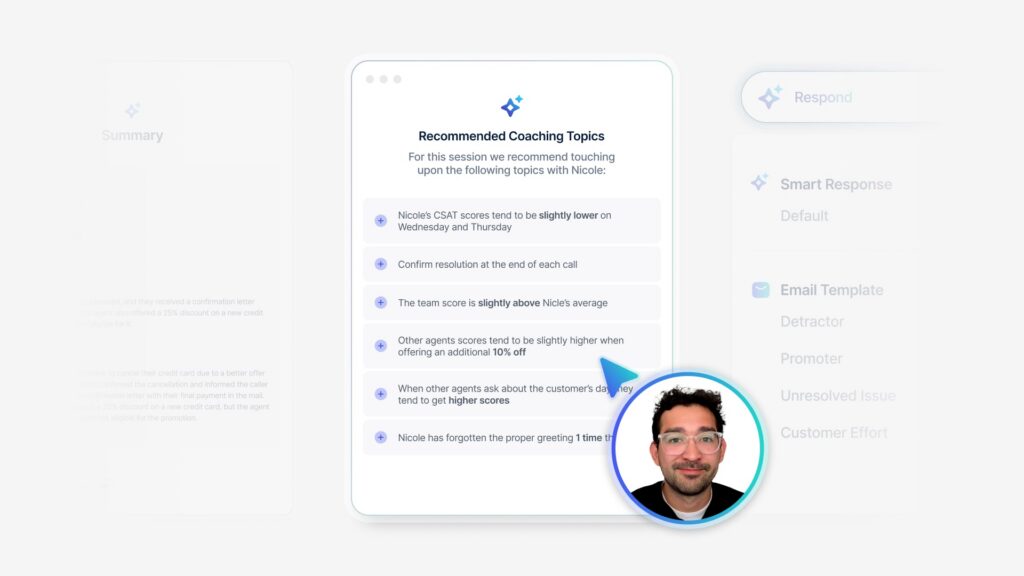
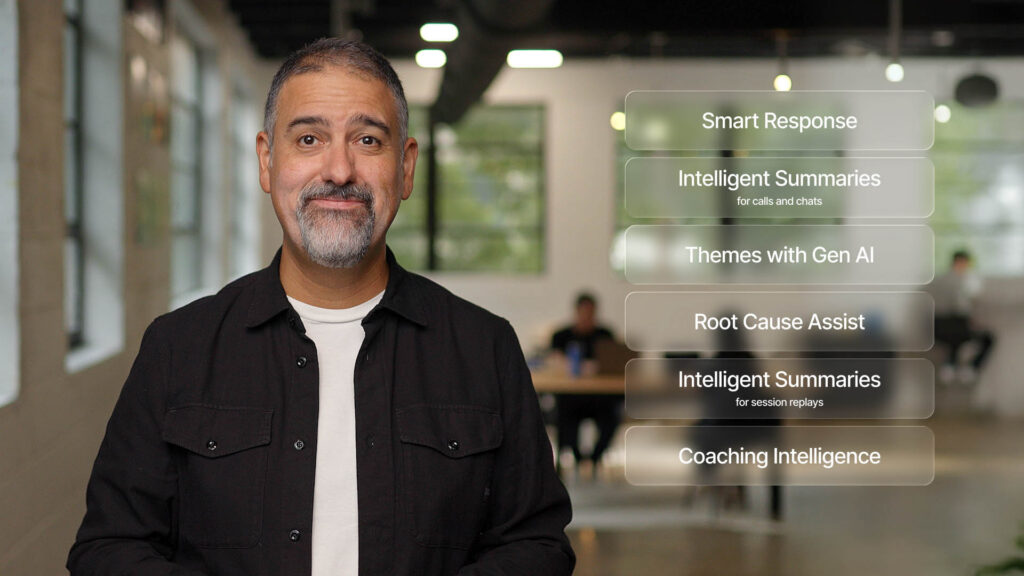
These are high value purchases. For those of you represented on stage, so I wanna talk about this area and maybe perhaps talk about this idea of an agent having to deliver a hard. A message or something like that. But how has Smart response changed that whole dynamic of the interaction?
For you all,
Colby Hutchinson: I sat through one of the sessions that you did, Terry. You talked about how the you were an early adopter of smart response and how it has, how it was changing the way you guys were interacting with customers. And I sat in that room and I said, I want that.
And I was lobbying, screenshots to my sales person who’s in the room to some of our manage services team who were online to see how we could [00:07:00] how we could start using it. I was surprised. I’m not I’m usually not full front in front with. Ai I, have said for many years that, pioneers get bloody, but settlers get the land.
So I always like to be second or third wave. We had a lot of fear internally when we turned it on from our operators that it was gonna depersonalize the experiences that our frontline were driving, meaning it was gonna be too easy for them just to fire something off and they would lose some of that connective tissue to that customer feedback that is so important in our programs.
And the opposite. Has happened. We started off with no real governance on it, just having it in there with some of our, out of the can responses that were the static ones. And we saw the adoption just like a rocket takeoff. We trained some leaders on it, about a dozen or so, and then throughout the rest of the organization it, it has gone nuts and I am a firm believer in.
Real experience starts with the inner loop. If we can’t get that one-to-one dynamic [00:08:00] correct with the majority of customers, doesn’t matter what we do with the outer loop, right? Like we have got to make it that personalized thing. And how many of you have filled out surveys and what happens?
Geoffrey Ryskamp: It’s a void,
Colby Hutchinson: nothing.
It’s a black hole. Our customers that are actually giving us feedback are investing time and their attention to us, and we’ve never been able before to say at least thank you with something personalized because of the scale of it. That’s what Smart Response did for us. So including alerts, we were responding to about 33% of the feedback that came through from customers.
Within three months of turning on Smart response we’re now at 89% as of yesterday same time, same attention that the staff is giving it. And yet that connectivity that they’ve got with customers has just increased. We’re creating more one-to-one relationships because of the engagement. With that feedback, [00:09:00]
Alex Lopez: I have the same exact story.
But in a kind of a opposite way. So I am actually, going first and try something when it’s brand spanking use. I was part of the early adopters group or AI features in Medallia. I begged and I plead it to be on it. And finally somebody heard me out. I jumped on, tested it I’ll myself I was skeptical because, as person who has used different LLMs, that.
Hallucinations were a thing. And so I was skeptical on how effective it would be, but I’ll tell you, it was excellent at writing in a way that was professional engaging that it sounded like our people and just an overall really well crafted message. So I applied it and gave it to a couple teams and we were, like Kobe had mentioned, we were only responding to negative feedback.
Turned it on, asked them to respond to positive. It does exceptionally well with positive feedback. They would read it through and make sure that everything sounds [00:10:00] fantastic. They didn’t need to add anything, and then they would launch it out and send a message back to the customers who.
Typically when to just avoid after giving some positive feedback. I don’t know if it’s coincidental or now or not. So we have a little bit of more research.
Geoffrey Ryskamp: Yeah.
Alex Lopez: So it’s correlated, but it’s not necessarily the cause. But our score in this area jumped up 20 points after responding to our positive feedback.
We also are covering about 90 95% of all. Surveys.
Geoffrey Ryskamp: So you both mentioned something and I think it begs the question, right? And this is the question that I’ve, we’ve had since way before Smart response or generative AI could do this kind of thing. It’s worth saying. So you both said, Hey, we’re responding to more customers, like we’re responding to more clients when they come on board.
Let’s ask it again. Like why even do that? What is the actual benefit to you when you have that closed loop, right? Whether it’s AI or human. Why was that important for you and your businesses to begin with?
Alex Lopez: We’re trying to establish a relationship with our [00:11:00] customers. That is authentic and true so that they see us as a preferred vendor in this space.
There is a com there’s a couple other companies that do what we do and we wanna make sure that we do it in the best way possible. And so engagement with those customers, if they’re spending time. Writing a message to us, being able to send that message back to say, thank you. You are heard?
Colby Hutchinson: Yeah.
Alex Lopez: Create a tighter more loyal customer that now in the area that we turned it on, it was for transportation. Like I had mentioned, scores had gone up. And the number of requests of transportation services had also gone up. After that first month of just turning it on, we find doing the right thing.
Turns into dollars for us as girl.
Geoffrey Ryskamp: Terry Kolby thoughts on that? ’cause again, like the old world of this, like we did close the loop. At one point people would do handwritten notes and I’m sure it’s still done in an environment like the Venetian in some high roller situation. I never get those notes.
But I think I used to be a agent looking at a cursor flashing on a blank screen, and then we [00:12:00] got canned responses and I and me had a, I think we had a feature name for that called rapid response. I don’t wanna, but yeah, why even close the loop? Why is that important?
Terry Byrnes: We’re a loyalty business too. People have a lot of great choices when they’re deciding where to stay or do business in Las Vegas. We get a mountain of feedback. Our opportunity to do closed loop feedback is almost unlimited. The business case for us has been pretty good. We’ve been able to respond to more guests, which is great.
We’ve been able to do that with a little bit less investment in our service center. And with the quality’s been excellent. I thought for sure in the beginning we would give it a try. Eventually we’d have customers come back and blast us to say, oh I stayed and I spent all this money at Venetia.
Then you send me back a robot response. We’ve seen zero of those in one year. So a combination of what’s being produced and then the agent evaluating it, that process and then sending has been a, winner for us. The business case that we’ve set out to, we’ve exceeded on really on both sides. We put some work into it.
Bill that’s here from our team did a lot of the training and the, tuning. You have the tool [00:13:00] so what you put into it matters too. But we’ve done a good job at adjusting that and continue as the business changes to look for those opportunities.
Geoffrey Ryskamp: You brought up a really important point that I think, so a lot of people have seen like the AI magic stuff, like the presentation this morning and everything like that.
I think that, the broader, the context window and what I mean by that is really the other parameters of data you put in like the other unstructured components, perhaps like in an environment like hospitality. On property ticketing, the more it has to chew on and digest, the more rich it becomes.
It’s no different from like an agent who has to like maybe flip between five or six different systems. If they have it all in front of them, then it can respond in a more thoughtful, intelligent, efficient way. So I think that you raise is a really good point about tuning it and making sure it’s having that voice of the Venetian.
Alex Lopez: And if tuning it is easy, it’s literally you’re not in the backend writing code or anything. You’re just talking to the LLM and saying, Hey. Provide this information instead of that in natural language.
Geoffrey Ryskamp: Interesting.
Alex Lopez: It’s super easy.
Geoffrey Ryskamp: Which, anybody can code now, right? So it doesn’t really matter about that, this stuff.
Colby Hutchinson: I was [00:14:00] the guy telling people who were pushing for AI within my org. You just hold cool, your jets gun powder. Let’s just slow it down. I had our first smart response up sitting in the Portland airport over a glass of wine or two and had it done in 15 minutes, and then just copy and paste it.
And really within an hour there were the six starting smart responses that that we’re using now. And to the point of fine tuning it the prompts that came out of the box were good. We found, at least for our org, we had to dumb it down just a little bit. Like we, we had to shoot for a like eighth, ninth grade reading, writing level a little bit because it was really polished.
We’ve got a couple other things that are in there, but we have found the prompts are super, super easy to use. And you can have it up and running in no time. And then, perfection sometimes is the enemy of progress. If you haven’t started it yet, I would encourage just get in there and play with it.
You’d be amazed. We’re seeing that connectivity with the customer increase significantly. So our frontline customer care [00:15:00] agents are dealing with more customers more often, they’re reading more of that feedback because we’re now responding. So often they’re now more aware than ever what surprising delight looks like and where the friction is that they can proactively start working at solving.
So it’s it’s been a game changer. For us.
Geoffrey Ryskamp: One thing that’s, I think of an interesting point of this so there’s this discussion where it’s okay, like they’re just throwing a bot at me, like they’re just throwing like a response, an AI thing. There’s actually been some really interesting research on this.
Yeah. There’s bad perceptions, bots. ’cause we remember what bots used to be like six years ago, right? They were this kind of like decision tree thing. And it was just like a decision tree on like almost you call like an IVR system and then you like get so frustrated, you throw your phone in the ocean.
That’s the thing. That’s the way bots used to be. But obviously this is different. So customer expectations and their interests are actually like. Look, I don’t care if it’s a machine or a human, I just want my problem fixed. And this thing is doing it quickly. So that’s the other thing that’s interesting.
I think you [00:16:00] both touched on it a
Colby Hutchinson: bit. I got a call from one of our customer care leaders in Northern California just a couple weeks ago, and he said, Kobe won’t believe this. I just got a call from a customer. I hit send on my smart response to him five minutes ago, and the guy picked up the phone and dialed my phone number on the bottom of it and said, are you a real person?
And they then had a conversation about how we listen, we care, and we act on their feedback.
Geoffrey Ryskamp: Wow.
Colby Hutchinson: Think about that for a second. No, we read every single piece that comes through. And we care about your feedback. And through our research and everything else, we’re learning not only how to make your experience better for you, but we’re learning how to make home living better for all of our future customers.
And I firmly believe that fundamentally changes the relationship with the customer. My, my customer journey is sometimes two and a half years long from when somebody decides to buy a home for when they’ve picked out all their options. When sticks come outta the ground, they finally move in. Plus the warranty period.
Or it could be, 12, 13 months, but that’s still a really long customer journey. You think people are more, [00:17:00] more or less likely to give us feedback if they think we’re listening and we care and that their feedback matters?
Geoffrey Ryskamp: Yeah it’s super interesting. And so that’s one component, obviously the conversational component of ai.
I’d like to kinda shift now to the sort of the solving the mystery type side for a lot of us in cx. Obviously closing the loop, we talked about. I think sometimes there’s this idea of okay, I need to go in and get the data that I need to. So in the past, the way this worked is you may have a spike in complaints and then that would trigger an investigation and you’re dancing around systems, maybe doing some data analysis.
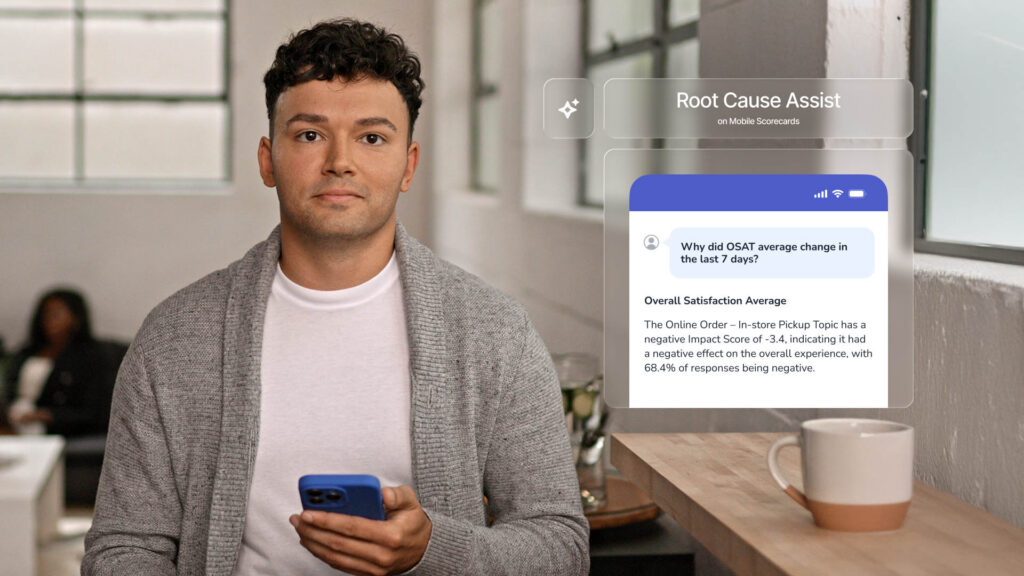
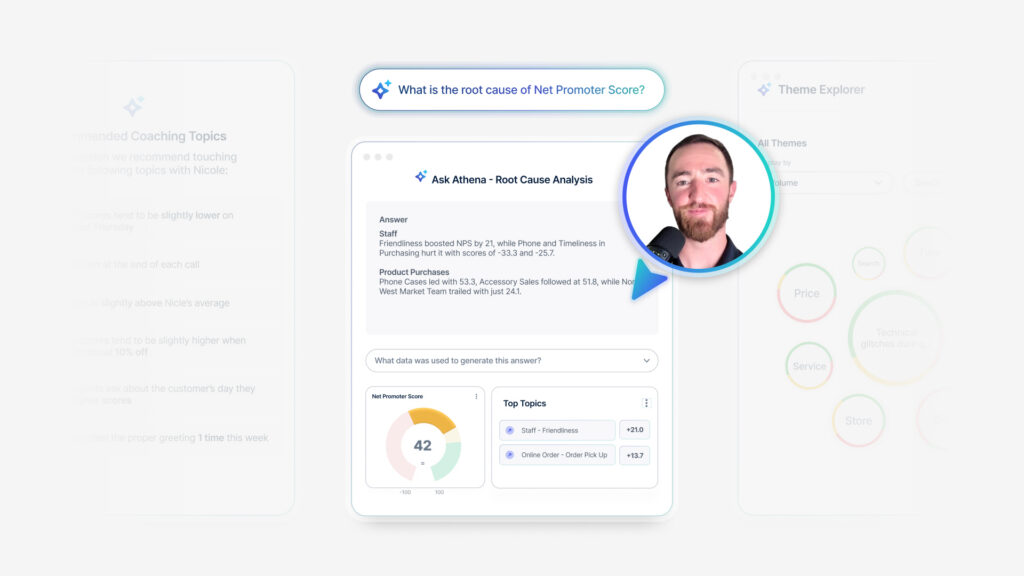
This is still being done, right? Like you get a question from the board and you gotta go figure it out. Walk us through how root cause cyst, could allow you to maybe bypass some of the guesswork and start to pinpoint more of specific issues.
Terry Byrnes: We have literally every month of an and amazing conversations of stakeholders about really complex guest issues.
Okay. Strategy, execution, costs. We’re almost back to your triangle that you started with, right? To say, how are we gonna work this all out for the [00:18:00] be the best spot we can be for guests, Venetian and everyone involved, right? We had all these conversations. Frequently, those conversations, if you don’t have something to start with, like a source of truth or facts or a summary of some sort, start with everyone just saying their opinion or what they saw or what they heard.
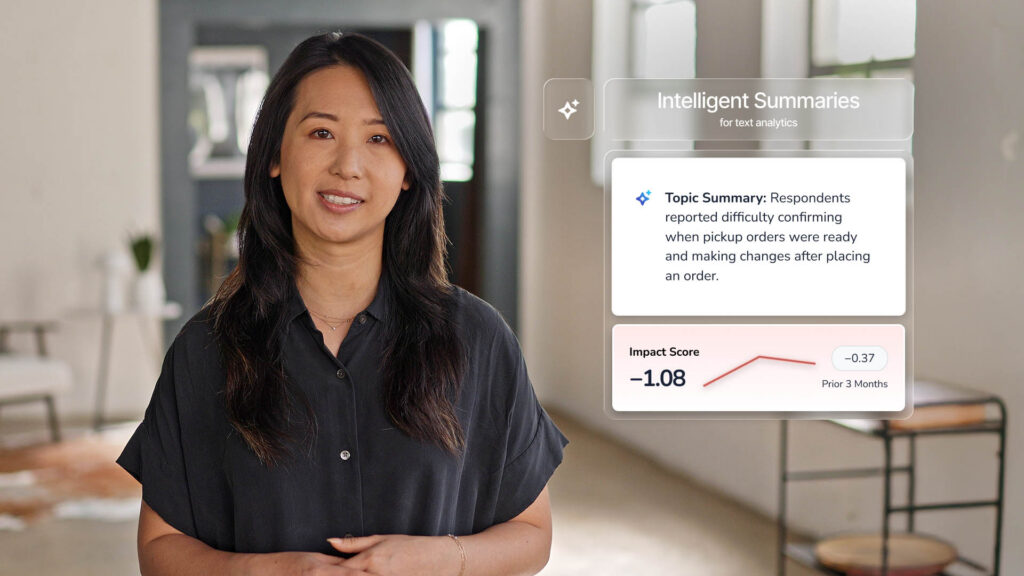
It takes a long time to get past all that. Sometimes it’s hard to get past all that to a place where you can say, okay, where? How are we gonna move this into action that gets a result that everyone’s happy with? So maybe a little different than the root cause assist. Just the intelligent summaries have been helpful to us.
I could think of a situation where we were off to a slow start to our pool business one year. Pools are a big business. We have seven pools. If you look out there on a nice day in the summertime, every seat is full. They’re a multimillion dollar business in themselves. Food and beverage business.
Wow. So there was concern. Are we’re going what we wanna do, are we gonna have a good pool season? So like a different people. If you just gave a list of feedback to different stakeholders who would read it and come different conclusions. Someone might say it’s staffing. Someone else might say, oh, it’s, we’re not clean and safe.
A third [00:19:00] person might say it’s the products. It’s difficult to get that started. And if you have an intelligent summary of some sort that has said, that’s prioritized in some way, what guests are saying and what volumes,
You can speed past a lot of the. Just opinion sharing to say, let’s get started with a set of facts and just have a lot better conversation about where we want to go.
So speed to market for that has been great. I know there’s people in the room that have had requests. Like late in the day or in the evening that said, can you tell us about this or that in the business? And then you say when do you need it? And they say for tomorrow’s board meeting or something for the vendor.
Who’s ever made like tick mark sheets with a list of comments? I bet there’s people in here. Everyone’s done it. So speeding past that with some of the newer tools is fantastic. And you can put your energy into the conversation and the action as opposed to doing the work of trying to figure all that out.
So it speeds it all up and just makes it better.
Geoffrey Ryskamp: Yeah. How often does that happen? The room where you bring an insight forward and you’re trying to get to the root of something and then you got eight different explanations or excuses from the business where it’s I think [00:20:00] it’s this, everybody has their own spin on it.
It’s good to have, I heard that everybody’s trying to work towards a single source of truth. The single source of truth may or may not exist for all issues, but at least you have an intelligent. Approach.
Colby Hutchinson: Every once in a while though is nice to get the c-suite to play. 1, 2, 3, 4, let’s have a thumb war.
Right?
Geoffrey Ryskamp: Yeah.
Colby Hutchinson: Just sit back of the popcorn and let them fight it out. Great to have the answers.
Geoffrey Ryskamp: Yes. And Alex I think you had some thoughts on this too. The intelligence summary is root cause assist? Yeah.
Alex Lopez: It come from the one of the parent companies of the Barbie Global i a, there was an acquisition and with most acquisitions there’s a consolidation of employees.
And so we had to do a lot more with a lot fewer people. And that’s when AI had really started to, kick off. And before it was in Medallia, I was using a variety of tools, copilot and whatnot to get the insights quickly to the teams that needed it. One of the problems that using copilot or or any of the other tools is that when you do the data analysis, sometimes when you [00:21:00] run it on data.
Right now and then rerun it. You get different results. So what’s the most important thing? It’s a little bit different, and it’s not terribly off, but it’s enough to make you wonder is this reading the right things? When Medallia turned on the themes for us when we got early access, it solved those problems.
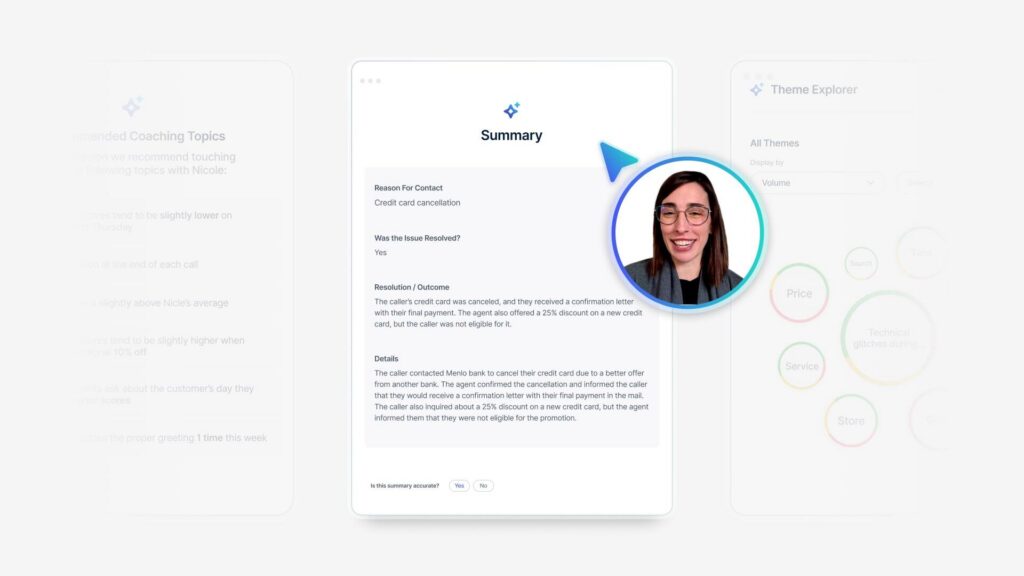
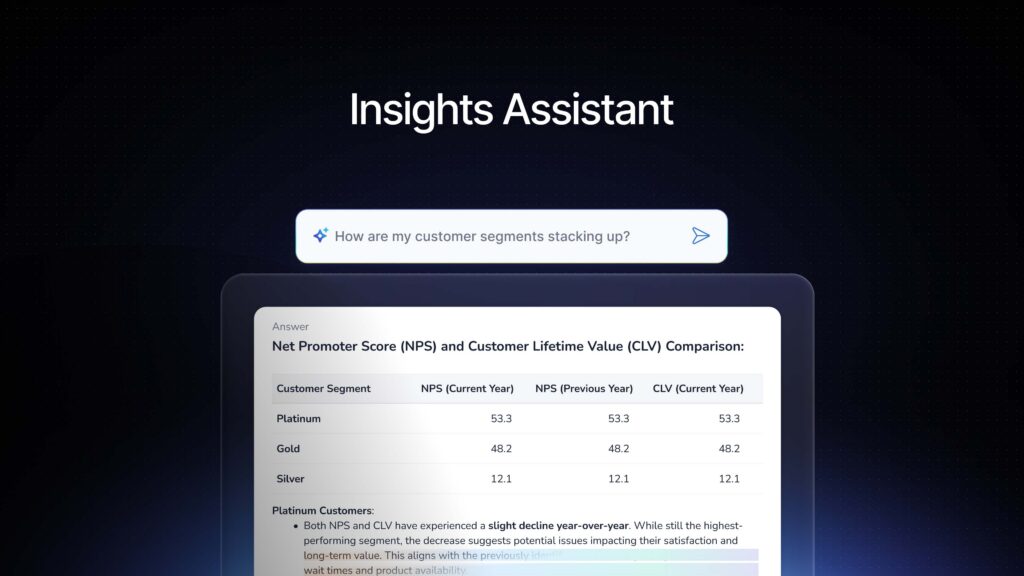
So now when I take that data set and and look at a specific timeframe, I get the results from the themes. I get the sum, the intelligent summaries that I can deliver to our teams internally, quickly, and next time I run it, it’s gonna be the same results. It’s not gonna change. Now I’m also able to take those features and hands them directly to the frontline staff so they can see those quick summaries of what’s going on within their respected places.
Geoffrey Ryskamp: That’s a, I think that’s a really good point you made there specifically about different answers at different times with some of the other tools you’re using because generative AI is typically [00:22:00] probabilistic, right? So you actually somewhat designed to give you different answers. But I think that the component that you mentioned in Medallia where it actually is like, yeah, here’s the answer and this is the data.
Like it actually all in one. You all saw versions of that today as well with some of the other features that are being rolled out. I think that’s a critical component. For when you’re doing this within the confines of a business. ’cause I think a probabilistic approach can work for if you’re trying to decide where to eat dinner tonight, right?
That’s fine, but if you’re actually saying, Hey, I actually need to back up everything I’m saying with data, and the source data needs to be there. Yeah, also bring in some stuff I might not be thinking about that could be related. So I like that you brought that to life. And I think there’s also this idea where kind of move up the value chain within an organization from kind of analyst mode to strategist mode.
Alex Lopez: Right?
Geoffrey Ryskamp: Have you found it, you’re saying it freed up some time to be able to think of bigger picture things, perhaps?
Alex Lopez: A hundred percent. Yeah. With the centralized CX teams that, that we had before we were able to curate all of the actions and insights and the intelligence from our team.
And then deliver that to the organization. We changed our approach to be a hybrid approach of [00:23:00] CX governance, and with that, I can actually instill certain CX experts within different teams, teach them on the tool sets, focus on the overarching changes and actions that we need as a organization while they actually focus on the things that they can do within the relative teams to fix customer experience.
Colby Hutchinson: I find that as CX professionals, our circle of control is very small, but our circle of influence is significant. We just don’t have the bodies, we don’t have the number, we don’t have the team. Sometimes we don’t have the funding. Developing high trust relationships with the people that will actually turn insights to action.
Helping them figure out what those actions are and speeding that up helps drive that, right? Because when mid-levels, your SVP levels reporting up into the C-suites, when we can enable them to not only understand what the insight is, but then to actually plan out and drive. Business changes that they can [00:24:00] track, like almost in real time in the quarter, for the quarter, in the month, for the month.
AB test, different experiential things along the way. I have at least found. More people are reaching out, asking more questions, wanting more assistance. Hey, we hear you have new toys in the toy box. How can my team start playing with those toys too?
Geoffrey Ryskamp: It’s interesting too ’cause I think it something we’ve known as CX professionals for a while.
Like sometimes our customers have the best ideas on how to fix the business and. Jump in if you have anything that comes to mind. But, I think sometimes that signal can get lost in the noise if you’re looking at large data sets, lots of dashboards. So sometimes the actual best ideas from customers or employees are trapped in there somewhere.
But obviously through things like intelligence summaries or actually getting the root cause, some of those things can bubble up a little easier. We have a little bit more time and what I wanna do, we’ve got a few more questions to talk about, but what I wanna do is I’m guessing there might be.
Some ideas, questions from all of you here, and I wanna make sure we have time for that and we don’t just cut it off really [00:25:00] quickly. Any initial thoughts, questions for Colby, Alex, or Terry about anything they’ve talked about with AI or their businesses, et cetera?
Audience Question 1: My name is Andrew from CIBC.
My question for you would be, what would be your lessons learned or the hurdles that you encountered that you would. Recommend others try to avoid when they’re implementing or starting to leverage the AI capabilities.
Colby Hutchinson: Talk to your legal team early and Hello fellow. Fellow Canadian, right? Yeah, said it yesterday in one of the mug meetings.
I was surprised at some of the hurdles and some of the obstacles that our internal teams through up. Obviously there’s an MSA with Medallia we gotta sign off on, but making sure I had the right pitch to them right outta the gate. Answered questions that they didn’t know they were gonna have. For example, making sure they knew for smart response somebody was in charge.
Somebody actually had to read that response and check off the box to say it was okay. Answering that question right out of the gate, if I would’ve done that, would’ve saved me weeks. And when in doubt, take your lawyer out and get ’em just totally liquored up with tequila. [00:26:00] Alright,
Terry Byrnes: best practice, Andrew. I was gonna say just be realistic about where you are in the process.
Don’t over promise. Go step by step and pick up some small wins early and go for bigger wins later.
Alex Lopez: Set expectations with the themes that you’re gonna have those features turned on. Smart response a great example. Meet with them first. Have them review the way that it’s responding and allow them to.
To tell you how they would like it adjusted. I found that to be very effective. They feel like they’re part of the solution and that the voice sounds like them. You can set up your smart responses by area, by group, and it’s really helpful when it sounds like the team, the area of the organization that it is crafting a message for.
And one other thing is consider, how widely you’re gonna use this because one of the, one of the benefits that we are finding is that our branch managers, some of ’em, their writing skills are not just. [00:27:00] Fantastic. So when they respond to customers, sometimes it’s not in the voice that we would necessarily want.
They
Colby Hutchinson: put the wrong and fastest on the wrong. Celebrate.
Alex Lopez: Exactly. Exactly. And the enabling smart response then allows you to put the brand voice on all responses. They just have to edit. If they want to, they can just edit some stuff and they can one of the things that we ask them to do is every issue that comes up, you have to include.
A solution to that issue. I don’t want AI given a solution, this has to come from the branch manager. So it’s a better crafted message. It sounds like the brand voice and they’re offering their solutions in it. So I think it’s a way more effective way of responding to all customers needs or just feedback.
Colby Hutchinson: Alex had such a great nugget, you just reminded me too. The power of using your internal stakeholders and teams as co-creators.
Geoffrey Ryskamp: Yeah.
Colby Hutchinson: So they’re almost part of the solution that’s going out and driving that use, driving that interest. I think that’s a nugget, not just for ai, but for [00:28:00] all cx.
Yeah.
Geoffrey Ryskamp: Yeah. That’s a good, so if you have a broader correlate coalition who’s supporting this, because you talked about sometimes inconsistency in delivering closed loop or kind of like conversations with the guests or customers, you have that because you’re distributing the work now. But then you can have a tighter, more aligned voice of the brand.
That’s actually. More personal as well. ’cause more context is being taken in. Then you bring in brand and marketing and yeah, how do you wanna have this and that, that can be become very interesting,
Colby Hutchinson: specifically for smart response. Another tip that I wish I would’ve hit the DeLorean at 88 miles an hour.
Talk to your marketing teams. A lot of your marketing teams are already using AI for some of their CMS, their content management. They’ve got a ton of these prompts that are already written. And at least for Medallia is that voice of brand. That kind of generates the things that the the AI will pull from the response.
They might already have that in the can so you don’t have to create a blank one sitting in the Portland airport after a couple glasses of wine.
Geoffrey Ryskamp: Yeah. So there are two questions here. One was how [00:29:00] do you validate and then also how do you test or do a second tier level of analysis concurrently?
And I think it’s very interesting question too, ’cause it begs the question, how did you do it before ai with the people that were doing that? Sometimes correctly, sometimes not correctly.
Alex Lopez: Intelligent summaries. Easy, there is an option to download the data so you can actually compare what it’s based off of against what you are seeing in the summary.
But I also to go a little extra. So when we were first implementing it, I was going through the area that we had it filtered on and I was reading everything ’cause I wanted to make sure that Medallia got it right. And luckily it is true that it, they got it right. So I was literally cutting through all of the feedback, reading it manually.
And I found that I just didn’t have to do that much anymore.
Terry Byrnes: Yeah. Yeah. My confidence in the summaries is pretty high, so we’ve done some validation like that to say when it comes out, does it seem like if you’re here and you were along the way running the business while you were here, does it seem like that’s what’s happening?
Okay. The match is. My [00:30:00] opinion. Very good. Some of the things we saw earlier today about some of the future products looked exciting as extensions of that, where it was gonna extend to counting or sizing issues. Also tacking on other things. We’ll be interested to hotels like us, suite numbers or something like that, or different tiers or different levels of customers.
It takes work to get to today. So we’d like to, we’re hoping the extensions we saw on the products help us get to those things faster as well.
Colby Hutchinson: Yeah, that’s where I we’re at right now. Fine tuning. ’cause we send a ton of metadata behind the data layer that the customer’s not giving us for those things. Yep.
You’re gonna get out of those, some of the effort you put in tenfold but you do have to put a little effort in out of the gate. And I find that we can play around a little bit. What we think is important. Does that make sense? Maybe. I think I fumbled that
Geoffrey Ryskamp: there, right? Yeah. No, it’s the parameters to the data is what you’re talking about.
Yeah. Where it’s, if it’s a simple survey without context, you’re only gonna get so much.
Colby Hutchinson: Yeah. Frame it and frame it around some of the key [00:31:00] KPIs and some of the key questions that, your C-suite, your senior stakeholders are asking you about find ways to get insights to action faster.
Speed it up. I
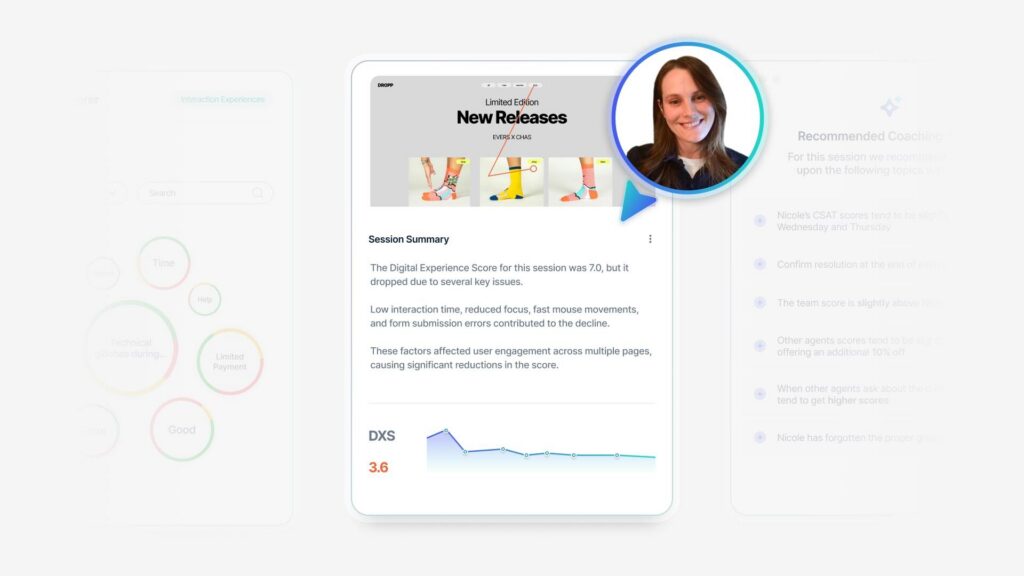
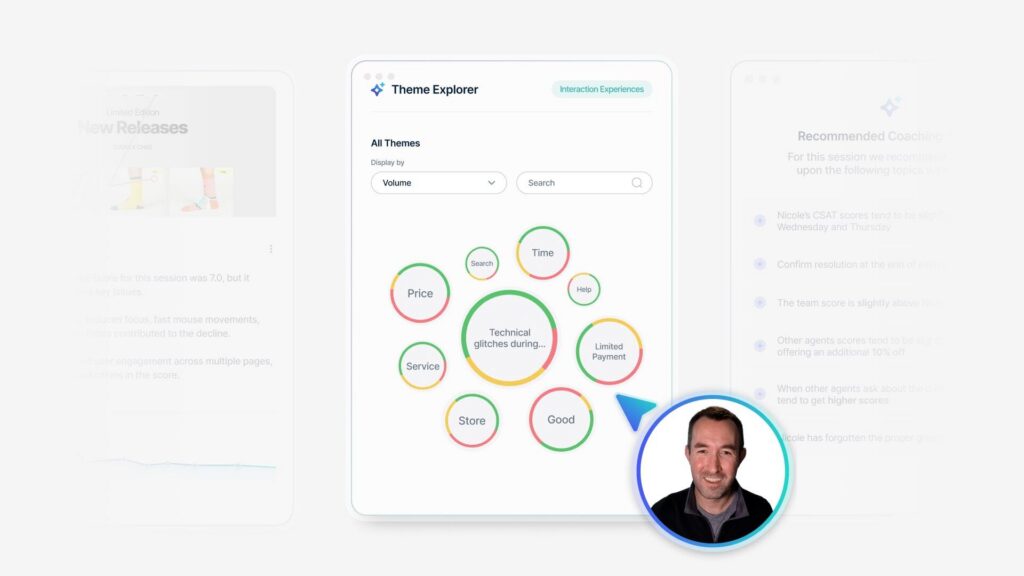
Geoffrey Ryskamp: think it’s a really interesting question because I think for those, keeping square at home, this is not a new thing for Medallia to have AI and the platform. In fact, we’ve had AI running on the platform for almost a decade. Through things like text analytics and theme explorer, right?
These are very much AI generated insights that are on the platform. We’re talking about generative AI now, right? That’s a different kind of a world. But I bring up the text analytics example because I remember early on this was like 10, 11 years ago, there were still like some conversation about hey, I actually want to have a human coding to make sure the text analytics is telling me what a human would.
There were a couple like little bake off things that, that, like you’d look at it basically nine times outta 10. The human was more unreliable than text analytics. ’cause what do you do when you’re coding text, if anybody remembers doing that, it was a really fun job. But you, no, you kinda wander, [00:32:00] you do what humans do you.
These pesky emotions and things like that and reliability. But great question. It’s super critical and I think it’s a really key component also of like building the coalition and saying, Hey, this is why it can make sense.
Alex Lopez: And I also, to answer your second question, I have used the gen AI themes to look for topics that I did not have covered that I did not see before.
In order to add those back to my my, my standard topics. But today I don’t use my topics that much. I use mainly themes to generate. The insights that I need to make the organizational change. It’s only when I need a topic that is a lot more brand specific. ’cause before I built out everything,
Geoffrey Ryskamp: and you’re talking about themes with generative ai, which we haven’t gotten too in depth on for this.
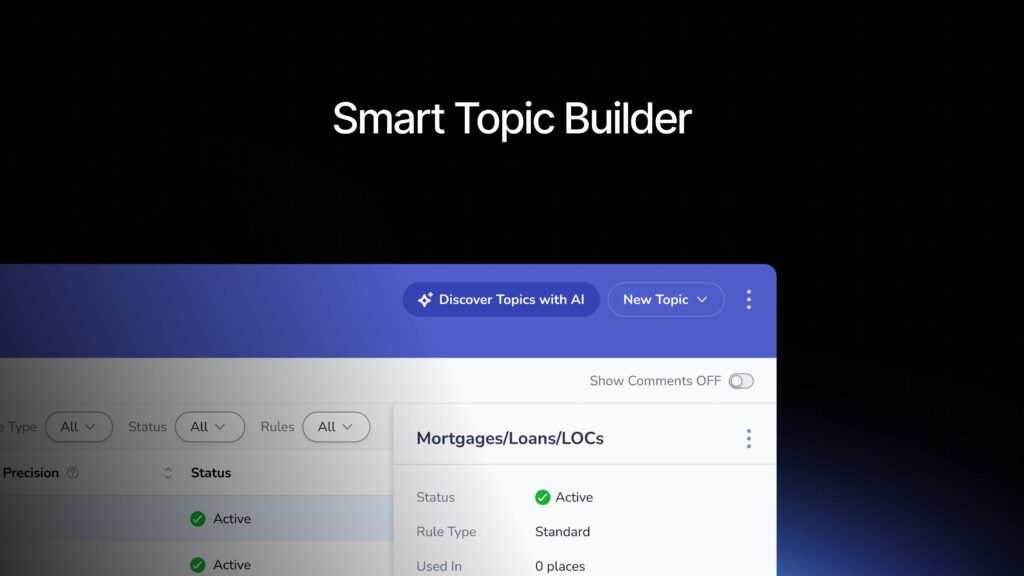
But yeah, maybe you could talk just really, a little bit more about that. You touched on it, but yeah, like manual topic creation, either Medallia does it, you do it, a partner does it.
Alex Lopez: Right.
Geoffrey Ryskamp: But now it sounds like you’re changing your approach and maybe even based on some things we all saw this morning, it’s gonna.[00:33:00]
Streamline a little more.
Alex Lopez: Yeah, because the Gen AI backend will actually take all of your feedback that it’s going through, it creates more robust topics out of it. And it gives you the same kind of look and feel that you’re used to in maybe your topics explorer or your standard themes.
But the information that you’re getting out of it is a lot more robust and sometimes even short sentences about what’s really going on, and you’re able to easily dive into. Those areas and get summaries for those topics that the theme explorer has bubbled up and then dive again deeper and look at each and every single comment that is associated to that.
So I had it for myself and for the CX team. Only and not for more of the front end staff.
But I switched that out and now the front end staff the IT team, they get access to the new themes.
Geoffrey Ryskamp: Yeah. With the gener. Okay. That’s super inter and it’s running constantly on the flow of data.
Exactly.
Audience Question 2: Do you have competing products from your own organizations, AI [00:34:00] teams that you are fighting with?
Terry Byrnes: Yes. And yes. Here too. N no. Yeah. Okay.
Colby Hutchinson: I like to be I like to think CX is there to be a solution provider for the organization. And my approach has been to pull them in and full transparency and when they have seen what’s going on.
Time speed to market for actually turning these things on. Again, 15 minutes in Portland Airport. They’re the ones telling me that although it’s in similar silos and ai, it’s, they’re coming to the realization that it’s really not competing for resources. For their AI initiatives. And at the end of the day, that’s what I found.
The conversation is really sticky. It’s not necessarily about the tool or the value that it can bring to the organization. It’s who’s getting funded, who needs the extra money for it, because it’s already included in MEC. We’re good to go.
Terry Byrnes: Yeah. I’m concerned. At Venetian, we just enabled 1100 knowledge workers with a prominent, aI solution, we’re gonna have to be [00:35:00] careful about what we, which we use for what purposes and things. So I don’t know how that’s gonna work out yet, but some of the same things you’re thinking about, we’re thinking about there, that’s gonna need to be worked out. Critical
Geoffrey Ryskamp: component with that, I think for everybody to think about is what do you want to do and what system and what is each system good at and how do you have it deployed?
I don’t think anybody at Medallia would tell you that Medallia is the one-stop shop for all AI insights in your organization. I, that’s not. That’s not what we’re going for here. Think about what you use Medallia for. What are medallia’s superpowers? And then how can AI embedded within that workflow make it phenomenally better?
So I think that’s the thing. And I know there’s other, there’s complexity to your question ’cause it’s also. All of a sudden, if people can ask something, anything about your organization, then it gets cloudy. All of a sudden they have a different idea of what customer experience is. There’s layers to this.
Without a doubt,
Terry Byrnes: Al almost everything you buy is gonna either have AI solutions or claim to have AI solutions. So how those fit together and what, where the overlap is, or what you’re gonna use for what [00:36:00] purpose is important conversation.
Colby Hutchinson: Yeah. We’re in a really new. We’re in a new area, right? Some of us have been using it for now, for a couple years, some of us only a year.
Geoffrey Ryskamp: Thank you so much for joining us. This was an awesome ization. I thought it was really neat to get the cross industry, but all super high stakes, high transaction volume, which I think is a key component of this. Like these are very high. Let’s call it table stakes because we’re in Vegas type interactions.
So really appreciated the conversation and I really appreciated the questions. I think these are three of the more important themes that have come up today. Enjoy the rest of your time at experience. If you have any other questions for us, I know we’ll be hanging out for a little bit.
There’s some great sessions that we’ve got coming up. There’s also a QR code if you wanna share any feedback, ideas, thoughts, reflections with us about how this was and I am jeff@medallia.com, G-E-O-F-F. I’m always happy to have a conversation and be at your service for any way that I can help.
So thank you. Enjoy the rest of your afternoon. [00:37:00] Thanks.