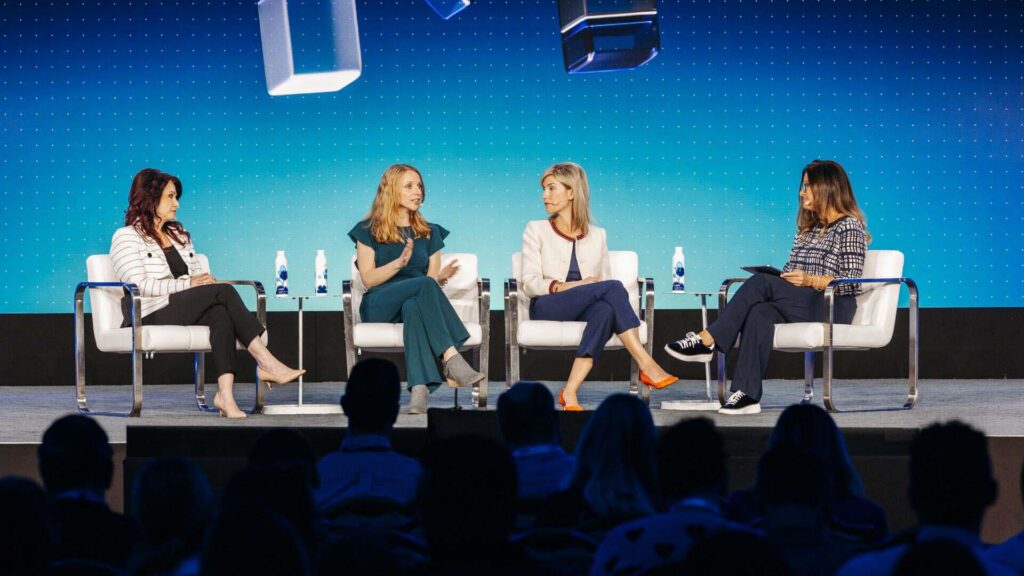
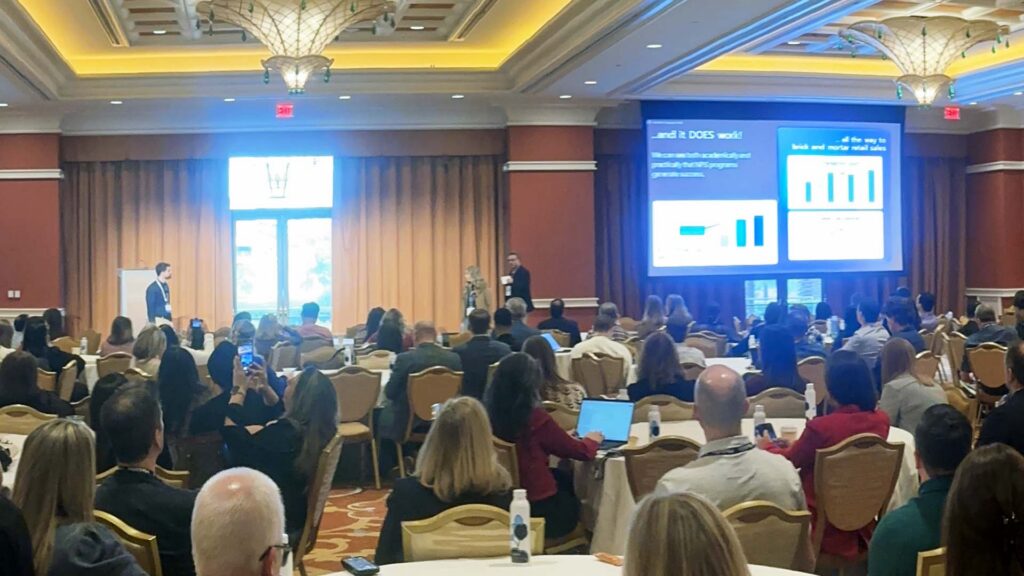
Jen Rodstrom: [00:00:00] To rethinking CX and how to listen across every customer touchpoint. My name is Jen. I am joined.
Mary-Catherine Dolan: I’m Mary-Catherine Dolan,
Jen Rodstrom: and we are both customer experience advisors here at Medallia, and if you’re wondering what the heck that means we offer strategic guidance to help programs like yours to improve, mature, and also to just really get better at engaging with your organizations, which we know can be problematic to get us started.
Mary-Catherine’s gonna kick us off, but there will be an interactive portion. This is a little bit of the, I don’t wanna say lecture. Listen in before, before we start chatting amongst friends. I’ll pass that.
Mary-Catherine Dolan: Thank you. Thank you, Jen. You’ll
Jen Rodstrom: kick things off.
Mary-Catherine Dolan: All right, so a little bit of a run of show how we’re gonna spend our next 45 minutes.
I am going to be talking through for a few moments. I’m talking about today’s CX playbook is we need to modernize, right? Certainly we’ve heard a lot today and the keynotes of it’s just [00:01:00] different times from when we started out doing surveys years and years ago. So what does that mean to actually take a step in CX maturity?
We’re gonna go through a workshop together, we’ll go through a bit of a customer journey. Our goal is for you all to leave with one tidbit, one starting point that you could take this back to your organizations and in your programs and start to get some of this going and activated today’s CX playbook.
I wouldn’t say it’s not working, it’s just it’s time for us to modernize and mature. It’s not because we are doing anything wrong, it’s just ti We are in an ever evolving industry, right? Many of the clients we work with right now are feelings. Stuck. They’re reacting to surveys. We know response rates are dipping across every industry segment, geographic location.
And so surveys are still going to be important, but they are just a piece of the puzzle here. And meanwhile, we have a ton of information [00:02:00] across our organizations that are also really valuable signals. That give us a whole picture of what our customers are doing, thinking and feeling about working with us.
Think of stuff like calls, chats, digital behavior, app reviews, all of that good stuff. So then what happens? You’ve got digital frontline operations. They’re each focused on optimizing their own piece of the journey. And this often leads to silos in understanding the full picture of what’s happening end to end.
AI is such a buzzword right now. It’s very important. And so it has great potential. We know this, but it’s got its challenges, right? Half baked inputs we know are gonna lead to bad outcomes. And then we also know automating bad experiences is just gonna create further frustration for our customers and our colleagues who we work with.
Lastly, the frontline, the employees who are [00:03:00] delivering the experiences that make our customers love our brands. Your brands, they don’t have the information they need to, nor the access or the empowerment sometimes to really help fix and elevate these experiences. And when there’s some or all of this disconnect, it frustrates everyone, you, your customers, your employees.
Okay? We here at Medallia have outlined kind of four key steps that really are fundamental for a modern CX playbook today. Really the first one here, breaking down silos and building that unified CX strategy. Gaining champions throughout every part of the organization. CX is a team sport, right? We need to be democratizing insights, getting access to people who need it, who can take action, where it matters.
Capturing and analyzing signals across the journey. That is going to be our focus today. We wanna prioritize speed in high impact areas, right? [00:04:00] This is new and sometimes often uncharted territory. Where are those places in the business that we wanna grow in or we really care about? Let’s start there.
Test and iterate, right? And then lastly, goes hand in hand a little bit with number one here, is really creating those evangelists, those champions at every level. They’re there, they’re in your organization. There are a lot of people that care about your customers and improving their experiences.
They will help evangelize for you. And it’s just about finding them within the organization. We will be double clicking into that. Second step today is capture and analyzing signals across the journey. So when we do double click into that, you’ve probably heard a lot today. Historically, we are relying on a lot of direct feedback, and when we say direct feedback, it’s mostly us pushing out largely email to web surveys where we’re asking clients, how do we do.
Would you recommend us? We saw in Mark’s keynote today that the gentleman who got frustrated didn’t even respond to the survey, so [00:05:00] we are missing out on that piece. And so really the solution here is we are sitting on a ton of really good data. Admittedly, it’s a lot, but think about calls, chat, transcripts, digital behaviors, ratings and reviews.
So again, the concept of starting small. Testing and learning. Building in those champions throughout the organization is really those key steps to make this a reality. We know that today’s customers are, they’re silent in surveys because they’re not interacting with them at the response rates that we once saw them in.
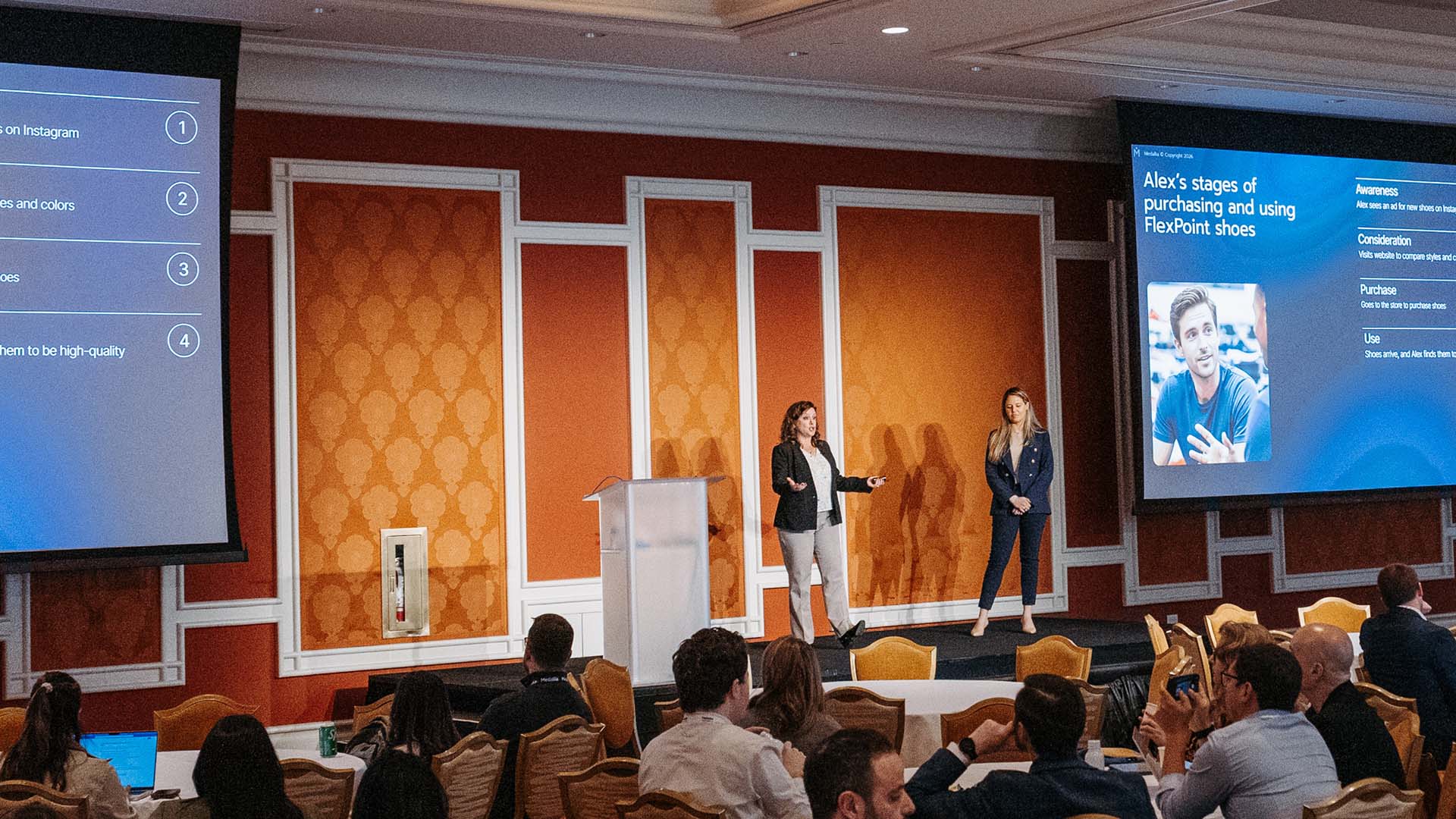
Once again, they’re a very important piece of our CX strategies of our voice of the customer, but they are allowed in their behavior and we have access to that behavior. So let’s talk about what we mean by that. We are now all employees at a company called Flex Point, a major US sportswear retailer.
We have both brick and mortar stores. We have an in-person and an a big e-commerce website, and us and our [00:06:00] customers use social media to engage with each other, and
Jen Rodstrom: we are completely fictitious. So you’re not gonna have any electronic to find us on the internet, but. We’re all employees.
Mary-Catherine Dolan: Yes.
Jen Rodstrom: Thank you.
Mary-Catherine Dolan: Also too, we know that probably the majority of folks here in this room. Most identify with Priya here who sit in a CX Insights or CX role. I think what our goal today in this workshop for you all is to really be in the shoes and thinking about our colleagues and team members in roles like Operations, digital Frontline, contact Center, and so you can read a little bit about what each of these personas care about within the organization of Flex Point.
We’ve got Alex, our customer. So he’s a working parent, comfortable going online and in store. I mentioned he’s looking for a good cross training shoe and like all of us, he values just convenience, easy experiences, just get the job done. I just want shoes. So lastly, in terms of the setup, we today are gonna look at a retail customer [00:07:00] journey.
Admittedly, we chose this because a lot of us are consumers of this retail journey, right? A lot of us have participated in purchasing such items. So really think about when we start to talk amongst ourselves, everything that Alex is gonna go through from awareness all the way to advocate, and across the lines there, some of those behaviors and actions that Alex is going to take that we at Flex Point have access to.
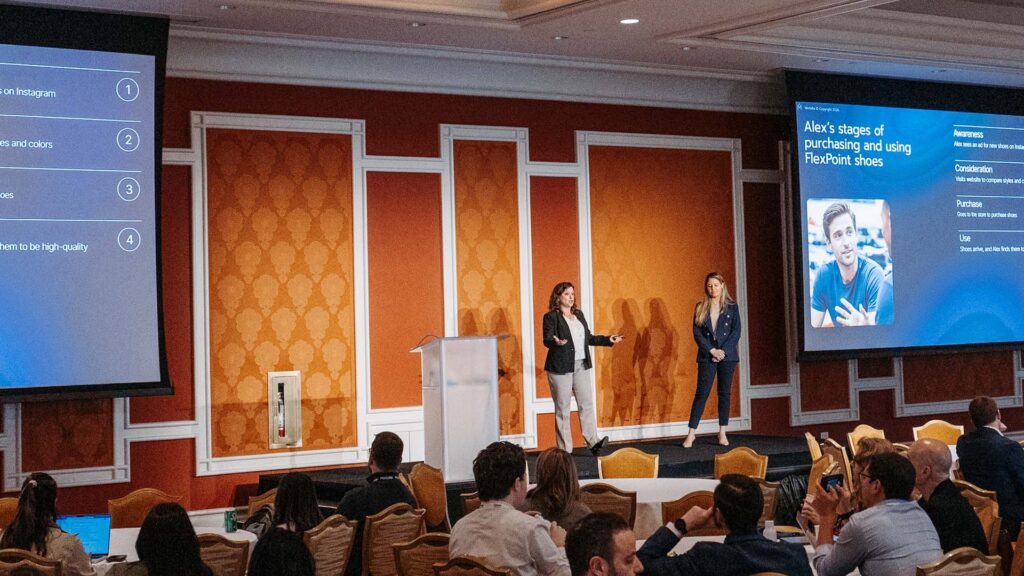
Jen Rodstrom: Again, we recognize you’re not all retail but this is one that we can all understand. So let’s take a look at how we at Flex Point, envision Alex’s journey is gonna go right. We create these experiences and we just are of the hope that’s the direction they’ll take. So let’s look at Alex’s journey.
He starts in the awareness phase. He sees an ad on Instagram, gets excited about the shoes, and decides to look into it. If there’s a consideration phase, he might go to the website and take a look at the different colors and the different styles to help him make that decision. He’s then, of course, gonna make a [00:08:00] purchase.
He’s someone who likes to go to the store and try on the shoes. He doesn’t wanna have to, necessarily return them if he didn’t like them. From there, he’s going to use the shoes, of course, he’s gonna go to the gym, go for a run, take the kids to the park, whatever it might be. He’s going to then perhaps engage with us.
He’s someone who wants to be out in all weather. He’d like to know about waterproofing for his shoes. So he’s gonna look online, maybe in the FAQs for that type of information. And lastly, we hope he’s gonna advocate and write a review about a very positive experience he had with the shoes, which is of course what we would like to see.
So my question for all of you, this is of course how it should go, but we’ve all made purchases, and this is where we start the interactive portion of our day together, is what are some things that might happen? That could surprise or frustrate our friend Alex, as he is on this journey. What might be something that happens as he’s there please.
The website doesn’t work. [00:09:00] Website doesn’t work. I do have some mic runners, but I’ll repeat so that I really wanna watch my friends run around the room. But I’ll be nice. Austin, you have someone right there. I’ll let you
Audience 1: we might not accept his preferred payment method.
Jen Rodstrom: Ooh, I like that. Might not accept his preferred payment method.
Austin or Tory over here. You got a microphone and everything.
Audience 2: Out of stock. So he goes in the store. He doesn’t
Jen Rodstrom: out of stock. Absolutely. What else? Oh, I got this gentleman back here.
Audience 3: He has trouble finding it when he finally gets to the store.
Jen Rodstrom: Trouble finding it at the store. These are all great.
Let’s get a couple more. I see a hand here and then we’ll, I’ll go to you next, sir.
Audience 4: The UPS loses his shoes on Tive house.
Jen Rodstrom: Ah, FedEx loses it. Okay, you people have some pain? I’m glad we can have some catharsis here. So he sees the ad on Instagram, excellent. Gonna buy the shoes. He goes to the consideration phase.
He goes on Flex point’s website is incorrectly told there in stock. Somebody brought that up. [00:10:00] The incorrect in stock listing. Yes. Purchase. He gets to the store and what happens His size is not in stock. So what happens? He has a very nice associate. He didn’t face the root associate, so that was a bonus.
She orders them for him. They will be delivered to his home. Guess what, guys? They don’t arrive when they’re supposed to. They weren’t lost, but they showed up later than expected, and hopefully not at the apartment building where they get taken. So he has to call to figure out where the heck his shoes are.
Next. Alex checks the website because he wants to waterproof his shoes. But like I think many of us have experienced, he can’t find the info. So then he starts a live chat. Now, Alex has clearly had a very terrible experience. Nobody should have all of this happen from there. He might have been an advocate ’cause his shoes are really awesome and he likes to using them, but he’s only gonna give a three instead of a five for his stars because of all the issues that happened along the way.
Now, do we. At Flex Point necessarily [00:11:00] have visibility to all of this, that this happened. It didn’t follow that beautiful, happy path that we worked so hard to design. Okay, we’re to the second part of our interaction, and you’re going to have to talk to each other, so I’m just warning you. We want to identify what signals, tools, data would provide visibility into the pain points Alex experienced during his journey.
Those of you who have the posters on your table, you are now allowed to flip them over. I know some of you cheated and saw them ’cause we put them out the wrong way. And if you’d like to move and join another table, we want you to look at this. You’re going to see that painful journey. You’re gonna see those personas and you’re gonna have the opportunity to write on post-it notes.
’cause who doesn’t love writing on post-it notes and indicate what are some things that we could look to internally? Without sending out that survey though, that’s not a bad thing to understand what happened on Alex’s journey to have visibility when things go wrong. So think about your different [00:12:00] personas.
That’s why we have them on the sheet, because they have access to different types of data. And so they are really important to think about because you as the CX Insights person, don’t necessarily have access to it. But we want to understand ’cause it’s all part of customer experience. So we’re going to take 10 minutes.
We are gonna come down and circle around. Tori and Austin are gonna be circling around and the other medallions in here who feel so inclined. If you have questions, we’re here to help you. But really the idea is think about what is something. That would help us to have visibility to this. What do we already have internally that we’re not using for cx?
What are some ways we could find this out other than surveys? What happened to our pal, Alex here?
Audience 5: We could reach out to our digital teams and get session IDs for his visits to the website.
Jen Rodstrom: Okay, so maybe a little session replay or something like that.
Audience 6: Conversational intelligence. So if he interacted with like your chat team, like online or contact center, but he may have not have surveyed you or.
Reveal, [00:13:00] like an understanding what those interactions were like. Love it.
Audience 7: Our table really focused a lot around duration throughout the journey. So that’s not just duration in a specific instance, but we were talking like, how long were they on the website? How long have they have a phone call? How long were they in store?
Yep. How long did they wait to order? How long did their order take to fulfill to ship? To receive just that whole entire
Jen Rodstrom: Because it, it sounds like for him it took a lot longer than we think it should take when you could go in, in theory, just get ’em within an hour. So that’s a little problematic.
Audience 8: Going off of what she set up there, the number of times Alex actually contacted the company across all channels,
Mary-Catherine Dolan: can they, can they track that? Are they looking at that? Are
Audience 8: they looking? It should signal a pain point.
Mary-Catherine Dolan: Yep. And when contact center gets that, call them. Having awareness of I, I’m coming in with a hot customer here.
He tried to give us outreach on multiple channels, his ideal state.
Jen Rodstrom: I was just having that conversation with someone today. There’s nothing worse than being that agent getting on the phone. You have a really angry customer and you have no idea [00:14:00] why you’ve just picked up the phone and politely said, hello, how can I help you?
At least provide what’s happened so they can come in with the right empathy. You all were fantastic and I wanna show you a little bit of a cheat sheet here. So these are some of the things to think about. And again, I know from hearing the keynote this morning and even with us here, you’re not going to do all of these at once.
Pick one. That’s what we’re telling a lot of our clients is chats the one that’s easiest for you? You already have transcripts and you can bring those in. Start with chats.
Mary-Catherine Dolan: Areas of impact. So again, what is an important business objective for your company that you can start with?
Jen Rodstrom: I know sometimes those conversations with those personas, those folks listed is you need to speak their language a little bit.
Anyone who’s worked or talked with anyone in contact center, they talk in abbreviations. FCR and a HA for first contact resolution and average handle time. Those are the things they’re always trying to improve. If you [00:15:00] can explain to them, and this is a major focus point for your organization, that by getting chat transcripts or bringing in some of those speech analytics, you are going to help drive that.
Oh, by the way, we’re gonna improve the customer experience. So it’s learning to speak in that language. With digital, they’re trying to increase self-service usage, right? So how do you make the conversation to them, let’s look at what’s happening on, did. They can’t log in? We can’t improve that experience if they can’t even log in.
So we’ve all had funding being part of Flex Point. We don’t actually work for a sportswear retailer except for a couple folks in the room. So I wanna have you think about your organization. I want you to, we’re gonna go from the okay. That was pretend to the real. And think about an important customer journey within your own organization.
And so I’ve just thrown up here a couple. These are some of the common industries we see here. If you are banking, it may be about, opening that account. If you are in [00:16:00] healthcare, it might be that inpatient hospital, say, might be the experience in the emergency department. If your insurance, it’s everybody’s favorite journey is submitting a claim.
For B2B and maybe something like approving a contract with your new client, what that looks like. So you need to think for yourself and for your, and I’m sure many of you, if I called on you could immediately shout out something. That’s a journey I won’t. That’s really important. To your organization and to your customers.
I want you to get that into your thought process. And what I want you to do is do a little bit of the exercise we just did, but now you get to work solo unless you really like your peers and you wanna bounce your ideas off someone. Or if you’re here with some of your colleagues, you can use our post-it notes.
If you’re someone I saw lots of people who are phone people, jot a few notes in your phone about that journey. Think about what are some of the things I could do going back to my organization Friday for some of you next week for others, [00:17:00] what is an area? What’s that journey I want to look at, and what types of data do I need?
I’m not thinking about my surveys right now. I’m thinking about chat, thinking about calls. Maybe it’s digital, maybe it’s reviews. Definitely in the retail space, hospitality space, travel space. Reviews are a big one, and just take some time to jot some things down. I, we, this is not a one and done. You are not gonna solve world peace today, but just to get thinking about this from your company’s perspective,
Mary-Catherine Dolan: who are the people that you need to go?
Back home and talk to at your organizations, right? Who would really benefit from knowing part of the journey or experience broke down? Where do you might even have those insights today from the
Jen Rodstrom: programs that you’re currently running? Absolutely. Because we recognize you don’t own this data. This is where it gets tricky.
As CX folks, we own the surveys. We don’t know the contact center. We don’t own digital, we don’t own social, but we are going to have to start, I think. I think it was Sid who talked about making [00:18:00] those connections, right? We have to be connectors across our organization. So where does that data live and who is it that we can talk to start thinking about how to get access to it?
So I am going to this time give you the cheat sheet so that you can think about this. For your organization. Again, feel free to talk to your, if you found someone at your table you wanna bounce ideas off of or just do it for yourself. Just a few minutes to reflect and think about how to bring this to life in your organization.
I think we covered what we set out today, so kudos to Mary Catherine and I, we did the workshop. You guys did an amazing job. Dick’s is, may, might be hiring, so if you wanna talk to some of the folks at the middle table they’re here for you. But we talked about Alex’s journey. And then we brought it back into our own organization.
’cause the end of the day, that’s really what it’s about. How can we do this sort of back at the office? We’re always looking to improve our sessions and I want to thank all of you for being [00:19:00] super engaged. I love that you were able to connect with each other. I hope you met some good peers to chat with today.
Thank you ladies. Thank you. Thanks everyone.