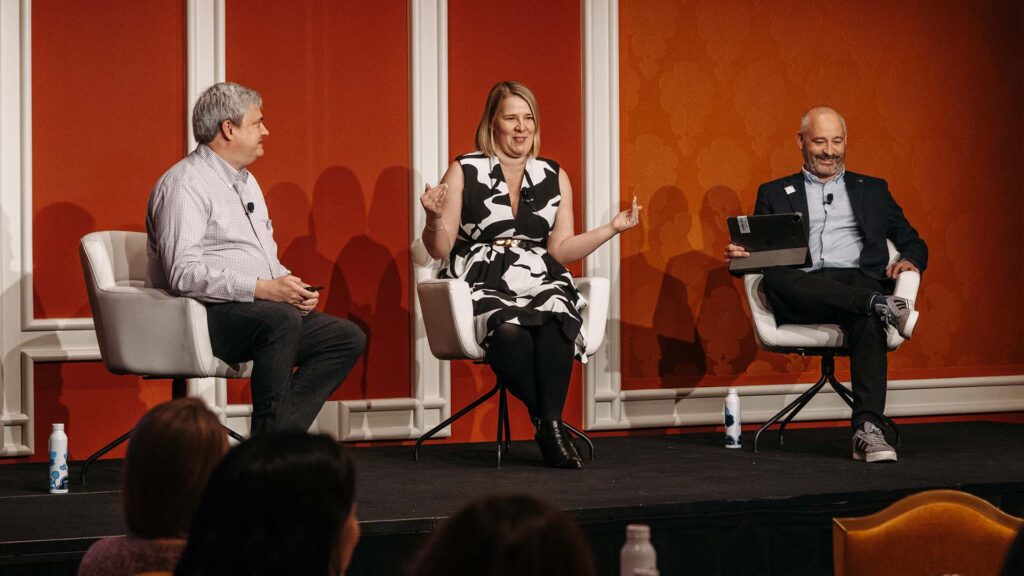
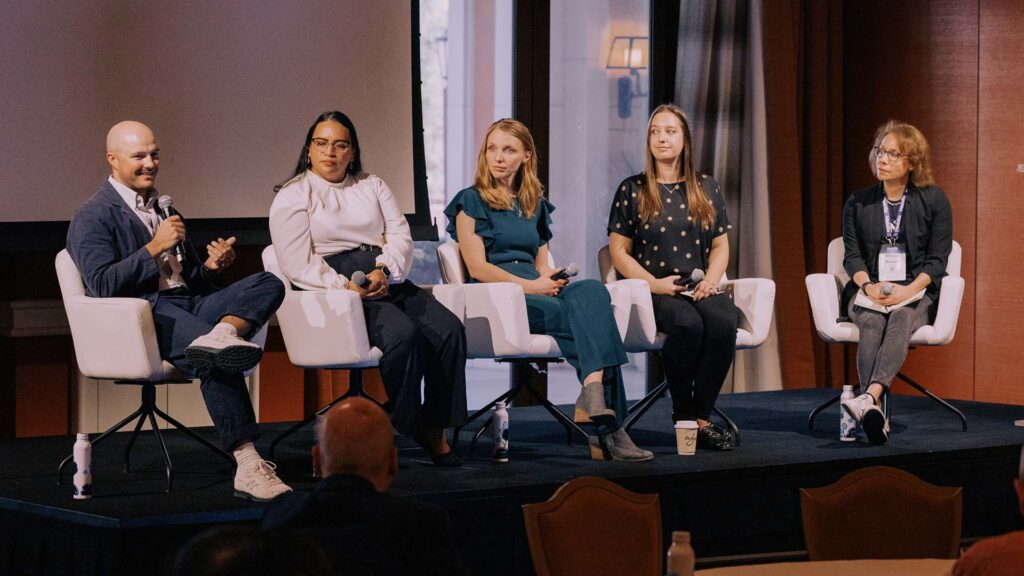
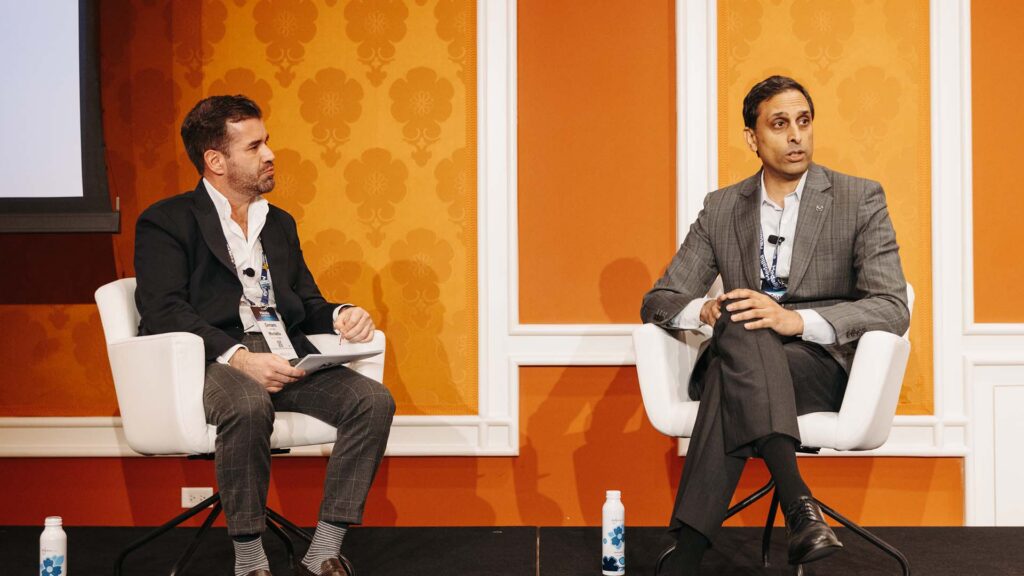
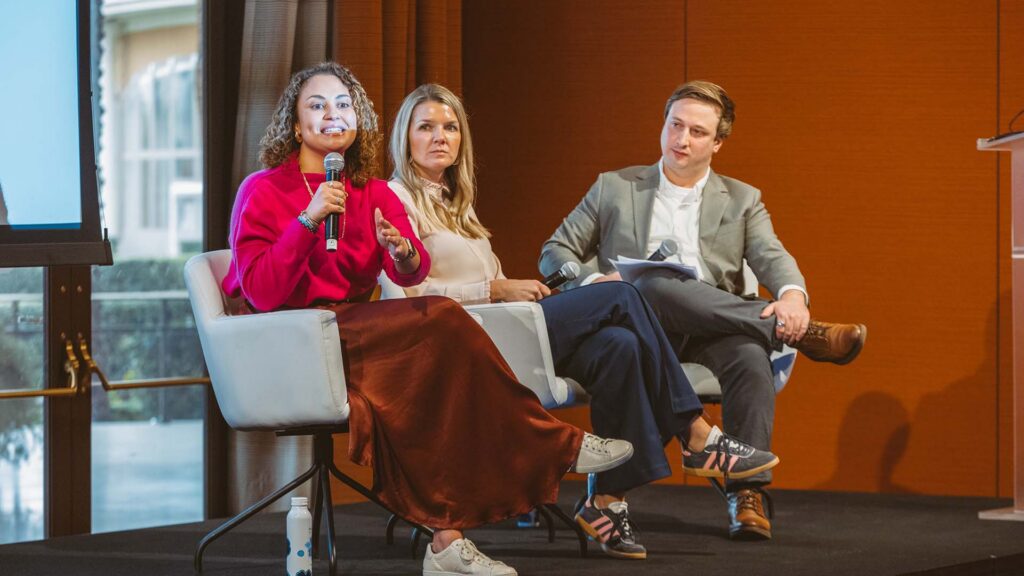
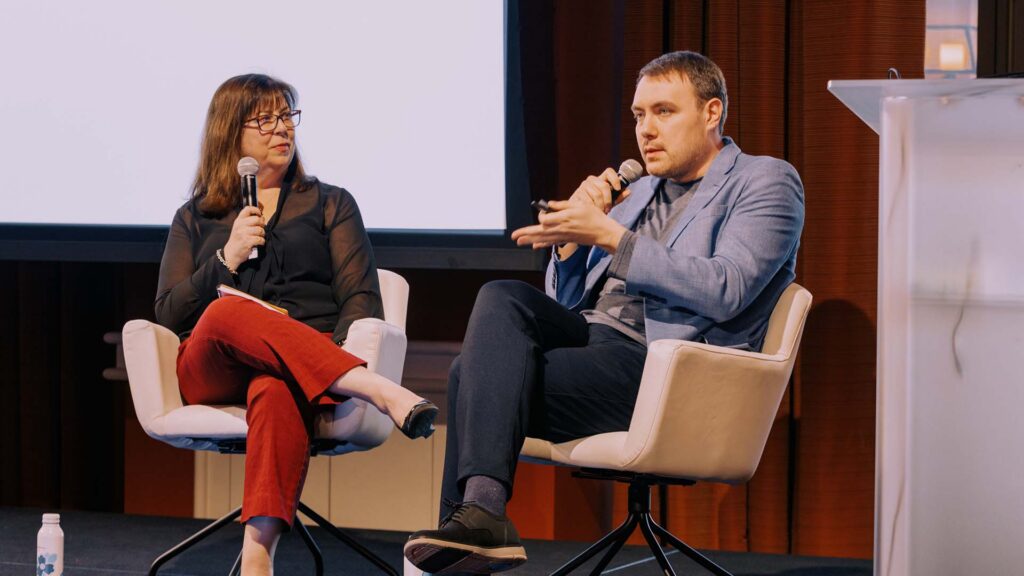
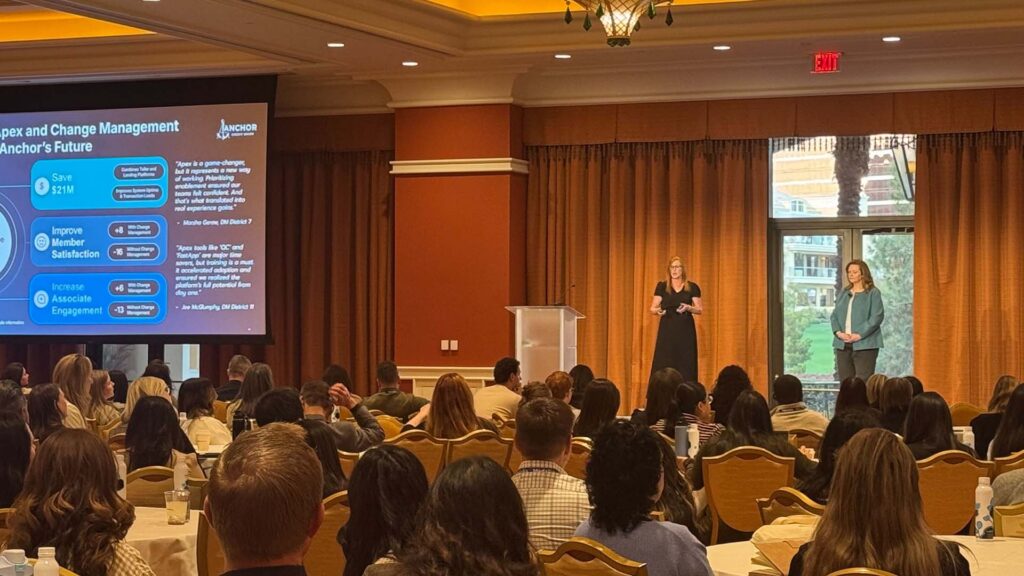
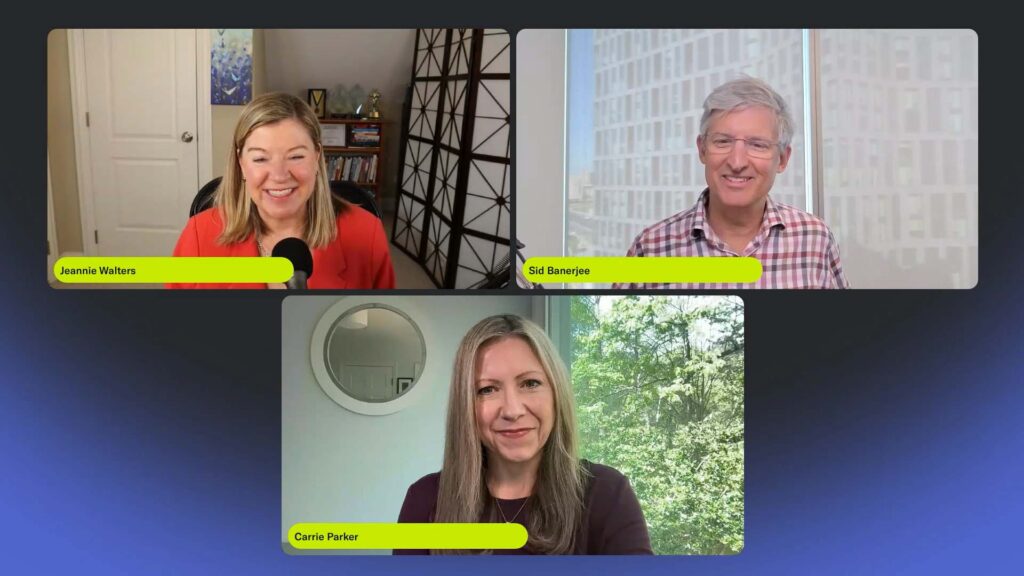
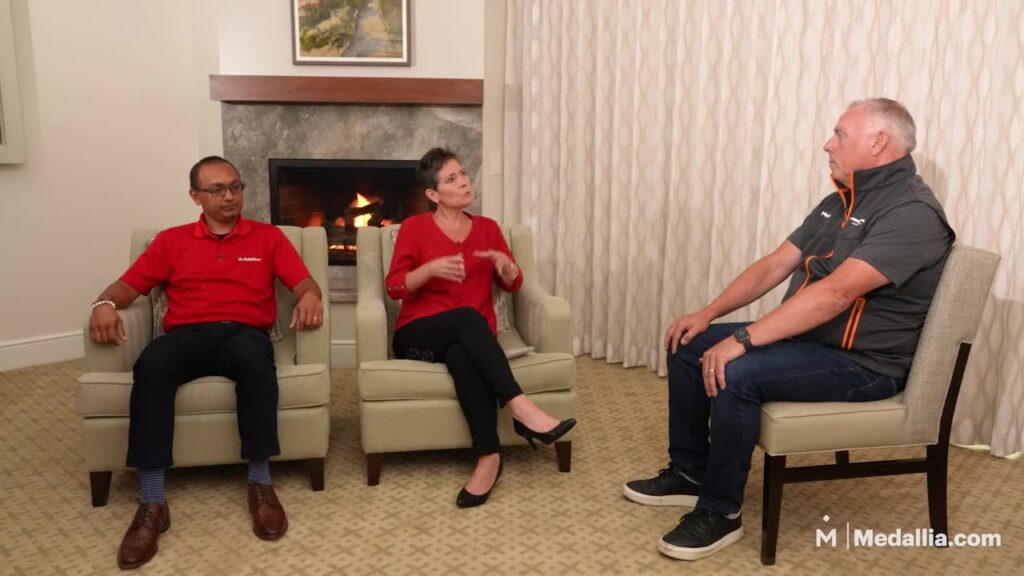
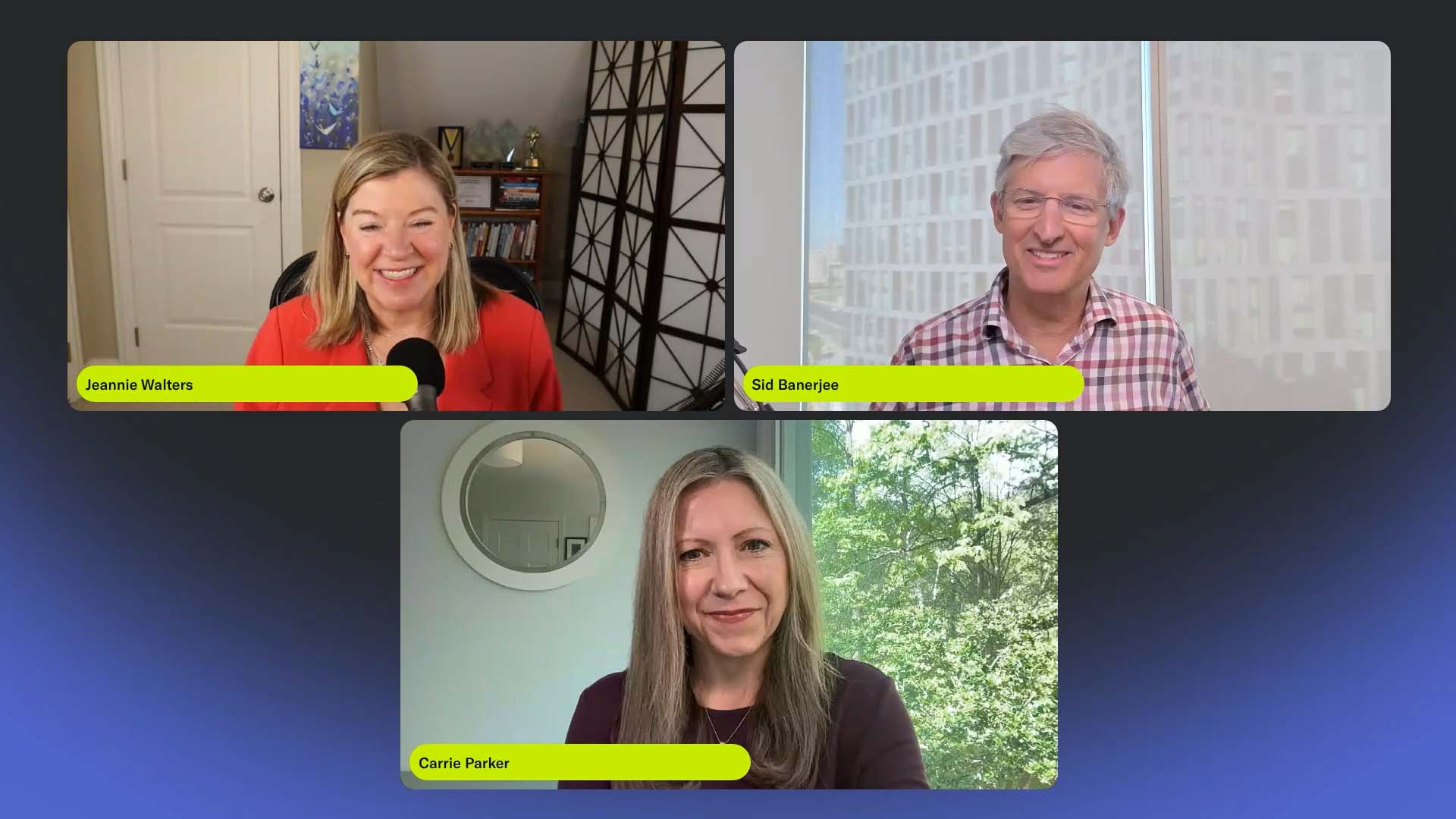
Jeannie Walters: [00:00:00] Hello everyone. We’re so happy you’re here. My name is Jeannie Walters. I am the founder and CEO of experience investigators and the proud author of a new book coming out next week called Experience Is Everything, and I’m thrilled to be joined here today for an incredible discussion around the state of CX report from Medallia.
Now, this is not just going to walk through the report. What we’re going to talk about are all of the many ways that there is. We’re kind of living in a state of paradox in customer experience. Investment is increasing, AI is accelerating change, expectations are rising, and so. As we go into this discussion, what can we learn from the data in this report, and what does that mean for you as a customer experience leader?
Because I’m sure if you’re joining us today, you have a role that is about being that change agent in an organization. So we’re going to [00:01:00] unpack that tension today with two incredible experts and leaders. So first of all, we have Sid Banerjee, the Chief Strategy Officer of Medallia. Sid brings nearly 30 years of experience building companies and solutions at the intersection of customer experience.
Data and AI Today, he focuses on helping organizations operationalize experience to drive real business impact, which is so important. So, hello Sid. How are you?
Sid Banerjee: Good morning, Jeannie. How are you? Doing well, or afternoon or evening, depending on where everybody is in the world here. But yes, great to be here.
Great.
Jeannie Walters: Great, well, we’re happy you’re here. And then we also have Carrie Parker, Chief Marketing Officer at Medallia. Carrie is a seasoned marketing leader with 25 years of experience driving growth for technology and software as a service companies. She focuses on building strong go-to market strategies, scaling demand, and connecting brand to measurable business outcomes.
And [00:02:00] so there’s a little bit of a theme here. So how are you, Carrie? Good to see you.
Carrie Parker: Good to see you. Thanks, Jeannie. Happy to be here. And hello everyone.
Jeannie Walters: First of all, if you have questions out there, we encourage you to engage. So please drop questions. We have the q and a open, we have the chat open. We’ll cover as many of those as we can live.
You can also download the full report within this webinar, and we will also be sharing the recording and the report with you following today’s discussion. So let’s go ahead and jump in. When we talk about customer experience today, we are really talking about not only how do we understand our customers, but how do we continue to deliver for them in an age where expectations are rising all the time.
So we’re gonna dive into a few of these topics today, including that confidence gap. We’re going to talk about where that progress breaks down, and then. The best part, we’re gonna [00:03:00] share a few secrets about how leading teams are pulling ahead. And then of course, I think it’s required that we talk about AI in every webinar, right?
We, it’s 2026, we have to, so we’re going to talk about AI and CX expectations, trust and risk, and then we’ll dive into q and a. So I look forward to spending about 30 minutes with you on this topic, on these topics, and then we’ll dive into as many of those questions as we can get to. So. Let’s talk about where we’re starting here.
Many organizations believe that they are improving experiences, but frankly, customers are not feeling that same progress. In fact, this is something that we are seeing in so many different ways across our industry, and really we have to remember that customers don’t grade on a curve, right? They are comparing us to all the.
Great experiences that they have everywhere. And so this perception gap might not always be what we [00:04:00] perceive it to be. The data shows a huge perception gap in how companies think they’re performing and how customers actually feel. So let’s dive into this a little bit. So when you look at this gap, Carrie, what stands out and what do you think those underlying causes are?
Carrie Parker: Yeah, let’s jump right in. Yeah. When we first looked at this data, I have to say, some of these numbers really stopped us in our tracks, you know? Mm-hmm. And you, you said it just now that you know, a majority of CX professionals believe that the experiences that we’re creating are getting better. You see that here at 83% that think that we’re delivering above average experiences.
And two thirds believe that if experiences are improving overall, but I think what, what you can clearly see is only 17% of consumers agreed with the same thing. So that is a massive gap, and that tells us that there’s something wrong with, with how we are keeping our finger on the pulse of what the consumers need.
[00:05:00] And maybe we’re using internal metrics that just don’t reflect what the actual customer reality. Um, because that’s a, again, that’s a pretty massive gap and it’s a big problem when the focus on retaining customers and reducing attrition is, is so paramount these days. You know, we also heard from consumers that this is not, that their experiences are, are really a challenge for them, and 30% said that the last interaction that they had with the business was a negative one.
So they’re not having. Experiences that are challenging. It’s a regular occurrence. And so these friction points, they’re, they’re getting missed. And as you can imagine, that’s impacting their decisions and it’s impacting who they choose to do business with. You know, what you can see here is, is underscores that, that 64% say that they’re choosing consumer companies more often based on who they trust, and they’re looking for those to give them better experiences.
So. The [00:06:00] bottom line is there’s real opportunity on the table for those who are looking at the whole journey and finding those signals that are perhaps getting missed.
Jeannie Walters: Yeah, I think that’s really important because really when we’re talking about a customer journey, it really is an act of trust to move to the next step with the customer.
So we need to make sure that we are building trust in everything we do. Um, and I think this highlights that there’s just this lack of trust right now. So, Sid, I’m curious about your perspective here, how, you know, what should people take away from this?
Sid Banerjee: Yeah, I think there’s a couple things that, um, I think the, the, the, the feedback we got from this, uh, this study reinforces to me a few things.
I think the gap between companies thinking they do a good job and, and customers seeing that, that there’s more to be done often is, uh, attributed to the fact that when companies do CX they often will set up programs and say, I’ve set up my program, I’m collecting feedback, I’m doing a good job. Mm-hmm.
But what the customer cares about is. Is the feedback being [00:07:00] used to drive improvement? Is it used to actually understand what’s working, what’s not working? Um, whether it’s a suggestion or a criticism. And it takes more than just, um, collecting feedback. It’s really about using that feedback to understand, um, and go deep, right?
Why are people unhappy? What are the things that are not working? What are the suggestions for improvement? That requires, uh, a lot of asking why. And you can do that, you know, in the manual way, which is just try to go deep with customers and research. But you can also do it by using analytics and tapping into.
Honestly, um, signals and, and markers that are often qualitative, not just the quantitative measures. Um, the last thing I think that’s important is that it’s important to understand the feedback you get and how it ties to outcomes. Um, an outcome could be a customer gets an issue resolved or a customer is able to purchase what they want or a customer has, you know.
A set of questions about something and they get answers. And if you can’t track the feedback to outcomes, you don’t necessarily know what you’re doing right and wrong. And [00:08:00] at its core, I think it’s about collecting more than just a single signal. It’s understanding how interactions and experiences and frankly journeys affect outcomes.
And then using that to drive continuous listening and continuous improvement, which I know we’re gonna touch on in a few minutes, but it, it does require basically translating insights into operational. Realities and improvements, and ultimately being able to understand qualitatively and qualitatively and quantitatively across the full journey.
Jeannie Walters: And I think we’re at a really interesting moment in time with this because, you know, any of us who kind of grew up in this industry, we, we remember when all we could rely on were what customers told us. And now we have all these amazing ways to look at how are they behaving, what are their actions telling us?
What do our operational metrics tell us? When we combine all of that, we get this rich kind of view of not only what the customer. Thinks they want, but actually how they’re [00:09:00] behaving and what they’re actually interacting with. So those signals are so important to look at for those points of friction in that holistic way within the journey.
And I think the, the bottom line here is we’re not lacking, um, we’re not lacking data, we’re not lacking, uh, insights. It’s a matter of how we use them. And so I think that’s a great. Opportunity to look at the next thing we’re going to dig into to here today, because a lot of leaders that I talk to, they know they’re kind of stalled.
They feel stuck in this, and most organizations, they’re, they’re almost overwhelmed with some of those. Data points and insights, and they’re really struggling with how do we turn those insights into operational change and how do we make sure that we are investing in the right places to get the results, both for our customers and our organizations.
And in fact, I would argue that most customer experience teams are really good at identifying [00:10:00] problems. The challenge is getting the organization to act on them. Let’s talk about where progress actually breaks down. Like why are we getting stuck here? Carrie, what did, what did the report have to say about this?
Carrie Parker: Yeah, I mean, I think this is probably not a surprise given everything you just shared, but you know, from the consumer’s perspective, there is some serious survey fatigue out there. Mm-hmm. And I think to, to your point, 60% are wondering if it’s even worth their, their while to give that feedback. You know, I think that there’s.
There’s a couple things playing out here, like one, to your point on all the signals. Customers already ex, they expect us to already know if they’re happy in a moment or what their issues are without having to give that feedback after the fact. I mean, they simply expect it given the data that we have at at our fingertips.
And second, I think when they share feedback, they absolutely expect it to be actioned and they’re feeling that that’s not actually [00:11:00] happening. And that was a real aha moment for us in the report. And what you see here is when we asked CX practitioners, roughly a third said that they don’t do anything with the feedback that they’re already receiving.
And that’s outside of all of those other signals that, that we should be using, e capturing. So it’s really hard to make an impact with customers when you’re not following through. And Syd, I think you’ve used the term score watching many times, so I’m not, I’m sure you’d wanna elaborate on what that means here.
Okay.
Sid Banerjee: Yeah, I think I’m, I mean, happy to do it. Now, one of the things that, um, that we’ve certainly seen over the last five or 10 years, but it’s still something that a lot of organizations are still kind of trying to catch up to, is you, um. You often know the answers to a lot of the questions you ask when you’re trying to collect scores.
If you can collect interactions at scale, right? An interaction could be a digital journey. It could be a call into a contact center. Increasingly, it can be chats or even chat bot or or voice bot interactions. When you collect the [00:12:00] actual interaction at scale, you learn. Someone is interacting with you, you would learn their questions, you learn their struggle topics.
You learn how the company, whether again it’s an agent or or a chat bot or a voice bot, is interacting back with the customer and you learn the outcome of the interaction, right? Because you can actually identify whether that outcome was a good or bad outcome based on how things resolve. That’s really a kind of analysis that most companies need to learn how to kind of dive into.
The technology has become remarkably good at being able to make sense of it. When you do that, then you’re not just looking at scores, you’re getting deep insights, and the insights that come from the things that don’t work well can be then pushed back out through processes in the organization to drive awareness.
Problem solving and then continuous improvement. And it really comes down to, um, thinking about driving a governance process where the insights from the signals are collected, connected, distilled into insights, and then pushed back out into the organization in a way that drives [00:13:00] both understanding and then change and then improved outcomes for customers.
That’s ultimately how I think you get the real value.
Jeannie Walters: And I, I like how you said score watching because sometimes I, I catch customer experience leaders who are, what I call number narrators, right? They just, they share numbers a lot and they share feedback a lot, but they don’t really translate it into actionable outcomes that the organization can operationalize.
And I think that’s something we, we continue to see in the industry right now.
Sid Banerjee: Yeah, if I know my NPS has gone up or down, but I don’t know why. Yeah, exactly. I haven’t taken an action when it’s gone down or I haven’t, you know, rewarded people when it’s gone up. I’m not really driving change in my business.
Right. And I think that’s part of the culture change that we, uh, we want to see our, you know, a lot of customer experience professionals leaning into.
Jeannie Walters: And I think, Carrie, you, you bring up a really important point. When we talked about the data around, people are kind of screaming like, you’re not doing [00:14:00] anything with this, so why am I sharing my insights with you?
And I think we’ve all felt that as customers too. So, um. As, as unsexy as the word governance is, it’s so important because that’s what leads to actually responding to these customers and making sure we’re, we’re moving forward with them in the way that they want, and all that alignment around the organization.
But really, I, I think all of this summarized by saying like, insight alone doesn’t actually drive change. And sometimes that’s, that’s an aha moment for customer experience teams because they’ve been told for so long to do that.
Sid Banerjee: One. One thing I might almost add too, I think is it’s important to measure accountability, not just on the score changing, right.
Um, but also on, uh, a financial or business impact measure that’s important to the company changing as well. Mm-hmm. And that could be decreasing costs for experiences that are inefficient. Right? Or it could be reducing the risk of interactions that try to create. Negative financial or even business outcomes to an [00:15:00] organization.
And, and a one great example I’ll just touch on if we have a minute is, you know, we, we work with a company called Santander Bank and they actually are looking at CX tied to outcomes such as, am I seeing deposit growth? Am I seeing customer retention? Am I seeing cost to serve? Going down, cost to serve is not just a good thing for a company.
Most of us don’t like taking two or three hours to do something that we can get done in five or 10 minutes. Right? So there’s a virtuous benefit to measuring those outcomes. They’re as important to how to drive good experiences as just tracking the scores.
Jeannie Walters: I totally agree, and we use something called a CX Success Blueprint, where we start with what are the organizational goals here?
Like if, if you want more deposits, what are those levers in customer experience that we need to both look for those signals, understand those insights, and take action as well, because we, nothing is in a vacuum here and everything is connected within that holistic journey. So, so let’s, let’s talk now about.
How do we address this? What are some of the [00:16:00] leading teams doing to pull ahead here and to do things differently? And really the report suggests that organizations are making progress doing three kind of key things. One is expanding those signals, just like we just talked about, of understanding. Beyond some of the traditional ways that we’ve listened to customers, operationalizing those insights and enabling action, and then tying experience to measurable business outcomes.
So really we’re talking about moving way beyond listening into operating systems, into almost an ethos for the organization. Um, so Carrie, can you dive into that a bit? How are these leading teams really leading?
Carrie Parker: Absolutely. And that is the triumvirate. I mean, you just hit the nail on the head and you know, what we see here is it, it’s fascinating that the winners in this space are really those that have moved from just listening programs to actual operating systems, as you mentioned.
And you know, there is a correlation between the number of data sources that you [00:17:00] use and your ability to prove ROI. You know, and what we saw is that teams using 10 sources or more. I think conversational data, a digital behavior, uh, traditional feedback methods, you know, they’re 92 4% more likely to prove their value, so mm-hmm.
The companies that are doing this, they’re thriving. And what’s more, we also saw you move on one that fast growing companies were actually twice as likely to pr prioritize. All of those signals and getting that data in compared to those that were flat or declining. So the leaders in the space are those who are moving beyond the what to the why and really connecting sentiment to those actions that impact financial outcomes.
Jeannie Walters: Mm-hmm. Yeah, and I think. Just like we talked about, there is more accountability in today’s world. You know, your leaders, your boards, they want to see that connection between if we’re investing in customer experience, how does that show up? So understanding those business outcomes from the beginning [00:18:00] is really important and making sure we can reflect that.
And I think that there’s, there’s a lot to unpack here, but, uh, Sid, what are, what are some of your thoughts on this?
Sid Banerjee: I think, well, it, it’s been interesting to watch CX the, the, the technology landscape for CX evolve particularly over the last two or three years because a lot of connecting signals and making sense of, um, the kind of the operational and the experience, uh, content that comes into a CX program has been, um, enhanced by ai.
Right? And in particular, AI is very good at detecting patterns. It’s good at connecting. Patterns to outcomes, and it’s actually quite good at that. Distilling the patterns and outcomes into things like recommendations, projections, suggestions that can be used by CX teams to make better decisions and to take change.
Um, a good example of of an organization we’ve been working with again, here is, um, another, another bank, CIBC. They were kind of an early adopter and bringing in chats and bringing in call transcripts and bringing in digital signals and [00:19:00] really trying to understand how all of that feedback that comes in can, um, ultimately drive.
The outcomes that matter in terms of, you know, is this a customer that’s driving more, uh, revenue over a multi-year period? And, you know, they found that promoters. And again, knowing what makes you a promoter and then working on enhancing the experiences for those promoters can drive up to 15% more revenue over two year period.
Um, also lower attrition and deeper engagement, and that also tends to bring in more family members and more other kind of, kind of expanded network of, uh, of customers into the space. But they, they did more than just looking at the signal of the. The, the, the promoter score, they looked at all the other data and they did deep analysis to try to understand these things, and that helped to justify the expansion of their program over time and the deployment of these insights across the organization.
You know, the digital organizations, the contact center organizations, and the various product lines of business. When you have a program that kind of shows real value in real. It gets deployed across an entire organization. Mm-hmm.
Jeannie Walters: Yeah, it feels like it’s really a [00:20:00] combination of understanding both what those signals mean and understanding that, and then also having priorities around the action.
So. If we know that we are, um, you know, promoters will do more business with us, then we’re going to focus on what does make those promoters and how can we actually engage within the organization to deliver more that they want. But if we’re just kind of following those scores like we talked about, we will miss those opportunities to really just.
Uh, make change that will not only drive customers to be promoters, but also to spend more to tell their friends, to bring in their family, all the things that we know great customer experience can do. So, um, you know, you mentioned AI and I think I was just talking to a leader this week and we had a funny conversation about how when she was in this role.
A few decades ago, she was spending so much time trying to find sentiment and everything, and [00:21:00] now it’s like you can, you can do that with. Not even a push of a button, right? Like AI knows. Um, and so we, we all know the power of AI and I think we’ve all seen what it’s capable of. And on the other side, we’ve, I’m sure we’ve all had those interactions as customers where we’re like, this is not working like we is happening here.
So it’s rapidly becoming part of the way we do business in every organization and every business function and customer experience is no different about that, but. When we think about how do we approach ai, I think there is this, there’s still this tension right now about customer trust and tolerance and understanding.
Um, you know, people are complex. We, we are emotional beings and so we wanna make sure that if. AI is, is dealing with our data and different things like that, that we’re still going to have that experience that we expect. So Carrie, what did the data say about how [00:22:00] organizations are approaching AI in customer experience?
Carrie Parker: Yeah, it’s a, it’s an interesting dynamic between humans and ai. So I think the, the not surprising data, to your point on ai, on, on all of our lips these days in our minds is that, you know, the vast majority of organizations have some form of AI goal. So that’s, that’s probably not surprising. I think what was really interesting is we dug into this a bit more, was that consumers are far less forgiving of AI mistakes than they are of human ones.
The 42% here who said that a human error is easier to swallow than a bot getting it wrong. So that illuminates I think, some opportunities, right, of how can you use AI in really intelligent ways to enable frontline workers and give it to humans in ways that make them more efficient and provide more powerful tools for them to take those actions in real time that we’ve been talking about
Jeannie Walters: for sure.
And I think the. The [00:23:00] way that I’m seeing it used the most right now is that frontline human support. And the other great thing about that is. You know, when we, when we get right down to it, AI is still somewhat new to a lot of these organizations and those frontline humans can help us say, Hey, this isn’t going the way I thought.
Or find some of those friction points as well, which can be really, really helpful. So, Sid, what do you think is most important about using ai? What do you, what do you see for the future of this?
Sid Banerjee: Yeah, I, I, again, I think this study, at least to me, does, uh, validate, uh, a kind of a philosophy that we’ve taken on certainly here at Medal, about how we think about ai.
I think in the first, first order of kind of value, AI helps to, as I mentioned earlier, tease out patterns and signals into sort of insights and a big part of how. Um, we think about AI as use it to quickly identify what, what is going on in experiences and what we need to do to fix things. The second piece of it is really to [00:24:00] push those insights as recommendations and automations to help frontline teams, humans that are in the business of interacting with customers.
Be more responsive, be able to find and, and respond to a customer more quickly and give them the tools to be able to do things in kind of a hybrid environment where the human still owns the conversation or the, the touchpoint, but the AI makes them, makes them more efficient at their jobs. Mm-hmm. And a big part of that is things like, you know, automating closed loop or automating, uh, identifying issues that need to be fixed in a particular digital or operational or even retail channel by seeing what the impact is of a change and then making the change.
I think where it’s going to ultimately go, it will start certainly to replace human interactions, I think over the next few years. But at the end of the day, AI is not a replacement for humans. It’s really a force multiplier, both in the human man interactions, and then over time you’re going to see some automations where there’s confidence and we’re, frankly, there’s qualitative improvements, which we have to measure because as, as the study showed.
Humans are much less [00:25:00] forgiving of machines that make mistakes than humans. And so those machines seem to be very good before we take out the humans. And I’m not suggesting we ever will, we will just use those technologies as a way to kind of augment and ultimately, um, expand the capabilities that we have when we do customer experiences.
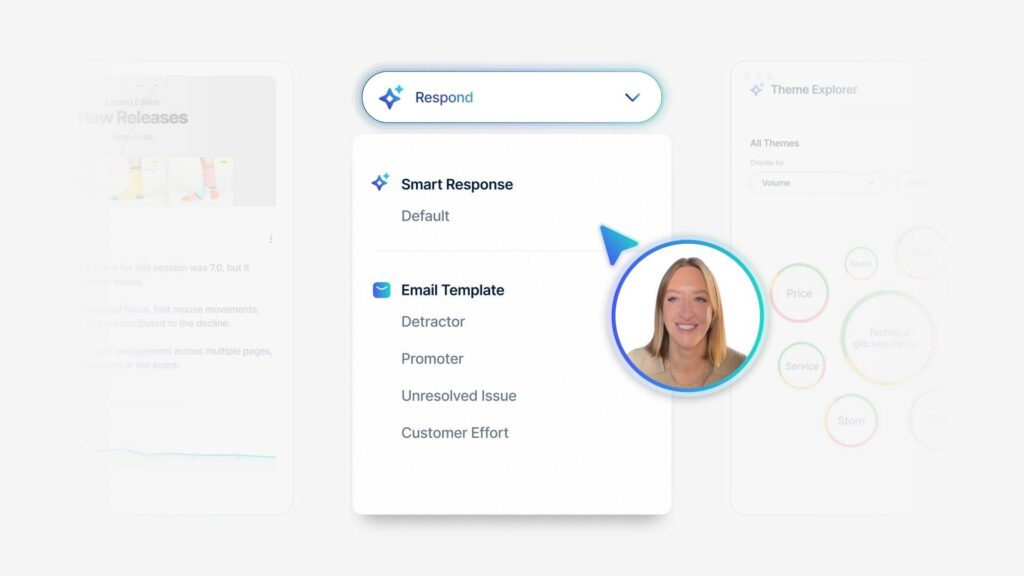
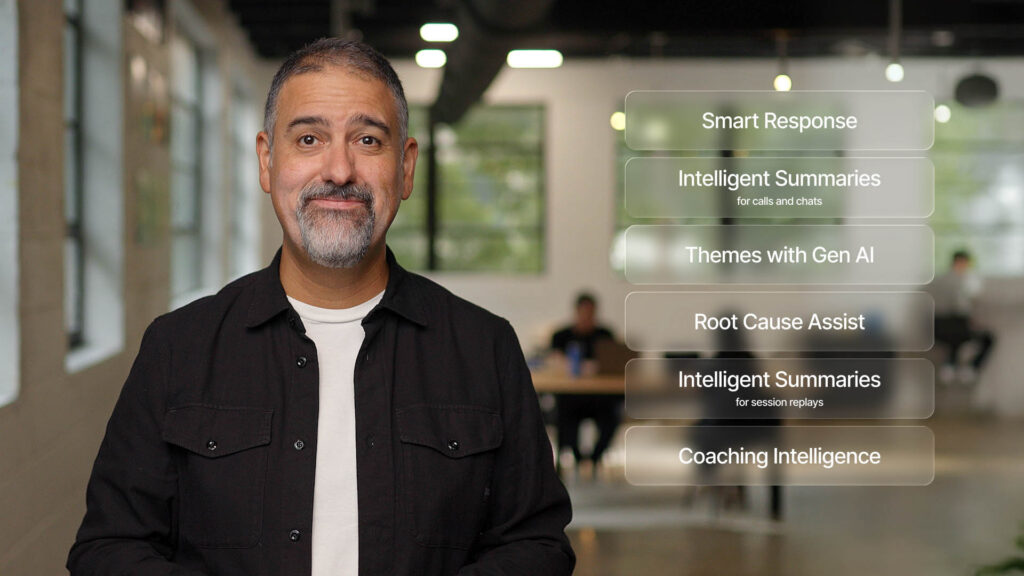
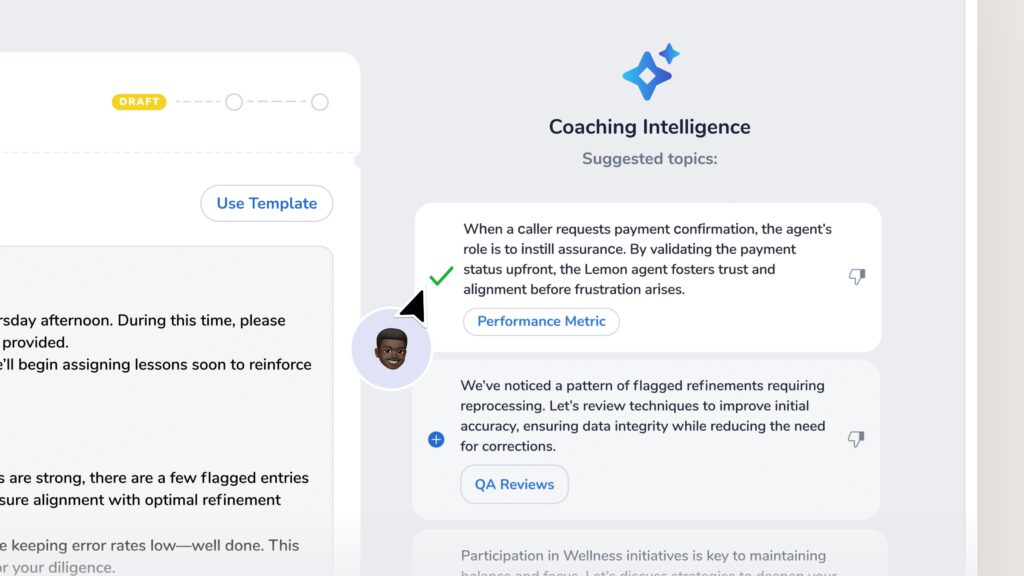
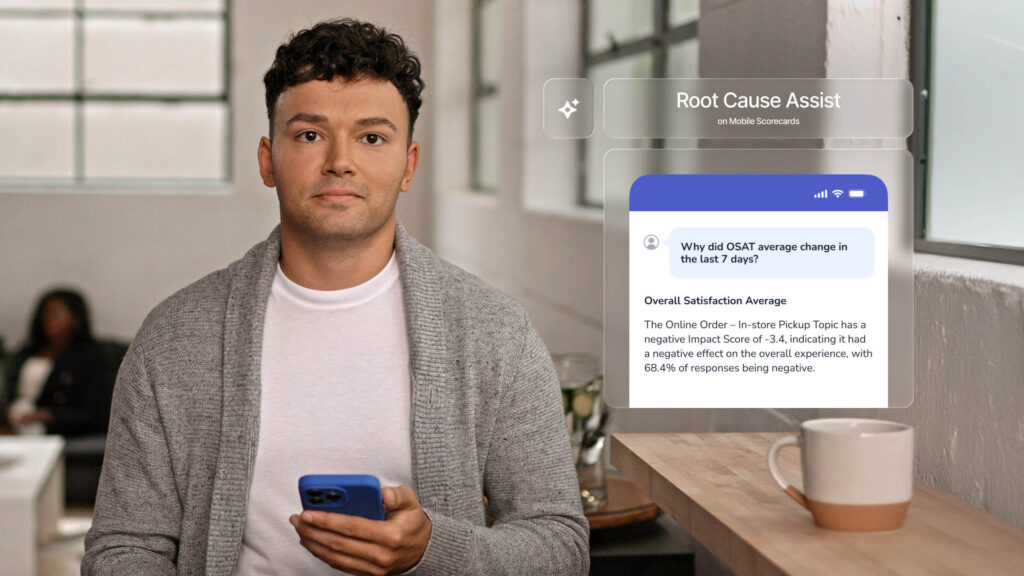
And again, just to give one more example, we, you know, we work with a company called United Rentals. They’re using AI in the analytical domain to kind of quickly identify and get to the root cause. What’s causing a good or bad experience? Using a technique called root cause assist. They’re using a technique called smart response so that when customers have feedback, that requires a response back, a closed loop, if you will.
We can use the AI to kind of predefine what that response should be. The human can review it and then ultimately close the loop with the customer. Those capabilities allow humans to be more responsive at finding and fixing. Interacting with customers when there’s customer experience, challenges that require, um, some, some side of engagement to close the loop.
That’s gonna be a big part of how I think you’re gonna see AI really pushed out. If you’re not using it today, you will be over the next year or two. [00:26:00]
Jeannie Walters: Mm-hmm.
Carrie Parker: Mm-hmm. If I could add one thing to your first point, Syd. You know, we had a customer join us on stage at our experience event, um, just a month or two ago, and he used a phrase that I love so much.
Organization is using AI to give employees superpowers that because they have AI at their fingertips on the front lines, they’re able to give more personalized advice, which actually makes it a more human connection, which I found utterly fascinating and a great use of, of the tools available.
Jeannie Walters: Yeah. Yeah, and I think that’s, you know, I mentioned trust and how important it’s to build trust with customers.
I think when we get to that point, and I love what you said about Sid, about, you know, we still have a human who’s reviewing things before sending that personal, um, ai. Supported response. And I think once we start getting into a rhythm with that, customers will see this is actually really helpful and relevant and, and personalized, and that actually builds trust.
So it’s really a question [00:27:00] of making sure we are amplifying the right things with AI and leaning into it, uh, both in that, in that scalable way and also in that way that is, um. Very human in many ways. So it’s an exciting time, and I feel like we’re at the beginning of the marathon here, right? We’re all gonna learn so much, and when we have this conversation a year from now, we’ll have all sorts of other interesting case studies.
But, uh, well at this point I would love to, uh, bring in a few questions because we’re getting some, some great ones right now. So, uh, let’s see. I’m going to start with, uh, one from, I’m not. Just say Chuck. Uh, so customers get inundated with communications already. How have you seen an effective approach at communicating back to customers that actions are being taken based on their feedback?
And this is, this goes to closing that loop, so, sure. Any thoughts on this?
Sid Banerjee: Um, I can take it if you want. You wanna [00:28:00] go, Kerry? That’s fine. So it’s a great question, I think, um. Typically customers want closed loop. When you can indi when you can sort of infer that there’s actually value in, in, in communicating back to a customer.
I think a big part of, um, you know, our experience is when you, uh, when you do close the loop, typically you can raise, uh, a score like an NPS and you can generally create a resolution event that actually makes that customer, you know, more, more, uh, satisfied with an interaction than if not. But I think it’s important to not overwhelm customers every time they give you feedback.
So we would typically look for what I would describe as alert, worthy conditions. It could be something as explicit as, I need you to call me back. Right? Or it could be, um, a very negative score or very negative qualitative markers. Those get built into essentially alert based mechanisms, certainly within the MEA environment that help us to prioritize customers where a responses likely to be appreciated, if not needed.
And we typically will work with our organizations, our customers, to [00:29:00] figure out what that protocol could be. But we do have some best practices. With the, um, with the smart response capability that we’ve introduced over the last year and a half or so, we now have an ability to actually infer those markers in an even more powerful way using ai.
But in the past it was done through more traditional analytics.
Jeannie Walters: And Sid, I really like how you highlight that as an alert kind of environment because what you’re doing is you’re looking for those very human signals when they’re not necessarily saying this is high priority. They’re not using those words, but, you know, inferring by.
Just natural language. And I think that’s something AI is really becoming very good at. And so that’s a really powerful way to use it. So great example.
Sid Banerjee: Yep.
Jeannie Walters: And, okay, let’s go to another one. We’ve got one from Andrea. Uh, when insights. Professionals are usually disconnected from the frontline or product teams.
What are leading teams doing to operationalize insights and enable action? And I bet a [00:30:00] lot of people can relate to this one because we don’t always have that deep connection that we want with those frontline teams. So anyone wanna take this one?
Carrie Parker: I can start it off and then Sid, I’ll, I’ll let you build on it.
I think the, the example that Sid gave shortly ago with, with CIBC, I think what they did incredibly well was they built bridges across their entire organization to get insights out of the silo and get it into action, right? So I think that there’s an opportunity for CX professionals to interact differently with the rest of the business and to think differently about how you are working.
With the other business partners to get those insights outta the silo and get closer to where the actual actions will be deployed?
Jeannie Walters: Hmm.
Sid Banerjee: Yeah, I would, I think that’s there, to me, there’s two parts to that answer. Certainly, um, Carrie’s response makes is, is absolutely correct to the extent you can create kind of a cross functional, you know, we like to think of ’em as centers of excellence, right?
Where the CX professionals who are often corporate. Find things, but they have a, um, kind [00:31:00] of a communication paradigm where they can distribute those insights out to lines of business, to product teams, to digital teams, to the contact center teams with an expectation that there’s a working group that then goes to what can we fix?
What’s the impact of making a fix or change? And then ultimately tracking continuous improvements to the customer experiences across channels. That can make a big difference. ’cause you’re now part of a center of excellence. You’re not just a corporate function distributing reports or scores. A second way to do this is also to just empower the front lines.
And again, a big part of our approach, certainly here at Medallia, is when we deploy a CX solution, it will go out to tens, you know, sometimes hundreds of thousands of users in large organizations. If you look at some of the leading retailers and banks that we work with. Um, you know, a major pharmaceutical retailer deploys out to over 90,000 users across thousands of retail locations.
So that information, those alerts, those recommendations, those closed loop capabilities [00:32:00] are actually pushed out. There’s still a corporate team that looks for the outer loop, the big picture items that need to be fixed, but it’s very much a part of the culture that we will push those insights out to the front lines so you can fix things at the front lines where your customers are interacting with you.
Jeannie Walters: Yeah. I love that. I love that because I think sometimes we don’t include their insights, their observations, and having that two-way dialogue can be really, really powerful as well. Um, and we use something called a CX charter, which I totally stole from project management, but the. The idea is everybody needs to understand what is the customer experience we’re trying to deliver, because that will then empower them to use those insights in and feedback and everything in, in the right ways.
So, um, okay. I think we have time for a couple more here. So, when it comes to AI versus people, how do we decide which parts of the customer journey absolutely must stay human? What’s the main rule here?
Carrie Parker: Sal, you talk to me.
Sid Banerjee: Yeah, I mean, [00:33:00] that’s a, it’s an interesting question and I’m gonna be very honest and say I’m not sure I know the answer to this one yet because AI is changing so fast.
Mm-hmm. Um, a general rule of thumb, if, if I could give advice to someone today is if the AI is. As good at understanding and communicating, um, the insight or the action, um, as the human would be. I think there’s gonna be a situation where you will have to make a decision. Does it make sense to have the AI drive the interaction or the experience or not?
Um, I think in many cases though, um, customer. Are not gonna embrace change to experiences. They’ll embrace changes to, to insights. Like if I’m a customer experience person, I’m very comfortable using an AI tool to find out what’s going on faster or sooner than, um, than if I don’t have ai. And in most organizations where we’ve deployed ai, it’s been embraced, right?
The, uh, one statistic I’ll share with you is we, we started rolling out AI [00:34:00] features to our, you know, our corporate customers. Starting about 18 months ago and we went from the first couple months, there was a lot of questions about, I don’t know if I can get this through my legal or I don’t know if that’s something I’m willing to do with change.
We went from zero customers to several thousand customers in less than a year, and these are big corporations. So the, the rate of adoption, surprise, even, you know, some of the most tech forward people here in my company at Medallia. Having said that, when you get to those interactions between. Customers of corporations, right.
And the corporations, the organizations there. I think people are being more deliberate and I, and I think they’re right to be. ’cause I think we’re going to learn over the next few weeks and months and years what the tolerance is for replacing humans. Uh, if there is even in some cases, um, with, with completely automated interactions.
Mm-hmm.
Jeannie Walters: Carrie, anything to add there?
Carrie Parker: No, I think you hit the nail on the head with that one said.
Jeannie Walters: Yeah. Yeah. And I think we’re, like I said, I think we’re in the beginning of the marathon, right? So we’re [00:35:00] going to continue to learn and adjust and figure out tolerance and all of those things. So, um, whoever asked that question we’re right there with you.
Uh, so, um, let’s see. One more here. I think that we have. Are there, are these figures referring to the report here both for B2B and B2C the same, or can we see any difference in trends? And I think this is a question that a lot of organizations have too. What are the big differences in B2B and B2C? Or are there big differences?
Carrie Parker: That is a great question. I don’t believe we called out B2B specifically. Um, but we can take that away as a follow up and, and. Provides some content and context if we do have that data. Mm-hmm. The, the majority of our focus was on the consumer side, since that is just mm-hmm. So clear that there are so many gaps and, and needs to address that.
Jeannie Walters: Yep. Yeah. Yeah. And one thing I, I would add to that [00:36:00] is just that I think we are living in a world where sometimes we assume B2B is not personal and they don’t feel as strongly about these expectations, but that’s not what we’re seeing. We’re seeing, you know, people feel very personally about their relationships and B2B, and they are, their expectations in business are also being set by their expectations as a regular customer.
So we, you know, they, they want to. Have better relationships with their, uh, partners and vendors and everybody else just like they would as on the beat of seaside.
Carrie Parker: A hundred percent agree. I mean, these are still humans making decisions and mm-hmm. Just, it’s the human experience. If you want to have a great experience with whoever you are choosing to do business with, whether you’re operating as a business person or as an individual consumer, and so it’s, it’s paramount to address the overall experience in each realm, even if they, they look different.
Jeannie Walters: Right. Right. Exactly. Exactly.
Sid Banerjee: Hey, can [00:37:00] I, um, I know we have five minutes left, give or take. Mm-hmm. There’s a question on survey fatigue that had seven, uh, likes on it. Yeah. I’m happy to take a minute and respond to that. Sure, sure. This is not something that necessarily came up in the report, but it is something that we are tracking here at Medallia and I’m worth sharing, at least, you know, what we’ve learned just from, uh, from talking to customers over the last few years.
Um. There is, there is survey fatigue in every part of, uh, I think the CX programming kind of landscape. Um, I would say just based on conversations I’ve had with customers over the last few months, it tends to be most, um, tied to email, um, and. Generally the most fatigue seems to be coming from location-based experiences, things shopping at a store or going to a bank where you’re actually in a physical location.
And I think part of that is because of the disconnected nature of those interactions, and then the solicited feedback there tends to be less fatigue off of digital. Less, uh, connection, less fatigue off of SMS just because it’s more kind of connected to you and more quickly. Having [00:38:00] said that though, I think the broader theme that the study did capture is that to the extent you can infer, um, experience satisfaction, even promoter detractor information from the interactions themselves, and that’s increasingly doable in digital interactions and phone interactions and chat interactions.
You don’t need as many surveys to get that same signal. Right. So, um, whereas, you know, I, I, a major retailer here in North America shared with me that when they started working with Medallia back in the 20 teens, they were getting nine, 10% response rates from surveys at the store level. That is down, uh, down around 6% now.
So 40% reduction. Um, their digital volumes are nowhere nearest declined, but, but fatigue. But there’s fatigue everywhere. Yeah. So we, we very much encourage people. Obviously keep running your programs because you want to have that signal. It’s a good, uh, kind of tracking mechanism and it’s actually a good training mechanism even for ai.
But expand the aperture, right? Get the data from other channels. Uh, it’s [00:39:00] increasingly easy to do so because of the fact that you can process calls and chats and you can use AI to make sense of it all, and you can generate alerts and closed loops without the survey. Um, and a big part of how we’re seeing value being created with these new generation CX programs is, is going beyond.
The survey, not not getting rid of it, but augmenting it with these other signals.
Jeannie Walters: Yeah, I think that’s a great point that we need to make sure we’re still listening to the people who want to share with us, and we’re at the same time looking for those other signals in those operational ways and behavior and all of those things.
So, so it’s time to wrap up. It feels like we could keep talking for a long time on all of this, and the report is rich with information and data, so I encourage everybody to download that. And look through it on your own. But really, I think to summarize it’s, it’s about customer experience is really about so many things.
It’s about all these decisions that are made across the organization. It’s about not just those individual [00:40:00] points of the journey, but the holistic journey for the customer. And it, it’s never about that one single interaction. And so we’re gonna do a quick lightning round here. So. If you were leading customer experience in 2026, what would you prioritize first?
Carrie, I’m gonna start with you.
Carrie Parker: Your insights absolutely have to drive action across the business. You have to act on what you’re hearing.
Jeannie Walters: There you go. I just heard a chorus of amens behind me, so well done. So Sid, what about you? What would you prioritize?
Sid Banerjee: I mean, we spent a lot of this call talking about technology, but I think the most important part of driving change in our organization is a culture of governance and a culture of continuous improvement.
So taking those insights and making sure that they’re pushed out and owned, not just by those CX teams, but really across the organization.
Jeannie Walters: And I’m gonna add one here for me. And I would say just make sure you are defining what customer experience really means at your [00:41:00] organization and understand what is the experience you’re trying to deliver that will help make all these other decisions a lot easier.
So thank you, Sid. Thank you, Carrie. This was a wonderful discussion. Thank you, Medallia. And if you do want to go deeper, the. The report is available to download right now. It will also be sent out along with the recording. To everyone who registered for this event, I’m Jeannie Walters. I’m so thrilled that you joined us today, and we will see you next time.
Carrie Parker: Thank you.
Sid Banerjee: Thank you. Thank you so much for hosting, Jeannie. Appreciate it.
Jeannie Walters: Thank you.