Paloma Paraja: [00:00:00] I’m from Santalucia and I lead customer experience, which means I’m kind of obsessed about what customers say, what they don’t say, but actually do and what we do with all of that. But that’s enough about me. Let’s get to what really matters. We all come from very different sectors, industry, business models.
So let’s try to find some common ground for starting, and let me ask you a simple question. What is a customer? Maybe a goal, a revenue stream, an opportunity, a big problem, a person, quite simple. Maybe there’s no right or wrong answer. Then we will try to explore a little bit more about this and we’ll do.
By drawing. So please scan the queer code you see on the screen and you will have 15 seconds to draw your customer. Any kind of customer you can imagine. Doesn’t matter. It’s not about artistic talent, [00:01:00] but about, yes, trying to visualize who are we talking about. I will ask you to take a look of your drawings and think and be honest with yourselves.
What do you see? They may be messy, incomplete. Some of you may say, ugly, at least me, I’m not good at drawing. Definitely if you are not, we’re in good company be. This was my real drawing when I start to think about this. A gift, an opportunity bet. If someone have asked me before knowing Medallia, maybe my customer will be more like this, this, or just a complete mess.
But even if you’re good at drawing or not. You only had 15 seconds and I didn’t give you much more instructions. So whether like it or not, this is real life, limited time and limited information. Our reality with customers, we don’t have unlimited time to understand them. Our [00:02:00] interactions with them are often fragmented, very limited, and in many cases.
Are transactional so we don’t have enough time to see the full picture. How can we truly understand everything that customers are telling us with so limited time with them? Well, let’s put this person a name. Let’s call her Anna, but Anna’s not yesterday name on system. She’s a complete human being, so.
She has worries. She has hobbies. She has a family, friends, and she has also preferences. Maybe she likes to speak my phone. Maybe she prefers texting or maybe she doesn’t want to speak at all. Do you remember those message drawings at the beginning? A few years ago before meeting Medallia, Anna would look like this for us, but now she’s complete, she’s a circle and I’m gonna explain [00:03:00] how we did it.
First, we need to understand it. As humans, we build relationships and we leave clues behind us all the time. This is Anna for her, herself, and for the world, and for all of you, remember, Anna’s also our customer, but we don’t just have Anna. We have Anna and Peter and Lauren and Jay. Sometimes thousands, sometimes millions of them.
So the question is how do we as a business can truly get to understand and to collect all the clues behind each customer to complete the full picture, the whole circle of every one of them. And this is exactly what we did at Alfi. This is a story about how we did it, and obviously we did it. [00:04:00] Medallia, but before we go any further, let me introduce ourselves because.
Probably most of you or known of you know us,
Voiceover: who is the first person you call in an emergency? The hospital. A loved one, someone you trust will care enough to come and help. But who do you call when something has already happened, when the damage is done, when there’s no way back, and the only option left.
Is to move forward. At Santaluciacia, we work every day to be that call, to be there when life doesn’t give you a choice, when what matters most is not fixing the past, but helping you keep going. For more than a hundred years, we’ve supported millions of people in their most vulnerable moments. The moments we hope will never come, but sooner or later.
Always do. That’s why our relationship with our clients matters above all else, [00:05:00] because if we are the ones they turn to when they need help, we have a responsibility to be there. Always being there isn’t a promise. It’s something you have to live up to. Insurance is often seen as something unavoidable. If we have to be unavoidable, we choose not to be a burden, we choose.
To be a relief.
Paloma Paraja: Okay, so some few more facts just to make a little bit more of con of context. We are an insurance group with more than 100 years of history. We offer solutions for home funeral life. Health cars, insurance. We serve more than 7 million customers. We rely on a network of 2,700 professionals. We handle around 1.6 million home repairs by year.
And now, [00:06:00] after this three years working with Medallia, we can say that we are NPS leaders in the Spanish insurance sectors, which bring us back to our previous conversation that was about. How can we truly understand all these customers and have the complete picture? What do you think individually? It’s impossible.
We need to do it at scale across all channels and across all moments that matters. But our beginning look more like this. It was very fragmented. We had a model that was basically based on service. That means by definition arriving late. And in an insurance sector, as many of jurors, I’m sure this is a huge problem because in every interaction we are facing a critical moment of truth.
A roof leaking, uh, the loss of someone you loved, [00:07:00] a fire, a health issue. If you wait until the end of this process and you ask how did it go? And something went wrong in the middle. You have nothing to do. You will be measuring the satisfaction, but you have no option to change the outcome. And on top of that, we lacked context.
We were just sharing NPS scores, which are just numbers. No one can understand numbers. Without the reason behind, we were just sharing this information through, through all their company, expecting them to do things they didn’t know what they have to do. Suddenly Medallia appears in our lives and we start working and our first step.
Was to improve our service system because it was already deployed and it was the most simple and [00:08:00] how we did it. We connect Medallia with all our internal systems in a way that with every interaction and link to it, we are bringing to Medallia very valuable information to have a complete context about what had happened behind the scores and behind the scenes, for example.
Do you remember, Anna? If she has a home repair, we don’t just know that the work has finished and we have to send her a se, we also know. Who the claim handle was, which repair technicians were involved, how long took them to finish each of these works, how much cost they repair for us. But we also bring information about Anna itself.
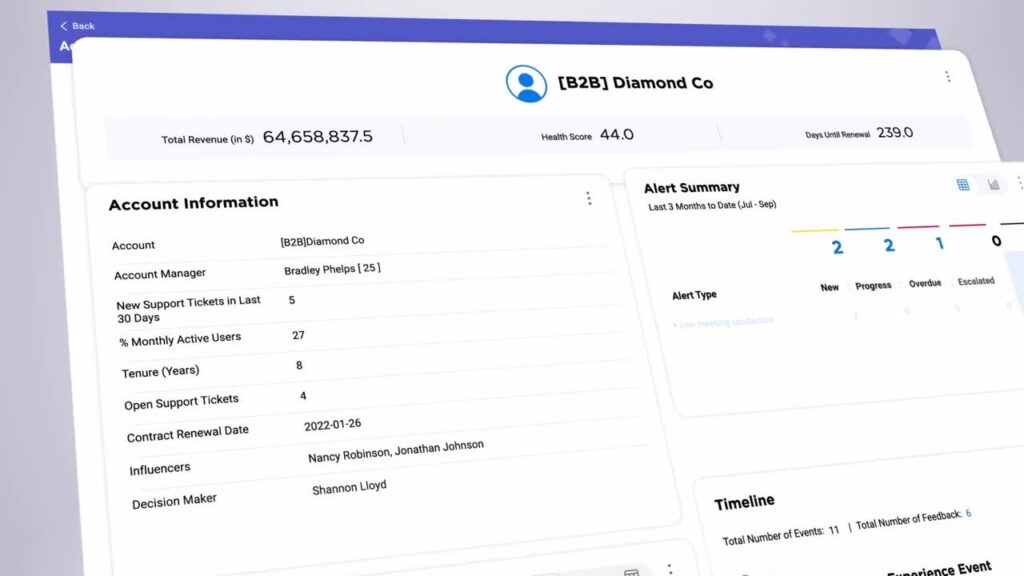
How many years has she been with us? What’s her customer value? What other products that she has with us? Can you imagine your close the loop teams having this information in a single view, how many efficiency you can gain and how much better the [00:09:00] conversation could be. So after completing this, we realized that customers were already telling us everything we needed to know.
But we were just not listening, especially in my sector, which is the best I know, but I suppose in many of yours. For us as customers, if something happens, we make sure that the company knows it doesn’t matter the way you can text, you can call wherever. Normally in situation, it’s a call, but. The customers were telling us everything, and we just need to connect Medallia to many other sources of unsolicited feedback.
To know it, social was the easiest one because it was the easiest to connect, but then we realized we needed to do hard work on that. I’m not gonna lie you, but when you start receiving thousands and millions [00:10:00] of comment with emojis, mansions, and these kind of things. They have no body. You have to search a lot and to clean all this noise and information.
But when you do that and when you learn how to do it, then you start receiving very valuable insights. And after that, we move to our probably biggest step, which was connecting speech analytics. We were studied by thousand calls per day. Just to try what we were receiving and to starting to learn about all this new information, but we suddenly start to escalate.
It would be our biggest source of customer knowledge because when something urgent happens, the most common is to take the phone and let us know what is happening and we won’t rank. Speech is our definitely gold mine. [00:11:00] The opportunity of knowing and understanding better our customers, and then we decide to move to the digital world.
We started with digital service because it was also easier then we realized it. We need to move in a step forward if we really want to change things because, um, we really need to know very well where we’ll failing, where we have room to improve and. Which are the processes more demanded by customers to bring them a good experience.
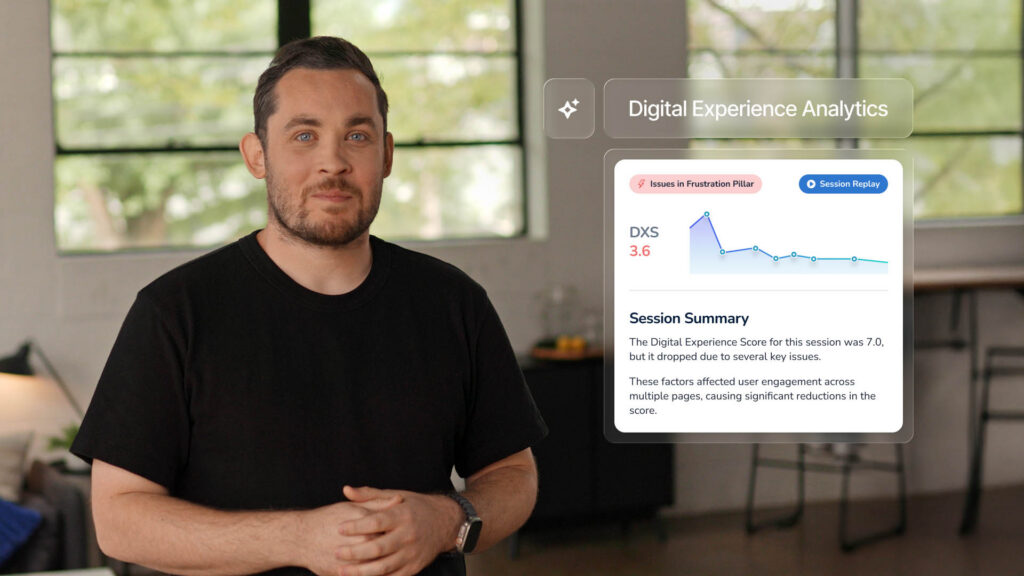
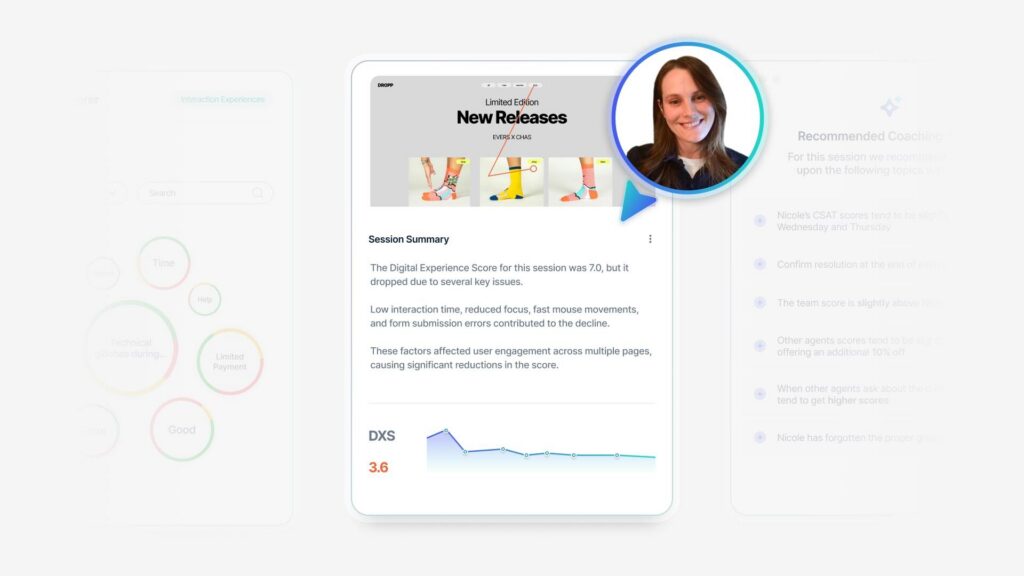
Maybe a traditional free rental insurance that’s in Sounds very tech, but we had a big challenge here to compete with others in the sector. We started with DXA to analyze not just answers, but behaviors. This was the big change for us. Thanks to that we are gaining users day to day, but most important, we are able to bring them processes that it, they can finish end to end in our apps without [00:12:00] fails most of the times because we are monitoring it from anywhere and at any time.
So this was crucial for us, and when we finish with all of that, it happens. Something that changed everything and it was that. Feedback started to connect All these sources of unstructured, unstructured feedback started to create a whole and complete customer stories. We were able to see patterns in their behavior, how they move from one channel to another, how they interact with us, depending on the moment behind and they, the importance they bring to it.
But listening is cool. It’s good. It’s like the first step, but without actioning. It’s just noise. So our next step was to take action on everything we were just measuring. Nowadays, every signal of [00:13:00] dissatisfaction, problem or issue during a navigation creates an alert. That is managed by our close the loop team.
Remember our close the loop team that has the full picture and the whole information that we bring up to Medallia to just in one view, make an idea of what’s happening, what’s historic of this customer, and how they have to achieve what the next conversation and after that. It becomes reporting, but not reporting just the scores or numbers.
We create a system where every person in the company with complete different rules can enter directly to Medallia, not sending them PowerPoint. They enter and they see what Jane to see, and it’s not. Numbers about what customers are saying about anything. They see what we are monitoring through all this instructor [00:14:00] feedback and how it’s facing their own essays and their own operational information.
So in a quick view, they know what they have to action to change things. And with that what happens? It’s alignment when. Every one of us start to speak the same language. Every one of us has the complete story of our customers Silos starts to fall because people really understand what they need to do, and we have a common purpose in the whole company.
So the circle completed, and this is how we did it. In this slide, you can see how we turn inputs into outputs, signals into decisions, and decisions into actions that really move forward. The customer experience. This is listening at scale. [00:15:00] After doing all of that, we realize one important thing. We will listen a hundred percent of our calls just from a customer point of view, but we were missing something.
We could do it also for measurement our service. So with Medallia now, we just don’t listen better, but we perform better. And the best sample is what we did in our contact center. Before doing this, we have our supervisors, many, all of you, with limited time, limited capacity, limited visibility, so they listen monthly diary, doesn’t matter, a random sample cost, not the most important ones, not the ones with the high risk, not the ones with the highest emotional, emotional charge.
Just the ones that chance put on their desk those days. And even this is a common [00:16:00] practice. We decide to change the daily question, which calls we sample by what not. Listen to all of them. And this question was the one that changed everything because nowadays with Medallia, we are listening every call.
Every day, every interaction. So calls are no more audio files. They are experience signals of what we are doing. We have also created a kind of experience metric that is personalized by core typology, and then we are linking this rate at an agent level. And facing this with the customer satisfaction show after the call when we make them a Serb obviously.
So now we are not listened random anymore. We are listened with a pop post because [00:17:00] the system Medallia is able to detect any of these situations. Poor practices, lack of empathy resolution, capability. When any one of these happens, it triggers automatically an alert that is sent to the supervisor with a clear signal.
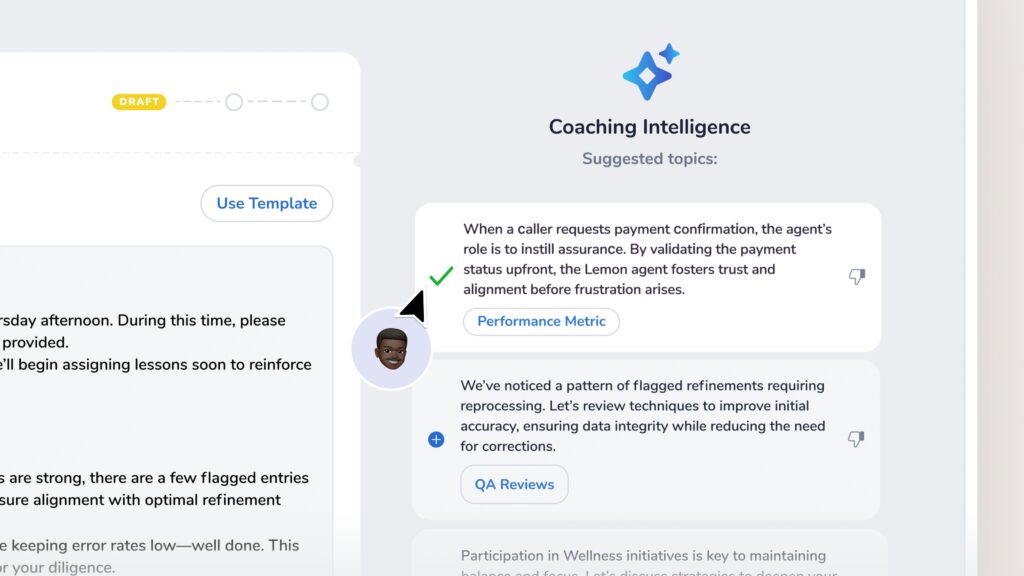
You need to listen to this call and then you have to coach your agent, solve the problem, and warranty a proper follow up on this. This. Through dashboards, but not numeric dashboards. Dashboards where supervisors and the whole organizations can see real time performance of each agent. The connection between agent experience and customer experience and the signals would it takes for training and coaching agent continuously.
We have done all of that, [00:18:00] but what can we do next? We’re started to think about many other things that are about to happen, I hope very soon. We want to use this information to anticipate situations, to reinforce our contact, enter teams, depending on demand, on real time, and also redistributing our network of providers.
Depending on this same demand, not only for our service, but also using this for communicating proactively to our customers when we detect the first signals of something that is going to happen, let’s, sometimes the best way to understand things is by saying them.
Voiceover 2: This is Jay. Jay is a father, a husband, and works an office job.
He still hasn’t told us which one, but we kind of get an idea of what his day looks like. It’s a normal day for Jay. He chats with his [00:19:00] coworker, John. He makes a few phone calls, he answers some emails, and at 5:00 PM he heads back home. But something has been worrying him. Two days ago after a severe storm, water started leaking through his roof, Jay declared the claim with his insurance company, San Deluthe, expecting a quick response.
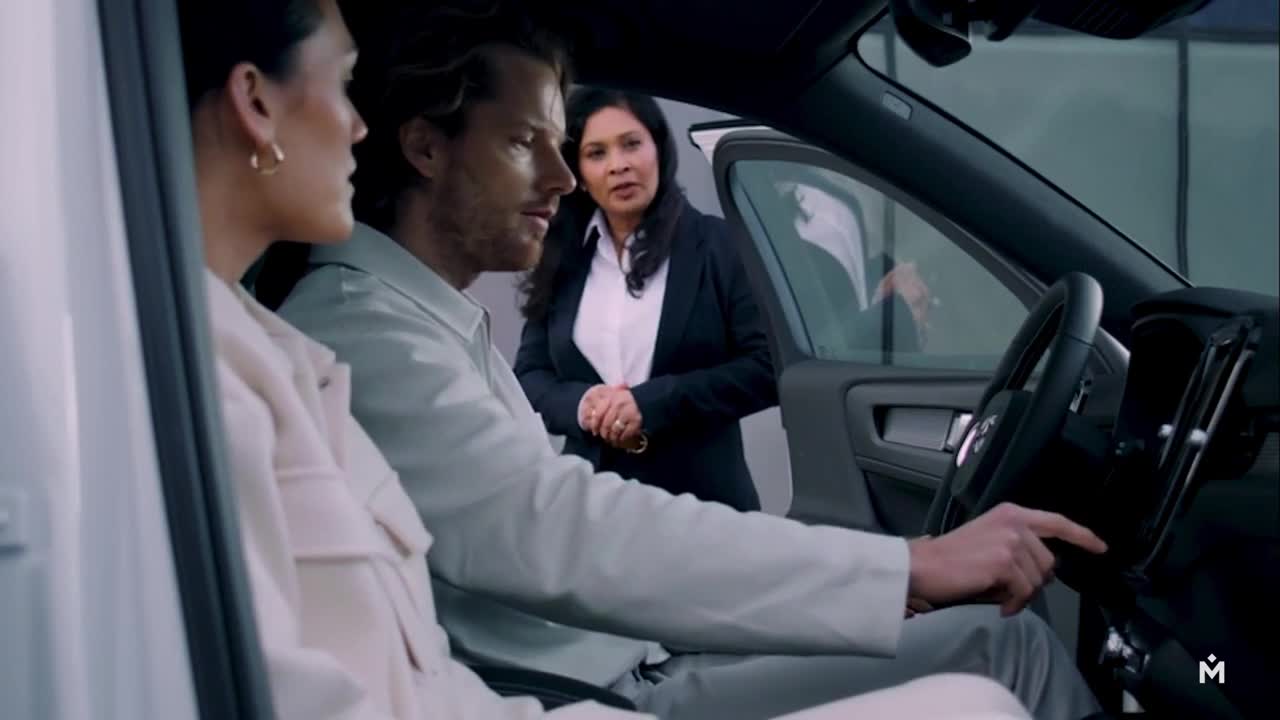
This is urgent. His home is at risk. A day goes by. And no one calls, no appointment, no confirmation, no information. So Jay calls us and he’s angry because when your ceiling is leaking, waiting is not an option. When Jay’s call enters our contact center, thanks to Medallia, we can instantly see much more than just a phone number.
By connecting his call with Medallia Digital and DXA, we immediately detect what went wrong. Jay did everything right. He had declared the claim through our [00:20:00] mobile app, but a technical issue in the digital process prevented it from being properly registered in our operational systems. That’s why no one contacted him.
At the same time, we can contextualize his situation with all the information already available, his previous claims, if any. The number of times he has contacted us before, through calls, digital interactions or social channels, his profile and value as a customer. The agents involved in every past interaction, the current status of the incident, and expected SLAs in minutes.
What started as an angry call becomes a real time alert with full context. We understand not only what Jay is saying, but why we prioritize the case. Activate the close the loop process, contact him, explain what happened, and immediately schedule the right professional. The situation is resolved and trust is restored, but Jay’s call can help more than just Jay by analyzing his [00:21:00] interaction.
We may detect an increase in calls coming from the same area. From other customers affected by the same storm. This enables us to take preventive action resizing contact center capacity based on the type and urgency of incoming calls. Redistributing our network of repair technicians to the most affected zones.
Proactively sending communications to customers with prevention tips and clear instructions on how to use their guarantees if damage occurs. And when you can connect what customers say, what they do, and what happens in your operations, you can move from reacting to truly taking care. Thanks to Medallia, we now have a stronger connection, not only to our customers problems, but to our customers themselves.
This is what happens when listening is continuous, connected and intelligent. [00:22:00] Because every customer is complex. Every customer is human and very much alive. That’s why there is no one size fits all solution. We need to understand each one of our customers, their interactions with us and their needs so we can become true partners in their moments of truth.
Because ultimately we are people who care for people.
Paloma Paraja: Okay. It looked great, but it wasn’t that easy. So I want to to share with you the biggest challenges we faced during all this trip. The first one was legal and security. This is painful just by saying it, at least in our sector, which is extremely regulated. Everything we wanted to do was a big public heck personal data [00:23:00] ia.
Foreign servers voice, which is biometrical data analysis. When we presented the project, all our legal team’s alarms automatically connected. This was our, I think, probably biggest pain, but thankfully Medallia was more than prepared to help us to navigate and to overcome through all these challenges. So for that, yes, the trust on them.
They’re gonna solve it. Integrations and it, that wasn’t an easy journey either. When connectors assists, it’s may be quite simple, but when you are a hundred year old company and your systems are, as much as all things can get complicated. Very complicated. So our IT teams made an extraordinary work by connecting systems that were not designed to [00:24:00] speak to another.
And when you start structuring all this information, you put a light on it. Inconsistency, CPU, everywhere, ever. Obsolete information, outdated data. So medal became the perfect tool to mobilize teams to start working on things that have been touching for years. Don’t feel fear about that. This is a good proof of you are moving things in the companies.
This is very important to you. You need to adapt everything you’re receiving to your own language to make all these teams involved, to understand things. Don’t think yet, knows everything from the beginning. Maybe with the I it would be a little bit easier, but for us it was not too much and I pretty a clear example.
We have a huge [00:25:00] portfolio of funeral insurance customers. I’m not gonna share our glossary with you, I still struggle with it, but try to imagine the tool as Medallia understanding it when we you tell an i a, that the word death has nothing to do with a negative sentiment. Even the most advanced one will crash.
So you need to adopt everything to your own languages. And when you go through all these challenges and things seems to be quite good, you start to see the value for everything you’re doing and not just you, but also the teams and the company. It’s very easy to get excited. That happened to us. We completely overwhelmed our close the loop teams, and we lost the ability to react on real time, so we had to stop.
Rethink and redesign again, all the system and also use a lot the rapid responses because [00:26:00] we realized that not everything needed an outcome core. And the last one, we need to have strong commercial skills. I’m a heavy believer of what Medallia brings to us. Maybe you have noticed it. Bit when it’s about buying new functionalities.
You need to convince much many people in your organizations. And for that, what we have been doing are little pilots, very concrete use cases that with a big business impact, implement them, show their impact, and then show how big it would be if we, if we escalate. And this has worked very well, at least for us.
So the way has not been easy, but we made it and result speaks from themselves. We have improved our NPS more than 10 points since we met Medallia, but this is [00:27:00] just the reflect of everything that is behind. We are analyzing more than 1.6 million calls per year, more than 1.2 digital sessions through DXA.
115 Serbs under text comments. But the most important here is that numbers are not important at all. 1 million calls or 10 calls have exactly the same value as long as you do things with them. And this is exactly what I was trying to show here we are closing 99%. Alerts on time, which means within 48 hours, this is our most important KPI.
Probably, we have achieved many other things that you can see here, but the most important is listening, understanding and taking actions. This is what I am trying to show here. Behind all this [00:28:00] individual interactions, when you aggregate thousands, millions of them, doesn’t matter how much it happens, something much more powerful.
You start to learn. You start to see patterns. And patterns are the only ones that can achieve really structural changes in your organizations. So from that, we don’t just see customer experience as a metric or a department. We see it as a relationship with our customers, of course, but also with our other teammates in the company.
And as any relationship it needs, respect, care, of course, a long-term commitment. I know we are in Vegas, but for us, long term is very important and it has a lot to do with what’s coming next. How can we bring all, we have achieved all the analysis, the listening, the alignment [00:29:00] to the next step, what the future holds for us.
The first thing. Predictability and proactivity. I have told this before when I was speaking about our conduct enter project, but this is crucial for us. Until now, we’ve been reacting incredibly fast, but the next step is to react before things happens. We have enough information to be able to proactively detect one of these situations, weather, extreme weather events, patterns of fraud.
Large scale claims and with that, anticipate needs and risks even before they happen.
Of course I can give an and keynote in 2026 without mentioning Gen I. It seems to be kind of legal or something like this. But jokes aside, gen i i in red is opening as a [00:30:00] big window of new opportunities for basically understanding better, and also we have a big focus on systematically integrate. And CX models.
We use the same platform for measuring both BO and we need them to connect in a way that the whole company, everyone of the employees we have could see themselves reflected on what we are trying to see in our CX models.
And finally, we want to move from reaction to orchestration through MXO by knowing always which is the next best action for each customer, and completing it with much more solid economic impact models. But before leaving, I want to share with you some learnings that. Can apply for any [00:31:00] kind of industry, company, model, or even culture.
These are learnings that come from what worked that, especially for, from what didn’t. So don’t be afraid to try. Don’t be afraid to fail, and don’t be afraid to experiment. So here they are. Unsolicited feedback is the future of customer experience. Don’t doubt it. It sounds abuse, but please focus on that.
Integration matters more than measurement because isolated metrics don’t change anything connected. Insight does
speed and the ability to respond is what truly move the experience forward, not scores. Not just numbers, decisions, [00:32:00] important teams is not about giving them more data. It’s about giving them the right data at the right moment and with a clear purpose. Speech analytics is not just technology, it’s a culture.
It’s the decision to listen always. Sustainable change only happens when the outer loop and they in the loop move together. And finally, my favorite one and the most important one, if when I finish you just remember that it will be a success for me. Great customer experience is humanity at scale because all of that have also this in common.
Each one of our customers will have interactions with us. Some will be good, [00:33:00] some won’t hope many of them are good. But if we have just one that is not, we have a big responsibility. The responsibility to make it better the next time. And this is how data becomes empathy. And empathy becomes better business.
Audience Question 1: Great Presentation. Uh, this is Michael Aser from Capital One.
Paloma Paraja: I see.
Audience Question 1: Um, it almost feels like an omnichannel kind of thing, but like customer journey, like all inclusive for the way you presented it. But the piece that I really wanted to anchor on was like the closed loop at the end.
Paloma Paraja: Yes, absolutely.
Audience Question 1: There’s a paradigm shift there because you look at it as like.
The surveys come in and you see a ton of positive, positive feedback that comes in, but then you do get the negatives and there’s, it’s such a small subset of customers. How do you get the buy-in from [00:34:00] others for that closed loop piece and making that like a center piece and like showing a customer journey end to end.
Getting people to say like, we’ll anchor to this because often closed loop as the subset of customers. Tends to be like the thing that’s left out and you have to do a lot of advertisement and pushing forward and trying to get those numbers in front of people. And a lot of people don’t wanna see their dirty laundry typically.
Paloma Paraja: Yes. But I think that the clue is not sharing numbers with those people, but sharing the stories. Mm-hmm. And not. Focusing on just individual cases. Close the loop works, of course, but yes, with individual cases you need to aggregate many of them and to detect kind of patterns. So you need to create some dashboards wherever you need to show it.
But you have to face a height, volume of same situations happening and, [00:35:00] and face them with our. Internal operational data isolates, whatever that allows you not to share with them just numbers, but to try to show them this is what’s happening in your service. You know it very well, better than me, obvious, but this is how it’s impacting to your customers.
And it can be sometimes in a negative way. It’s good also to do it all the times in a positive one by showing them achievements and things that are working very well and how this is also impacting customers.
Audience Question 1: Yeah, and we call it like there’s the one-on-one experience, which is like fixing the tires.
Like we’re helping each customer fix a tire. And then like that secondary piece is like fixing the road that caused the those tires to go flat. So like we do that a lot, but it tends to end up like in a black box scenario where like we have a bunch of [00:36:00] information, but it’s about 5% of our customers actually hit these trigger rules for the reason why we’re doing that customer outreach and.
People are like, well, we’re hitting our numbers, like we’re good. We’re, we’re, we’re fine where we are. And it’s like, but if you did flip the funnel on these customers and get them over to the other side, imagine what your numbers would be. So like, that’s really powerful.
Paloma Paraja: Don’t tell them there’s just a 5%.
Yeah.
Voiceover 2: Oh no,
Audience Question 1: no, no show.
Paloma Paraja: Show them Just very concrete
Audience Question 1: storytelling, analytics. Yeah. Yeah, yeah. Absolutely. Thank you.
Audience Question 2: Hi, I am Krista from Chubb Insurance, and your presentation was amazing and, and very helpful. Um, I think over the past few days what I’ve been thinking about is our business model and we sell through independent agents, and I specifically focus in personalized insurance.
I think, um, where we struggle a little bit is the engagement between the client and the agent. And because the agent is not a Chubb employee, there is interaction that happens there that could [00:37:00] impact their feelings about us in the same way with the agent experience. Um, so I’m just curious, um, if your model is similar or if you have any recommendations on how to capture those insights before they’re essentially coming to Chubb?
Paloma Paraja: It’s not easy. It’s like wage kind of. Connect or measure the impact that each line of boys, employees or, and, and customers move each other maybe, or, my recommendation is to start with. Kind of typology, of course, that you know, that have a huge impact on customer experience. Maybe the most emotional chart ones in those ones.
A start to measure how’s the temperature of your service? How are your agents deploying and how they feel, and then face it with your customers bit. In that case, you have to start in an individual way, agent by agent, facing [00:38:00] customer by customer. And then when you have some patterns, you can aggregate them and find where you have to work to.
But start with little cases. Don’t pretend to do it in a systematic way for all your contact center. It’s impossible to manage this huge volume from the beginning, so try to find it. A very concrete core typology that you can start work with and a very reduced, maybe reviews team of agents where you can start working.
Audience Question 2: That’s helpful. Thank you.
Paloma Paraja: Thank you so much.